
A World Through a Glass Window—Reflections of a 2008 Summer Intern
Last edited: 2026-07-27
Previously, my imagination of prison was like something out of a TV drama, where everyone was locked up in individual cells, with images of ancient dramas featuring floors covered in straw flashing through my mind. It was only because I came to intern at the JRF Taichung Office that I had the opportunity to make a field visit. Until I truly stepped into the Taichung Prison to meet with a client, I realized how narrow my previous understanding had been.
A Family's Longing
Walking along the path toward the main hall, outside the service center was a lush, verdant garden, but upon entering the hall, the scene changed instantly. Looking out, most people were family members coming to visit: a mother bringing her child, and elderly folks with gray hair carrying homemade food. Everyone's pace seemed very fast—taking a number, filling out a visitation slip, waiting to be called, waiting for their batch. From these practiced movements, one could truly feel the families' eagerness to see their loved ones as soon as possible. Especially since today was Monday, after a two-day weekend, were their relatives inside doing well? Were they also longing for everyone back home? The coming and going people seemed to have this emotion branded on their faces. The family support system becomes a crucial element connecting the inside and the outside.
Hope from Afar
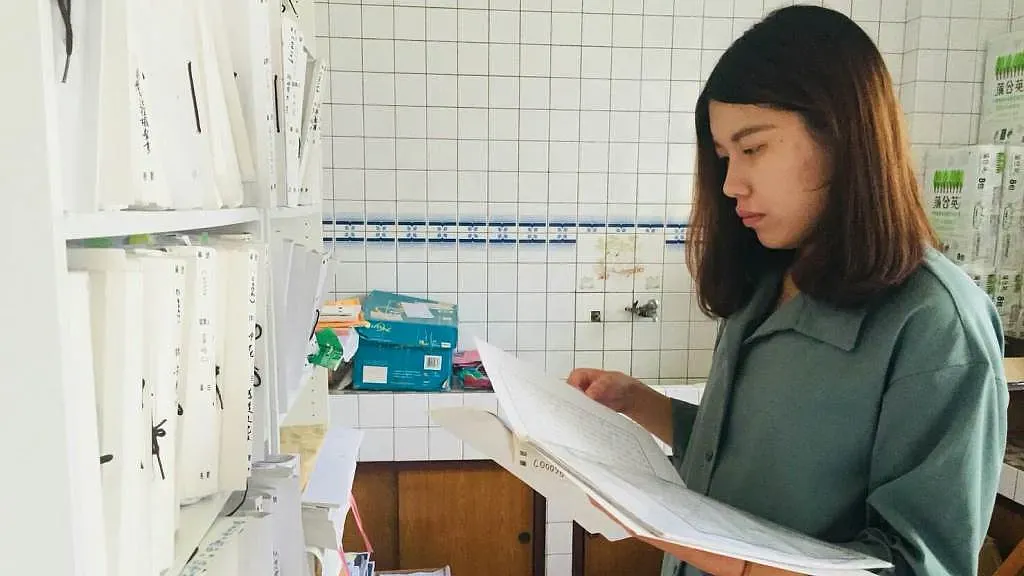
 Photo / Intern Liang Yen-ling visiting the case client at Taichung Prison
Carrying questions about the client's case, I walked into this small visitation room, separated from the client by a thick glass partition. Picking up the phone, the client's voice sounded as though it came from a very, very distant place—somewhat hoarse, somewhat unfamiliar. Listening to the back-and-forth dialogue between the client and the supervisor, I caught the expression of the client seen through the glass window: the helplessness revealed on his face as he repeatedly insisted he did not commit a certain crime, and the hope shining in his eyes because there were still methods left to try. Returning to the client himself, starting from the heart, I suppose it is this very determination to seek vindication and redress that sustains his entire being.
Invisible Deprivation
After finishing the visit with the client and stepping out of the visitation room, the fresh air outside hit my face, suddenly bringing a sense of physical and mental relaxation—contrasting sharply with how stifling the atmosphere inside was. The air was not only permeated with damp elements; as one walked toward the visitation area in the basement, the smell grew even stronger, making it hard to breathe. The dense trees lining both sides of the road outside the correctional facility made the prison look even more like an isolated island. This feeling was as if the prison and the outside world were separated into two sides, incompatible with each other, even down to differing smells. Serving a sentence in prison is not merely restricted to physical freedom; human rights and thoughts are also locked away, forfeiting basic dignity. And even after completing a sentence and re-entering the environment, one cannot immediately return to society due to prolonged "isolation," let alone those wrongfully convicted clients who were innocently locked away without knowing when, or if, they would ever be able to walk out freely.
This article is an AI-generated translation of the original Chinese text. In the event of any discrepancy, the Chinese version shall prevail.