
Bringing Legal Education Closer to Life: Reflections from a 20th Summer Intern
Last edited: 2026-07-27
The Stuntest Legal Shield
People often say that "the law" always helps the bad guys, while good people must fend for themselves and stay clear of legal entanglements. Yet, the law permeates every aspect of our daily lives—from making a purchase at a convenience store to attending classes at school. The law constantly maintains the pulse of society. We often say the law is distant from our lives, but in reality, it is all around us; we simply do not intentionally notice or discover it. Without regard for wealth or social status, the law silently protects everyone. The law seems distant only because we do not understand it. During my internship at JRF, my supervisor once said, "Only by understanding something can one evaluate it." When the law enters the campus, it ceases to be merely a tool for a privileged few; it truly becomes the strongest shield for every protected individual.
Deepening Rule of Law Education on Campuses
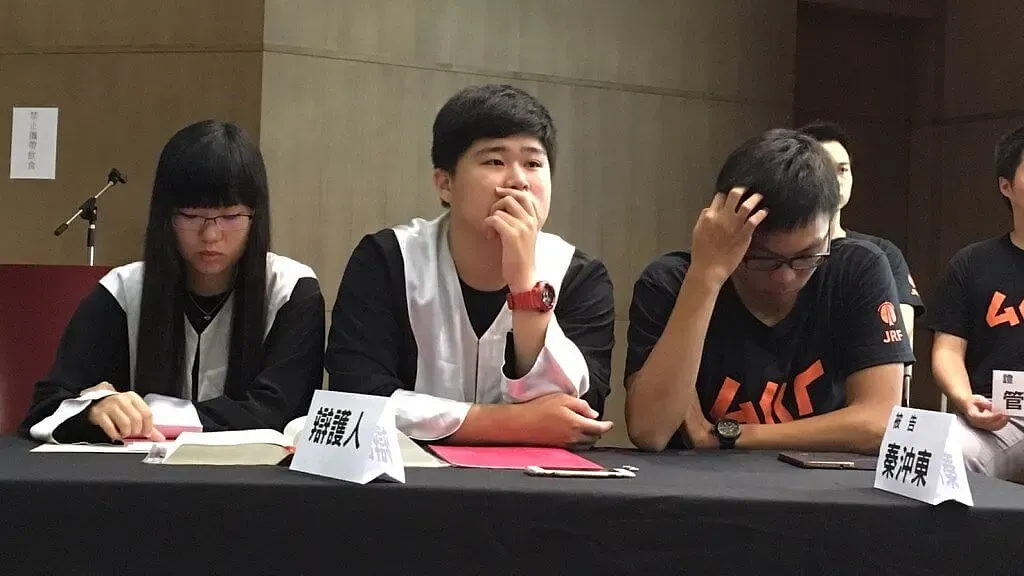
Coming to intern at JRF during the summer, I accompanied specialists onto campuses to simulate court proceedings. Students dressed in the robes of judges, lawyers, and prosecutors, holding mock scripts provided by JRF, performed court dramas adapted from real cases. Mirroring the seating arrangements of a court, the trial procedures prescribed by legal provisions, the direct and cross-examination of witnesses, and incorporating a lay participation system, we simulated scenarios that could occur in a courtroom. Through the performance of mock trial dramas, students examined testimonies and evidence, discussed in groups whether the person prosecuted by the prosecutor was guilty, and shared their perspectives with other groups. The collision of opposing viewpoints allowed students to experience how difficult it is to judge a case as a juror deciding a defendant's guilt or innocence. Guided by lawyers' explanations, students came to understand legal procedures and applications, bringing legal education deep into the campus.
Through the method of mock trial dramas, students' capacity for independent thinking is stimulated. We often follow media trends when viewing cases, but once we possess basic legal literacy, we realize that the so-called "dinosaurs judges" portrayed by the media are not truly incompetent, but rather labels we attach out of a lack of legal understanding. Through independent thinking, we cultivate self-critical judgment. Education is no longer merely the state's job or simply about obedience; when rule of law education enters the campus, the law no longer feels distant, but becomes the sturdiest shield truly protecting you and me.
Reflecting on the Value of Legal Popularization
I remember when I was studying in the Department of Law, I aspired to be a lawyer who helps vulnerable groups in the courtroom. As I delved deeper into the law and listened to teachers share their experiences, I gradually became uncertain whether I would walk this path. I remember my homeroom teacher once saying, "Being a lawyer allows you to save only one client per litigation, but being a teacher allows you to educate sixty legal professionals at once." At first, I didn't quite understand this statement, but through my internship at JRF—organizing high school summer camps, mock trials, and other activities, and packaging legal knowledge into interactive formats—legal education transformed from abstruse to approachable. This made me realize that helping others can be envisioned in many ways, and education is one of the most accessible and best ways to help people.

This article is an AI-generated translation of the original Chinese text. In the event of any discrepancy, the Chinese version shall prevail.