
Visiting Chiou Ho-shun: It is Not as Simple as It Sounds!
Last edited: 2026-07-27
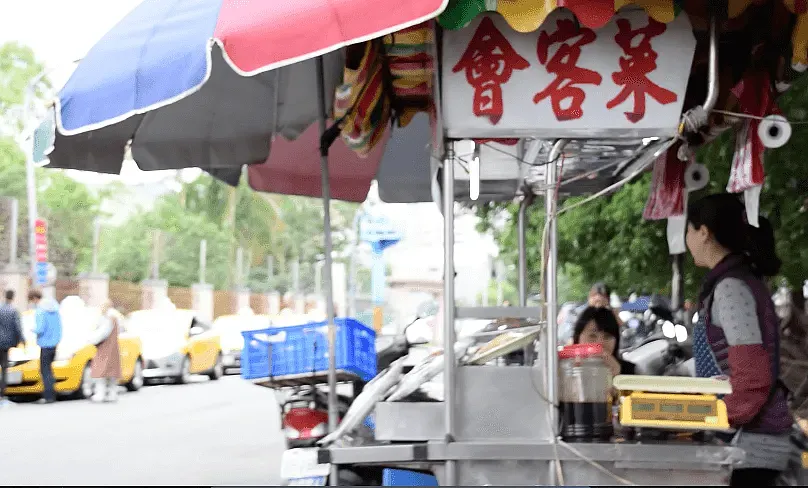
Photo / A food stall selling visiting-day meals outside the Taipei Detention Center
Three days before visiting Mr. Chiou Ho-shun, I consulted everyone around me: If you were in prison for thirty years, what books would you want to read? I received wild and varied answers: manga, the complete Harry Potter collection, the Code of Criminal Procedure, Zhuangzi, Passing Defendant, Miscarriage of Justice, The Judge's Victim, and so on. Some left me speechless with amusement, while others made me want to pick them up and read them myself.
I tossed and turned the night before, anxious that we would have nothing to talk about. I had a hundred imaginations about this person, carrying a sliver of fear, a bit of doubt, and—even more so—questioning the judicial system. This would be my very first time stepping into a detention center, and I felt like a white rabbit wandering into a forest, utterly lost. In the end, I arrived empty-handed because I could not picture what he looked like in my mind. From the small stall selling visitor meals at the entrance of the detention center to the crowd waiting for visits, I could vividly feel strange gazes following me. The atmosphere was bizarre; everyone felt like you were an out-of-place foreign object. The moment I passed through layers of iron doors and sat before the transparent glass window, my adrenaline surged. The second A-shun opened the door and stepped into the visitation room, my mind went completely blank. My hand holding the telephone receiver trembled slightly. All the text I had read in the JRF's materials shattered, transforming into a most tangible form—a living, breathing human being of flesh and blood sitting right across from me.
Fluent Taiwanese flowed from the other end of the phone, and his hearty voice made one forget we were in such a narrow, confined space. I was grateful to be able to use a language he felt close to, and to have a proper conversation with him while he was in such high spirits. He had never used a mobile phone, and the image of Taiwan in his memory was probably printed as a faded old photograph. Yet, in his speech, he could still feel indignant about the widening gap between the rich and the poor today. He repeatedly said that the future must be left to the young, and he still offered critiques of society and expectations for the future. He even encouraged us, saying, "Life is not won at the starting line, but at the turning point (A-shun, you must have been reading inspirational books). Don't follow in other people's footsteps; it doesn't matter even if you fail the bar exam. Live a life that is different from everyone else's." Suddenly, he was no different from anyone's grandfather.
Unable to suppress my curiosity, I asked him what books he wanted to read. He let out an exclamation and said he had no time to read at all; he had to reply individually to over 4,700 letters from all over the world, genuinely grateful to everyone who supported him. He asked for the names of my classmates and me, assigning each of us a number. As those numbers accumulated, was there truly more hope, or a deep sense of endless despair? I didn't dare to ask.
Singing is not allowed inside, so everyone who came to visit A-shun hoped to hear him belt out a tune. He silently looked through the iron bars and sang. Even though I am someone who cannot tell good pitch from bad, I felt the vicissitudes of life in every single note and could not hold back my hot tears. After finishing two songs, he mockingly said that this year he had silently updated the lyrics from 29 years to 30 years. Indeed, he had been inside even before I was born—what an unimaginably long stretch of time. A-shun said that on the day of the retrial, everyone must support him; he was holding onto hope. To remain optimistic amidst the ravages of time and a body plagued by illness—that is simply too difficult.
No one can truly empathize with his suffering. I could only hold the receiver with both hands and say to him, "You must be strong, and take good care of your health." For the first time during the twenty-minute conversation, a vulnerability broke through as he whispered, "How can it be as simple as you say!" At that exact moment, I was utterly speechless.
This is a case that even Amnesty International has paid attention to, yet as a law student, I only came to properly understand it after stepping into the JRF. Most people in Taiwan have long forgotten about it and pay little attention. When the detention center staff member walked out and said we were all so kind to come see him, a guilty bitterness pressed against the back of my tongue, leaving me unable to reply. Had I not interned at the JRF, I would have been just as clueless; I was entirely unworthy of the word "kind."
This article is an AI-generated translation of the original Chinese text. In the event of any discrepancy, the Chinese version shall prevail.