
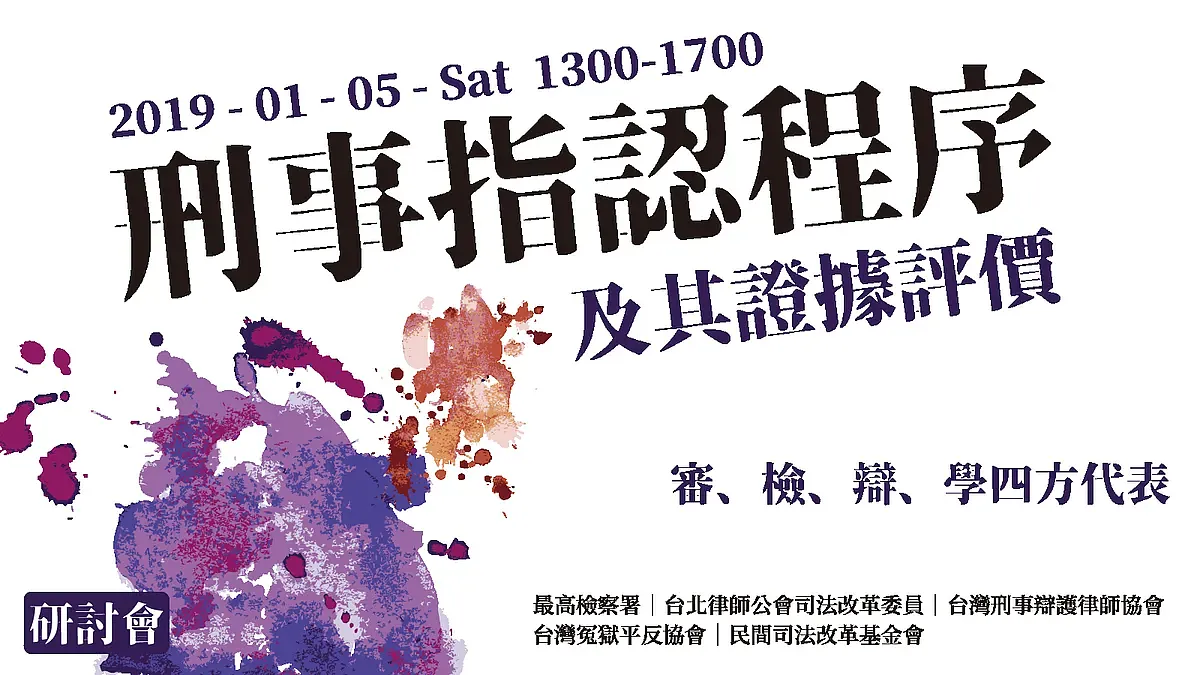
Seminar | 2019 Seminar on Criminal Identification Procedures and Evidentiary Evaluation
Last edited: 2026-07-27
Mistaken identification is one of the major causes of judicial miscarriages of justice. We believe that the improvement of identification procedures should cover at least two aspects: the regulation of identification methods during investigation, and the evaluation of admissibility of evidence in litigation. In particular, identification methods that fail to comply with proper procedures should not be granted admissibility.
The 2017 National Judicial Reform Conference adopted two resolutions on this matter:
- Re-examine current domestic regulations on identification procedures to ensure that "suggestive or inducing identification procedures or practical methods that may lead to erroneous statements" are no longer applied, and incorporate evidence-based identification methods and procedures.
- The entire identification process must be audio and video recorded. In its six-month progress report on the implementation of related resolutions, the Ministry of the Interior responded that it had convened cross-agency consultation meetings to actively revise the "Directions for Police Authorities in Conducting Identification of Criminal Suspects."
Identification procedures have different standards across eras. Therefore, aiming to combine theory with practice, we invite representatives from the judiciary, prosecution, defense, and academia to discuss the proper standards for identification and the legal evaluation of mistaken identification. This will allow us to re-examine current domestic identification procedures and jointly promote the improvement of the judicial system. The content of this seminar will also serve as a reference for future legislative amendments.
Time
January 5, 2019 (Sat.) 13:00 – 17:00
Location
Multimedia Classroom 1301, Lintsê Hall, College of Law, National Taiwan University
(No. 1, Sec. 4, Roosevelt Rd., Da'an Dist., Taipei City 106)
Speakers
(Ordered by stroke count)
 Attorney
Wang Yi-t'ing
Board Member, Taiwan Innocence Project
 Prosecutor
Chu Chao-liang
Prosecutor, Supreme Prosecutors Office
 Attorney
Lin Chun-hung
Convener, Case Rescue Division, Judicial Reform Foundation
 Scholar
Wen Tsu-te
Assistant Professor, School of Law, Shih Hsin University
 Attorney
Cheng Chia-hsin
Taiwan Criminal Defense Lawyers Association
 Judge
Ch'ien Chien-jung
Judge, Criminal Division, Taiwan High Court
Agenda
| Time | Topic | Moderator / Presenter / Discussant |
|
13:00-13:10 |
Registration and Admission |
|
|
13:10-13:30 |
Opening Remarks |
Guest Speaker |
|
13:30-14:40 |
Session 1 Regulation of Identification Methods During Investigation |
Moderator Lin Chun-hung, Attorney |
|
14:40-15:00 |
Mid-session Tea Break |
|
|
15:00-16:10 |
Session 2 Evaluation of Admissibility of Evidence in Litigation |
Moderator Cheng Chia-hsin, Attorney |
|
16:10-16:50 |
Open Forum Q&A and Responses |
Moderator Ch'en Yü-fan, CEO Discussant
|
※ Presenters will have 30 minutes each, and discussants 20 minutes each. The open forum will last for 40 minutes, subject to adjustment by the moderator. The event is scheduled to conclude before 5:00 PM.
Organizers
Judicial Reform Committee, Taipei Bar Association
Taiwan Criminal Defense Lawyers Association
Taiwan Innocence Project
Judicial Reform Foundation
Supreme Prosecutors Office
(Ordered by stroke count)
This article is an AI-generated translation of the original Chinese text. In the event of any discrepancy, the Chinese version shall prevail.