
An Incomplete Reunion Table: The Long Road Home
Last edited: 2026-08-29
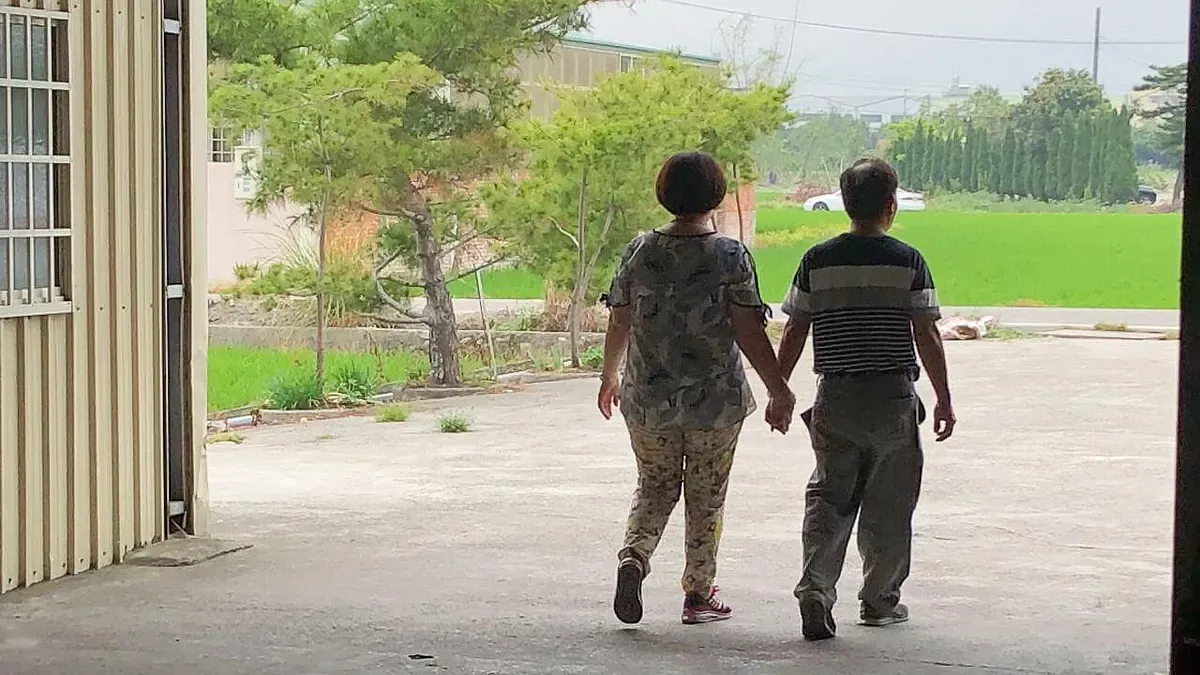
Photo/Hsiao's Father and Hsiao's Mother
Chinese New Year's Eve is supposed to be a time for family reunion, sharing a meal, chatting, and playing games together. But for Ming-Yueh Hsiao and his family, this has become a distant, unreachable dream... He was an ordinary real estate agent, but his friends and the court gave him a new identity as the head of an international drug-trafficking syndicate. He is Ming-Yueh Hsiao.
Visiting Hsiao's Father and Hsiao's Mother
Before the New Year, we brought a New Year's greeting card to visit Hsiao's father and mother early. We arrived at the Hsiao family's woodworking factory. We talked for nearly two hours, ranging from the rescue progress to their recent daily life. Whenever Ah-Yueh was mentioned, the eyes of Hsiao's father and mother not only showed deep affection but also revealed worry. They talked about their son, his personality, and his past.
I also asked Hsiao's father and mother, "On the day Ah-Yueh walks out a free and innocent man, what is the first thing you want to say to him?" Hsiao's mother said she has so, so many things to say; she wants to hug him and also punch him twice. I saw Hsiao's mother trying hard to hold back her tears. At that moment, I knew I had to be the best listener. I listened as they talked about their son. In their words, they were proud of this child; they were proud that he inherited the traits of kindness and a generous, helping spirit, yet they also complained about his kindness. It was precisely because he offered his help to friends unconditionally and too enthusiastically that he brought disaster upon himself. I thought to myself: "Is being a good person wrong?" I tried to place myself in that situation. If my close friend got into trouble and needed help, I would also help them without a second thought. But how on earth does one end up "turning from a mediator into the accused"?!
Corroborating Evidence and Judicial Reform
I first learned about the Hsiao case on the JRF website. What left the deepest impression on me and sparked my desire to pay attention and join the rescue efforts was the video JRF filmed of Ah-Yueh. In the video, his eyes were red from crying. Every single tear, cried out in a hoarse voice, fell like hailstones, fracturing upon Ah-Yueh, myself, and Taiwan's judiciary.
At first, after reading about Ming-Yueh Hsiao's case, the first question that popped into my mind was, "How is that possible?"
Isn't there Judicial Yuan Interpretation No. 582? Doesn't it state that the testimony of a co-defendant cannot be used as the sole evidence? Later, I learned that the corroborating evidence in this case turned out to be evidence concerning the relationship between Ah-Yueh and other co-defendants, rather than other evidence definitively proving Ah-Yueh's involvement in drug trafficking. But isn't this absurd? It turns out that although Interpretation No. 582 states that co-defendants' testimony cannot be the sole evidence and requires other corroborating evidence, there was never any follow-up discussion on how such corroborating evidence should be provided or to what extent!
During my time as a volunteer, I also participated in the meetings of the internal rescue team's lawyer group. During the meetings, I discovered that there are so, so many drug and sexual assault cases in central and southern Taiwan. These cases share a common characteristic: whether due to uncorroborated single evidence or because higher-ups are designated only by code names, the corroborating evidence relied upon to secure convictions based on accomplices' confessions is often far-fetched. The meeting also mentioned: "Convictions cannot be based solely on transcripts of communications and the testimony of one party; stronger and more powerful factual evidence is needed for corroboration to better align with the presumption of innocence..." This touched me very deeply. I hope future judicial reforms will also place more emphasis on this area, making the corroboration standards for statement evidence explicit. This would not only prevent innocent people from being wrongfully convicted but also resolve the issue where judges and prosecutors apply overly lenient standards of corroboration when determining facts and applying the law.
Hoping While Embracing Imperfections
Finally, Hsiao's father also helplessly complained in fluent Taiwanese: "Look at how despicable a wrongful conviction is. Originally, our whole family lived together... The relationship between the two of us, father and son! Now, my son is gone, my daughter-in-law is gone, and my two granddaughters are gone. Such a big house, and only the two of us old folks and a daughter are left. Look at how my wonderful family has turned out now..." Hearing this, a wave of heartbreak surged into my mind. This suddenly reminded me of Chiang Hsun mentioning our "desire for completeness." He said, "Su Shih once wrote, 'Men have sorrow and joy, parting and meeting; the moon may be dim or bright, round or crescent.' Perhaps because there are so many, many imperfections, we hold onto numerous imperfections and hope that one day, it will be complete..."
This Chinese New Year's Eve, a corner of the Hsiao family's round table remains empty.
This article is an AI-generated translation of the original Chinese text. In the event of any discrepancy, the Chinese version shall prevail.