
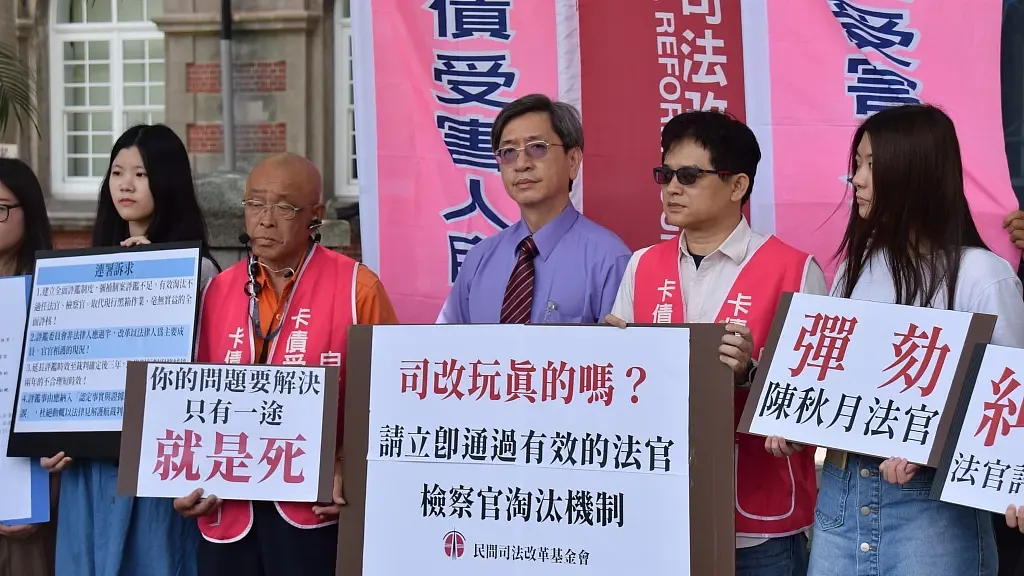
Reflections on the Judges Act Amendment Controversy from the Perspective of Evaluation Resolutions
Last edited: 2026-07-27
Introduction
The recent controversy surrounding the amendment of the Judges Act has spread from the Legislative Yuan to the general public. While reform groups call to "weed out incompetent judges and prosecutors," judicial associations respond by "defending judicial independence1." No one opposes these two propositions in principle. Examining the root of the controversy reveals that it stems from proposals advanced by the Judicial Reform Foundation (hereinafter JRF) through Legislator Yu Mei-nu in the draft Judges Act2—specifically, including "errors in the subsumption of facts under the law" as grounds for evaluation, establishing full-time commissioners on evaluation committees, and requiring that evaluation committees be composed of a majority of non-lawyers. As a full-time lawyer at the JRF who has participated to a certain extent in the formulation of the draft Judges Act, the author hopes to use practical cases to divide current problems in the evaluation system into substantive and procedural aspects, while explaining the context behind certain proposals in the JRF draft and the problems they aim to resolve.
The author believes that all stakeholders caught up in this controversy share the hope for a more progressive judiciary. The JRF's original intent in proposing the draft was to draw upon its own experience participating in the evaluation system to tentatively formulate solutions to the problems it has witnessed. Should there be any flaws or improprieties, the author welcomes correction from all seniors and experts, so that we may collectively ponder reform proposals that render Taiwan's judiciary more progressive.
Substantive Problems of the Evaluation System
Under the Judges Act passed in 2011, because individuals could not directly initiate evaluations before the evaluation committee, the JRF played the role of filing evaluation cases in the evaluation procedure, utilizing self-raised funds to screen cases and initiating more than half of all evaluation cases. Taking the 55 evaluation cases from 2012 to 2018 as an example, the cases requested by the JRF accounted for 41 of them3. Therefore, the following observations are raised regarding phenomena observed during the JRF's process of filing cases or from observing the results of evaluations filed by other groups.
-
Raised High, Dropped Softly
-
Judges Evaluation Committee Resolution 2016-Ping-tzu No. 4
The judge under evaluation in this case reopened arguments in as many as 16 cases between July 1, 2014, and June 30, 2016, with a single case having arguments reopened up to 7 times. Over the same period, as many as 31 cases exceeded the case-handling deadlines, and 18 cases had the delivery of original judgments delayed after pronouncement (a single case may simultaneously involve problems of reopened arguments, overdue case handling, or delayed delivery of original judgments).
For ordinary people, entering the judicial trial procedure is usually a matter of absolute last resort. The various inconveniences and anguish in the litigation process can be said to be a major torment for the parties. The judge under evaluation in this case routinely reopened arguments, exceeded case-handling deadlines, and delayed the delivery of judgments, unnecessarily increasing the costs borne by people participating in the judicial procedure. The Judges Evaluation Committee (JEC) also concluded in its resolution document that the judge under evaluation affected the rights and interests of the parties and violated the Judicial Ethics Norms with serious circumstances, finding the request to be well-founded. However, even after making the aforesaid determination, the JEC stated in its conclusion that, considering the physical condition of the judge under evaluation and their past excellent case-handling performance, it deemed that "there is no necessity for disciplinary action," and referred the matter to the Personnel Review Committee of the Judicial Yuan for deliberation.
This resolution highlights two blind spots in the evaluation procedure. First, the personal physical condition and past good performance of a judge under evaluation are not appropriate as "mitigating grounds." After all, the damage suffered by a citizen in the procedure is not rendered any lighter simply because the judge possesses the aforementioned traits. What the evaluation procedure should determine is whether the person under evaluation remains suitable to undertake judicial duties; that is, a judgment should be made regarding their "suitability." Even if the person under evaluation has sympathetic aspects, their fitness for office must still be judged by their performance in office. Second, there is a lack of ancillary dispositions in the current evaluation procedure. Given that judicial officers are difficult to cultivate, if a person under evaluation has areas in their execution of duties that require improvement, or if their physical health encounters problems, there should be relevant mechanisms allowing judges and prosecutors to make up for their deficiencies or restore their physical condition to a state capable of handling the work. Under the current law, however, neither the evaluation committee nor the Disciplinary Court can render such dispositions, forcing the evaluation committee to choose between two extremes: swinging the axe or exonerating the person under evaluation, lacking concrete methods to improve judicial quality. This is highly regrettable.
-
Judges Evaluation Committee Resolution 2018-Ping-tzu No. 5
The judge under evaluation in this case, while acting as the commissioner judge in charge of preparation procedures for a case involving the Public Officials Election and Recall Act, directly interrogated the defendant and conducted substantive evidence investigations, violating the principles of direct trial and oral trial. Furthermore, when interrogating Defendant A, one of the defendants, the judge used the method of in-court detention to demand that Defendant A, who possessed the nature of a witness, spit out the criminal facts of co-defendant B giving instructions and providing financial sources; once Defendant A expressed willingness to confess details such as instructions and financial sources provided by co-defendant B, the detention disposition was revoked in court. When interrogating another detained defendant in the same case, the judge instructed them that unless they confessed to other co-defendants' vote-buying offenses, it would be difficult to grant bail to suspend detention4.
In addition to violating the provisions of Article 273 of the Code of Criminal Procedure by conducting substantive evidence investigations during the preparation procedure and breaching due process of law, the judge under evaluation also coerced the detention of the defendant on the grounds that the defendant refused to confess regarding co-defendants, and conditioned the bail suspension of detention on confessing about co-defendants, clearly exhibiting the circumstance of "detaining people to extract confessions." In this regard, the JEC considered that the judge under evaluation harbored pre-judgments, manifested mental disposition that the defendant should be found guilty, violated the "presumption of innocence," and improperly infringed upon the defendant's right to a fair trial, with serious circumstances.
The presumption of innocence regulated by Paragraph 1, Article 154 of the Code of Criminal Procedure is fundamental to criminal trials, aiming to safeguard every criminal defendant's right to a fair trial. It can be said to be the core of the core in criminal trials, and violations of the presumption of innocence should be viewed with a serious and cautious attitude. However, although the JEC considered that the judge under evaluation had violated the presumption of innocence, it concluded that there was still no necessity for disciplinary action—only needing to be referred to the Personnel Review Committee for deliberation—on the grounds that "the judge under evaluation has had no disciplinary record since taking office, and annual year-end performance evaluations and job evaluation results over the years have all been good."
As mentioned previously, the target of evaluation by the evaluation committee should be the "suitability" of the person under evaluation; that is, it should be judged from their overall conduct in the execution of duties whether they are suitable to continue serving in judicial work. In this case, in addition to requesting facts, the JEC randomly sampled the trial recordings of past cases handled by the judge under evaluation and found that the judge had a tendency to interrogate defendants ex officio during the preparation procedure. In other words, this violation of the presumption of innocence was not an isolated incident. If the JEC's determination for a violation of the "presumption of innocence" is that there is "no necessity for disciplinary action," it is no wonder that outsiders question the supervisory effectiveness of the evaluation committee.
-
-
Masking Professional Negligence under the Guise of "Legal Opinions"
Taking JEC Resolution 2015-Ping-tzu No. 5 as an example, the controversy in this case lay in the fact that a judge of the Taipei District Court proactively issued a trial slip to schedule an investigation庭 before the prosecutor had applied for an extension of detention in any written or verbal manner, violating Paragraph 1 of Article 108 of the Code of Criminal Procedure5 and case-handling procedure regulations. There were procedural flaws, and after the detention extension ruling was appealed, the panel of the High Court still upheld the procedurally flawed detention extension ruling. Regarding the Taipei District Court's detention extension ruling, the JEC considered that because it had no substantial impact on the defendant's rights objectively, the circumstances did not reach the level of seriousness, and dismissed the request; as for the High Court's upholding decision, the JEC considered it to fall within the scope of "judicial independence," belonging to the realm of the "core of adjudication" and termed "legal opinions" under Article 37, Subparagraph 4 of the Judges Act, thus not falling within the scope of review stipulated by the Judges Act, and accordingly made a resolution not to subject it to evaluation.
Detention is a major disposition that heavily interferes with personal liberty. Therefore, judges must be all the more cautious when making decisions depriving people of personal liberty. As the supervisory body overseeing detention decisions, the JEC should apply even higher standards to examine flaws in the process of deciding to deprive personal liberty, so as to prevent potential human rights violations. It is inappropriate to use "no substantial impact on the defendant's rights" as a reason to conclude that the circumstances have not reached a serious degree and resolve to dismiss the request.
Furthermore, the purpose of the court appeal and interlocutory appeal mechanisms is precisely to correct errors that may arise between different appellate instances. In this case, the district court judge's ruling was flawed, as already determined by the JEC, and correcting this error should have been the task of the interlocutory appeal collegiate panel. However, if the violation of due process is overlooked and also deemed to fall within the scope of "judicial independence" and the realm of the "core of adjudication," classified as a "legal opinion" and thus immune from review, this is truly self-imposed limitation and an excessive expansion of the core of adjudication, allowing due process safeguards to slip into arbitrary determinations of legal opinions and failing to thoroughly uphold human rights and the rule of law.
It must be emphasized that although the protection of the "core of adjudication" is an important connotation of judicial independence, it does not mean that it can be completely free from supervision. Quoting JEC Resolution 2015-Ping-tzu No. 2 as an example: "... unless the factual determination or subsumptive interpretation and judgment of the elements of the detention disposition are such that it is difficult for any ordinary rational, conscientious, and experienced person to imagine any reasonable basis supporting the decision, rendering it evaluable as arbitrary or manifestly unlawful, based on the principle of safeguarding judicial independence, specific decisions made by judges regarding the cognition of facts and application of law during trials shall, in principle, not fall within the scope of review of this Committee." This resolution indicates that "specific decisions made by judges regarding the cognition of facts and application of law during trials" are in principle outside the review scope of the evaluation committee—that is, the "core of adjudication." However, interpreted a contrario, this also indicates that if factual determinations or subsumptive interpretation and judgment of elements are supported by no reasonable basis whatsoever and can be evaluated as arbitrary or manifestly unlawful, they may be reviewed.
Accordingly, given that detention is a major disposition interfering with personal liberty and must premise upon strict procedural justice, courts at all levels related to detention decisions should bear the heavy responsibility of defending procedural justice. If lower courts violate procedural justice and higher courts fail to point it out, the appellate courts should be evaluable as manifestly unlawful in their factual determinations or subsumptive interpretation and judgment of elements, thus falling within the objects subject to review by the evaluation committee.
-
Inability to Empathize with Vulnerable Situations
Taking Prosecutors Evaluation Committee (PEC) Resolution 2016-chien-ping-tzu No. 3 as an example, in a case where a foreign migrant worker was sexually assaulted, the prosecutor under evaluation considered that the victim did not bite the assailant's penis during forced oral sex, demonstrating it was consensual oral sex, and thus rendered a non-prosecution disposition. The prosecutor presumed how victims of sexual crimes ought to react when handling the case, exhibiting the "ideal victim myth" and severely lacking gender awareness. Unexpectedly, after the evaluation was requested, the PEC made excuses for the prosecutor, surmising on its own that the assailant and victim had a relationship of trust, otherwise the assailant "would not have felt secure placing his genitalia into Woman A's mouth without fear of being injured by sharp teeth," concluding that the prosecutor did not need to be disciplined.
From the aforementioned case, it can be seen that the PEC, composed mostly of legal professionals, is unable to break free from monolithic imaginations regarding gender-related issues when adjudicating gender-related cases. Not only can it fail to correct the prosecutor's problems, but it further exposes the evaluation committee's blind spot of lacking pluralistic thinking.
-
Summary
-
The Argument for Adding External Members
From JEC Resolutions 2016-Ping-tzu No. 4 and 2017-Ping-tzu No. 5, it can be found that the JEC uses "past disciplinary records, performance evaluations, and job evaluation results" as consideration factors for whether disciplinary action should be taken, ignoring the nature of evaluation as judging the "suitability" of serving in judicial work. Furthermore, PEC Resolution 2016-chien-ping-tzu No. 3 reveals the evaluation committee's inability to perceive the plight of vulnerable groups.
In view of the above cases, one cannot help but doubt whether an evaluation committee composed mostly of "legal professionals" produces blind spots in thinking due to excessively high homogeneity and similar upbringing processes. Consequently, the JRF advocates adding a majority of non-legal members to the evaluation committee. Admittedly, a problem that this argument cannot evade is how non-lawyers less familiar with the judicial system will handle relevant disputes in legal procedures, whether members possess professional ethics expertise, and whether specific groups' established stances on specific cases will affect the impartiality of judgments. However, the original intent of the JRF in putting forward this proposal is to solve the problems of single-perspectives and overly conservative resolutions, hoping to find the best reform plan through the collisions of various sectors.
-
Increasing Disciplinary Grounds
The disciplinary grounds currently stipulated in the Judges Act are mostly aimed at "punishing" judges and prosecutors. However, not all disciplined judges and prosecutors are incompetent. At this time, how to help these judges and prosecutors who made mistakes in their duties correct their mistakes, and even help them recover to a state capable of executing their duties when physical and mental health issues arise, is a major problem. To solve this problem, the JRF explicitly stipulated in Article 50, Paragraph 1, Subparagraph 46 of its draft that education or other ancillary dispositions may be imposed on judges and prosecutors.
-
The Appropriateness of Legal Subsumption as Grounds for Evaluation
Taking the problem pointed out by JEC Resolution 2015-Ping-tzu No. 5 as an example, overexpanding the definition of the "core of adjudication" will cause the evaluation committee to impose self-imposed limitations, making it difficult to exercise supervisory functions. In view of this, the JRF designed the provision of Article 30, Paragraph 3 in its draft: "Where a judge's opinion in applying the law contains errors, they shall not be subjected to individual evaluation. However, errors in the subsumption between facts and law shall not be subject to this restriction," hoping to demarcate the boundaries of the core of adjudication.
Admittedly, "errors in the subsumption between facts and law" remain an abstract concept in interpretation, lacking fixed evaluation criteria, and may still overlap with the scope of the core of adjudication in certain instances. If the wording used in the aforementioned JEC Resolution 2015-Ping-tzu No. 2 is used, directly incorporating "subsumption" into the statutory text might generate controversy. Therefore, in terms of design, clearly defining the "core of adjudication" while strengthening accountability without harming judicial independence is a task the JRF must face. In this regard, reference may perhaps be made to Article 7-1, Paragraph 3 of the Universal Charter of the Judge7 by the International Association of Judges: "In the absence of bad faith or gross negligence, a judge shall not be subject to disciplinary action for their determination of facts, application of law, and weighing of evidence based on conviction in a judgment," so as to further clarify the types and protected scope of the "core of adjudication," and incorporate bad faith or gross negligence as elements, which may achieve a better balance between judicial accountability and judicial independence in application. However, regardless of how the statutory text is amended, the overarching direction that "judicial independence should be protected, but is not free from supervision" must still be grasped as the fundamental cure.
-
Procedural Problems of the Evaluation System
-
Lack of Party Participation
-
Problems of the Current System
The relevant provisions in the current Judges Act regarding procedural participation by the person requesting evaluation and the person under evaluation are extremely rudimentary, governed only by matters regulated in the "Implementation Regulations of the Judges Evaluation Committee" (hereinafter Evaluation Regulations) authorized by Paragraph 10 of Article 41 of the Judges Act, and the items requestable between the two opposing parties are unequal.
The evaluation requester may request to appear at the meeting to state opinions pursuant to Article 7 of the Evaluation Regulations8, but the evaluation requester cannot obtain the defense briefs of the judge under evaluation, nor do they have the right to request file review. In contrast, the judge under evaluation may obtain the evaluation request form pursuant to Article 8 of the Evaluation Regulations and may further request file review pursuant to Article 9. The inequality between the two opposing parties in the procedure is readily apparent.
-
The Three-Courts Draft
Although Article 41-19 of the official draft Judges Act stipulates that the evaluation committee may conduct necessary investigations upon application or ex officio; that both opposing parties may apply to appear at the meeting to state opinions, and such requests shall not be refused unless manifestly unnecessary; it adds a provision that the requester may apply for delivery of the opinion statement of the judge or prosecutor under evaluation, though the evaluation committee may refuse it; while the right to request file review is still enjoyed exclusively by the judge or prosecutor under evaluation. Viewed overall, the two opposing parties in the evaluation procedure remain in a state of unequal arms.
-
The JRF Draft
Article 41-110 of the JRF draft strengthens the proactive investigative power of the evaluation committee, enabling it to conduct necessary investigations. Additionally, it allows evaluation requesters to apply to the evaluation committee to investigate facts and evidence; stipulates that the written opinions of the judge under evaluation must be delivered to the evaluation requester; and also permits the evaluation requester to conduct file review.
The reason why equality of arms among participants in the evaluation procedure is important is that those who file evaluation requests—whether individuals or organizations—do not hold public authority. When investigating specific matters, they often face various obstacles making it difficult to obtain relevant data. Therefore, the evaluation committee should to a certain extent permit the review of data obtained through its investigations; otherwise, evaluation requesters can often only rely on limited resources to conduct evaluations, while being unable to obtain the defenses of the judges and prosecutors under evaluation, which truly violates equality of arms.
-
-
Excessively Short Statute of Limitations
-
Problems of the Current System
Paragraph 1 of Article 36 of the current Judges Act stipulates: "Requests for individual evaluation of judges shall be made within two years." The starting point of calculation is distinguished by whether it involves a handled individual case, regulated in Paragraph 2 of the same article: "The period in the preceding paragraph shall be calculated from the date of the termination of the evaluated facts if no individual case handled by the judge is involved, or from the date of the conclusion of the case handler if an individual case handled by the judge is involved. However, for circumstances under Article 30, Paragraph 2, Subparagraph 1, calculation shall start from the date when the judgment becomes final or upon the expiration of six years." Prosecutors are mutatis mutandis subject to this provision pursuant to Paragraph 1 of Article 89.
The problem with the current law is that evaluation cases involving handled individual cases begin calculation on the "date of the conclusion of the case handler." For citizens wishing to file complaints against judges and prosecutors, there is a certain degree of fear regarding initiating evaluations against judges and prosecutors before a case has become final. Whether a case is prosecuted by a prosecutor or concluded through lower-instance trials, parties still have to continue facing the next stage of judicial litigation. Many citizens who come to the JRF to file complaints often dare not file complaints against judicial officers while cases are ongoing in the judicial system due to the consideration that their cases are still pending, waiting until the cases become final before daring to file, only to find that the two-year statute of limitations has already passed.
This situation is even more severe in prosecutor evaluations. Among the current 51 resolutions, as many as 12 cases were not subjected to evaluation due to the statute of limitations. Moreover, these resolutions were mostly concentrated in the second JEC. During that period, the JRF hoped that cases exceeding the two-year statute of limitations could apply the longer limitation provisions through the proviso of Paragraph 2 of Article 36, but the PEC ultimately resolved in all cases not to subject them to evaluation. Consequently, in the subsequent two terms of the evaluation committee, the JRF proactively screened out time-barred cases in preliminary stages, which may be one of the reasons why the number of resolutions by the Prosecutors Evaluation Committee dropped precipitously from 32 cases in 2013-2014 to 3 cases in 2015-2016.
-
Analysis of the Three-Courts Draft
The official draft still takes whether an individual case is handled as the standard. For those not involving handled individual cases, the limitation period remains "two years from the date of the termination of the evaluated facts"; for those involving handled individual cases, it is "three years from the date of the conclusion of the case handler"; and for circumstances under Article 30, Paragraph 2, Subparagraph 1, it is "three years from the date when the judgment becomes final or upon the expiration of six years of case pendency."
In other words, apart from extending the statute of limitations for cases involving handled individual cases from two years to three years, the official draft actually makes no other changes regarding limitation periods and cannot handle the aforementioned problems. Supposing a citizen dares not file an evaluation after a prosecutor prosecutes due to improper conduct during the prosecutor's investigation process, and the trial of the case takes longer than three years, this citizen still cannot file an evaluation unburdened after the amendment.
-
The JRF Draft
Mindful of the aforementioned problems, the JRF proposed the draft amendment to Article 36 of the Judges Act: "Requests for individual evaluation of judges shall be made within two years from the date of the termination of the evaluated facts. However, for those involving individual cases handled by judges, it may be extended to within three years from the date when the judgment becomes final or within six years from the date of the conclusion of the case handler." And for prosecutor evaluations, Article 89 stipulates: "Requests for individual evaluation of prosecutors shall be made within five years from the date of the termination of the evaluated facts. However, for those involving individual cases handled by prosecutors, it may be extended to within three years from the date when the judgment becomes final or within six years from the date of the conclusion of the case handler."
The original intent of the aforementioned provisions is that a prosecutor's negligent acts usually occur in the preliminary stages of the judicial procedure. Therefore, the evaluation statute of limitations for prosecutors is lengthened, and for cases where difficulties arise in filing evaluations before the judicial procedure is concluded, the limitation period may exceptionally be extended pursuant to the proviso.
However, considering that judges and prosecutors in our country have heavy workloads and numerous cases, if all cases could apply the provisos of the aforementioned articles to initiate evaluations, situations would inevitably arise where cases handled many years ago have relevant details forgotten, making defense impossible. Therefore, the application of the aforementioned provisions should also have certain standards established by the evaluation committee to avoid any possible procedural unfairness.
-
Conclusion
Taking resolutions rendered by the evaluation committee as examples, this article briefly analyzes the problems encountered by the JRF in the evaluation system over the years from the perspective of evaluation-requesting organizations, and explains the legislative intent behind the draft amendment to the *Judges Act* proposed by the JRF. Nevertheless, it must be reiterated here that the JRF does not view this draft as the perfect solution for institutional reform. Judicial reform relies on criticisms and guidance from all experts and scholars; through continuous collisions and discussions, solutions accommodating pluralistic perspectives can ultimately be proposed, thereby achieving our common goal—building a more progressive judiciary.
Notes
- "Defend Judicial Independence, The Judiciary Cannot Compromise: Legal Professionals from Ruling and Opposition Parties Stand Up Together" Statement, last visited: 2019/05/15.
- Legislative Yuan Bill Query System, last visited: 2019/05/15.
- JEC Evaluation Closed Case Tracking Data, last visited: 2019/05/15.
- Judges Evaluation Committee Resolution 2018-Ping-tzu No. 5 Press Release, last visited: 2019/05/16.
- Article 108, Paragraph 1 of the Code of Criminal Procedure: "The detention of a defendant shall not exceed two months in investigation, and shall not exceed three months in trial. However, if there is necessity to continue detention, before the expiration of the period, after the court interrogates the defendant pursuant to the provisions of Article 101 or Article 101-1, it may rule to extend it. The extension of the detention period during investigation shall be accompanied by specific reasons by the prosecutor, and applied to the court for a ruling at least five days prior to the expiration of the period."
- Article 50: "(Paragraph 1) Disciplinary measures for judges are as follows: ... 4. Suspension from office, and may order mandatory education or other dispositions; the period shall be not less than six months and not more than three years. ..."
- ROC Judges Association Website, last visited: 2019/05/17.
- Judges Evaluation Committee Implementation Regulations: "(Paragraph 1) When deliberating individual evaluation cases, this Committee may conduct necessary investigations or notify interested parties to appear at the meeting to give explanations. (Paragraph 2) Where a requester requests to state opinions and has justifiable reasons, an opportunity to appear and state opinions shall be granted. (Paragraph 3) Where this Committee deems it necessary upon the requester's request, it may present data related to the evaluation request when the requester appears to state opinions. (Paragraph 4) This Committee may resolve that designated commissioners or the original review panel jointly conduct an inspection."
- Three-Courts Draft Article 41-1: "(Paragraph 1) The Judges Evaluation Committee may conduct necessary investigations upon application by the judge under evaluation and the requester or ex officio, and may notify interested parties to appear at the meeting to give explanations; data obtained from investigations, unless otherwise provided by laws and regulations, shall not be provided to other agencies, organizations, individuals, or made available for review and transcription. (Paragraph 2) Applications by the judge under evaluation and the requester to appear at the meeting to state opinions shall not be refused unless manifestly unnecessary; if improper speech or conduct occurs during their appearance, it may be stopped. (Paragraph 3) The Judges Evaluation Committee may restrict or refuse a requester's application for delivery of the opinion statement submitted by the judge under evaluation; if delivery is agreed, a reasonable period to express opinions shall also be granted. (Paragraph 4) The judge under evaluation may apply to review, transcribe, copy, or photograph data obtained from investigations under Paragraph 1. However, in the event of any of the following circumstances, the Judges Evaluation Committee may restrict or refuse it: 1. Drafts intended for processing before the resolution of an individual evaluation case. 2. Preparation or deliberation documents for the resolution of an individual evaluation case. 3. Necessity to protect the legitimate rights and interests of a third party. 4. Other necessity for confidentiality pursuant to law or based on the public interest. (Paragraph 5) Data obtained upon application pursuant to the preceding paragraph shall be kept confidential. (Paragraph 6) Regarding fact and evidence investigation, dates and periods, and service in evaluation procedures, unless otherwise provided in this Act, the provisions of the Administrative Procedure Act shall apply mutatis mutandis."
- JRF Draft Article 41-1: "(Paragraph 1) The Judges Evaluation Committee may conduct necessary investigations, or notify interested parties to appear at the meeting to give explanations; data obtained from investigations, unless otherwise provided by laws and regulations, shall not be provided to other agencies, organizations, individuals, or made available for review and transcription. (Paragraph 2) Requesters of evaluation, agencies, or organizations may apply to the Judges Evaluation Committee to investigate facts and evidence. If the Judges Evaluation Committee has justifiable reasons to consider investigation unnecessary, it shall attach reasons for explanation. (Paragraph 3) When investigating evidence or interviewing the person under evaluation or interested parties, the Judges Evaluation Committee may notify evaluation requesters, agencies, or organizations to be present and grant them an opportunity to express opinions. (Paragraph 4) Evaluation requesters, agencies, or organizations may apply to review, transcribe, copy, or photograph relevant data or files. (Paragraph 5) The Judges Evaluation Committee shall not refuse the application in the preceding paragraph, except for matters that should be kept confidential according to law. (Paragraph 6) The Judges Evaluation Committee shall deliver the written opinions submitted by the judge under evaluation to the evaluation committee to the evaluation requester, agency, or organization, and grant a reasonable period to express opinions."
※ This article was published in Taiwan Law Journal, No. 367 (2019.5.14)
This article is an AI-generated translation of the original Chinese text. In the event of any discrepancy, the Chinese version shall prevail.