
Minister, Please Stay! Immediately Establish "Standard Operating Procedures for Death Penalty Execution" ~ Human Rights Day Joint Press Conference
Last edited: 2026-07-24
Having assumed office as Minister of Justice for less than four months, Minister Ch'en is soon to be promoted to Vice President of the Judicial Yuan. While civil judicial reform groups should naturally offer congratulations, it is nevertheless regrettable that Minister Ch'en is departing without having made significant achievements during his tenure. Therefore, in his final term as Minister of Justice, civil judicial reform groups hope that Minister Ch'en will have the courage to uphold human rights and establish standard procedures for the execution of the death penalty as a final parting gift to human rights.
Recently, three organizations raised ten questions regarding the death penalty execution procedure to Minister Ch'en of the Ministry of Justice, demanding that the Minister respond to shortcomings in the current death penalty execution procedures. However, the Minister's response was evasive, consistently failing to confirm the necessary procedures between the finalization of a death sentence and its execution, while insisting that the procedures were "flawless." The three organizations have decided to step up the collection of information on death penalty executions to make the Ministry of Justice understand that hasty execution procedures are by no means merely isolated incidents. It is an indisputable fact that there is currently no standard procedure for the death penalty, and the Ministry of Justice holds sole discretion over the timing of execution. Therefore, the three organizations jointly raise the following questions once again:
Regarding the Chou case, the Ministry of Justice responded that "the Department of Prosecutorial Affairs of the Ministry of Justice respectively inquired with the Supreme Prosecutors Office and the Taiwan High Prosecutors Office as to whether extraordinary appeals and motions for retrial had been filed. After confirming that no such applications had been filed, it carefully reviewed the relevant case files and evidence. Upon determining that there were no grounds for extraordinary appeals or retrials, it submitted the case for the Minister's approval, and the review process was careful and thorough... and so on." We ask:
From the time the Supreme Court dismissed the appeal and finalized the death sentence in the Chou case on the 13th, to the time the Ministry of Justice completed its review and approval on the 15th—a span of less than 48 hours—what was the detailed review process for the case files and evidence relating to the Chou case? When did they arrive and where did they go, enabling the case files and evidence to travel at such high speed within this tight timeframe from the Supreme Court to the High Prosecutors Office, then to the Department of Prosecutorial Affairs of the Ministry of Justice for review, and after inquiries with the Supreme Prosecutors Office and the High Prosecutors Office, return to the Minister's hands for re-examination and final approval?
Lost Case File Journey Map
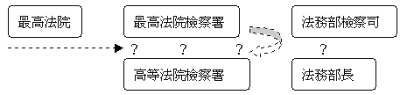
Supplementary Notes
- Case files and evidence refer to the relevant case records and physical evidence. Because this case went through five remand trials, there were a total of an indictment, a District Court judgment, six High Court judgments, and six Supreme Court judgments, amounting to 13 judgments plus the indictment for a total of 14 sets of case files and evidence—a massive volume.
- Regarding the units queried by the Ministry of Justice, who were the inquirers? Who were the executing prosecutors of the Taiwan High Prosecutors Office and the Supreme Prosecutors Office? How were they able to complete the review of the case files and evidence with such high administrative efficiency?
- The Ministry of Justice stated that it inquired between the 14th and 15th whether any extraordinary appeals or motions for retrial had been filed. However, the defendant only received the judgment document on the 14th. We ask, how could any extraordinary appeal or motion for retrial possibly have appeared at the prosecutors office on the 15th?
- According to the Ministry of Justice's response, regarding the extraordinary appeal filed by defense counsel on the 19th, the Supreme Prosecutors Office dismissed it on the very same day. The Supreme Prosecutors Office reviewed all case files and evidence and reached a decision within a few hours. Is there any suspicion of haste and negligence?
- Currently, there is a 20-day period for filing appeals in the first and second instances, and a 30-day period for filing motions for retrial. Why are extraordinary appeals not subject to any time constraints, allowing "technical issues" to create the possibility of irreversible loss of life through negligence?!
The Ministry of Justice claimed that the service of the judgment and the finalization of the case are the responsibility of the Supreme Court and have nothing to do with the Ministry of Justice. The Ministry of Justice clearly ignores the fact that: the Ministry of Justice is the final executing authority that determines the life and death of the parties involved. How can it shirk the Ministry's irremediable negligence in this case by claiming it is "unrelated"? On the eve of Human Rights Day, three civil human rights organizations solemnly demand that the Ministry of Justice immediately establish "Implementation Guidelines for Death Penalty Execution Procedures," standardize the death penalty execution process, and prevent Taiwan's human rights situation from becoming a bizarre anomaly on the 50th anniversary of the Universal Declaration of Human Rights!
This article is an AI-generated translation of the original Chinese text. In the event of any discrepancy, the Chinese version shall prevail.