
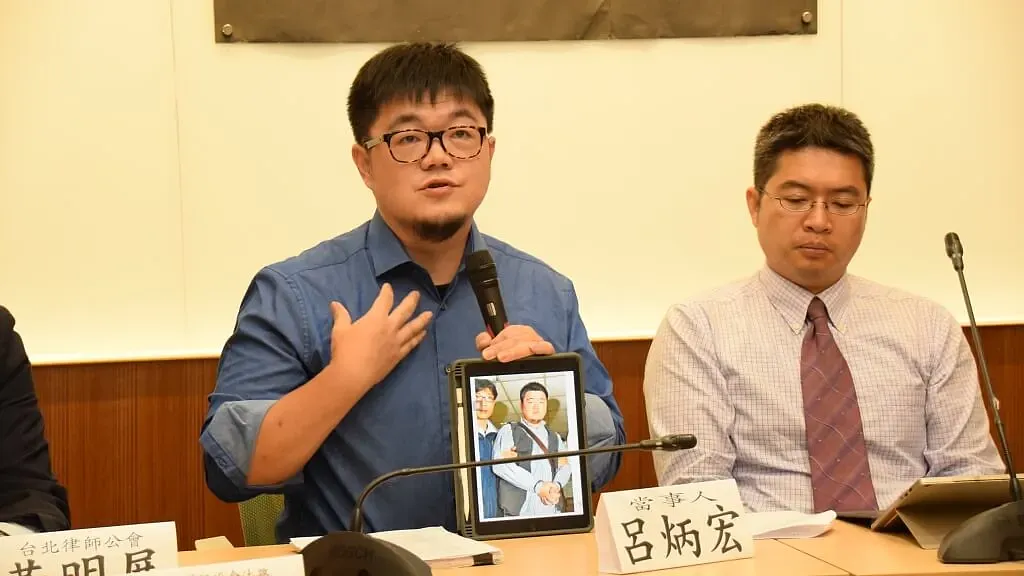
New Challenges of Non-Disclosure of Investigation Emerging on Police Day: Press Conference on the Implementation of the Newly Amended Directions for Non-Disclosure of Investigation
Last edited: 2026-07-27
The newly amended Directions for Non-Disclosure of Investigation officially took effect on June 15, 2019, which also happened to be Police Day. Lü Ping-hung, a victim of the violation of non-disclosure of investigation, Legislator Kawlo Iyun, and civil society organizations jointly held a press conference at Meeting Room 101 of the Legislative Yuan's Chung-Hsing Building. Although the new regulations include multiple amendments based on the conclusions of the National Judicial Reform Conference, laws cannot enforce themselves. Whether the new regulations are effectively implemented is critical to upholding the principles of a fair trial championed by non-disclosure of investigation, as well as effectively protecting the reputation and privacy rights of parties involved in litigation. Therefore, civil society organizations announced three major tasks for monitoring the implementation of the new regulations: (1) continuing to accept public "complaints" regarding individual cases where prosecutors, police, and investigators violate non-disclosure of investigation; (2) monitoring investigative authorities through television news and gathering facts of illegal conduct by investigative authorities; and (3) monitoring review reports and disciplinary actions.
"Non-disclosure of investigation" has been voted by the public as the most serious problem in Taiwan's judiciary. In 2017, the National Judicial Reform Conference passed multiple resolutions regarding non-disclosure of investigation. The newly amended Directions for Non-Disclosure of Investigation will finally officially take effect on June 15, 2019, which also happens to be "Police Day." In terms of enforcement, this will pose the greatest challenge to the police sector, which is most frequently complained about for "violating non-disclosure of investigation," and the subsequent enforcement effectiveness deserves close tracking and monitoring.
While there are many amendments in this legislative revision, their actual implementation effectiveness remains to be seen. Given that the new regulations still leave many unresolved issues—such as: How will review reports be published? Once the disciplinary list is published, how can incorrect information that has already spread be corrected? Should the government compensate victims? How to advance subsequent monitoring and implementation work for the new regulations in the future—all sectors still need to pay close attention.
Past Complaints Continue, Hopes for the Implementation of New Regulations
The Judicial Reform Foundation and civil society organizations established the "Non-Disclosure of Investigation Project Team" in 2017. Over the past two years and more, they have closely monitored the implementation status of "non-disclosure of investigation." In addition to actively proposing draft amendments, they have also accepted public complaints regarding individual cases where rights were damaged due to violations of non-disclosure of investigation by prosecutors, police, and investigators (the table below lists 5 serious cases).
| Case | Circumstances of Violating Non-Disclosure of Investigation | |
| 1 | Love and Bloodshed | The police edited and publicly released footage from duty body-worn cameras |
| 2 | 10-Year-Old Money Courier Case | The police leaked photos and personal data of a juvenile suspect who was only 10 years old |
| 3 | Agency Against Corruption Press Release Case | The Agency Against Corruption publicly released ongoing investigation cases via press releases |
| 4 | Police IG Information Leak Case | A police officer leaked photos of stolen goods and evidence on a private Instagram account |
| 5 | Leak of Puyuma Express Driver's Criminal Record | The prosecution allegedly leaked the suspect's criminal record to the media during the investigation |
As can be seen from the aforementioned complaint cases and the National Police Agency's self-monitored statistical data on news violating non-disclosure of investigation (please refer to the appendix), although regulations on non-disclosure of investigation have always existed, laws cannot enforce themselves. In the past, the passive law-abiding attitude of investigative authorities caused serious problems in the implementation of regulations. It is hoped that after the implementation of the new regulations, the investigative authorities and their supervisory superiors will show the reforming determination to resolve long-standing problems.
Three Future Monitoring Tasks for Civil Society Organizations After the Implementation of the New Regulations
To monitor the implementation of various aspects of the new regulations, the "Non-Disclosure of Investigation Project Team" formed by civil society organizations will continue to advance the following work:
-
Continuing to Accept Public "Complaints" Regarding Individual Cases Where Prosecutors, Police, and Investigators Violate Non-Disclosure of Investigation
The Judicial Reform Foundation complaint hotline (02-25421958) continues to receive public reports and complaints regarding cases where prosecutors, police, and investigators violate non-disclosure of investigation. The scope of accepted cases includes: one's own case being subjected to open investigation, discovering that prosecutors, police, and investigators have violated non-disclosure of investigation, etc.
-
Initiating "Watching Television News to Monitor Investigative Authorities" to Gather Facts of Illegal Conduct by Investigative Authorities
Although the National Police Agency monitors the news daily, its disciplinary effectiveness is poor (please refer to the appendix). Civil society organizations will form a working group to watch television news daily, compile situations where "investigative authorities" are suspected of violating non-disclosure of investigation, and regularly report them to official authorities.
-
Closely Monitoring Officially Published "Review Reports" and "Disciplinary Action Status" Regularly
According to the new regulations, the "Non-Disclosure of Investigation Review Team" formed by investigative authorities should publicly release review reports and disciplinary action statuses every quarter. Civil society organizations will closely monitor the review reports and supervise official accountability.
Finally, it should be explained that non-disclosure of investigation affects not only the parties involved and investigative authorities, but also the reporting media. Although the media is not included within the scope of regulation of the Directions for Non-Disclosure of Investigation, if investigative authorities repeatedly brush off major public interest events with the excuse of "non-disclosure of investigation," such operation also fails to comply with the regulatory objectives of the Directions for Non-Disclosure of Investigation. Therefore, we hereby invite everyone to join the ranks of monitoring investigative authorities. We must not only monitor the misconduct of investigative authorities in making public what should not be made public, but in situations involving public interest where matters should be made public but are not, we also demand that investigative authorities accurately apply the exceptions to the principle of non-disclosure of investigation and make public statements to clarify matters. Especially amidst the current prevalence of fake news and rumors everywhere, it requires joint efforts from all sectors to shape the standards for what should or should not be made public, and to forge a Directions for Non-Disclosure of Investigation that balances the rights of all sectors.
Appendix
| 2014 | 2015 | 2016 | 2017 | 2018 | Total | |
| Cases Transferred for Investigation | 51 | 78 | 97 | 109 | 47 | 382 |
| Substantiated | 29 | 41 | 48 | 32 | 23 | 173 |
| Number of Disciplined Personnel | 29 | 41 | 48 | 42 | 14 | 174 |
Attending Representatives
Lü Ping-hung / Party to the Non-Disclosure of Investigation Case
Kawlo Iyun / Legislator
Wang Yu-hao / Northern Liaison, Police Working Rights Advocacy Association
Wang Hsi / Legal Staff, Taiwan Association for Human Rights
Huang Ming-chan / Chairperson, Taipei Bar Association Non-Disclosure of Investigation Monitoring Center
Shih Hung-cheng / Standing Executive Committee Member, Judicial Reform Foundation
Huang Ying-chia / Staff Attorney, Judicial Reform Foundation
Press Contact
Attorney Huang Ying-chia, Judicial Reform Foundation (02)2523-1178
This article is an AI-generated translation of the original Chinese text. In the event of any discrepancy, the Chinese version shall prevail.