
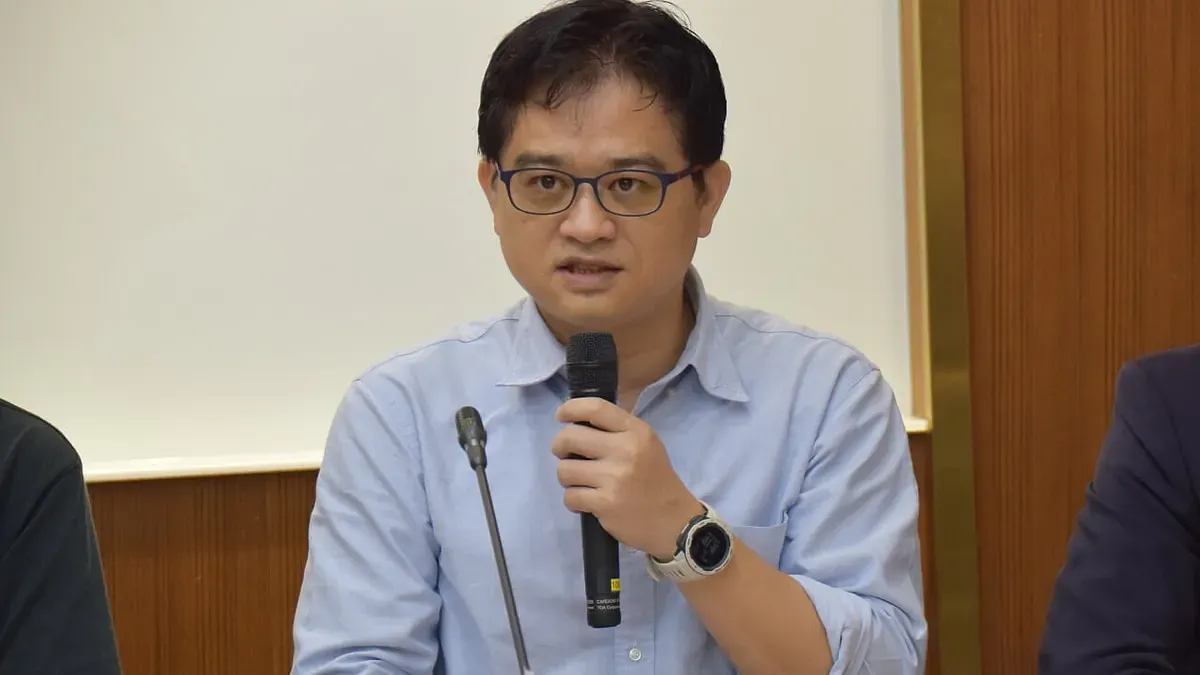
Statement by Professor Wu Tsung-sheng — Judges Act Amendment Press Conference
Last edited: 2026-07-27
For ordinary people, entering or going to court is a terrifying and frightening experience. Judges possess supreme authority and hold the power to decide the fate of the parties involved. However, if judges do not understand the lives of ordinary citizens or the living conditions of the people, what kind of judgments will they render?
I would like to share a few actual examples I have encountered for your reference.
The client was an indigenous mother who lost custody of her two children due to domestic violence and a two-year hospitalization for psychiatric illness. Under the dual blows of family breakdown and illness at the time, she accumulated hundreds of thousands of New Taiwan Dollars in debt. After being discharged, she lived with her mother in an indigenous tribal village, subsisting on a monthly disability subsidy of a little over NT$4,000. After a few years of physical recovery, she finally found a job at a beverage shop, earning a monthly income of about NT$23,000. Having evaded her debts for many years, she was persuaded by her younger sister to muster the courage to apply for "debt rehabilitation" (gengsheng), hoping to slowly repay her debts, live a life with legal status, and avoid having her wages constantly garnished. If she continued to evade her debts, she would be unable to find a better job, and her life would never improve.
However, the judge's ruling completely shattered her. Her disability allowance was counted as income, which, combined with her salary, totaled NT$27,000. According to the current minimum living standard—which is just over NT$12,000 in the Hualien-Taitung region—she was required to repay NT$17,000 per month under the debt rehabilitation plan.
Why was such a judgment rendered? Because the judge believed that her mother received a semi-retired pension and did not need her financial support. Because the judge believed that custody belonged to her husband, the living expenses she reported for her dependents could not be factored in.
According to the law, the judge was not entirely wrong. However, the client stated that living with her mother still involved buying things for the household or bringing home food to treat the family to better meals. Although she did not have custody of her children, she would still secretly visit them at school and slip them gifts and small amounts of money. She could not control herself; she would simply do these things. If she had to repay NT$17,000 every month, she truly would not be able to survive. Rather than that, she might as well continue evading her debts, as her life would still be better than it is now.
Just imagine: for a person with mental illness or schizophrenia, how much effort from medical personnel and social workers is required behind the scenes for them to recover and return to the workplace? Yet, judges who fail to understand this living condition and merely emphasize legal regulations can so simply cut off a path to rebirth.
Among the cases I know of, there are many other unreasonable judgments against debtors. These judgments often stem from judges' self-righteous perceptions or habitual thinking within the judicial system. Therefore, if judge evaluations continue to be conducted solely by judges themselves, will they be able to spot these unreasonable flaws? Consequently, I strongly recommend that evaluations must incorporate experts from various other fields. Only then can such reforms go beyond mere improvements within the judicial system and truly become reforms that provide the people with a better life.
This article is an AI-generated translation of the original Chinese text. In the event of any discrepancy, the Chinese version shall prevail.