
Amendments to the Judges Act: JRF Statement on the Legislative Yuan Cross-Party Consultation Consensus on June 24
Last edited: 2026-07-27
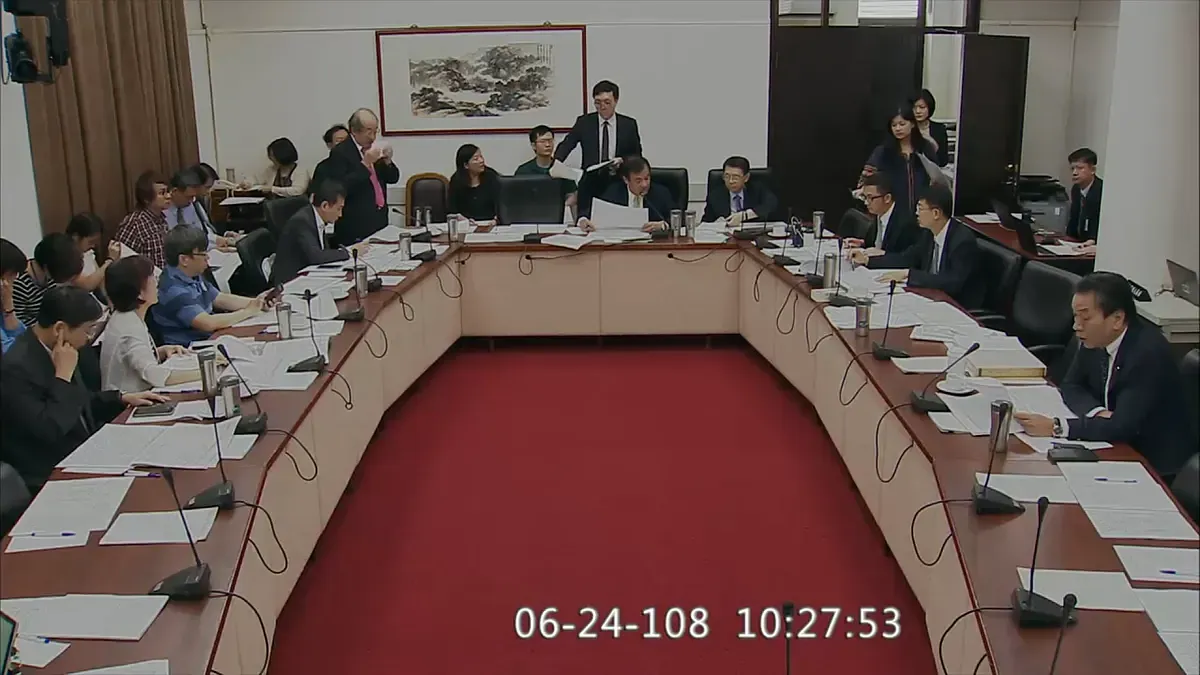
Amending the Judges Act to remove incompetent judges and prosecutors has always been a judicial reform issue of public concern. Thanks to the efforts of various party caucuses, the party caucus consultation on the Judges Act concluded on June 24. While a consensus was reached on issues such as evaluation timeframes and streamlining procedures that represents an improvement over the current system, the conclusions of this consultation still seem to fall short of the public's demand for external oversight. We understand that compromises are inevitable during the reform process, but we still hope that the Legislative Yuan passes an amendment to the Judges Act that truly has reform momentum. Therefore, we propose four statements regarding the direction of the amendments as follows:
-
Abolition of Comprehensive Review Must Be Accompanied by Complementary Measures
The comprehensive review system has been implemented twice since the enactment of the Judges Act. Its original intent was to review the daily performance of all judges to identify incompetent judges and prosecutors, who would then be removed through the individual case evaluation system. However, the results of both implementations showed that the Judicial Yuan and the Ministry of Justice did not refer a single evaluation case to the Evaluation Commission as a result. The system clearly failed, which led to the Democratic Progressive Party caucus proposing its abolition.
Nevertheless, based on past experience, the Judicial Yuan has identified the flaws in this system and attempted to enhance the effectiveness of comprehensive reviews by commissioning Academia Sinica to conduct them. Before this system has had a chance to improve upon its shortcomings, rashly abolishing comprehensive reviews may raise public concerns about a decline in oversight strength. We hope that all party caucuses and legislators in the Legislative Yuan will give this careful consideration.
To take a step back, if the ultimate decision of the legislators is still to abolish comprehensive reviews, they should strengthen the oversight of individual case evaluations. The top priority is to open up the subjects eligible to request evaluations. Alternatively, the proposal of the New Power Party caucus could be adopted, referencing the U.S. legal system to allow anyone in society to initiate an evaluation. The goal would be to increase the intake volume of the Evaluation Commission and convert the budget for comprehensive reviews into capacity for handling individual case evaluations. Once the volume of individual case evaluations is sufficient, incompetent judges and prosecutors can naturally be discovered through them, thereby maintaining a certain level of oversight after comprehensive reviews are abolished.
-
Broaden the Subjects Eligible to Request Evaluations to Increase Case Sources
The provisions in the official draft limit subjects eligible to request evaluations to "parties and crime victims." The overly narrow result may fail to resolve the problem of insufficient requests under the current system. Coupled with the abolition of comprehensive reviews, it may still face the problem of too few case sources, resulting in ineffective oversight.
In addition, for cases without parties or crime victims, who should initiate [an evaluation] remains an unresolved issue in both the official draft and the party caucus consultations. If this amendment imposes such strict limitations on those who can initiate evaluations, then if serious judicial discipline cases such as the "Chief Prosecutor Lobbying Case" or "Judge Falsely Accusing a Prosecutor of Tampering with Evidence" happen again in the future, no one will be able to initiate an evaluation. This can be said to be a major loophole in safeguarding judicial credibility.
Some may argue that other agencies can still initiate [evaluations], but the total number of cases submitted by such agencies—such as courts, prosecutors' offices, and bar associations—over the past several years does not even add up to half of those submitted by civil society groups. The public simply cannot trust these agencies to act as gatekeepers. Therefore, we hope that legislators can amend the law to fill this gap. If the aforementioned New Power Party proposal to allow "anyone to initiate an evaluation" is considered too broad, consideration should also be given to maintaining "group requests for evaluation" or opening it up to "interested parties" to initiate evaluations.
-
The Evaluation Commission Should Strengthen External Participation
Strengthening external participation and oversight has been the main axis of this amendment since the National White Paper on Judicial Reform. Therefore, the civil society draft demands that non-lawyers should make up the majority of the Evaluation Commission, and the diversity of the committee members' backgrounds should be considered to avoid narrow perspectives, single-track thinking, and the inability to empathize with disadvantaged groups. However, such opinions were not adopted during the consultations. We would like to appeal once again to all legislators: external participation is the first step toward restoring judicial credibility. Only by declaring to the public that judges and prosecutors will be weeded out, and that the public also has the right to voice their opinions—rather than non-lawyers covering up for officials—is it possible for the public to trust such a system and, by extension, trust the judiciary.
If the various party caucuses cannot compromise on the proposal that "non-lawyers must make up the majority," the statutes should at least explicitly stipulate that "socially impartial figures" among the members must be non-lawyers, or that a certain proportion of non-lawyers must participate. In addition, the establishment of gender quotas should also be supported.
-
Strengthen Oversight of Adjudication Quality
Paragraph 3, Article 30 of the current Judges Act stipulates that "views on the application of law" shall not constitute grounds for individual case evaluation of judges. However, public dissatisfaction with the judiciary has always included serious flaws in judges' determination of facts, application of law, and weighing of evidence, which severely infringe upon the rights and interests of the people. If adjudication quality cannot be overseen, it will be difficult to enhance public trust in the judiciary. Therefore, we hope that legislators will listen to the voices of the people, reference the provisions added under Article 7-3, Paragraph 3 of the Universal Charter of the Judge, and amend Paragraph 3, Article 30 of the Judges Act: "Except in cases of intentional misconduct or gross negligence, views on the application of law shall not constitute grounds for individual case evaluation of judges." Through the oversight of adjudication quality, public trust in the judiciary can be built.
Press Contacts
JRF Chairperson Lin Yung-sung
JRF Office Director Hsiao Yi-min
This article is an AI-generated translation of the original Chinese text. In the event of any discrepancy, the Chinese version shall prevail.
