
Amendments to the Judges Act Safeguarding Citizens' Right to Procedural Participation
Last edited: 2026-11-03
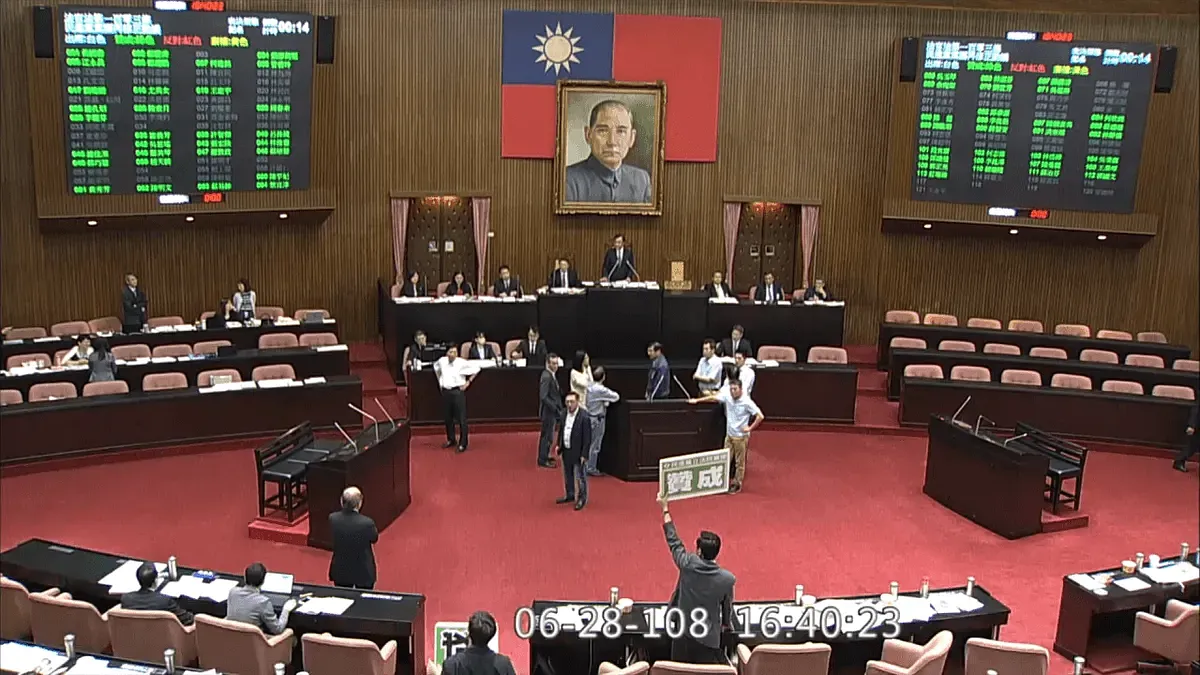
The amendment of the Judges Act to weed out incompetent judges and prosecutors has long been a judicial reform issue of public concern. Following an extraordinary session of the Legislative Yuan, the amendments passed their third reading on June 28. Championed by civil society organizations, this amendment finally allows case parties to directly request evaluations and substantially enhances citizens' right to "procedural participation," safeguarding the procedural justice that has long been lacking.
Looking back at the implementation of the Judges Act in 2011, the Judicial Reform Foundation (JRF) has continuously assisted the public in filing evaluation requests for judges and prosecutors. From the experience accumulated over these seven years, we found that between the submission of an evaluation request and the receipt of the evaluation resolution, the biggest problem lies in the fact that "an opaque evaluation procedure leads to a lack of public credibility in the evaluation resolutions."
Opaque Procedures Lacking Credibility
Why is "procedural participation" so important? Taking Prosecutors Evaluation Case No. 4 of 2010 (ROC calendar: 107) as an example, a petitioner believed that during litigation involving a personal dispute with a certain prosecutor, the prosecutor seemingly engaged in improper intervention in the investigation. If true, the prosecutor would be suspected of abusing power in violation of the law. Due to the principle of non-publicity of investigations, the petitioner was unable to inspect the case files. Consequently, after the case was decided not to be prosecuted, the petitioner hoped to ascertain the truth through the evaluation procedure. After filing for a prosecutor individual evaluation, the JRF also applied to review the case files, evidence, and court recording transcripts, indicating that it would decide whether to continue requesting an evaluation based on the findings. In the end, without receiving any response, we directly received a resolution of "no evaluation to be initiated" from the Prosecutors Evaluation Commission. Such an opaque "surprise ruling" is tantamount to disregarding procedural justice.
To cite another example, Judges Evaluation Case No. 2 of 2010 (ROC calendar: 107) before the Judges Evaluation Commission: The JRF reported that the judge in question only scheduled afternoon court sessions one day per month, resulting in excessively packed court dates and compressing the time for case adjudication. Whenever citizens tried to further state their opinions, they were met with sarcastic remarks from the judge, such as "How much postage money of ours do you think is wasted by summoning you?" and "You don't understand, yet you love to talk so much." However, after the judge submitted a written defense claiming that "the petitioner has taken things out of context and is ignorant of the interests at stake between the two parties," the Commission directly concluded that the judge's misconduct did not reach the level of "serious circumstances," and directly issued a resolution that "the request is unfounded."
This practice of only allowing the evaluated judge to defend themselves while denying the evaluation requester the opportunity to respond creates an unfair procedural defect. Especially for evaluations concerning "courtroom demeanor," judgments cannot be made simply by relying on cold written materials or audio and transcript records. Evaluation commissioners making resolutions based solely on the one-sided account of the evaluated judge, while failing to listen to the genuine feelings of citizens who experienced the courtroom firsthand, naturally makes it difficult to convince the public.
Safeguarding the Right to Procedural Participation and Enhancing Trust in Evaluations
The aforementioned problems could be avoided as long as the evaluation commissions are willing to let applicants participate in the procedure, inspect case files and evidence, or provide supplementary explanations. The problem is that the current Judges Act is entirely devoid of provisions regarding the right to procedural participation. Fortunately, through the efforts of civil society organizations, Article 41-1 has been added through amendments: applicants may request the evaluation commission to investigate facts and evidence, and may inspect, transcribe, copy, or record relevant materials. Meanwhile, to prevent applicants from being completely in the dark about the investigation process and having to passively wait until the moment the evaluation resolution is made public to learn the result, this amendment also adds a provision: during the investigation by the evaluation commission, applicants may request to appear in person to state their opinions, and after the evaluated judge or prosecutor submits a defense, applicants should also be given a reasonable period to respond. It is hoped that through procedural participation, applicants can understand the process by which evaluation resolutions are formed, making the evaluation procedure more transparent and eliminating the feeling of a "black box operation."
Although this amendment to the Judges Act opens up case parties to directly request evaluations and safeguards procedural participation during the investigation process, it has deleted the qualification of civil society organizations—which historically accounted for the highest volume of proposals—to act as evaluation requesters. Without the assistance of civil society groups, how vulnerable groups who lack the capacity to conduct complex evaluation procedures, as well as judicial integrity cases without direct parties, will operate in the future remains to be observed. However, what is certain is that before the judicial system can truly implement self-discipline and self-reflection, the JRF will still steadfastly stand from the perspective of the people, assisting the public in weeding out incompetent judges and prosecutors, ensuring that citizens can receive a fair trial, and building a trustworthy judiciary. Let us wait and see.
※ Originally published in ETtoday News Cloud on Jul. 8, 2019
This article is an AI-generated translation of the original Chinese text. In the event of any discrepancy, the Chinese version shall prevail.