
Call on the 42nd Session of the Human Rights Council to Hold Accountable: The Chinese Government's Persecution of Economic, Social, and Cultural Rights Defenders
Last edited: 2026-07-27
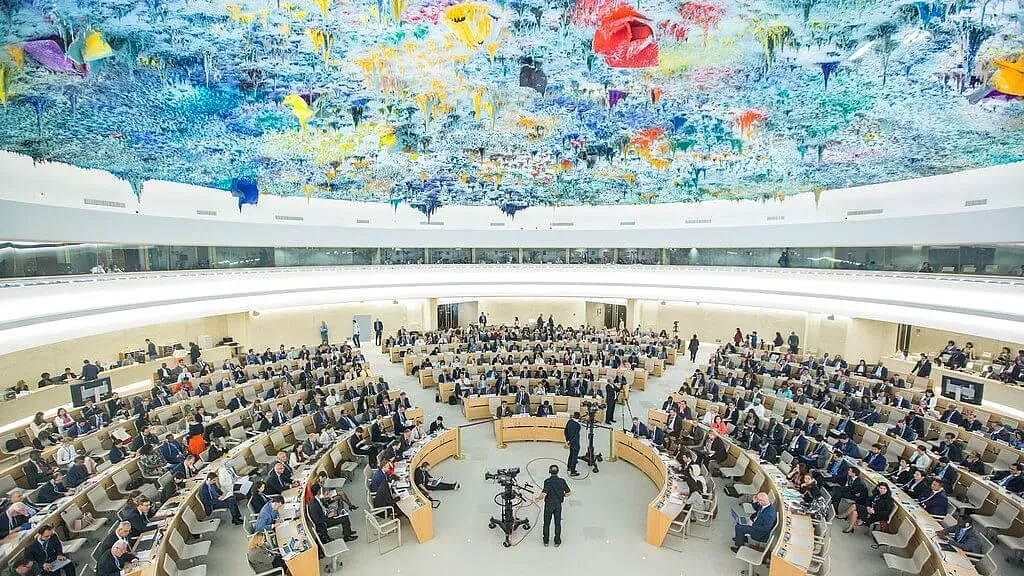
Photo Credit / UN
Respected Representatives of the Member States of the Human Rights Council:
At the Human Rights Council, Chinese representatives frequently invoke achievements in economic, social, and cultural rights as a pretext for outright refusal to comply with United Nations principles protecting civil and political rights. Member States of the Human Rights Council must clearly recognize that in China, the government has imprisoned numerous human rights defenders advocating for the protection of economic, social, and cultural rights, and has shut down civil society organizations promoting equal enjoyment of protection for these rights. During the 42nd session of the Human Rights Council, member states must take action to hold China accountable for its publicly committed human rights obligations, including those made prior to seeking election to the current Human Rights Council. Possible actions include making public statements, expressing concern, advocating for investigations, or issuing joint statements.
We draw your attention to human rights violations that have occurred in China over the past year alone. The Chinese government has detained numerous human rights defenders working to protect the environment, housing, land, labor, public health, and the rights of persons with disabilities, as well as staff of non-governmental organizations advocating for equal protection and anti-discrimination (see cases in the appendix). Some of these individuals have been subjected to enforced disappearance after being detained by the police. The authorities have cracked down heavily on citizen journalists and NGO staff for reporting and documenting violations of social, economic, and cultural rights. We strongly urge you to mention the cases of persecuted social, economic, and cultural rights defenders in your statements at the 42nd session of the Human Rights Council, to raise these cases with the delegation of the People's Republic of China, and to call for the immediate release of these human rights defenders in your statements or joint statements.
We understand that economic development makes an important contribution to the enjoyment of all human rights. However, human rights are indivisible, interdependent, and interrelated. The deprivation of any human right has a negative impact on the enjoyment of other human rights. The Chinese government violates the civil and political rights of these human rights defenders, including freedom of expression, peaceful assembly and association, freedom from arbitrary detention, torture, and enforced disappearance, and the right to a fair trial. These are rights guaranteed by the Universal Declaration of Human Rights. Depriving individuals of these human rights undermines the equal enjoyment of economic, social, and cultural rights protection for all people, including all Chinese citizens.
The "China Model" promoted by the Chinese government at the United Nations—achieving economic development at the expense of equal protection of universal human rights—has resulted in various other human rights violations in China. In today's China, millions of low-income families cannot afford skyrocketing healthcare and medical costs; millions of workers and migrant workers toil under hazardous conditions without labor insurance, occupational injury, and occupational disease compensation, and are denied the right to bargain for fair wages and benefits because the government bans free and independent trade unions; millions of urban and rural residents suffer the dire consequences of polluted air, water, and soil, while their grievances are censored on the internet and protests are suppressed by police; government policies and regulations continue to permit, or even encourage, discrimination against women, migrant workers, persons with disabilities, people living with HIV/AIDS and hepatitis, ethnic minorities, and sexual minorities.
We hope you will pay close attention to the Chinese government's mass arbitrary detention in the Xinjiang region, where many Uyghurs and other Turkic Muslim minorities are held in extrajudicial re-education camps, and where the government continues to systematically suppress religious freedom in Xinjiang and Tibet. We urge you not to remain silent in the face of the Chinese government's systemic violations of civil and political rights in Xinjiang and Tibet. Such human rights abuses pose a grave threat to the cultural, economic, and social rights of millions of minorities in these regions.
Evidence shows that the Chinese government's approach to governance and development has utterly failed to promote the equal protection of civil and political liberties as well as economic, social, and cultural human rights. The so-called "China Model" also poses a threat to the relatively broad freedoms enjoyed by the people of Hong Kong under "One Country, Two Systems," as this model opposes and disparages democratic political systems, the rule of law, and fundamental civil and political rights. Please show solidarity with the people of Hong Kong in their struggle for universal human rights, including freedom of expression and peaceful assembly, and publicly express your views on China's disregard for the principles of the "One Country, Two Systems" framework.
We believe that your speaking out on behalf of these human rights defenders and rights violations reflects your governments' firm commitment to upholding universal human rights. As a member of the Human Rights Council, China should uphold the highest standards of human rights, and other member states of the Human Rights Council must use this standard as a yardstick to measure the behavior of the Chinese government. The Chinese government's public commitments at the UN Human Rights Council starkly contrast with its domestic practices. Because the Chinese government systematically deprives citizens of civil and political rights, thereby failing to provide equal protection for the economic, social, and cultural rights of all Chinese citizens, all UN member states have a responsibility to take action.
Sincerely,
Co-signatories
Chinese Human Rights Defenders
Covenants Watch
Front Line Defenders
Hong Kong Christian Industrial Committee
Human Rights Network for Tibet and Taiwan
International Labor Rights Forum
International Service for Human Rights
Judicial Reform Foundation
Reporters Sans Frontières/Reporters Without Borders
Safeguard Defenders
Taiwan Association for Human Rights
Taiwan Alliance to End the Death Penalty
Taiwan Labour Front
Taiwan Support China Human Rights Lawyers Network
World Organisation Against Torture (OMCT)
Appendix
Selected Cases of Social, Economic, and Cultural Rights Defenders Detained by Chinese Police, 2018-2019
-
On July 22, anti-discrimination and health rights NGO workers Ch'en Yuan, Liu Ta-chih, and Wu Ko-chien-hsiung were secretly detained on charges of "subversion of state power," an offense carrying a potential sentence of life imprisonment. On August 26, the authorities formally arrested the three. Their organization, Changsha Funeng, has provided legal and rights protection for vulnerable groups (including individuals living with HIV/AIDS and Hepatitis B) through policy advocacy and legal empowerment since its establishment in 2016. China currently serves as the Chair of the UNAIDS Programme Coordinating Board.
-
In recent years, the substandard vaccine scandal has been one of China's most severe public health crises. Victims and their families have faced criminal prosecution for advocating for improved regulation and victim protection, even though their demands align with official propaganda. On July 26, Ho Fang-mei, the mother of an infant disabled by a defective vaccine, was prosecuted by Henan authorities for "picking quarrels and provoking trouble" after she established an advocacy group that organized victim families to campaign for vaccine safety and demand compensation. If convicted, she could face up to 10 years in imprisonment.
-
Although the Chinese government has promised in international forums that China is committed to addressing climate change, grassroots environmental rights defenders remained targets of government suppression over the past year. In August, a Jiangsu court sentenced rights defender Chi Shu-lung to four years in prison for writing articles about anti-corruption and pollution. Since May 2018, Hsieh Jen-yi, founder of the grassroots environmental organization "Green Leaf Action," has been detained. Police told him that "Green Leaf Action" was being controlled and utilized by "foreign forces," and claimed that his organization's campaigns on universal healthcare, social security, environmental protection, and food safety constituted "illegal activities."
-
In its crackdown on defenders of social, economic, and cultural rights, the Chinese government has also targeted housing rights defenders. Ch'en Chien-fang began standing up for land and housing rights after government-backed land developers seized her and her family's land. Furthermore, Ms. Ch'en, together with the late rights defender Ts'ao Shun-li, advocated for civil society participation in China's Universal Periodic Reviews in 2009 and 2013. Both suffered reprisals as a result; Ms. Ts'ao died in police custody after her health deteriorated due to medical neglect while detained. Since March 18, 2019, when Ms. Ch'en was taken away by police after publishing an article commemorating the fifth anniversary of Ts'ao Shun-li's death, she has been missing.[2] It was not until July that authorities informed her lawyer she had been formally arrested on charges of "inciting subversion of state power," but authorities still refuse to disclose her place of detention.
-
Since the authorities' crackdown on striking workers at the Jasic Technology factory in July 2018, the Chinese government has intensified its persecution of labor rights advocates, including factory workers, activists, researchers, NGO workers, and social workers. After dismissed workers attempted to form a union to demand back pay, four Jasic factory workers—Li Chan, Liu P'eng-hua, Mi Chiu-p'ing, and Yü Chün-ts'ung—along with local NGO worker Fu Ch'ang-kuo, were detained by police.[3] The Jasic strike protests attracted the attention of many current and recently graduated elite university students who traveled to Shenzhen to show solidarity with the Jasic workers and assist them in defending their rights, resulting in government suppression. Since January 2019, police have expanded their persecution of labor rights defenders, arresting five NGO workers, including the head of a prominent local labor organization, three social workers focusing on labor rights, and a labor activist working in a factory.[4]
-
Several citizen journalists have faced reprisals from the Chinese government for focusing on and reporting about government violations of socio-economic human rights. Between February and April 2019, three activists running the independent online media platform *iLabour*—K'o Ch'eng-ping, Wei Chih-li, and Yang Cheng-chün—were subjected to "residential surveillance at a designated location" (RSDL) by police, rendering their whereabouts unknown, and were arrested in August. The detention of these three individuals was likely retaliation by authorities for their reporting on the conditions and protests of pneumoconiosis workers in Hunan. In July of this year, a Sichuan court sentenced rights defender and citizen journalist Huang Ch'i to 12 years in prison, convicted of "leaking state secrets" for reporting human rights violations. In January of this year, Liu Fei-yüeh, director of the NGO *Civil Rights & Livelihood Watch*—which has reported on human rights violations such as being "forced into psychiatric facilities"—was sentenced to five years in prison. Despite the UN Working Group on Arbitrary Detention calling on Chinese authorities in April 2018 to release Huang Ch'i and Liu Fei-yüeh, they remain imprisoned.[5]
Notes
- http://www.xinhuanet.com/english/2019-06/29/c_138185186.htm
- https://www.ohchr.org/Documents/Issues/Reprisals/A_HRC_42_30.pdf
- https://spcommreports.ohchr.org/TMResultsBase/DownLoadPublicCommunicationFile?gId=24516
- https://www.nchrd.org/2019/07/china-must-release-detained-labor-rights-advocates/
- https://www.ohchr.org/Documents/Issues/Detention/Opinions/Session81/A_HRC_WGAD_2018_22.pdf
This article is an AI-generated translation of the original Chinese text. In the event of any discrepancy, the Chinese version shall prevail.