
Election Season is Here, Don't Forget Judicial Reform—The Alliance for Monitoring the Implementation of the National Dr. Szu-kai Conference Resolutions
Last edited: 2026-11-03
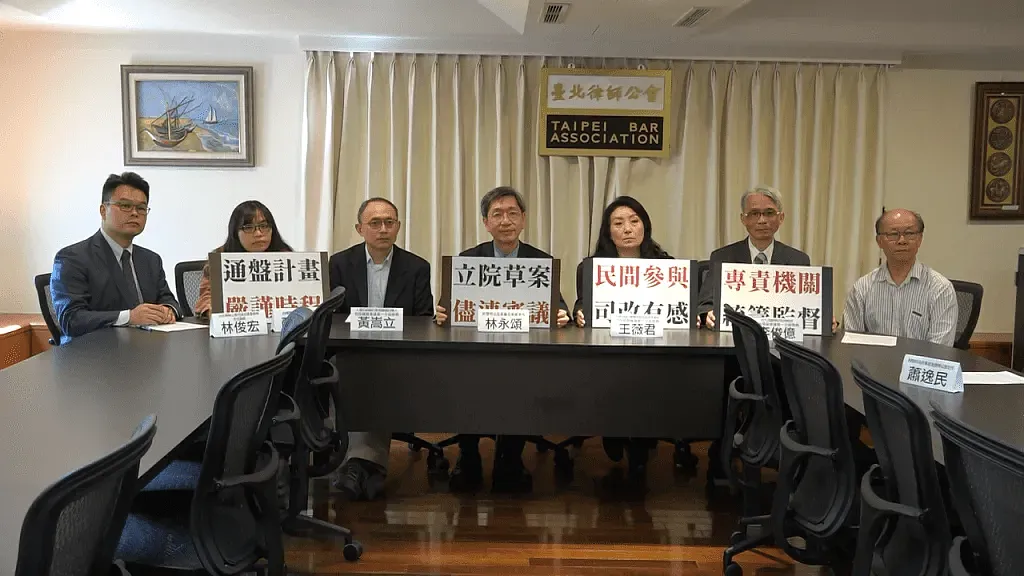
Today (Oct 5), the Alliance for Monitoring the Implementation of the National Szu-kai Conference Resolutions held the "Second Anniversary Symposium on the National Judicial Reform Conference" at the Taipei Bar Association. The event reviewed the implementation status of the national judicial reform resolutions over the past two years, analyzed why judicial reform has failed to enhance public trust, and discussed how to bridge the gap between the public and the judiciary. In addition to exchanging ideas and finding solutions through the symposium, the Alliance will also visit presidential candidates, urging them to propose judicial reform policy white papers and commit to the continuous advancement of judicial reform.
Following the conclusion of the National Judicial Reform Conference on August 12, 2017, civil society organizations established the Alliance for Monitoring the Implementation of the National Szu-kai Conference Resolutions on October 6, 2017, to oversee the government's fulfillment of the conference resolutions. Marking its second anniversary today, the Alliance held the symposium to thoroughly analyze the implementation progress over the past two years. Furthermore, the Alliance invited group conveners and members of the National Judicial Reform Conference, official representatives, and individuals from various sectors concerned with this issue to participate. At today's symposium, while affirming certain government policies, the Alliance noted that the overall pace of reform remains far too slow. As the 2020 presidential election approaches, the government must factor in the likelihood of drastic changes in personnel and policy directions, and swiftly adjust its policy focus and timeline to achieve the goals of judicial reform. At the same time, the Alliance hopes that regardless of who wins the next presidency, judicial reform will continue unabated.
Regarding the government's implementation of the National Judicial Reform Conference resolutions over the past two years, the Alliance makes the following recommendations:
-
The pace of judicial reform has fallen short of expectations, primarily due to the lack of a comprehensive plan and timeline.
Most resolutions from the National Judicial Reform Conference require joint deliberation by various ministries and cross-ministerial agencies, along with preliminary procedures such as discussions and research conducted by experts and scholars. However, these processes often take time—ranging from several months to half a year. Combined with subsequent proposal-making, legislative amendment steps, and various other factors, this easily results in resolutions lacking deadlines for implementation. Therefore, responsible agencies should establish complete and reasonable implementation plans, rigorous timeline planning, and execute them faithfully to ensure resolutions are fulfilled within deadlines. If the implementation of various resolution items remains slow or even stagnates, changes in government personnel over time can easily disrupt the continuity of policies. Reviewing the implementation of judicial reform resolutions over the past two years, we have seen only a massive number of resolutions progressing slowly or stalling entirely, with many remaining stuck at the stage of holding symposiums and conducting research without any subsequent follow-up. Consequently, the Alliance calls upon all ministries and agencies to formulate rigorous timetables for the resolution items under their charge and proceed according to schedule, thereby accelerating the pace of judicial reform and realizing its goals.
In response to the upcoming reelection of the Legislative Yuan this coming January, and under the rule of the lapse of bills at the end of a term, all judicial reform bills currently under review in the Legislative Yuan will have to restart from scratch. The Alliance urges that judicial reform bills already passed by various committees of the Legislative Yuan and awaiting second and third readings—including the Code of Criminal Procedure, the Attorney Regulation Act, the Prison Act, the Detention Act, and the Whistleblower Protection Act—be deliberated as soon as possible during the final legislative session.
-
Public trust in judicial reform has not increased, mainly due to insufficient public participation and the distance between the judiciary and the people.
When the National Judicial Reform Conference was convened in 2017, over half of its members came from civil society and non-legal backgrounds. However, during the implementation and execution of the conference resolutions, a shortage of civil society voices and enthusiasm emerged, ultimately making the public feel detached from judicial reform and failing to enhance public trust in the judiciary. Moreover, a gap still persists between the judiciary and the people. Difficult-to-understand and overly lengthy judicial judgments, when presented through one-sided media reports that highlight the negative image of the judiciary, further deepen public distrust. Therefore, the Alliance hopes that the government will incorporate diverse public voices when implementing resolutions, accelerate the pace while making the judiciary more accessible to the public, and strengthen the dissemination of accurate information and education to increase the visibility of judicial reform, deepen the public's understanding of its impact, and make its effects tangible to the people.
-
The public should pay more attention to the achievements that have been made in judicial reform.
Over the past two years, resolutions from the National Judicial Reform Conference have yielded certain results. The passage of the Labor Incident Act has lowered the threshold for labor litigation, substantially reducing or exempting the litigation fees workers are required to pay upon filing a lawsuit, and introducing provisions that shift the burden of proof onto employers. This provides greater safeguards for workers' rights and narrows the disparity in litigation strength between labor and management overall. The Judges Act has also had a major impact on the public by enabling the elimination of incompetent judges and prosecutors. Following the amendments to the Judges Act, individual parties to a case and crime victims can directly request a judicial evaluation of judges, rather than being restricted to doing so only through civil organizations as was the case prior to the amendments. Furthermore, the timeframe for submitting an evaluation request has been changed to after the conclusion of the litigation, eliminating the problem where citizens delayed filing evaluation requests out of fear of the judiciary, causing the requests to become statute-barred.
This demonstrates that many aspects of judicial reform are closely tied to the rights and interests of the people. Whether it is the Labor Incident Act aiding workers or the Judges Act impacting the public, these matters are vitally important to citizens. The Alliance calls on the public to pay closer attention, jointly oversee the government in implementing judicial reform resolutions, and accelerate the overall pace of judicial reform.
-
A permanent committee for monitoring the implementation of the National Judicial Reform Conference resolutions should be established to handle cross-ministerial and cross-Yuan resolutions.
The National Judicial Reform Conference reached a total of 87 resolutions covering every facet of judicial reform, exerting a positive influence on judicial personnel and the general public alike. However, two years have passed since these resolutions were adopted, and many important resolutions remain unimplemented. Aside from the reasons mentioned above, more importantly, numerous resolutions involve coordination across ministries and Yuans, yet there is a lack of a dedicated agency responsible for overall planning and coordination.
Taking evidence oversight and rules of evidence as an example, the judicial reform resolutions recommended that the Executive Yuan and the Judicial Yuan establish regulations. However, after holding meetings, the relevant agencies arbitrarily concluded that individual units already had relevant regulations to follow and deemed regulatory rules unnecessary, thereby closing the case on their own initiative. Another example is the environmental law domain's aim to construct a comprehensive regulatory system featuring consistent standards from administrative regulation to criminal prosecution; this case even suffered from an inability to determine the competent authority for the regulations, resulting in zero progress up to the present. This clearly shows that establishing a permanent committee under the Office of the President to supervise and implement the National Judicial Reform Conference resolutions is imperative to ensure that the competent authorities for various resolutions carry out overarching planning, coordination, and supervision, thereby preventing the implementation of resolutions from becoming a distant and indefinite prospect.
-
The Alliance will visit presidential candidates to urge the presentation of judicial reform policy white papers.
In a democratic country governed by the rule of law, the judiciary is the last line of defense protecting the rights of the people. In Taiwan, where public trust in the judiciary remains depressed, judicial reform is all the more urgent. The Alliance chose to hold the symposium on the second anniversary of the National Judicial Reform Conference not only to comprehensively review the phased outcomes of judicial reform, but also out of concern that judicial reform issues might be sidelined or marginalized during the upcoming presidential and parliamentary elections. Therefore, the Alliance urges that judicial reform must proceed continuously both before and after the election. The Alliance will also visit presidential candidates to call upon them to include concrete judicial reform directions in their proposed policy white papers and carry forward judicial reform.
Attending Representatives
Lin Chun-hung / Chairperson, Judicial Reform Committee, Taipei Bar Association
Wang Wei-chün / Member, National Judicial Reform Conference
Yen Szu-yü / Director, Northern Office, Taiwan Association for Human Rights
Li Chun-i / Member, National Judicial Reform Conference
Huang Sung-li / Member, National Judicial Reform Conference
Lin Yung-sung / Chairperson, Judicial Reform Foundation
Juan Wen-hsiung / Member, National Judicial Reform Conference
Press Contacts
Judicial Reform Foundation / Director Hsiao Yi-min
This article is an AI-generated translation of the original Chinese text. In the event of any discrepancy, the Chinese version shall prevail.