
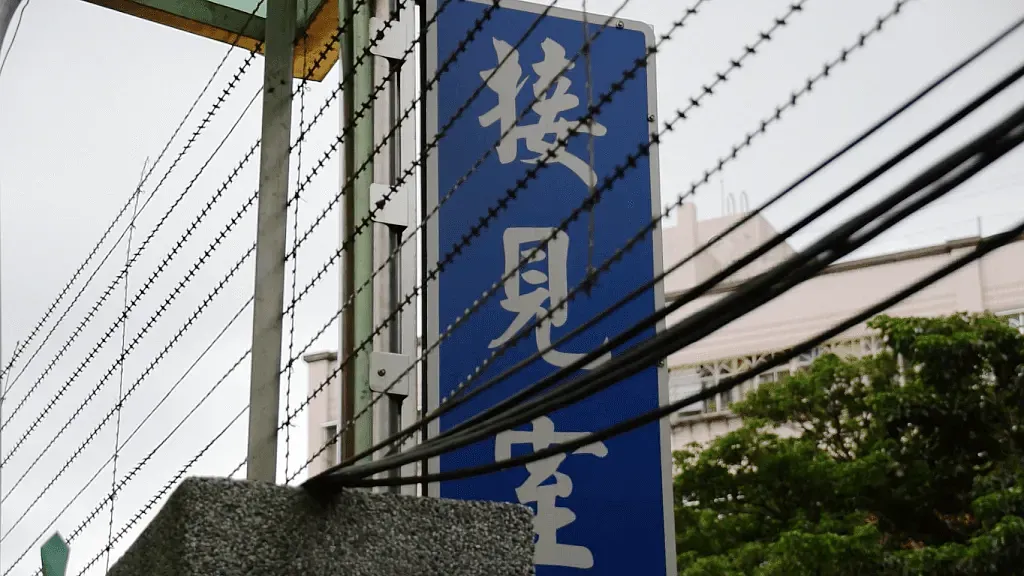
Even in Prison, One Can Vote for President—Polling Stations Can Be Established in Correctional Facilities
Last edited: 2026-07-27
With the general election approaching, the air is buzzing with various electoral issues; some voters participate with enthusiasm, while others feel it has nothing to do with them. What remains constant, however, is that every citizen has—and only has—a single ballot. This ballot is what all candidates hold dear; whoever attracts the most favor from voters becomes the ultimate winner. This is the rule and atmosphere of democratic politics, and it is also the core spirit of the right to political participation guaranteed by the Constitution.
Yet, there is a group of people who are citizens, but are not allowed to vote. This group is identified by numbers at their places of residence; society calls them bad people, and the law calls them inmates. This includes convicts, detained defendants, those undergoing compulsory rehabilitation, and all other citizens whose freedom of movement has been deprived in accordance with the law.
Convicts Also Have the Right to Political Participation as Citizens
First, it must be clarified that inmates in correctional facilities—unless they are convicts sentenced to the deprivation of civil rights—are not affected in their right to political participation as citizens. As for convicts deprived of civil rights, according to the provisions of the Criminal Code, the deprived political rights are "the qualification to be a public official" and "the qualification to be a candidate for public office." Following the legal amendments in 2006, this no longer includes "the qualifications to exercise the four rights of election, recall, initiative, and referendum." In other words, no law restricts any convict's qualification to exercise the right to vote, not to mention those detained defendants who have not yet been convicted. This is precisely why former President Ch'en was seen voting during the 9-in-1 local elections at the end of 2018. So, since the law does not restrict it, why can inmates in correctional facilities not vote?
Regarding this issue, the Central Election Commission once issued an official letter in 1980 stating: "As offenders in correctional facilities are detained in detention centers due to criminal cases, their freedom of movement has already been restricted, and it is a matter of course that they may not exercise the right to vote." This statement inherited the view of the Ministry of Justice Administration from 1954, and it sounds so natural. It means that it is not the government preventing offenders from voting, but rather that because their movement is restricted, they naturally cannot exercise the right to vote. However, we cannot help but ask: if we follow this same line of reasoning, does the deprivation of freedom of movement also naturally result in the inability to assert the right to health because one cannot go outside for medical treatment? Then why is it that correctional facilities can maintain inmates' right to health under the premise of restricting freedom of movement by setting up hospitals, providing escort for medical treatment, or granting medical bail, while the right to vote—as one of citizens' political participation rights—becomes a result that must naturally not be exercised? Such an administrative act of "naturally not allowed" has overridden the Constitution and surpassed the right to political participation conferred by the Constitution.
How to Safeguard Inmates' Right to Vote?
Looking at foreign legislation, many Nordic countries recognize the right to vote for convicts, some European countries set conditional restrictions, and the State of California in the United States has officially allowed certain offenders to vote in prison elections. Some commentators may think that inmates in our country's correctional facilities are easily manipulated by the government and easily controlled by mobilization, making it inappropriate to open up voting. However, under the method of secret voting, how one can "indoctrinate" inmates to shake their choices is already doubtful; furthermore, the maintenance of administrative neutrality is the legal responsibility of agencies, making it truly difficult to serve as a legitimate reason to block the exercise of rights. Moreover, considering the cost of election administration personnel, excluding some offshore islands and minimum-security prisons with fewer than a thousand people, even the Green Island Prison—which has the smallest inmate population—has over a hundred inmates. Compared to the polling station with the fewest electors in the 2018 general election, which had only 55 electors, it still exceeds that number. If this could enable correctional officers to exercise public authority while on duty, it would further enhance the safeguarding of rights.
Another regulatory issue is that the "Act Governing the Election and Recall of Public Officials" and the "Presidential and Vice Presidential Election and Recall Act" stipulate restrictions on "voting at registered domicile." According to these provisions, voting must take place at the polling station in the voter's registered domicile. Under the current "Directions for Household Registration Management of Inmates in Correctional Facilities," following the amendments in 2014, inmates are no longer forced to transfer their household registration to correctional facilities. In other words, in principle, inmates' household registrations remain in their own homes, and their registrations are set in correctional facilities only in special circumstances such as having no address to move out to. Therefore, due to the regulation of "voting at registered domicile," we can understand that if approximately 60,000 inmates were to be escorted outside to vote on the same polling day, there would indeed be practically insurmountable difficulties. However, for inmates whose household registration is set in correctional facilities, under current laws and regulations, if polling stations are separately established in agencies (institutions), schools, public places, or other appropriate venues in accordance with the provisions of the Election and Recall Acts, then setting up polling stations within correctional facilities can be considered an appropriate venue and does not violate the law. If administrative agencies fail to act as required by law, resulting in the deprivation of inmates' legitimate right to vote, there is clearly a situation of unlawful omission by failing to act. As for whether the legal provision of "voting at registered domicile" inappropriately restricts the exercise of inmates' right to vote and carries the risk of unconstitutionality, that is a separate issue.
There are currently advocacy efforts promoting "absentee voting" for national elections. If the legal amendments can be successfully completed, the voting methods for the aforementioned inmates not registered in correctional facilities can be resolved. Before that, however, administrative obstacles to establishing polling stations in correctional facilities must be resolved first. Otherwise, even if the restriction on voting at registered domicile is removed, inmates' right to vote will still have no way to be implemented.
I Do Not Condone Your Actions, But I Will Defend Your Right to Vote
Although our country does not adopt a compulsory voting system, education emphasizes that voting is both a right and a duty of being a citizen. In a democratic society, forming civic consciousness through the electoral system is an important manifestation of fulfilling civil society responsibilities. In addition, Article 1 of the "Prison Act" explicitly states that the execution of imprisonment and detention aims to make convicts repent and reform, making them suitable for social life. If inmates can be enabled to fulfill their civic responsibilities, does this not precisely align with the purpose of sentence execution to make them suitable for social life? Viewed from this perspective, if inmates are willing to exercise their right to vote, correctional facilities and election administration agencies—based on administrative responsibility and the purpose of regulations—should be eager to promote it rather than passively hindering its exercise.
There is a famous saying regarding freedom of speech: "I do not agree with what you have to say, but I will defend to the death your right to say it." Regarding the right to vote, we might say: "I do not condone your actions, but I will defend your right to vote." When we safeguard the rights of others, we lay another brick in the wall of human rights, and this is precisely the reason we can live securely.
※ This article was published in Up Media on November 28, 2019.
This article is an AI-generated translation of the original Chinese text. In the event of any discrepancy, the Chinese version shall prevail.