
JRF Newsletter
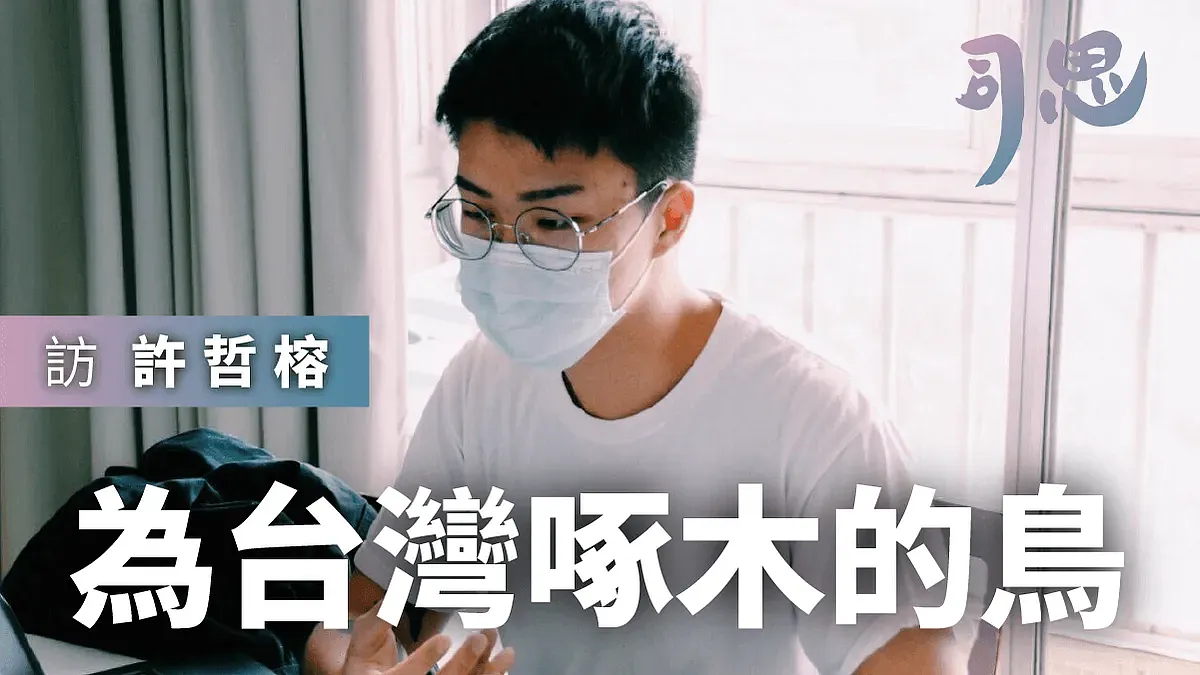
A Woodpecker Pecking for Taiwan: An Interview with Hsu Che-jung, a Defendant in the March 23 Executive Yuan Occupation Case
Last edited: 2026-07-27
Editor's Note: During the summer of 2019, the office welcomed a few Hong Kong volunteers. Studying in Taiwan and watching live streams from afar as they witnessed the tragic situation in Hong Kong, they hoped to do whatever they could to help. One of the authors, Ao-ching, a Hongkonger and law student at National Chengchi University, proactively came to the JRF at that time, assisting the JRF with various issues related to state violence through advocacy activities, protests, and courtroom observations. Another author, I-chen, is Taiwanese and a law student at National Taiwan University. She also came to the JRF that summer, carving out time to volunteer at the JRF during a summer when many law students chose to enter cram schools, assisting with the preliminary reviews of miscarriage of justice cases and evaluation complaints. We got to know them that summer.
On March 31, 2020, at the oral argument hearing for the National Chengchi University Chiang Kai-shek Statue Case, we saw one of the defendants in the March 23 Executive Yuan Occupation Case whom the JRF was assisting.
He was very impressive. His final statement at the oral argument hearing for the March 23 case concluded as follows: "As a pursuer of the Taiwan independence movement, I will not be absent from any action against an unjust regime. It was so in the past, and it will be so in the future. No matter what tomorrow holds for this island, my partners and I will continue and steadfastly pursue a truly new and independent country through one action after another, until the end of our days." After he finished speaking, someone—whether another defendant or a member of the audience, I forget—applauded, but was stopped by the judge. His statement in the statue case (Note 1) was even more profound, and one could feel that behind it was his hard-condensed life philosophy.
Matters inside the courtroom are rarely paid attention to. Once outside the court, if nothing is done, those statements will remain merely trial records. Armed with a tentative mindset, we asked the volunteers if they were interested in doing a simple profile interview so that these processes could be seen by more people. Ao-ching and I-chen raised their hands immediately.
At that time, we did not yet know the judgment result of the March 23 Executive Yuan Occupation Case on April 28. As people forget the history of that bloody clearance operation on that night, this 25-year-old became one of the 8 defendants convicted of obstructing officers.
Before walking into the interview meeting room, we felt nervous for a long time. In our hearts, we wondered to a certain extent whether the person walking in would be like Ch'en Chih-hao, like Wei Yang, like Joshua Wong (Huang Chih-feng), or like those social movement leaders we see on social media. His simple outfit that day—a white top and blue jeans—was no different from any ordinary boy; standing about 175 centimeters tall with a medium build, if you or I were to see this person on the street, we would never be able to tell that he was the National Taiwan University student who sawed off the horse's foot of the Chiang Kai-shek statue at National Chengchi University, or that he was one of the defendants who participated in the storming of the Executive Yuan on March 23.
Being a Woodpecker That Knocks Out Change
 Photo / Formosan black bear holding a T91
We noticed three clear, totem-like large tattoos on his arms. When asked about them, he generously explained that one of them is a Formosan black bear holding a T91 (a domestically produced combat rifle), another is a griffin from West Asian mythology used as an air force emblem by some countries, and the third is Bellona, the Roman goddess of war. Behind these three tattoos lies the underlying meaning of protecting Taiwan and defending his homeland. This Taiwanese youth's love for Taiwan is undoubtedly evident.
Yet when Hsu Che-jung was asked how he views his own role in these social movements, he did not feel he was a bear or a war god. His metaphor was very modest: he likened himself to a woodpecker on the eve of the demolition of the Berlin Wall, using a chisel or hammer to peck out small holes. These small participations are undeniably done in the hope of bringing about any tiny change, letting the public understand that many people still care about these matters and that we can act differently from the past.
Radicalness is an Indispensable Choice
Hsu Che-jung was particularly influenced by his father in participating in social movements. In his youth, his father was also a participant in the Tangwai movement, and often spoke to him about "the Taiwan of those years" during his childhood, thereby fostering a sort of "Taiwan-centric upbringing perspective" in him from an early age. Consequently, Hsu has been more sensitive to social issues than his average classmates since high school.
When asked about his starting point in engaging with social movements, he said, "I think protests are boring." Hsu Che-jung uttered this most authentic thought in his heart with a mix of caution and shyness. We have also attended many protests, and hearing this statement naturally brought a bit of impact to our hearts, prompting us to immediately ask him whether he does not believe that people gathering to chant slogans can have any substantive reform effect. He said no, and that he does not deny the efficacy of soft forms of expression, further believing that the "soft" and the "firm" should coexist.
In fact, the first social movement he participated in was also the anti-media monopoly mass protest in 2012. He does not deny the efficacy of soft forms of expression; it is simply different from his preferred way of expressing demands. Some people choose to awaken everyone through drama, music, and other methods, while others choose to cultivate children's historical perspectives and even increase communication with children through picture books. It is just that he believes that at certain times, radical methods are still required to awaken those whom soft methods can never wake up.
We asked him, wouldn't such relatively radical social movements further deepen the chasm of confrontation between people? However, Hsu Che-jung believes that when different historical perspectives are brought out for discussion, social harmony may be disrupted to a certain extent. To Hsu Che-jung, social confrontation represents the existence of different voices, and viewed from this perspective, confrontation is not necessarily a negative thing.
Facing Society, Facing Oneself
Radical in action yet gentle in attitude, this contrast piqued our interest. He does not seek to become a social movement star; he only wants to be a woodpecker.
As Hsu Che-jung is about to graduate from National Taiwan University's Graduate Institute of Building and Planning with a master's degree, his thoughts on the future also barely conceal a hint of anxiety. Coming north to study and participating in various social movements since his student days, what he cared about most during each social movement might not have been being chased, beaten, or humiliated by the police—transitioning from the early days of social movement participation when he promised his parents not to get arrested, to later times when getting arrested was no longer something to be avoided at all costs—yet as he is about to enter the workforce, he gradually finds that his "footprints" of participating in social movements seem to gradually raise the social costs in his interpersonal relationships and employment.
We asked him, although he himself does not seek the spotlight, does he worry that grassroots social movement workers or political workers will not be seen, will be forgotten by history, or will even leave with movement injuries? Hsu Che-jung calmly said, "I go along for the walk, I go help hold the banner, some people hold the microphone—this is inherently a division of labor." For Hsu Che-jung, mental and physical preparation and realization prior to participating in social movements are necessary; only by first possessing a sound body and mind can one find spiritual balance amidst the conflict between giving and reward.
Taiwan independence, transitional justice—these heavy and difficult grand terms are like intricately intertwined tree trunks. Hsu Che-jung's light yet firm demeanor makes us feel as though we are seeing a crack, through which light shines.
[Note 1] National Chengchi University Chiang Kai-shek Statue Case
-
Final Statement by Defendant Hsu Che-jung at the Oral Argument Hearing
-
Author's brief reflection: Students on campus and even the school administration basically discussed the retention or removal of the statue in binary terms. Not only was it difficult to reach a consensus between students and the administration, but there was also no consensus among students themselves regarding the choice of retention or removal. Through our interaction with Hsu Che-jung that day, we came to realize that, in fact, there is fundamentally no conflict between the "NCCU Honorary President" and "transitional justice." If we were to change the image and attire of the existing Chiang Kai-shek statue, removing the authoritarian symbols and imagery, could we strike a balance between "preservation" and "removal"?
This article is an AI-generated translation of the original Chinese text. In the event of any discrepancy, the Chinese version shall prevail.