
JRF Newsletter
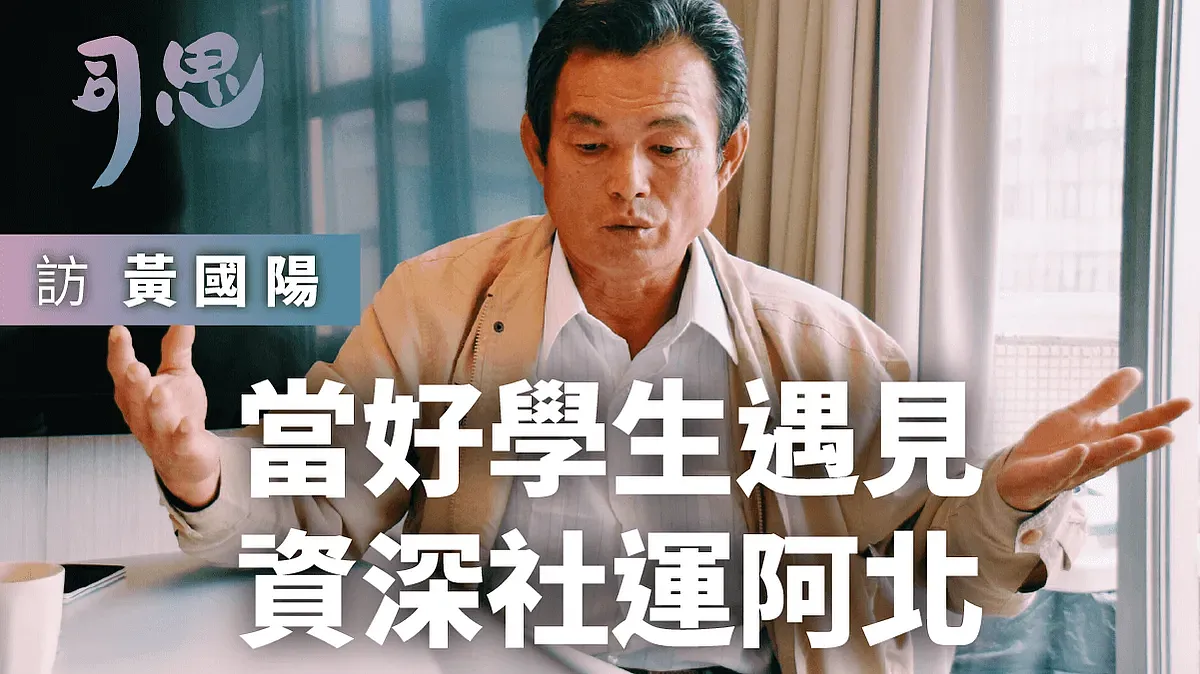
When a Model Student Meets a Veteran Social Movement Uncle: An Interview with Huang Kuo-yang, a Defendant in the March 23 Executive Yuan Occupation Case
Last edited: 2026-07-27
"In the twenty-odd years I have participated in democratic movements, I have never committed a crime. I truly hope that the law can progress, that reform can progress, and that the operation of the country can peacefully make correct judgments regarding all normal democratic movements. Because in every country in the world—whether it is communist, led by the Democratic Progressive Party, or a democratic nation—there are bound to be national movements; this is something that cannot be denied."
Anyone who, like me, attended the oral argument hearing for the March 23 Executive Yuan occupation case is probably left with an impression of this statement by Huang Kuo-yang. There was not much debate over the factual details of the case; six and a half years have passed since the March 23 incident, yet these are still the only words he wishes to say.
"Twenty Years"
On April 28, 2020, the verdict for the March 23 Executive Yuan occupation case was handed down. Huang Kuo-yang's appeal regarding the offense of obstructing a public officer was dismissed, finalizing his part in the case. Over a month later, to discuss subsequent actions and how to pay the fine commutated to community service or detention with the other co-defendants, they scheduled a gathering for a certain day. Much like his participation in social movements over the past twenty-odd years, and much like the night of March 23, 2014, he specially took a long-distance bus from Chiayi up to Taipei.
The defendants borrowed the large conference room at the JRF, and Huang Kuo-yang and I thus brushed past each other in the pantry. That morning, we invited Lin Pei-chuan, a freshman law student who had proactively filled out the volunteer form expressing a willingness to help, to conduct a brief interview with Huang Kuo-yang, chatting about who he is and his reflections on engaging in democratic movements along the way.
Watching Lin Pei-chuan, who was not yet 20 years old, sitting in the small conference room with Huang Kuo-yang, who is 34 years her senior, reminded me of Huang Kuo-yang's statement in court. Twenty-odd years is truly not a short period of time. While this young girl was still in swaddling clothes, this "uncle" was already out on the streets.
"Model Student"
I asked Pei-chuan how she views these activists. She said that she spent six years in middle and high school at Sacred Heart Girls' High School, a private Catholic school notorious for its strict rules. However, when she was in middle school, the Sunflower Student Movement broke out, and a 25-year-old young biology teacher asked them, "Do you think the people occupying the Legislative Yuan are rioters?" guiding them through logical reasoning to ponder the meaning of democracy—an experience that left a deep impression on her. In high school, she further participated in a reading group, reading Imagined Communities and 1984 together with her classmates.
In response to my question, her answer was that looking at activists like Huang Kuo-yang filled her with "gratitude."
I seemed to be able to empathize with the mindset of such a model student. Naturally growing up in an atmosphere of freedom, we tend to first encounter relatively "radical" theories in books and academia before gradually coming to understand the world. Thought precedes practice, which often instills in us a sense of appreciation for genuine practitioners. In particular, the free social environment we inhabit is precisely the shade left behind by them.
"Good Citizen"
To be honest, Pei-chuan meticulously prepared an interview outline, hoping to learn a bit more about Huang Kuo-yang's life. Yet, very little came out of the interview.
Huang spoke very little about himself: he graduated from a vocational high school, did various manual labor jobs, lives in Chiayi, and even today still cares about how his elderly father views his participation in social movements while refusing to give up on communication—virtually all we know is just that. Yet when the conversation turned to his dissatisfaction with and expectations for the judiciary, or his reforms and ideals regarding social injustice, he spoke endlessly.
What surprised Pei-chuan the most was that she had assumed a "veteran frontliner" like Huang Kuo-yang, who had traversed the path of social movements for many years, would not care about the image of a "good citizen" as much as model students like us do. Yet in reality, throughout the interview, Huang repeatedly emphasized to Pei-chuan, "I am also a good citizen in society! I had never left a criminal record at a police station before, really!" Huang said that he had always restrained himself, trying his best to express his demands in a peaceful and non-violent manner. On the night of March 23, the situation was simply too critical, and he could not bear to see anyone get hurt, which was why he ended up pushing and shoving with the police. Overall, he still believes that diverse means are all pursued in the name of freedom and democracy, and can all make Taiwan a better place.
"Raise Your Hand If You Think These People Are Rioters"
To this day, Jiang Yi-hua, the Premier at the time, still claimed in court that because of the rioting by the public that night, he made "a decision to reassure the public," and he has never regretted it. Naturally, we were astonished that amidst so many media reports of police violence that night, he could sleep soundly; and naturally, we were astonished that even seeing footage of police violence in court failed to shake him, allowing him to utter the words "he has never regretted it" during his final statement. Sitting in the seat directly behind Jiang Yi-hua, I actually felt a deep sense of perplexity: how could the exact same story present such a massive discrepancy in the eyes of different people?
Who is the violent party, and who is the righteous party? And how will future generations comprehend the painful history we have experienced?
Of course we admire model students, good citizens, and upstanding nationals, but from Huang Kuo-yang's youth to our youth—twenty years—the definition of "good" has imperceptibly been stretched to encompass different meanings. Faced with the enormous cognitive chasm of history, looking at the uncle and then at the girl, I still felt a sense of hope.
This article is an AI-generated translation of the original Chinese text. In the event of any discrepancy, the Chinese version shall prevail.