
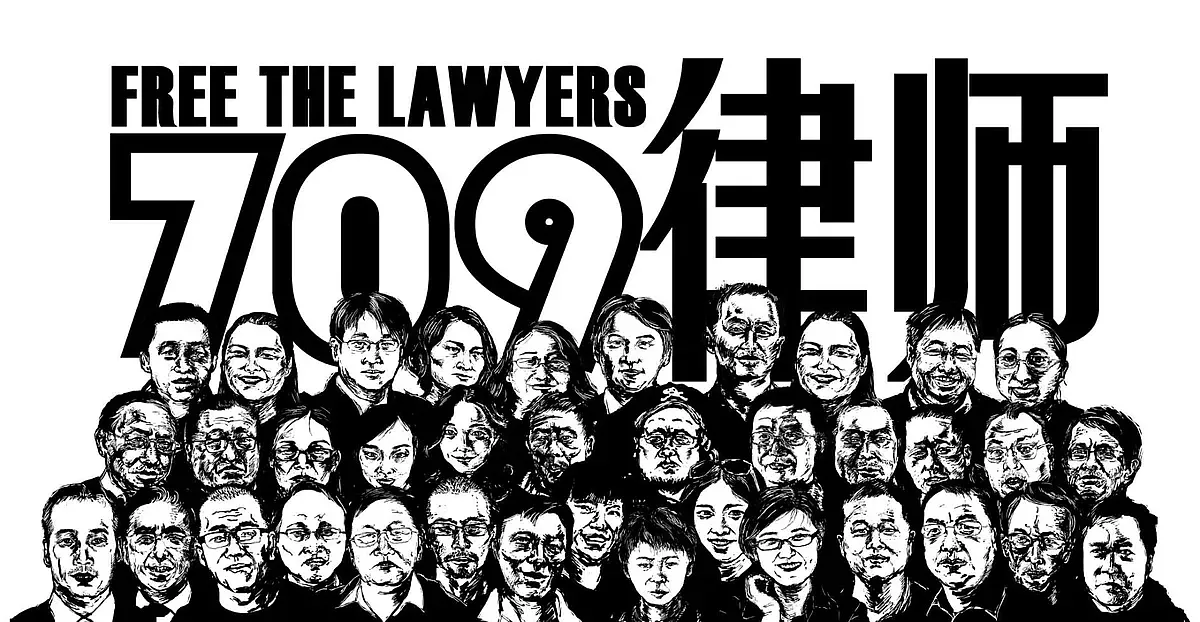
Wide-Angle Perspective: 709
Last edited: 2026-07-27
709 as Part of the "Social Purification Campaign"
On July 31, 2012, the overseas edition of the People's Daily published an article titled "Where Do China's True Challenges Come From?", pointing out that human rights lawyers, underground religions, dissidents, internet leaders, and vulnerable groups had become representatives of anti-China forces in the United States attempting to subvert China, and recommended that authorities take strict preventive and crackdown measures against these five categories of people. Some described them as the new "Black Categories." Among them, human rights lawyers ranked first. Considering that the People's Daily is the official organ of the Chinese Communist Party and its primary mouthpiece, one can glimpse how deeply the authorities resent human rights lawyers. It seems that human rights lawyers have become a core threat affecting the rule of the CCP.
Therefore, from the very moment the new "Black Categories" were introduced, the suppression of human rights lawyers possessed a certain fateful inevitability. Of course, before the suppression turned into reality, there were bound to be multiple variables regarding its timing, intensity, and methods. When the concept of the new black categories was first proposed, officials might have merely expressed a posture of intimidation; even if a crackdown occurred, it should have been a warning-style crackdown within an overall defensive posture. However, by classifying petitioners among the black categories, they had already abandoned the foundational bedrock of justice.
Despite institutional inertia—meaning that regardless of who changes at the top, the leadership will maintain a suppressive stance toward civil society, and it is unfair to over-exaggerate any single leader—it is an undeniable fact that based on his identity as a "red-fringe princeling" (despite his father having been persecuted by Mao), Hsi Chin-p'ing (Xi Jinping) naturally feels an affinity for totalitarianism and a reverence-style worship of Mao. Although his fate was also tragic in the early days of the Cultural Revolution, he subsequently possessed mediocre qualifications and no obvious political achievements, yet sailed smoothly to the highest position of power. Looking back at the path he took must make him filled with emotion, feeling both love and hate, though love and hate are not equal; he still feels grateful to this system.
From the perspectives of sentiment and interests, he wants to rescue the situation from collapse and defend the red political power, to the extent that he felt grief over the dissolution of the Soviet Union (even though the Soviet Union's dissolution minimized China's strategic pressure), lamenting that back then not a single man among them stood up. This was a contemptuous evaluation of Gorbachev, Yeltsin, and their cohort. Such class-based emotions that transcend nation-states are difficult for those holding constitutional democratic or nationalist stances to understand, but they are the inner voice of Hsi.
If one further considers his educational shortcomings, human rights and constitutional democracy can be judged as missing from his intellectual background. He may have read many books, but they do not escape the scope of vernacular storytelling; perhaps he has insights into human relationships, human nature, and people's hearts, but he lacks modern political common sense and does not understand the basic political ethics of modern society. Therefore, his defense of the totalitarian system carries no ideological cognitive dissonance. Politicians are realists, and ideology is generally not the decisive factor in their behavior, but ideology still subconsciously influences individual decision-making. Hsi's ability to climb to the very top of power and centralize power so rapidly certainly has its unique aspects. Of course, his centralization of power relied more on the "potential energy" inherent in supreme power itself. From the day he ascended to the top post of the party and military, he could fully leverage the power of the "organization" to purge dissidents. In addition, his personal character includes a penchant for taking risks. Compared to his mediocre peers—who came from middle-and-lower bureaucratic backgrounds and climbed the official ladder through extreme caution, seeking no merits but avoiding mistakes—his somewhat reckless and obtuse power-struggle methods would instead yield miraculous results. If the rumors of his "disappearance" before the 18th National Congress are true, they also corroborate this point. This is the effect of not playing by the book.
Hsi's unconventional approach in high-level power struggles has repeatedly succeeded, but concluding that Hsi is merely a reckless brute would be biased, leading to misjudgments about the trajectory of the political situation and preventing the grassroots from properly responding and choosing pathways for rights defense. Hsi has consistently tried to prove to the world that he is a person who fears nothing in order to achieve his goals. However, looking at the articles by his childhood friend Nieh Wei-p'ing (Nie Weiping), his posture of fawning over the US president while suffering taunts during his visit to the United States, and a series of diplomatic moves after the South China Sea arbitration case, all falsify this claim. Essentially, he still operates politics as a realist. Comparing the 709 crackdown and the "New Citizens' Movement" cases also reveals clues. Both 709 and the New Citizens' Movement cases were definitely derived from Hsi's will. However, during the New Citizens' Movement, he had just ascended to supreme power, clearly lacking confidence in his control over power and having no idea about the strength of civil society's counter-measures. Therefore, he was relatively cautious, using the non-political charge of "gathering a crowd to disrupt public order" to carry out suppression, also allowing the parties involved to freely hire lawyers, and lawyers were able to meet with clients. Dr. Hsü Chih-yung (Xu Zhiyong), the ringleader, was only sentenced to 4 years (though sentencing an originally innocent person even for a single day is a crime). But compared to 709, and compared to the subsequent cases of other rights defenders, its operational mode and sentencing results prove that he was still in an exploratory stage.
From the fact that Hsi began sorting out the "new black categories" as soon as he ascended to supreme power, one can see how urgent his desire was to return to the orthodoxy of totalitarianism. Of course, the orthodox totalitarianism favored by Hsi should be a controllable, orderly, highly centralized, and flexible social state, where the entire society revolves around power, and all social resources can be controlled by power. Since power is strictly hierarchical, this is equivalent to the entire society revolving around Hsi, with all social resources controllable by Hsi. Comparing this with the social stages experienced after the founding of the CCP in 1949, the state Hsi desires should roughly resemble the state during the Anti-Rightist Campaign in 1957. At that time, the entire intellectual class with centrifugal tendencies was brutally suppressed, but society did not fall into chaos; generations of intellectual elites suffered disasters without causing a true shock to the overall operation of society. Totalitarian propaganda and organizational capabilities faced no real challenges.
The social "purification" movement of the Anti-Rightist Campaign was so deep and broad, yet it was almost entirely resolved within the scope controllable by the Party's organization, rather than relying on mass movements like the Cultural Revolution to achieve its goals. During the Anti-Rightist Campaign, although demonizing propaganda never stopped, its purpose was merely a deterrent—an explanation of the situation after the disposal of the rightists. It was quite habitual, with no intention of mobilizing the masses to participate. Even if the masses participated, it was merely supplementary behavior like informing and reporting, which had no impact on the Party's control over the political movement. Under this premise, the Party naturally welcomed the prevalence of informing and reporting, because this would poison interpersonal trust and form an atomized social state.
The foundation upon which totalitarianism relies for its existence is terror and lies, and the maintenance of a state of terror requires the continuous "purification" of society. In essence, a post-totalitarian society that talks about "harmony" rather than "struggle" is a free-radical-like "metastable state"—even with rapid economic growth as the basis of ruling legitimacy, because the weakening of fear poses a fatal threat to totalitarianism, it must either transition to a democratic constitutional system or return to totalitarian orthodoxy.
There is no need to debate the direction Hsi has chosen. Thus, social "purification" becomes necessary. Purifying others and oneself are both indispensable. Purifying others is to ensure that ideology is not challenged; purifying oneself has a more complex purpose, serving both as a means of power struggle and part of a project for winning popular support. It also precisely meets the requirement of shaping a more serious, simple, robust, and progressive social appearance demanded by totalitarian orthodoxy (most non-humanitarian societies operate this way to conceal the scarcity of material wealth and the monotony, dullness, and desolation of the spirit).
This purification of dissidents and accomplices within the system can be seen as a sacrifice to the gluttonous monster of totalitarianism. This is the internal requirement for totalitarian stability. What Hsi strives for is merely hoping that this "social purification" becomes an orderly, controllable movement within the existing legal framework, one that does not require breaking bones, and one that does not rely on mass movements but only on organizational resources to be perfectly launched and never concluded.
Hsi's "controllable social purification" is first manifested in the comprehensive crackdown on the black categories: internet Big Vs, the "New Citizens' Movement," dissident intellectuals mainly from universities, religious believers mainly centered around house churches and Falun Gong practitioners, active citizens, petitioners, NGOs with heterogeneous tendencies, and human rights lawyers—none were spared.
In addition to arresting people, this is supplemented by the frequent issuance of evil laws that restrict citizens' constitutional rights. This is an effort by Hsi to incorporate the "social purification" movement into a legal framework. He truly possesses a historical sense of mission to defend the political power so that it never changes its color.
This is a tragedy for the Chinese nation, and of course, Hsi is also situated within it. But as I pointed out in this article, Hsi essentially still operates politics as a realist; he is by no means a reckless brute, which leaves a glimmer of hope for redemption amidst Hsi's own tragedy. The mountains and rivers of the old country remain, but the First Emperor of Ch'in is gone; someone who is blind to the grand trend, no matter how great their power, will ultimately only be a passerby who creates tragedies for the nation and themselves, leaving behind perhaps nothing but criticism for history.
The movement of the Tao is to return; the tide of an era of rights cannot be stopped by anyone.
In this "social purification" movement, human rights lawyers are not the only victims, but they are the group that has suffered the most severe suppression, or rather, the case for which official suppression was most thoroughly prepared, mobilized the most social forces, and was treated most seriously.
Judging by the number of people arrested, it is likely the highest since the June Fourth Incident in 1989; judging by the number of people summoned, it is comparable to the Jasmine Revolution in 2011. Especially regarding the trampling of due process in existing laws, it is the most concentrated. In this process of persecution, the arrogance and franticness of power coexist with a sense of defeat. Families, defense lawyers, and peers facing the same fate broke through fear amidst fear, persisted under pressure, resisted in compromise, and maneuvered in the cracks. This caused the case to rapidly transcend national borders and become a major, world-attracting human rights persecution case, as reflected by the naming of "709."
However, an undeniable fact is that the officials also achieved their goals to a considerable degree—though this came at the cost of the corruption of their moral image. Human rights defenders (human rights lawyers, citizens) generally remain in fear, and active citizens have almost all been spared no exception, arrested in twos and threes intermittently. The rights defense movement as a whole has fallen into a low ebb.
This is an overall amputation-style crackdown on the rights defense movement using a sharp iron fist. From any perspective, it is sufficient to go down in history.
The 709 case holds multi-faceted significance. Studying this case as a whole will give us a new understanding of the CCP's current operational model for human rights persecution, while sorting through the defense side's counter-attack and game-playing methods will help the grassroots handle similar cases in the future. These two parts will unfold around several issues.
"709" as a Paradigm of Suppression
Issue 1 What did human rights lawyers do to make themselves the primary targets of suppression?
You must admit that the CCP's screening of targets for suppression remains rational and rule-based, especially targets designated by the highest political authorities, which are almost always the result of repeated weighing. After taking office, Hsi first targeted the "New Citizens' Movement" because they saw the growth potential of Hsü Chih-yung and others. Due to the educational backgrounds of its main leaders, the New Citizens' Movement possessed the ability to integrate elite and grassroots resources, in which human rights lawyers were deeply involved. Although the rights defense direction chosen by the "New Citizens' Movement" later mainly focused on non-sensitive areas like educational equality, because these areas involved a large number of people and problems could not be resolved for a long time, after all moderate means were exhausted, there was a tendency toward street activism, which also touched the CCP's red line. In China's rights defense movement, no matter how harmless your initial choice seems, and even if it can be tolerated by the authorities for a time, it will eventually touch their red lines. Because the red line they have drawn is enclosed by a rubber band, and the core inside is the political system. This red line can expand or shrink, depending on the top CCP leadership's assessment of the danger to the political system, which itself is dynamic and affected by international politics, domestic economic conditions, the individual cognition of leaders, and other factors.
Based on Hsi's personal sense of historical mission and his political tastes which still linger in the characteristics of the Mao era, he easily develops a mixed emotion of contempt, resentment, and fear toward those who are insubordinate to power. In his heart, he surely believes more than once that rights defenders are people who refuse a toast only to be forced to drink a forfeit—a bunch that simply deserves to be disciplined.
Because human rights lawyers possess the following characteristics, they appeared active during the rights defense era. First, the cases handled by human rights lawyers are basically related to basic human rights. Such cases directly confront public power, given that those who violate basic human rights are mainly the government and its personnel. The agency risk is high, focusing on ideological declaration, and requiring the use of tools like Weibo and WeChat. In totalitarian China, this inevitably carries political risks. Secondly, the professional characteristics of human rights lawyers determine that they may become nodes connecting various rights defense forces. Through human rights lawyers, various grassroots forces can form a loose network structure, naturally forming a state of cooperation, which is what the authorities fear the most. Regarding this point, the cases of the Zhengzhou Ten Gentlemen, Jiansanjiang, and Qing'an all showed this characteristic, although this was not the result actively pursued by human rights lawyers. Gazing citizens and news-chasing reporters following lawyers with legal status was almost their subconscious choice. The occurrence and subsequent evolution of the Qing'an case reinforced the political leadership's understanding of this and created an urgent sense of crisis; thus, the Qing'an case is generally considered the fuse of the 709 mass arrests. This case had many features that destined it to attract attention: a police officer shooting in broad daylight at a railway station, shooting a father dead in front of three minor children, and shooting a son dead in front of an octogenarian widow, preceded by unprovoked beatings and defensive provocation. Such egregious and outrageous abuses of killing lacked the intervention and investigation of procuratorial organs. On the second day after the incident, the deputy head of Qing'an County represented the Harbin Railway Public Security Bureau to commend and comfort the killer; the young and robust killer Li Lebin became a hero who killed gangsters, while the gangster was merely an unarmed, short-statured petitioner with a disability in his leg.
Such a case, if the world remains silent and no one pays attention, can only lead to a fallen-state scenario where "beasts eat men, and ministers and lords eat men," resulting in the loss of justice and the extinction of civilization.
The hasty handling of the case was destined to cause public uproar and indignation among all people of conscience. First, the butcher Wu Gan (known as "T'u-fu" / Butcher) went into danger alone, heading to the scene to investigate and offering a reward to obtain a precious video proving that Li Lebin indeed possessed the essence of treating human life as grass. Later, four lawyers—Hsieh Yen-yi (Xie Yanyi), Hsieh Yang (Xie Yang), and others—spontaneously arrived at the Qing'an scene one after another, obtained authorization from the deceased's mother, and participated in the case's investigation, negotiation, and accusation as the deceased's agents. For major public cases of this kind, journalists with a keen sense of smell would never let go, especially after the lawyers officially intervened, reporters followed almost the entire way. Meanwhile, citizens and petitioners from all over the country rushed to Qing'an out of a sense of shared fate. Then followed the detention of citizens, the detention of lawyers representing citizens, and the detention of lawyers representing the detained lawyers.
The arrogance and willful misconduct of power accompanied the entire process.
After citizens were gradually released, the eerie Weifang case followed, which looked more like a meticulously arranged trap. Many gazing citizens were arrested and have lost their freedom to this day.
Originally, the Qing'an case was just a sudden incident that could happen in any country. If handled properly, it would not have had subsequent influence, nor would it have evolved into a major public case. Throughout the handling process of the entire event, at the beginning, power was exceptionally foolish due to arrogance; in the middle, power disregarded justice for the sake of stability maintenance; and in the end, power could only rely on arresting people to create terror and bring a hasty conclusion.
Instead of reflecting upon themselves, they shifted the responsibility onto human rights lawyers, claiming that human rights lawyers were networking to stir up trouble and subvert state power.
Finally, there was the establishment of the Human Rights Lawyers Group platform. Since its establishment in 2013, the Human Rights Lawyers Group has been viewed as a thorn in the side by the top political leadership, who have wanted to uproot it—even though it was merely a long-existing ideological community of human rights lawyers rather than a political organization, and its original intention for establishment was out of a defensive posture of huddling together for warmth. However, because it stood from a higher human rights perspective since its inception, repeatedly leading joint statements on major human rights cases and events occurring in China, spreading information about cases and events that officials intended to cover up and silence, focusing public opinion, and forming factual supervision and restriction on public power, its members were naturally the strongest and most socially conscious lawyers. They often arrived at the scenes of major human rights cases at the first instance, intervened, and used Weibo and WeChat as information dissemination platforms. At this time, the Human Rights Lawyers Group WeChat group naturally undertook the role of action and intellectual support.
In the eyes of the CCP, which views the right of association as an absolute taboo, this group of people with shared ideologies possessed the potential for association. The CCP's assessment of threats does not necessarily lie in their actuality, but heavily values their growth potential. The suppression of the "New Citizens' Movement" was precisely the same.
Issue 2 How was the suppression orchestrated?
Looking back at the entire arrest and subsequent steps, it can be seen that this was a well-planned operation decided by the highest authorities, uniformly deployed by the Ministry of Public Security. The targets chosen for arrest were very clear. First, unyielding front-line lawyers like Wang Yü (Wang Yu), Wang Ch'üan-chang (Wang Quanzhang), Hsieh Yang, and Hsieh Yen-yi; second, human rights lawyers connected with foreign NGOs, like Li Ho-p'ing (Li Heping); third, Lawyer Chou Shih-feng (Zhou Shifeng), whom they believed had certain institutional resources and the ability to "recruit and absorb dissidents."
Looking at the targets of official suppression, the first and second categories of lawyers were mandatory targets. Lawyer Chou Shih-feng became a target due to the following characteristics of the Fengrui Law Firm: it housed multiple human rights lawyers whom they had always wanted to strike, such as Wang Yü and Wang Ch'üan-chang; starting in 2014, it also hired highly sensitive citizens and legal figures like Wu Gan (the Butcher) and Liu Szu-hsin (Liu Sixin); Chou himself also began stepping forward to represent human rights cases.
By public opinion "constructing" the Fengrui Law Firm into a "criminal syndicate," they could not only arrest human rights lawyers directly subordinate to it, but also implicate human rights lawyers and citizens who had interacted with it, and expand the scope at any time.
To turn the case into an iron-clad case, they needed to arrest the assistants who possessed certain information together, so Li Ho-p'ing's and Chou Shih-feng's assistants also could not escape disaster, and even Professor Ch'en T'ai-ho (Chen Taihe), who was closely related to Li Ho-p'ing and jointly promoted the People's Decision Group, was implicated.
After the 709 mass arrests, mainstream media such as CCTV deliberately blurred their reports to form an impression among the public that all arrested human rights lawyers belonged to the Fengrui firm. But in reality, lawyers Li Ho-p'ing and Hsieh Yen-yi had no intersection with the Fengrui firm, let alone out-of-province lawyers like Hsieh Yang, Sui Mu-ch'ing (Sui Muqing), and Ch'en T'ai-ho.
"Constructing" Fengrui as a criminal syndicate and avoiding directly striking the real target—the Human Rights Lawyers Group—should be said to be a rather brilliant crackdown technique. After all, with its performance over the past two years, the Human Rights Lawyers Group occupied the high ground of human rights and morality, and its loosely united state also made it difficult for authorities to strike directly.
From the 709 arrest methods and subsequent actions, it can be seen that officials had plotted for a long time. First, they groundlessly hyped up old cases, stigmatized Lawyer Wang Yü, and tested Wang Yü's reaction. Then they chose to arrest Wang Yü's husband, Pao Lung-chün (Bao Longjun), at the Beijing airport as he was seeing their son off to Australia. Following that, they arrested Wang Yü in the middle of the night as a better way to isolate information, kicking off the mass arrests. Then they smoothly took the net in a thunderous blow, arresting Li Ho-p'ing and the entire crew of the Fengrui firm.
After making arrests, officials focused on doing four things: First, summoning and interviewing human rights lawyers nationwide, warning them not to support Wang Yü and others. Almost all interviewed human rights lawyers were subjected to making transcripts, in order to manifest the severity of the situation, create an atmosphere of terror, and form a situation where everyone felt endangered. Doing this served two purposes: first, to reduce the grassroots rebound intensity against the arrests of Wang Yü and others; second, to attempt to re-atomize human rights lawyers and indirectly destroy the Human Rights Lawyers Group. Second, stigmatizing propaganda against the arrested lawyers. In media propaganda, they not only blurred disclosure information, artificially linking all arrested human rights lawyers and citizens to the Fengrui Law Firm, but also, in order to lower the moral attribute of the persecuted and reduce the moral cost of the crackdown, they intentionally substituted "human rights lawyers" with "stubborn (sikè) lawyers" in early media propaganda. "Sikè" originally only meant a serious attitude in handling cases and carried no distinct moral burden. Although human rights lawyers currently indeed handled cases in a stubborn manner, labeling them as "stubborn lawyers" lowered their righteous color and moral value of defending human rights. Although later, with the counter-attacks of human rights lawyers and extensive domestic and foreign attention, officials could no longer conceal the essence that these arrested people were human rights lawyers, they began changing to another phrasing: "so-called human rights lawyers." Third, comprehensive pressure was exerted on defense lawyers, with domestic security (guobao), justice bureaus, and lawyers' associations multi-pronged and working together, using threats and intimidation to force them to withdraw from defense. Fourth, new laws were enacted or inserted, such as the National Security Law, the Foreign NGO Management Law, and the Charity Law, testing new policies with the intention of legalizing and institutionalizing the intimidation and control over human rights defenders, squeezing their living space. As human rights defenders with the strongest action capacity, human rights lawyers naturally bore the brunt of the impact. Holding a national lawyers' conference, with a mix of blows and pulls, aimed to isolate and disintegrate human rights lawyers.
It must be said that these four tactics worked in the short term, and many human rights lawyers who were previously quite active were forced to choose to stand aloof and remain silent. From the perspective of human nature seeking gain and avoiding harm, this should be fully understood.
"709" as a Paradigm of Defense
709 is a major political case. It can be said that the top leadership mobilized all dictatorial means except the military, with the iron fist and the mouthpiece cooperating and seamlessly docking. Thus you would see a case of being "designated residential surveillance" (which is effectively forced disappearance) under the pretext of endangering national security, where defense lawyers could not see their clients, but the mouthpiece could leisurely conduct face-to-face interviews, letting them plead guilty, repent, and expose each other.
In such a case, compared to the defense, the prosecution's power was overwhelming. The defense needed to mobilize all forces to barely cope, needing to stand from a higher human rights perspective, use more diversified defense methods, and possess greater fearlessness. Therefore, this could not be a task completed by individual defense lawyers alone.
The top leadership of the CCP initially thought that by virtue of overwhelming superiority, creating an overwhelming and perilous atmosphere where everyone felt endangered, they could successfully deter human rights lawyers from intervening in the case, at which time they could logically arrange "red-top lawyers" for designated defense, perfectly cooperating with the performance. But officials did not expect human rights lawyers to continue disregarding risks and resolutely defend the 709 clients, embodying a fearless courage and sense of responsibility. This was a group of dancers on the blade's edge, performing a grand and brilliant serious play.
Issue 1 How did individual defense lawyers defend?
After 709, the defense counsel for the main defendants were soon in place, which was mainly attributed to the mutual aid platform of human rights lawyers—the Human Rights Lawyers Group—not collapsing amidst fear. The lawyers quickly entered their roles and conducted effective defense. Human rights lawyers demanding meetings at the T'ianchin Detention Center came in an endless stream, and although each time they were predictably refused, the effect was significant, focusing attention on 709 time and again. It was precisely the bravery of the defense lawyers, continuously releasing news, that made European and American government and media attention possible. At the same time, the lawyers' intervention also encouraged and drove the families, making them feel they were not alone. Human rights lawyers who did not act as agents also used their own ways to forward the messages of lawyers and families, jointly breaking the terror.
The ones who first blew the horn of counter-attack were lawyers Ts'ai Ying (Cai Ying) and Ma Lien-shun (Ma Lianshun). On July 16, they accepted the commission of Li Ho-p'ing's wife, immediately launched work, and on the 19th published an article titled "Explanation of the Situation Regarding Acting as Defense Counsel for Lawyer Li Ho-p'ing," demanding that the police guarantee Li Ho-p'ing's litigation rights, inform Li Ho-p'ing's family and defense counsel of the suspected crimes, the handling unit, the coercive measures taken, and the place of detention; demanding that the police immediately stop the illegal behavior of using the media to leak case investigation information; demanding an immediate stop to obstructing and prohibiting family members of arrested individuals from hiring defense counsel; and demanding an immediate stop to threatening, intimidating, and arresting lawyers who served as defense counsel for the arrested lawyers. These resounding demands boosted the morale of the entire 709 defense team and struck a blow at the police's arrogant momentum of willfully breaking the law.
Lawyer Wang Yü's defense counsel, Tung Tung-hai (Dong Donghai) and Li Yü-han (Li Yuhan), frequently went to T'ianchin demanding meetings, also showing brilliant performances and demonstrating fearless courage. First, they submitted the "Legal Opinion Regarding Wang Yü Not Constituting the Crime of Inciting Subversion of State Power and Requesting the Hexi Branch of the T'ianchin Municipal Public Security Bureau to Alter Coercive Measures and Timely Arrange Lawyer Meetings" to the police, pointing out that the public security organs' procedures were severely illegal, demanding the immediate cancellation of the case and the release of all secretly detained lawyers and citizens, and demanding supervision by the procuratorate; on August 31, the two lawyers published an article titled "Notice on the Progress of the Wang Yü Case"; on November 20, the two lawyers further filed an administrative lawsuit regarding the media trial in the "709 Wang Yü Lawyer Case." On December 2, they published another "Progress Notice on the Wang Yü Lawyer Case."
Others also did not fail their missions: Lawyer Wang Ch'üan-chang's defense counsel Yü Wen-sheng (Yu Wensheng), Ch'eng Hai (Cheng Hai), Hsi Hsiang-tung (Xi Xiangdong), Li Chung-wei (Li Zhongwei), and Wang Ch'iu-shih (Wang Qiushi); Lawyer Hsieh Yang's defense counsel Chang Chung-shih (Zhang Zhongshi), Lin Ch'i-lei (Lin Qilei), and Liu Chin-pin (Liu Jinbin); Dr. Liu Szu-hsin's defense counsel Ge Wen-xiu (Ge Wenxiu) and Wang Lei (Wang Lei); Lawyer Li Ch'un-fu's defense counsel Kao Ch'eng-ts'ai (Gao Chengcai); Lawyer Chou Shih-feng's defense counsel Yang Chin-chu (Yang Jinzhu); Lawyer Ch'en T'ai-ho's defense counsel Ch'en Yi-hsüan (Chen Yixuan); Lawyer Sui Mu-ch'ing's defense counsel Jan T'ung (Ran Tong); Hu Shih-ken's defense counsel Li Po-kuang (Li Boguang) and Cheng Hsiang (Zheng Xiang); Pao Lung-chün's defense counsel Huang Han-chung (Huang Hanzhong); Chao Wei's defense counsel Jen Ch'üan-niu (Ren Quanniu); Kao Yüeh's defense counsel Wang Fei (Wang Fei); Monk Wangyún's defense counsel Ch'ang Po-yang (Chang Boyang); Kou Hung-kuo's defense counsel Chi Chung-chiu (Ji Zhongjiu); T'ang Chih-shun's defense counsel Ch'in Ch'en-shou (Qin Chenshou); Hsing Ch'ing-hsian's defense counsel Kao Ch'eng-ts'ai; Hsieh Yüan-tung's defense counsel Liu Jung-sheng (Liu Rongsheng); the earlier arrested Butcher's defense counsel Wang Yü, Yen Hsin (Yan Xin), and Li Fang-píng (Li Fangping); Chai Yen-min's defense counsel Ge Wen-xiu and Li Wei-da (Li Weida); Liu Hsing's defense counsel Ma Hai-chün (Ma Haijun); Chang Wan-ho's defense counsel Lin Ch'i-lei; Li Yen-jun's defense counsel Shu Hsiang-hsin (Shu Xiangxin) and Ma Lien-shun; Yao Chian-ch'ing's defense counsel Kuo Hai-yüeh (Guo Haiyue); Yin Hsü-an's defense counsel Shang Man-ch'ing (Shang Manqing), and others also engaged in hard defense through writing articles, submitting legal opinions, demanding meetings, filing complaints, and even lawsuits.
Issue 2 How did human rights lawyers as a collective participate in the defense?
Against the backdrop of the mouthpiece demonizing arrested lawyers, joint statements by lawyers were particularly precious. Such joint statement texts standing from a higher human rights perspective, in a relatively detached posture, generalized and characterized the case, publicized the illegal abuses of public power, and used the collective prestige and character accumulated by human rights lawyers over the years to endorse persecuted colleagues. This was of great significance for the case entering the public vision, and also cleared away the fear atmosphere pervading the entire rights defense group.
"If individual counter-attacks were a display of foil fencing where each showcased their best skills, then collective action was like standing at the summit of Mount Hua holding a dark iron heavy sword; there were no fancy routines, every move and stance was solemn, archaic, grand, and thunderous."
After 709, there were mainly the following joint statements and issuances.
First, joint statement by 17 Hunan lawyers
On November 27, 17 Hunan lawyers jointly issued a call demanding authorities guarantee Hsieh Yang's litigation rights. This was the first collective action by lawyers after the 709 mass arrests. The appeal pointed out that in the process of handling Hsieh Yang's case, the Changsha Municipal Public Security Bureau violated the relevant provisions of the Criminal Procedure Law and the Provisions on Procedures for Public Security Organs Handling Criminal Cases, severely infringing upon the statutory litigation rights of Hsieh Yang and his defense counsel. To safeguard Hsieh Yang's legitimate litigation rights and defend the dignity of the law and fairness and justice, the signatories supported the complaint filed by Hsieh Yang's defense counsel Chang Chung-shih, while solemnly demanding that the Changsha Municipal Public Security Bureau immediately stop its illegal actions and legally guarantee Hsieh Yang's litigation rights. They also called on the Changsha and Hunan Provincial People's Procuratorates to lawfully perform their legal supervision functions, supervise the illegal actions of the Changsha Municipal Public Security Bureau, and order corrections to effectively protect Lawyer Hsieh Yang's statutory litigation rights and safeguard the correct implementation of the law.
Second, the 709 mass arrests seminar and subsequent joint texts
As the "709 mass arrests incident" was approaching its fifth month and World Human Rights Day was near, on China's Constitution Day, December 4, nearly 40 Chinese lawyers and family members of the arrested held a seminar on the "709 mass arrests incident" in Zhengzhou.
Based on the fact that since the mass arrests on July 9, no arrested and disappeared human rights lawyers and other human rights defenders were allowed to meet with defense lawyers, nor did public security departments lawfully inform defense lawyers of the case details, and based on the fact that the Ministry of Public Security directly commanded behind the scenes while T'ianchin police abused power and destroyed the implementation of the law with roots in the Ministry of Public Security, the participating lawyers reached two consensus points: First, defense lawyers would file a complaint with the Supreme People's Procuratorate against the Ministry of Public Security for abusing power and destroying the implementation of the law; second, they would issue a joint statement urging relevant departments to respect civil rights guaranteed by the Constitution.
This was the first time human rights lawyers gathered at their own risk after the 709 mass arrests, and its importance is self-evident. The smiling posture facing danger exhibited by the families and participating lawyers gave immense encouragement. This can be seen as confidence that justice will not be absent, and a contempt and defeat of the persecutors.
-
Complaint letter from defense lawyers and family members:
On December 9, 64 defense lawyers and family members in the "709" incident mailed a complaint letter to the Standing Committee of the National People's Congress and its Chairman Chang Te-chiang (Zhang Dejiang), Chinese President Hsi Chin-p'ing, the State Council and Premier Li K'e-ch'iang (Li Keqiang), and the Supreme People's Procuratorate and Prosecutor-General Ts'ao Chien-ming (Cao Jianming). It accused the Ministry of Public Security of taking the lead in trampling on the Criminal Procedure Law, with local police obeying orders and jointly creating a human rights disaster of illegal arrests, secret detentions, and forced interviews against lawyers and other civil figures. Moreover, in handling the "709" incident, the Ministry of Public Security completely cast aside the "Provisions on Procedures for Public Security Organs Handling Criminal Cases" formulated by itself, manipulated "backroom politics," played with the magic wand of power, spoke with forked tongues, turned black into white, went against the global trend, and severely damaged China's rule of law process. -
Human Rights Lawyers Group statement on World Human Rights Day:
On December 10, World Human Rights Day, the Chinese Human Rights Lawyers Group issued a statement: "Freedom from Fear is a Rightful Freedom of a Civilized Society—Chinese Lawyers Urge Public Power Organs to Respect and Protect the Basic Rights of Detainees." Addressing the deprivation of litigation rights that multiple lawyers and citizens should have enjoyed after being arrested around July 9, and the general dilemma of facing public remedies after being deprived, the statement called on relevant public power organs to respect and protect the rights of detainees, and called on procuratorial organs to earnestly fulfill their supervisory duties.
This was a joint counter-attack in the true sense by human rights lawyers after the 709 mass arrests, with a total of 93 lawyers signing. It portended that human rights lawyers did not yield under high pressure, and also indicated that human rights lawyers basically overcame the fear caused by the high pressure after 709. This round of counter-attack by the defense side made the authorities furious, resulting in widespread interviews and warnings directed at participants of the seminar and signatories of the text. It highlighted a society characterized by human rights persecution yet disallowing cries of pain standing astride in front of everyone.
Third, lawyers and family members jointly condemned Shandong authorities for obstructing lawyers from legally acting in 709 cases:
On December 28, 9 human rights lawyers and family members jointly published an article titled "Shandong Authorities Have Become the Shock Troops Suppressing and Intimidating Lawyers Practicing According to Law," condemning Shandong authorities for abusing power to obstruct lawyers from normally acting in cases, and exerting comprehensive pressure on lawyers participating in 709 cases. The article stated that domestic security, justice bureaus, and lawyers' associations took turns entering the fray, starting from initially obstructing Feng Yen-ch'iang (Feng Yanqiang) and Liu Shu-ch'ing (Liu Shuqing) from representing Wang Yü and Li Ho-p'ing, to later pressuring Feng Yen-ch'iang to withdraw midway from representing T'ang Chih-shun, and subsequently forcing Li Chung-wei and Hsi Hsiang-tung to terminate their representation of Wang Ch'üan-chang's case, and Lawyer Liu Chin-pin to terminate representation of Hsieh Yang's case, demonstrating that Shandong authorities stood at the very forefront of destroying the implementation of the law nationwide.
Fourth, 2016 New Year Message of the Human Rights Lawyers Group:
On January 1, 2016, the "2016 New Year Message of Chinese Human Rights Lawyers Group Lawyers: The End of Night Always Brings Dawn" was published, reviewing 2015 and expressing expectations for the new year. It reiterated that everyone enjoys the rights to life, liberty, property, and the pursuit of happiness free from fear, condemned the political persecution of human rights lawyers by authorities, and bluntly stated that the past year was a year of hysterical operation of the stability-maintenance mechanism. Meanwhile, human rights lawyers crawled forward amidst fear, defending human rights lawyers and defenders accused and disappeared for exercising civil and political rights; defending those whose economic, social, and cultural rights were infringed; and defending universal, non-discriminatory human rights for everyone. They candidly stated, "This is defending ourselves, defending our peers, defending our loved ones, defending our country and people, defending human rights, defending justice, and even more, defending the future of this country."
Issue 3 How did family members as parties involved participate in the defense?
Represented by the wives of Li Ho-p'ing, Wang Ch'üan-chang, Hsieh Yang, Hsieh Yen-yi, Chai Yen-min, and Kou Hung-kuo, the 709 family members wrote a brilliant movement in the entire defense. Their role mainly included three aspects: first, supporting each other with defense lawyers to jointly transcend fear; second, risking themselves to make the world focus on the case; third, seeking external world support to make the case cross national borders, become a major human rights persecution case transcending the legal framework, and enter the diplomatic vision of European and American countries.
Judging the defense of lawyers and family members during a period of totalitarian high pressure by the standards of a normal society is inappropriate. In a normal society, you cannot imagine that family members independently commissioning defense lawyers on behalf of others is a risky matter, nor can you imagine how much pressure must be borne behind it.
Given Hsi's personality, growth experience, and educational background, he himself should be very fond of Stalin's Moscow Show Trials model: all defendants standing in court plead guilty, repent, and do not appeal. And this requires the cooperation of the defense counsel, which is manifested in two aspects: first, explaining the stakes to the defendant, transmitting various terror messages, and collapsing the defendant's fighting will; second, making perfunctory defenses during the trial to fool the world and foreign human rights critics.
Therefore, defense lawyers became an important link in the "perfect performance." Thus, after the 709 case occurred, although the lawyers for each party were in place at the first instance, officials refused to acknowledge it—not only refusing visits, but also releasing information through various channels that the defendants had changed lawyers. Acts of applying pressure on family members through threats and inducements to persuade them to accept "officially appointed lawyers" never stopped either. Therefore, not dismissing the lawyers they commissioned actually meant bearing immense pressure behind the scenes. Moreover, considering that this pressure existed continuously from the arrest onward, and having people in the other party's hands meant having to hold back for fear of rat-and-plate destruction, it was hard to imagine without clear ideological support and weathering the storms hand-in-hand with defense lawyers all the way.
After commissioning, whenever lawyers went to T'ianchin to demand meetings, if family members were not confined to their homes, they would accompany the lawyers. This also served to shield the lawyers, making every "demand for a meeting" look grand and magnificent, while actively accepting interviews with foreign media to reduce the lawyers' professional risks.
Aside from accompanying lawyers to T'ianchin time and again, they also traveled there together on their own multiple times to inquire about the progress of their husbands' cases, filing complaints against the law-abusing state organ personnel all the way up to the Supreme People's Procuratorate, and filing lawsuits against officially appointed lawyers. Meanwhile, they constantly wrote articles, both exposing and criticizing while overcoming fear. During this process, they were subjected to detention, beatings, and threats to varying degrees; their children could not attend school normally; and vast Beijing had no place for them to stay, as every rented residence was sabotaged by domestic security (guobao / secret police).
Another well-known fact was the 709 family members' contact with and appeals to European and American diplomatic personnel, as well as frequently accepting foreign media interviews, which played a major role in the case's spread to global influence.
The 709 family members had obvious differences from the families of other victims. In front of the camera, holding their children, they seemed to smile forever, dressed in brightly colored clothes. They never self-pityingly wailed about tragedy or begged for pity, nor did they plead with officials; what they had was only accusation, exposure, criticism, and litigation. They were self-reliant, unyielding, and arduous new-era women, as brave and responsible as their husbands, giving officials a great sense of defeat.
IV. Conclusion
Against the backdrop of a gradually deteriorating economic situation, leadership turnover, and declining ruling confidence, the original model of relying on massive resource inputs for one-on-one stability maintenance became unsustainable. Hsi tended to launch a sweeping crackdown on the entire rights defense group, sending active lawyers and citizens to prison, extinguishing the sparks of rights defense, and attempting to survive a few difficult years through this method, and then returning to the orthodox stage of totalitarianism through the comprehensive ideologization of law and institutions, ensuring that the red political power would be forever secure.
The problem is that arresting lawyers and active citizens did not make problems disappear, as demonstrated by the rallies and protests in Wukan and Lianyungang. Furthermore, this high-handed suppression blocked the path of gradual transition; the more problems he wanted to solve, the more contradictions he manufactured, and ultimately he would head into a vicious cycle.
After the 709 incident, the defense side's counter-attack and the international community's attention both exceeded Hsi's estimations. While successfully making human rights defenders tremble, Hsi also successfully shaped himself into an enemy of civilized society. Moreover, based on Hsi's personality, it is expected that he will still stubbornly go his own way; after sorting out human rights lawyers, the suppression of citizens will face much less resistance. At present, large-scale arrests of human rights defenders happening in Jiangsu, Fujian, Sichuan, and other places have hardly caused public attention. Meanwhile, various pressures faced by human rights lawyers also tend to increase, and it cannot be ruled out that more human rights lawyers will be arrested in the future. Society is turning comprehensively to the left as Hsi hopes, but he will ultimately fail. Chinese people talk about the Way of Heaven, that those who follow Heaven are at ease while those who go against Heaven labor; that the listening of Heaven comes from the listening of the people; that the Way of Heaven is the people's will. At present, the greatest people's will is constitutional democracy.
709 has not completely ended, and the defense for it is still ongoing—and in a sense, it will always be ongoing. It will become a new "stumbling block" standing forever in front of dictators or oligarchs until totalitarianism ends.
This article is an AI-generated translation of the original Chinese text. In the event of any discrepancy, the Chinese version shall prevail.