
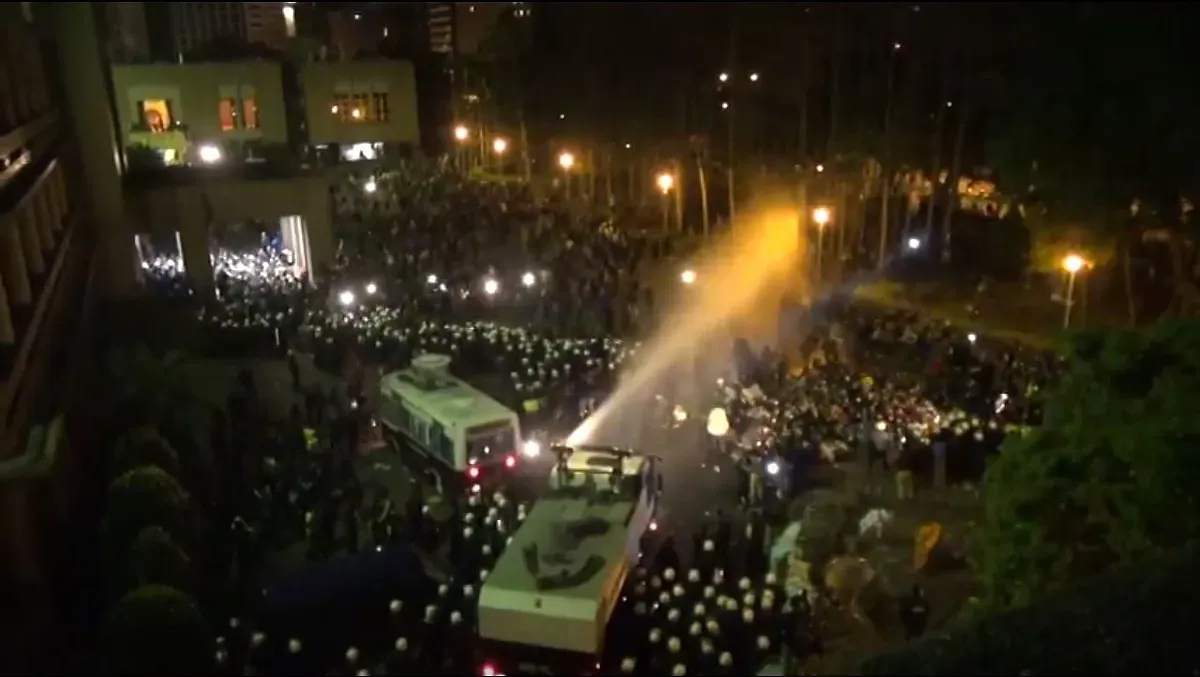
Six and a Half Years Since the March 24 Executive Yuan Eviction: State Violence Remains Unaccounted For ~ Statement on the First-Instance Judgment of the Private Prosecution against Ma Ying-jeou, Chiang Yi-huah, Wang Cho-chiun, and Fang Yang-ning for the March 24 Incident
Last edited: 2026-07-27
This morning (15th) at 9:30 AM, the Criminal Division of the Taipei District Court delivered its verdict in the private prosecution against Ma Ying-jeou, Chiang Yi-huah, Wang Cho-chiun, and Fang Yang-ning regarding the March 24 Executive Yuan eviction incident, acquitting all four defendants. The volunteer legal team expresses once again its disappointment and regret regarding this judgment.
It has been six and a half years since the March 23 Executive Yuan eviction incident. Whether through filing private prosecutions, seeking state compensation, petitioning the Control Yuan, or having city councilors raise interpellation, citizens and civil society organizations have attempted various channels to actively urge police and judicial authorities to help pursue accountability. To this day, not a single police officer who committed violence against the public that night has faced administrative punishment or criminal prosecution, nor has any police commander been held responsible.
Defendant Fang Yang-ning in this case was the jurisdictional commander of that night and held the on-site command authority. Fully aware that the citizens were peacefully sitting-in at the time, he nevertheless turned a blind eye to the violent actions of the police officers in order to accomplish the task of clearing the site. Defendant Wang Cho-chiun, the then-Director-General of the National Police Agency, sat at the NPA command center yet simply shifted all responsibility onto the on-site commander. Defendant Chiang Yi-huah, the then-Premier, brazenly claimed that he had already gone to sleep when the violence occurred, while Defendant Ma Ying-jeou, the then-President, made statements during the trial proceedings asserting that the operation of constitutional organs is more important than the personal safety of citizens. The meticulous division of labor and protracted procedures within the bureaucratic hierarchy dilute the sense of personal autonomous responsibility, giving rise to state violence, yet not a single person feels apologetic about the violence of that night.
After having its procedural dismissal upheld by the court twice, this case finally entered substantive proceedings last August. Yet the judgment result remains completely devoid of novelty; Taiwan's judiciary has once again chosen to allow those in power within the police command chain to hide behind bureaucracy and shirk their responsibilities, leaving the legal team deeply disappointed. The legal team will study and discuss the matter of appeal with our clients, and we will not give up on pursuing the truth and accountability for that night.
Appendix
Oral Argument Presentation Slides for This Case
- Part I: Attorney Chang Ching-ju Explains the Course of Unlawful Violence
- Part II: Attorney Liu Chi-wei Cross-Analyzes the Command Chain of the Violence That Night
- Part III: Attorney Kuo Hao-jen Explains Fang Yang-ning's Responsibility Within the Command Chain
- Part IV: Attorney Yu Po-hsiang Explains the Legal Evaluation of the Defendants' Conduct and the Inference of Principal-behind-Principal Liability for the Four Defendants
Press Contact
Staff Attorney Lee Ming-ju, Judicial Reform Foundation
This article is an AI-generated translation of the original Chinese text. In the event of any discrepancy, the Chinese version shall prevail.