
JRF Newsletter
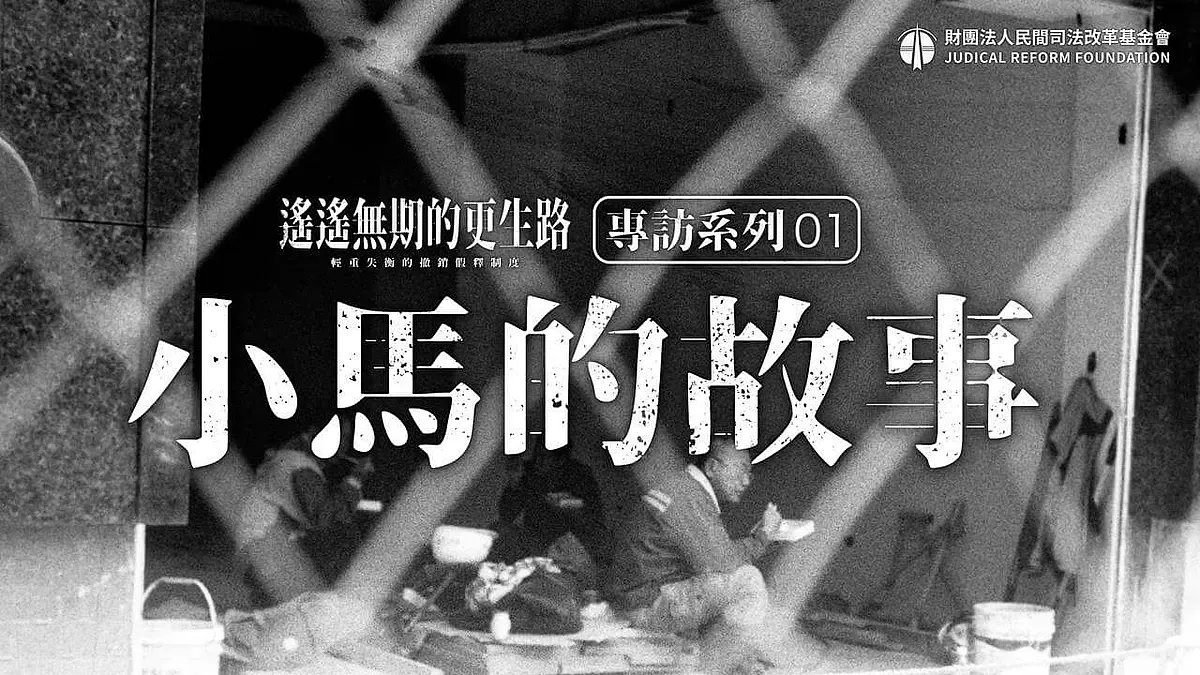
The Endless Road to Reintegration ❶: Hsiao-Ma's Story
Last edited: 2026-08-29
Introduction
Although he had once been sentenced to life imprisonment, Hsiao-Ma (a pseudonym) still had hopes for his future. At 40, while doing business in Guangzhou, China, he became involved in drug smuggling and spent more than 13 years in prison. At 54, after maintaining a good prison record, he was released on parole.
Prison was hard. During those years, his marriages fell apart and both of his parents died; Hsiao-Ma seemed to age overnight. He still remembers the day he was paroled. When an officer suddenly called his name, he assumed he had done something wrong. Instead, the day he had waited for through years of imprisonment had finally arrived, and he burst into tears. His older sister, who had grown up with him and regularly visited him in prison, took him in and helped him find work. The pay from jobs such as moving shipping containers and selling clothes at a street stall was modest, but for more than eight years he felt that he once again belonged to society.
Then, one evening after closing his street stall, he made a rare exception and had a drink with friends. Police stopped him as he drove home, and his breath-alcohol concentration exceeded the legal limit. Although he cooperated and had caused no accident, he was sentenced to two months' imprisonment, commutable to a fine. Deeply remorseful, he paid the fine and thought the matter was over. Soon afterward, however, he received notice that his parole would be revoked. Under the law, he would have to return to prison and serve the remaining 25 years of his life sentence, plus the two months imposed for the new offense, before he could even be considered for parole again. The news was devastating. He was already 58 and could not imagine enduring decades more in prison. Given his longstanding health problems, surviving another 25 years under prison conditions seemed almost impossible.
In the more than six years since his second imprisonment, Hsiao-Ma has often written to his sister, "How many twenty-year stretches does a life have?" He is not the only parolee to have been returned to prison for decades after a minor offense. Under Article 78 of the Criminal Code as then in force, a parolee who committed an offense during parole and received a qualifying sentence of imprisonment could have parole revoked and be required to serve the remainder of the original sentence, leaving no room for judicial discretion.
Even under a rule this rigid, some judges have refused to treat such outcomes as inevitable. As parole revocations for minor offenses have drawn increasing attention in the legal community and prompted discussion of legislative reform, some courts have applied the principle of proportionality and waived punishment for people serving life sentences who commit minor offenses while on parole. For a fortunate few, that has prevented a return to prison that would otherwise be grossly disproportionate.
Many others, however, including Hsiao-Ma, remain imprisoned by the system, barely holding on under the weight of an unforgiving rule.
Sincere Remorse and a Brief Taste of Freedom
Hsiao-Ma was married twice. He had a daughter with his first wife before they divorced, and later had a son and a daughter with his second wife. After he was arrested and imprisoned for drug smuggling, his second marriage also ended. His mother had died while he was doing business in China, and his elderly father died during the 13 and a half years he spent in prison. His sister became the only person he could truly rely on.
Because Taipei Prison was overcrowded, Hsiao-Ma was transferred to Chiayi Prison. Despite the long journey, his sister visited every month. "At first he would sometimes tell me there were a lot of bad people inside," she recalled. To her, he was still the kind younger brother she had always known. "He wouldn't even hurt a small animal. He is just too easily persuaded. Someone says a few nice things to him and he loses his bearings; he doesn't have much judgment of his own."
Whether he acted knowingly or was set up by friends, anyone sentenced to life imprisonment and sent into a prison without knowing when freedom might return would be afraid. "I was terrified at first. I didn't understand any of the rules inside." It took Hsiao-Ma a long time to adapt. Sometimes he asked his sister to bring extra food so he could share it with other prisoners. "But I did something wrong. Serving 13 years wasn't unfair." Frightened as he was, he resolved to face what he had done and repent sincerely. He worked steadily in the prison workshop, joined activities, and maintained a good disciplinary record. "I only lost points once, for leaving my assigned place."
Everyone longs for freedom, but for a person serving a life sentence, parole can feel impossibly distant. After enough time, even hope fades. "When they called me that day, I had no idea my parole had been approved." After 13 and a half years, Hsiao-Ma was paroled in August 2006. He took a taxi from Lucao Prison to the airport, boarded a flight to Taipei, and prepared to begin the second half of his life.
His sister-the only person who had remained in close contact throughout his imprisonment-took him in. "Every day I helped buy breakfast and groceries. I also began practicing Buddhism with her, and on the first and fifteenth days of the lunar month we would go to the Enzhugong Temple on Songjiang Road." A life that had seemed black and white began to regain color. He remembers those ordinary moments vividly. "I wasn't used to life outside at first, but I was grateful. It felt like coming back to heaven from hell."
Parole Revoked, Freedom Lost Again
"I have three children-two daughters and a younger son. My second wife's hand is impaired and she has only worked in accounting, and my younger son has an intellectual disability and has a disability certificate." Although he was divorced and faced enormous obstacles after his release, Hsiao-Ma wanted above all to make amends and make life a little easier for his children.
Middle-aged, with a prison record and only an elementary-school education, Hsiao-Ma repeatedly ran into barriers when looking for work. His old skill operating stamping presses was no longer useful. With his sister's help, he found work moving shipping containers and on construction sites, jobs that often required climbing and carrying heavy loads. "The work paid better, and I sent money to both families." He insisted that he really did send money to both former wives, and whenever he could, he traveled to Changhua to see the son and daughter from his second marriage.
The work did not last. While carrying a heavy load one day, he fell from a second-story exterior wall and severely injured his spine. On another evening, he was struck from behind while riding his bicycle home, suffering a concussion, spinal problems, and a serious knee injury. He could no longer do heavy labor. After repeated rejections from service-sector jobs left him with few options, his sister suggested that he sell clothes at street stalls in Sanchong and Luzhou. The income was lower, but at least he could still support himself.
In the late spring and early summer of 2014, a friend called Hsiao-Ma after his morning exercise and told him a stall might become available in Wufenpu. Around 3:00 p.m., he drove there to measure the space. That evening, he and friends ate rice-noodle soup nearby. In the summer heat, the three opened a bottle of Taiwan Beer. His friends insisted that he have some too, and on this one occasion he agreed. On the way home, police stopped him at the intersection of Yongji and Songlong Roads. His breath-alcohol concentration was 0.36 milligrams per liter, above the 0.25-milligram threshold that had taken effect under the newly amended drunk-driving provision. In 2013, amid strong public demands for tougher drunk-driving penalties, the Legislative Yuan had rapidly amended Article 185-3 of the Criminal Code, lowering the breath-alcohol threshold for criminal referral from 0.55 to 0.25 milligrams per liter-among the strictest standards internationally at the time.
"I was fully conscious, cooperative, and hadn't harmed anyone or damaged any property." He told the officers honestly that he was on parole. They advised him to admit the drunk-driving offense: it was unrelated to his earlier drug-trafficking conviction, there had been no accident, and they told him he would simply have to pay a fine. The Taipei District Court later sentenced him to two months' imprisonment, commutable to a fine. "When I was first held at the Xinyi Precinct, the police told me there was no way my parole would be revoked. I didn't seek help. I thought I'd quietly pay the fine and that would be the end of it." On May 26, Hsiao-Ma received the judgment and paid the NT$61,000 fine in installments, believing the matter was closed.
On June 12, while reporting to his probation officer during a regularly scheduled religious-counseling session, Hsiao-Ma learned that even this minor two-month offense would cause him to lose parole and return to prison for at least another 25 years and two months. Realizing the gravity of the situation, he immediately sought legal remedies. But the ten-day deadline had already expired. The district court dismissed his appeal, and two subsequent challenges were also rejected.
"I truly never imagined my parole would be revoked... I once wrote to legislators asking them to let me die by euthanasia. I'm suffering so much, and even when I sleep I keep thinking about it." Having already endured life imprisonment once, Hsiao-Ma understood the value of freedom better than most. Losing it again was almost impossible to bear. At 58, returning to prison for what could effectively be the rest of his life was devastating.
An Ordinary Worker Who Once Had Hope
Hsiao-Ma had once been an entirely ordinary working-class man. He grew up poor; both parents were illiterate and asked only that their children be able to support themselves. With help from a teacher, his sister finished junior high school. Hsiao-Ma, the youngest child, left school after elementary school and went to work, operating dangerous stamping presses in factories.
After gaining experience, he went into business with a friend in Guangzhou, manufacturing computer casings. "I met someone there named 'Szu-Tu.' I helped him send molds back, and it turned out he had hidden drugs inside them." Transporting drugs for profit violated the then-applicable Statute for the Suppression of Narcotics, which carried extremely severe penalties. Hsiao-Ma was sentenced to death at first instance and to life imprisonment on appeal. "A classmate told me that after Lee Teng-Hui took office we'd get our sentences reduced, but that never happened." Perhaps because he has told the story so many times-or because it remains too painful-Hsiao-Ma remembers every detail, but keeps his head lowered and repeatedly calls it a shameful episode.
When Hsiao-Ma's sister speaks about him, the pain is visible on her face. "My brother didn't use drugs. The man surnamed Feng who worked with him was the one who used them and wanted to buy them, and he kept shipping things back under my brother's name. That Lunar New Year my brother was in Taiwan, and Mr. Feng sent the drugs back hidden in a machine. My brother's name was written on it. That was it-there was no way out."
She was terrified when police came to the house and took her brother away. "I never imagined he would be involved in something like this. From childhood he was the kind of person who worked honestly at manual jobs and followed the rules. He didn't even smoke. He didn't have those bad habits. But I didn't know what had happened in between. He never told me, and even his wife didn't know."
Hsiao-Ma had once been an honest worker with ordinary hopes for his life. That year, something went wrong. After that, one wrong turn followed another.
Hope Fades; the Will to Live Burns Low
Facing the prospect of spending the rest of his life in prison, Hsiao-Ma felt the outcome was unjust but for a time still held on to hope. With few precedents and nowhere obvious to turn, his sister spent the years after his second imprisonment searching for lawyers, petitioning legislators, and contacting civil society organizations, trying to find some way to help him.
"Had the original judge properly reviewed the petitioner's prior record and set it out in the facts of the case, the court would have seen that sentencing a person already on parole for a drug case to imprisonment would revoke that unrelated parole and require him to resume serving a life sentence. By relying mechanically on the summary judgment without examining those details, the court produced a result in which the punishment was substantively disproportionate to the offense." With JRF's assistance, Hsiao-Ma submitted petitions to government bodies explaining what had happened and why the result effectively imposed an extraordinarily severe consequence for a minor offense. Most went unanswered.
After most of those letters disappeared without a ripple, there was finally movement in 2016. Prosecutor General Yen Ta-Ho concluded that the drunk-driving judgment violated the law and exercised the Prosecutor General's exclusive authority to file an extraordinary appeal, a special procedure under criminal law. When Hsiao-Ma's sister received the news, she told him during a visit. "He said 'wow.' He was so happy and hopeful."
That glimmer of hope proved fragile. Less than three months later, the Supreme Court dismissed the extraordinary appeal, concluding that the original judgment could not be shown to be unlawful. The ruling shattered Hsiao-Ma's hope of freedom and nearly extinguished his will to live. After exhausting other legal remedies, his lawyers made one final effort in 2018, petitioning the Grand Justices for a constitutional interpretation of the Criminal Code provisions governing parole revocation. Two years later, there had still been no decision.
His sister told us that after Hsiao-Ma returned to prison, his depression worsened. Chronic problems-including a lumbar-spine injury, degenerative joints, and intestinal inflammation-also plagued him, and he attempted suicide several times. "I'm not exaggerating-my brother wasted away to almost 20 kilograms." During our interview, Hsiao-Ma more than once expressed a wish for euthanasia and said he hoped to donate his organs. Fighting back tears, he said that wrongdoing should of course have consequences, but punishment should still satisfy the principle of proportionality. How could he accept having a little alcohol and then being returned to prison until death? Over the past six years, he told us, he had met others whose parole had also been revoked, but after so many crushing disappointments he no longer dared to hope for anything. He simply lives one day at a time.
Most people in prison live with at least some hope of parole. Hsiao-Ma now feels he has less hope than almost anyone around him. Staying optimistic under those circumstances is extraordinarily difficult. "I'm older now. To live with some dignity, I keep exercising," he told us. He tries to help others in prison and has received four commendations. "If I tire myself out a little more, I sleep better at night."
He is still trying to find a way to keep living.
This article is an AI-generated translation of the original Chinese text. In the event of any discrepancy, the Chinese version shall prevail.