
JRF Newsletter
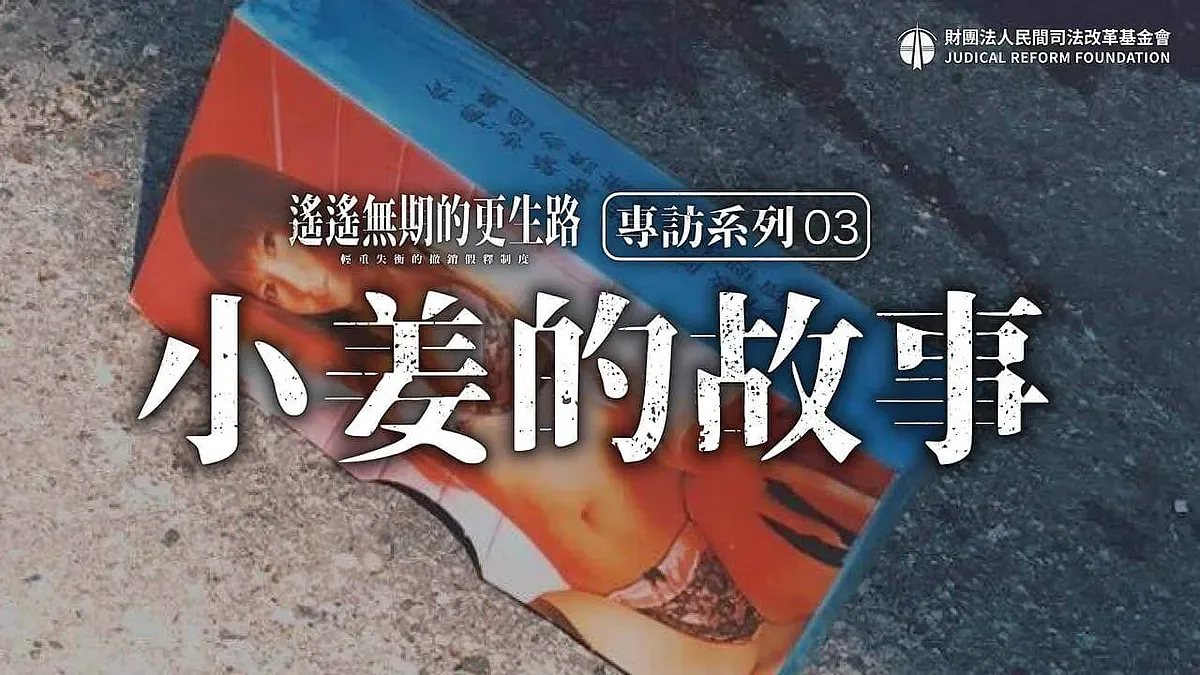
The Endless Road to Reintegration ❸: Hsiao-Chiang's Story
Last edited: 2026-08-29
BoJack Horseman, the popular Netflix animated series, follows a character trapped in cycles of drug and alcohol abuse. A deeply dysfunctional family leaves him unable to build healthy, stable relationships; he keeps hurting the people he cares about, and the guilt and frustration drive him back to drugs and alcohol. Eventually he checks into rehab, cuts himself off from the substances that leave him out of control, and works with a therapist to repair his relationships with others-and with himself. He thinks that if he can stay away from drugs and alcohol, he can piece his life back together and earn a chance to start over. But the past keeps returning like a ghost, and old wounds and triggers pull him back into the same mistakes and the same abyss. He thinks atonement will bring redemption, only to find that his life seems to have been scripted before he was born, with every road leading to a dead end.
When I think of Hsiao-Chiang, I see BoJack. Almost every familiar script we imagine a parolee encountering seems to have played out in his life. Like BoJack, he entered an institution that was supposed to make him better, and while he was inside, presidents came and went.
He knew his earlier offense was nothing to be proud of. He went to prison, quietly worked in the prison workshop, and did what he could to qualify for parole. After his release, he discovered that nearly every job required skills he had never had the chance to learn because the prime years of his life had been spent behind bars. So he hauled gravel, transported tea, and took whatever temporary work he could find. These precarious jobs might not make him a "good person" by society's standards, but he was trying, in his own way, to find a place in society.
Who could have imagined that lifting a car's windshield wiper and slipping in a pornographic flyer could be found to violate the Child and Youth Sexual Exploitation Prevention Act, leading to the revocation of his parole and another 25 years in prison? He had taken the job out of desperation: posting 600 flyers for NT$300-just NT$300. When I read the judgment, I was stunned. Does his situation not show how few options people may have after release on parole? Yet the law treated a parolee's minor offense as proof that he had "shown no remorse" and, with one stroke, sent him back behind bars. It is deeply disheartening. Are parolees like Hsiao-Chiang, like BoJack, simply living out scripts that were written long ago?
In his letters, Hsiao-Chiang told us that before he returned to prison, he pored over The Taiwan Law Review and the Judicial Yuan Gazette, trying to understand what the "abstract endangerment offense" he had committed actually meant. He also tried to figure out how to petition the Grand Justices for a constitutional interpretation. Someone with no legal training was forced to learn concepts most people never encounter in their lives. We could see how exhausting that was-but did it not also show that he still had the will and hope to keep fighting? Not quite. After several rounds of legal remedies, he knew there was no hope this time. Asked how his second imprisonment felt different from the first, he answered: "This time, there is no hope." It is hard to imagine what it means to spend 25 years in prison without hope.
When the conditions for reintegration are already so difficult, automatically revoking parole for any new minor offense, regardless of the circumstances, can crush someone who had been highly motivated and willing to try every possible way to escape that cycle. Hsiao-Chiang even stubbornly refused visits from his family, because the more they continued to help him, the more guilty he felt. I could see BoJack's bitter smile in him: the expression of someone who wants to live the rest of his life well but finds every effort futile-"My life's already ruined; what else can you do to me?" If nothing can change, why keep trying?
We can only hope that the efforts parolees like Hsiao-Chiang make after release are not slowly worn away, and that a life script that seems predetermined can still be rewritten. A change in the law may be like a railway switch: pulling the lever looks simple, but it can move many lives onto a different track and toward an entirely different destination.
This article is an AI-generated translation of the original Chinese text. In the event of any discrepancy, the Chinese version shall prevail.