
JRF Newsletter
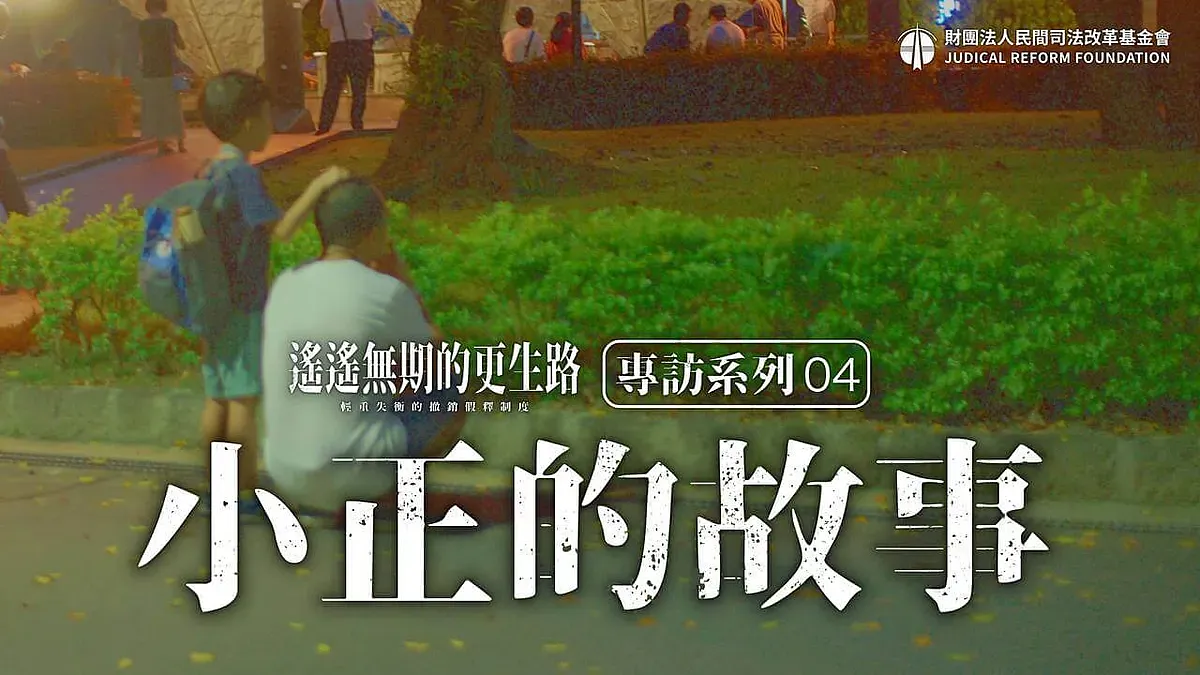
The Endless Road to Reintegration ❹: Hsiao-Cheng's Story
Last edited: 2026-08-29
Hsiao-Cheng had previously been convicted of several robberies and sentenced to 15 years and 10 months in prison. After maintaining a good record behind bars, he was released on parole in 2011. Before he had even fully adjusted to life after release, however, he became entangled in a wrongful hit-and-run case in 2014 and was sentenced to six months in prison. While he fought to clear his name, his parole was revoked and he had to return to prison to serve the remaining five years of his original sentence. "The moment I got into the prison transport van, my whole life turned black and white," he recalled. That day remains etched in his memory. With the encouragement of his family and lawyers, he continued pursuing relief from prison and, in April 2020, was finally acquitted in a final judgment and regained his freedom.
A Young Drifter's Past
Hsiao-Cheng was born and raised in Chiayi and speaks Taiwanese with an easy confidence. Having already spent 11 years in prison, he wanted people to understand that when parole is revoked, "it's not just a piece of paper." He learned firsthand how readily society assumes that someone who has done wrong before cannot later be wrongfully accused-and how quickly a family's hard-won efforts at reintegration can be undone.
As a teenager, Hsiao-Cheng entered a cooperative vocational-training program, perhaps hoping to start earning money early and help support his family. After only a week, however, he got into a fight with a classmate and was expelled. "After that I didn't really work. I just drifted around," he said with a laugh, though still looking a little embarrassed. After setbacks at school and repeated experiences of being labeled by mainstream society, he and his friends began looking for a "way out" and a way to make money. That path largely came to mean robbery. Hsiao-Cheng and his friends planned and committed several robberies, and he was eventually sentenced to 15 years and 10 months in prison.
For young people like them, life could feel like a slide: once they began drifting, they kept slipping downward until they became what society simply called "inmates." Behind bars, life without freedom settled into a strange kind of "stability." They folded department-store paper bags in prison workshops, doing monotonous, repetitive work for only a few hundred New Taiwan dollars a month. "All I wanted was to get out. I'd have taken any job that paid NT$500 a day," Hsiao-Cheng recalled. The one constant was the support of his parents and younger siblings. With their encouragement, he maintained a good prison record and was released on parole after serving 11 years.
Parole Revoked: A Turbulent Road Back to Society
After so many years without freedom, Hsiao-Cheng stepped out of prison both excited and uneasy. He worried that technology had moved on without him and could barely remember the streets downtown. Fortunately, his family was there, as always, to help him adjust. With only a junior-high-school education and a criminal record, finding work was difficult. Eventually, a friend introduced him to a textile factory, where he found a job in dyeing. Because that stability had been so hard to come by, he treasured it.
By the third year of his parole, Hsiao-Cheng had met a girlfriend and become a father. He moved out of his parents' home and began building a family of his own. Then, at about 8:00 a.m. on October 20, 2014, just after finishing a night shift at the textile factory, he drove away from work and collided with a farmer riding a bicycle the wrong way against traffic. The farmer suffered several abrasions. Hsiao-Cheng stopped, checked on him, helped gather the scattered produce, and left his name, employer, and license-plate number before departing after a short time. He was nevertheless accused of hit-and-run and quickly prosecuted. Fearing that a conviction would cost him his parole, he sought help from an attorney providing pro bono consultation at the local district prosecutors office. The case dragged on for years over whether he had been at fault, and in 2017 he was sentenced to six months in prison. Under Article 78 of the Criminal Code then in force, a parolee who intentionally committed another offense and received a qualifying sentence of imprisonment could have parole revoked after the judgment became final.
"No one believes someone who did bad things before can really be innocent." "Society thinks I already have a record, so one more conviction doesn't matter." "My whole life went dark." Hsiao-Cheng not only failed to clear his name in the hit-and-run case; he also had to return to prison to serve the remaining five years of his original sentence. He could hardly believe that freedom had been so brief-or that his parole could disappear because of a collision with someone riding against traffic. During the two years he spent back in prison, his girlfriend left him. His family, however, never did. His aging relatives brought his infant daughter to visit, separated from him by glass while he was unable to help shoulder the family's burden. Determined to reunite with them, he and his lawyer pursued remedy after remedy, eventually taking the case to the Supreme Court and petitioning for a constitutional interpretation of the ambiguous hit-and-run provision as applied where the driver was not at fault. Judicial Yuan Interpretation No. 777 later declared part of the provision unconstitutional. A retrial was opened in 2019 and execution of his sentence was stayed, allowing him to leave prison. In April 2020, the original conviction was finally set aside and his acquittal became final.
"Right now is the happiest I've ever been. My life is in full color."
Throughout the interview, Hsiao-Cheng kept returning to how happy he is now. "I just want to work hard at my trade and raise my daughter well." He beamed whenever he spoke about her. In his youth, confusion and serious mistakes cost him his freedom. Becoming a father gave him a reason to imagine a different future for himself and his daughter. He now lives with his elderly mother, works in door manufacturing, and helps support the household. After work, his favorite thing is simply playing with his child. Time with his family matters more to him than anything else. The hopeless black-and-white world he remembers from the prison transport van has given way to a life he describes in vivid color. He remains deeply grateful to the family and lawyers who stood by him; their support gave him the chance to stand on his own and return to society.
That happiness could have come much sooner. Before he was exonerated, Hsiao-Cheng spent nearly two years in prison for a crime he did not commit. The most fundamental problem, of course, was the wrongful conviction itself. But if the decision to revoke parole had allowed room for individualized discretion, those two years behind bars-and the losses that came with them-might never have occurred.
This article is an AI-generated translation of the original Chinese text. In the event of any discrepancy, the Chinese version shall prevail.