
What If the State Is the One That Did Wrong? Reflections on "Hai-Wang's Daybreak - Chiu Ho-Shun's Forgotten 32 Years"
Last edited: 2026-08-29
Photography | Wu Ting-Chen
"Hai-Wang is A-Shun's childhood nickname. On the day he was born, the fishing catch in his hometown, Longfeng Harbor, was especially abundant. We named the exhibition 'Hai-Wang's Daybreak' because we hope A-Shun will one day regain his freedom."
Those were the first words one of the exhibition organizers said to me when I arrived at the Chiu Ho-Shun exhibition. My first thought was: A-Shun-what a warm, affectionate way to call him.
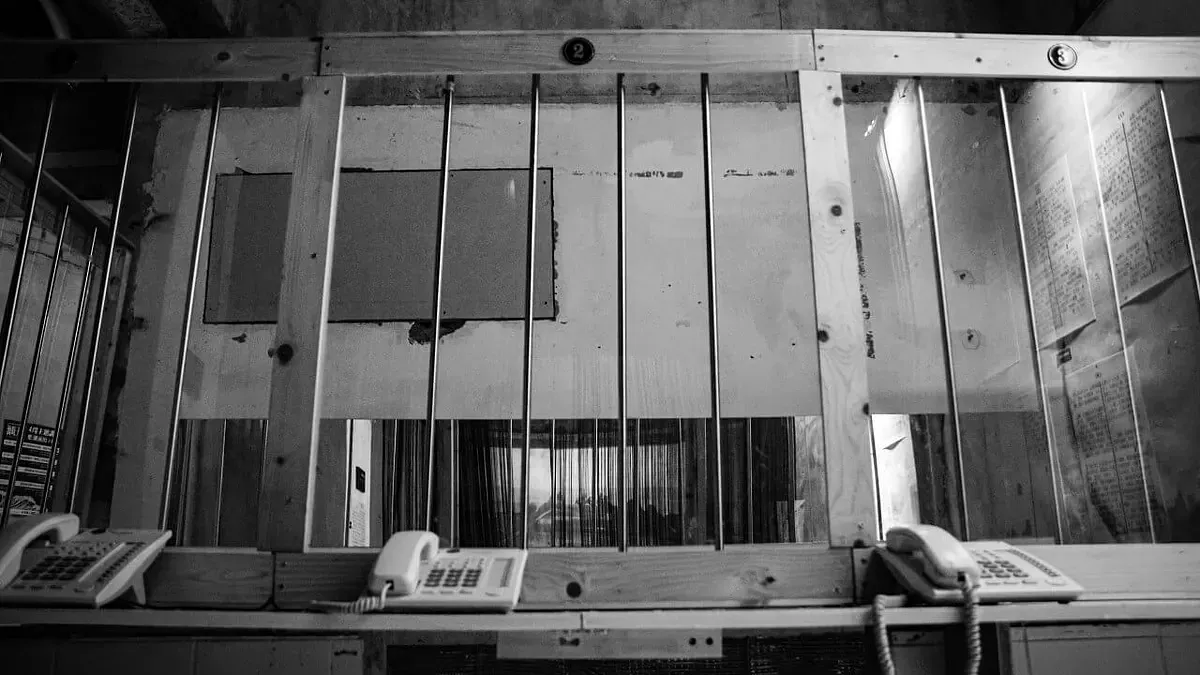
She then led me into the first exhibition space, a simulated prison visitation room. A pane of glass separated us from the space beyond. We looked through it and saw a mirror-and in that mirror, ourselves. She told me that although none of us is obligated to care about a stranger with no apparent connection to our own lives, she hoped this simulated space might allow us to feel, even briefly, something closer to what A-Shun is experiencing.
That room affected me deeply. It felt as though I was being forced to look directly at a wound I had always preferred not to see-a scar on our democracy. They call Chiu Ho-Shun "A-Shun" not to manufacture intimacy or put on a brave smile, but because he really is no different from us. Like us, he should have gone to school, found work, married, and had children. Like us, he should have been able to sing karaoke when he was happy and see a movie when he was sad. He has never had many of the experiences we take for granted today; he has never even seen the MRT. Yet he knows far better than any of us that his number is 7026, not A-Shun; that when he has something to say, he needs paper and a pen rather than simply saying, "Hey, you know what?"; and that when he is sick, he has to reach through the opening in a cell door and wave a flag rather than reach for his National Health Insurance card. Why? There was no physical evidence, the confessions contradicted one another, and the fingerprints did not match. Why is he still on death row?
Before coming to JRF as an intern and helping guide visitors through the Chiu Ho-Shun exhibition, I had almost refused to read anything about wrongful convictions. I knew it would leave me feeling heavy and powerless. Even though the cases had nothing to do with me personally, I would feel guilty because I could do nothing to help. I am emotionally fragile, so I stayed in my comfort zone like an ostrich, unwilling to touch the ugliest side of the justice system. But I knew it was there. Those of us who choose the law cannot simply close our eyes. We call ourselves a democracy and a country governed by the rule of law. We define crime, judge people through legal procedures, and even accept the death penalty because we believe some wrongdoing is so grave that justice permits the state to take a person's life. If we claim that authority, we do not have the luxury of looking away. Law asks people to take responsibility for what they do, and the state decides whether their conduct deserves punishment. But what happens when the state is the one that did wrong?
I understand the historical context of the Chiu Ho-Shun case. At the time, defendants did not receive the procedural protections we expect today, and torture to extract confessions was common-the system often wanted only a name it could identify as the culprit. For those of us born around 2000, that world is difficult to imagine. Perhaps it was part of Taiwan's gradual democratic development; change is incremental, conflict is common, and not every transformation is bloodless. But reform must at least ensure that blood was not shed in vain. If the state refuses to acknowledge wrongful convictions, the judiciary cannot truly stand for justice, and this beautiful place can never proudly say that it has become a genuine democracy governed by the rule of law.
When someone does wrong, they should apologize. We all owe Chiu Ho-Shun an apology.
This article is an AI-generated translation of the original Chinese text. In the event of any discrepancy, the Chinese version shall prevail.