JRF Newsletter
Joining JRF in an Era of Expansion: An Interview with Attorney Huang Ying-Chia
Last edited: 2026-08-29
Attorney Huang Ying-Chia worked at JRF from 2016 to 2019 and was the organization's first full-time staff attorney. She now practices at a law firm. During her time at JRF, Huang worked on legislative amendments, evaluations of judges and prosecutors, wrongful-conviction cases, and the Gender Judicial Reform Alliance. Both that work and her own experiences in professional and everyday life sharpened her reflections on judicial reform, social vulnerability, and gender.
A Different Starting Point: Judicial Reform as the Beginning of Legal Practice
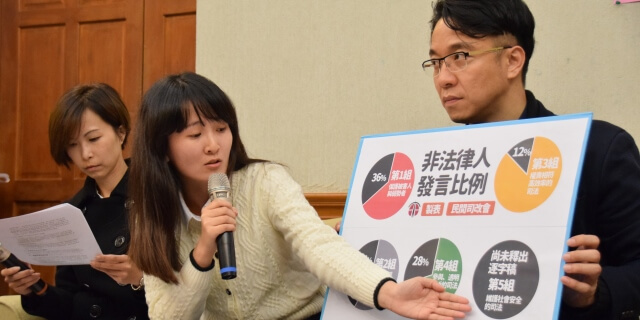
In JRF's earlier years, the executive director was the only attorney on the Secretariat. Staff primarily coordinated administration, while most substantive legal work depended on volunteer attorneys. By 2016, however, the organization's workload had grown substantially and the Complaint Center increasingly needed immediate legal research. The Center's director therefore proposed hiring a full-time staff attorney to strengthen JRF's in-house capacity to address legal issues.
After university, Huang first worked as a court clerk, then returned to graduate school and later trained at a law firm. When a position happened to open at JRF, she applied and became the organization's first full-time staff attorney.
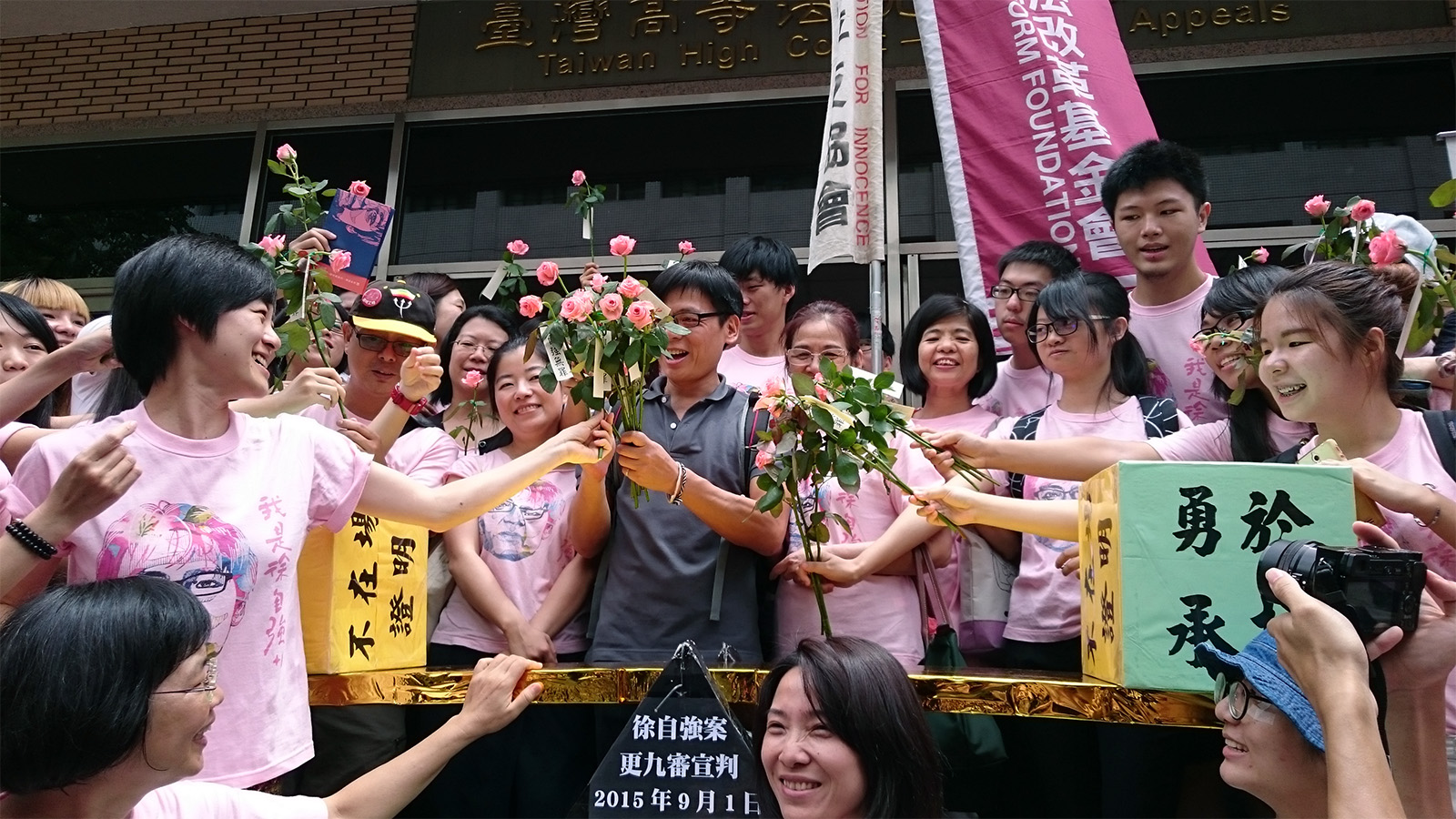
By the time Huang joined, the Secretariat had grown to more than ten people, but its work had not yet been divided among the specialized departments that exist today. As the staff attorney, she therefore had a hand in almost everything involving law. Her work included evaluations of judges and prosecutors and legislative research on the Attorney Regulation Act, Judges Act, Code of Criminal Procedure, and other laws. She also handled substantial work connected to the National Congress on Judicial Reform. By her third year, after moving into a supervisory role, she joined the effort to assist former national athlete Chen Ching-Kai, who had been accused of faking blindness to commit insurance fraud.
After leaving JRF, Huang joined a law firm, where her work now includes land expropriation and land disputes as well as conventional civil and criminal litigation. Looking back, she says the experience that shaped her most was handling complaints from members of the public. People who came to JRF had often already endured years of litigation and arrived only after ordinary legal channels could no longer help them. Those encounters made her more empathetic toward people who are vulnerable both legally and socially and more patient with clients who are anxious or easily overwhelmed. Drafting court submissions, advocating publicly for people wrongfully convicted, and participating in press conferences also gave her a broader view of what legal practice can look like.
A Different Experiment: The Gender Judicial Reform Alliance
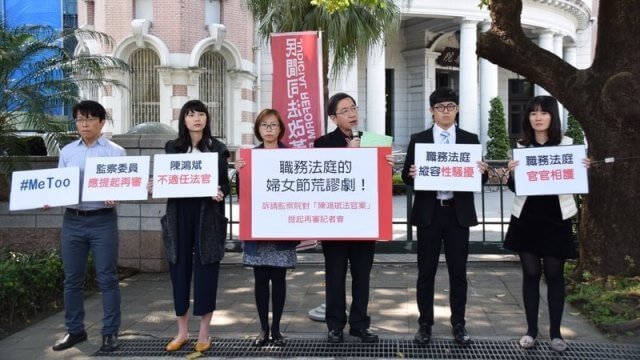
During Huang's years at JRF, the highly visible debate over marriage equality produced sharp disagreements within the organization. That experience made her think more seriously about how JRF could engage gender issues, strengthen its own gender awareness, and build internal consensus. At the time, leadership bodies such as the Board and Standing Executive Committee remained predominantly male. Huang found herself asking why women-particularly women attorneys-participated less in public-interest work, and what a reform organization like JRF could do about gender problems within the justice system itself.
JRF therefore joined women's and victim-support organizations including the Garden of Hope Foundation and Awakening Foundation to form the Gender Judicial Reform Alliance. The premise was that, although the justice system had improved, some judges and prosecutors still ignored the significance of gender or relied on gender stereotypes, causing people seeking justice to be harmed a second time. In serious cases, that experience could deter vulnerable women from using the justice system at all because they did not believe it could help them. Huang recalled assisting a migrant worker sexually assaulted by her employer; language barriers made it extremely difficult for the victim both to tell her story and to participate in the proceedings. Sexual-assault cases also exposed persistent myths-for example, suspicion directed at a victim who did not immediately preserve evidence or report to police, or assumptions that a "real" victim would always resist physically.
Gender-related cases could also be harder for JRF to assess internally than other complaints. JRF already used a rigorous case-review process, and the confidentiality of gender cases together with differences in gender awareness added another layer of complexity. Even at the threshold decision of whether JRF should provide assistance or oversight, advocates often needed more time than usual to persuade other members to commit organizational resources.
After entering private litigation practice, Huang continued noticing gendered patterns. Clients might address a man as "Attorney" but call a woman lawyer "Miss," or simply assume she was a secretary. They were also more likely to make additional requests of women attorneys. Family-law practice, meanwhile, is disproportionately female, perhaps because some clients find it easier to disclose intimate facts and emotions to women and feel that women attorneys understand those emotions more readily. For Huang, the response to these gendered differences is not silence but more dialogue.
Carrying Reform Experience Forward in a Different Style
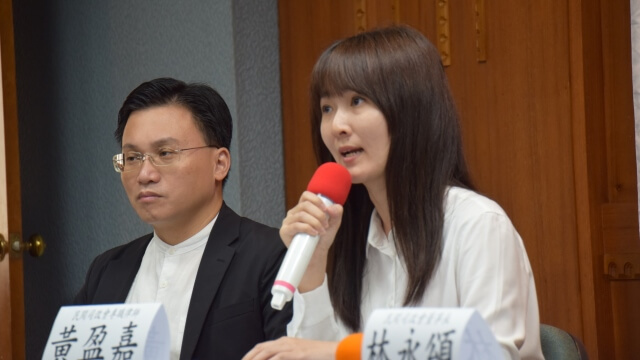
For Huang, experience as an NGO worker taught her that communication-inside an organization, with the public, and with clients-is essential if an issue is to be seen clearly. Gender advocacy brought constraints from social stereotypes and existing judicial remedies, but the effort to challenge those frameworks also gave her more room to examine social concerns and legal practice critically. Looking back on her work in human rights, judicial reform, evaluations of judges and prosecutors, and gender issues, she says those experiences shaped both the foundation of her legal practice and her professional attitude.
Huang joined JRF just as the organization was beginning to expand. Characteristically modest, she describes those years primarily as a period of learning. Yet as the organization's first staff attorney, she also carried the pressure of unfamiliar problems and invested the time and energy that helped shape a growing JRF confronting an increasingly diverse range of controversies.
After leaving JRF, Huang wrote to Chiu Ho-Shun at the detention center to tell him she was moving on. He replied: "Everyone in the world thinks differently. Success is not about winning at the starting line, but at the turning point. I hope you will think about how to create a new future in a different style." The letter reads almost like a short philosophical poem, something that takes time to absorb. At her own turning point, Huang carried the experience of reform with her and continued forward in a style of her own.
This article is an AI-generated translation of the original Chinese text. In the event of any discrepancy, the Chinese version shall prevail.