
Lost Justice - Reflections on "Hai-Wang's Daybreak" in Zhunan
Last edited: 2026-08-29
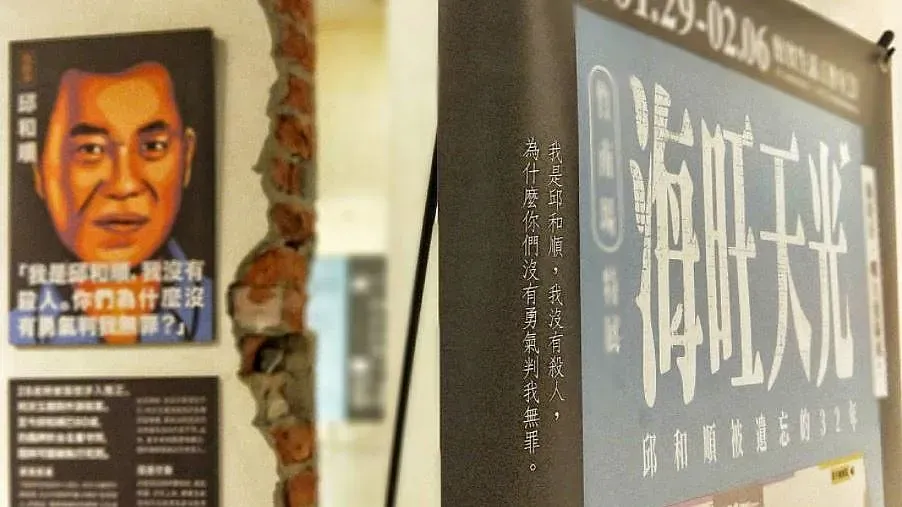
When I stepped into the exhibition, I felt almost as though Hai-Wang himself-still longing for home-had arrived there with hope, returning to the land that had accompanied him since childhood. I had heard his name and seen reports about him before, but I understood only fragments. Through this exhibition, he no longer felt distant from me or disconnected from the society around us.
The choice of venue was thoughtful, but what stayed with me just as strongly was the design of the exhibition and the realism of the reconstructed spaces.
The exhibition began with the Lu Cheng and Ko Hung Yu-Lan cases. As question after question appeared before me and the seconds kept passing, I found myself angrily questioning what we call judicial justice.
Then came a wall that felt almost unbearable. It was covered with news reports from the time. Many described the torture of Chiu Ho-Shun and the other defendants, yet almost no one seemed willing to speak up. Even prosecutors-supposed representatives of "justice"-dismissed those facts as lies.
Just as I was becoming discouraged, a voice poured into my ears: "Why... why... does freedom never come? Why can I never go home?" "I have a dream... a hope... a determination... to create a miracle." The voice was weathered and lonely, but still full of hope. Even knowing the devastating fact that police had lost the original recording tape, the person yearning for freedom was still singing.
I admired A-Shun for holding on to that hope. With tears in my eyes, I gripped the telephone receiver and saw myself framed behind the iron bars. In that tiny visitation room I felt afraid, angry, and overwhelmed by loneliness. For a moment I felt as though I too were trapped in that cold world. Then I realized it was not merely an exercise in empathy: the person standing there today could, in another case, become the next person wrongfully convicted.
After an amount of time I could no longer measure, I entered a slightly larger room and saw, for the first time, a reconstruction of a death-row cell. It was only 1.368 ping-about 4.5 square meters-with almost no privacy. A-Shun has lived in conditions like these for years. We say "all these years" so easily. Did he really live them here? Around the room were his hopes and anger, written out one stroke at a time. Letter after handwritten letter made the rough passage of time painfully visible.
On the wall beside me were projected scenes of torture. I could hardly believe that the vicious words I heard had come from police officers charged with upholding justice. I stood expressionless, but inside I was shaken. I hope that one day every person's concern for A-Shun can become part of the strength that carries him back into the light.
When I left the room, the shock faded slightly but I still felt short of breath. Farther ahead was a whole row documenting advocacy, marches, public statements, and petitions for a pardon. I saw how much JRF and so many other organizations had done for Chiu Ho-Shun and for this society. Perhaps what I should carry away is not only sorrow, but the strength to join that work.
As I took a photograph beside A-Shun's standee, I whispered, "I am sorry for what you have had to endure. None of this should have happened to you. But I am also glad that so many people are working for you. One day, surely, you will be able to stand freely in your hometown just as I do."
Since then, wrongful convictions no longer feel separated from me by the distance between words and my eyes. They are happening all the time, in ways large and small, in the gap between being believed and not being believed. People make mistakes; courts do too. The justice system I hope for is one capable of admitting error and restoring justice. We are born free-but if society lacks justice, what does freedom mean?
"The sky is growing dark. In a little while, daybreak will slowly come..." I looked once more at the note reading "Chiu Ho-Shun Is Innocent," then walked downstairs.
This article is an AI-generated translation of the original Chinese text. In the event of any discrepancy, the Chinese version shall prevail.