
JRF Social Work Internship | Cross-Disciplinary Learning While Preserving the Self
Last edited: 2026-08-29
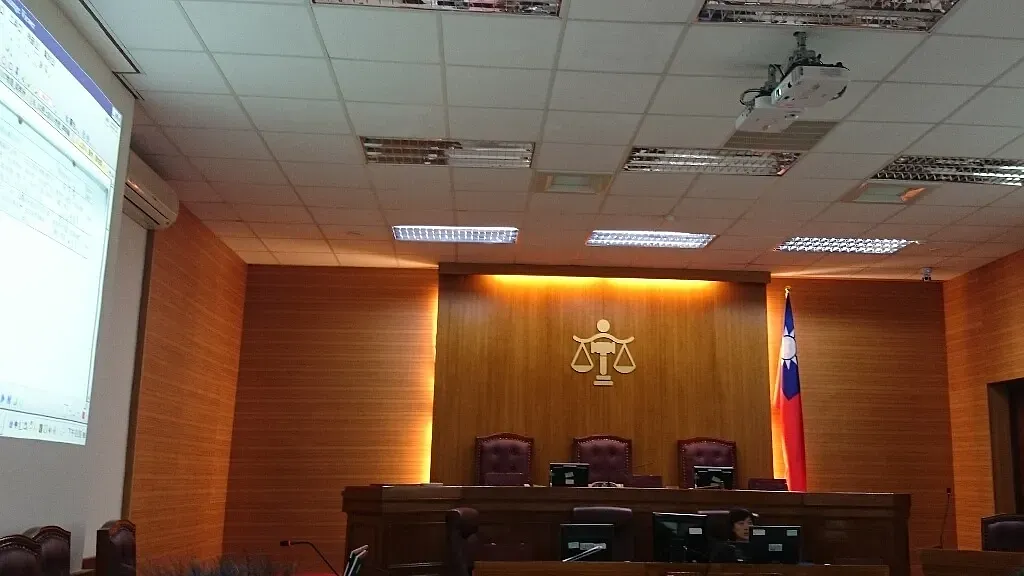
During this internship, I observed several court proceedings, including preparatory proceedings and oral argument in the March 23 Executive Yuan occupation case arising from the anti-CSSTA movement, the Su Chien-Ho civil case, and cases challenging parole revocation for minor offenses. These experiences gave me many opportunities to learn and reflect from a social-work perspective.
-
Learning How Court Proceedings Actually Work
Through court observation, I gained a much more concrete understanding of how proceedings operate in practice. In my experience-though I cannot say whether this is universally true-social workers rarely have opportunities like this unless they work within the court system or for an organization stationed at a courthouse. Several of the hearings I attended were at the Supreme Court, which holds oral proceedings only infrequently. Professionally, the experience was genuinely striking.
Throughout the process, I often felt as though I were speaking directly with the state. In the March 23 case, for example, I felt the version of myself who had participated in the 318 Student Movement was finally being placed in dialogue with state power. Many of the defense attorneys' arguments moved me because I had been part of the movement myself, even though I was never prosecuted. At times, their words felt as though they were speaking for what I had felt then. That was an exceptionally meaningful experience for me.
-
Reflecting on the Lack of Courtroom Practice in Social-Work Education
If social workers want to help build a society that is more humane, fair, and just, they need at least some understanding of legal work and courtroom practice. Social workers often serve people facing multiple, intersecting difficulties-poverty, domestic violence, grandparent-led households, parenting challenges, single-parent families, migrant-worker status, residential placement, and more. Those cases frequently require collaboration with attorneys and other legal professionals. If I do not understand how courts actually work, that gap can affect the quality of service I provide.
Likewise, if I do not understand how courts operate, how can I work effectively with legal professionals? How can I participate meaningfully in social-policy and legislative advocacy? Social-work programs do emphasize policy and legislative reform, yet practical opportunities to encounter courts are comparatively limited. I find that unfortunate.
These were some of my strongest reflections from the experience. If social workers may one day participate in courtroom practice or multidisciplinary teams, direct exposure to court proceedings can be enormously valuable.
-
Interdisciplinary Learning: Different Professional Ways of Seeing
What I learned through court observation was not the core material I had been taught in social-work school, nor was it part of the professional practice through which my identity as a social worker had previously been shaped. Interning at JRF therefore required me to integrate different professional perspectives on my own, and many of the insights I developed were highly personal.
At JRF-based only on my own observation-the discussion of an individual litigation case often centers on questions such as: What are the disputed legal issues? What procedural or technical arguments can be improved? Are there new interpretations of statutes that can prevent the person from being wrongly convicted? Those are the kinds of conversations I encountered most often.
Social work, at least as I understand and practice it, often begins somewhere else: with the person and the social structure surrounding the case. Take the 318 Student Movement. Looking back, I see a society in which democratic awareness and a sense of political agency were growing. People increasingly believed they had a right to participate in decisions about their own country. To me, the movement protected that sense of agency at a moment when the Ma administration was moving toward the Cross-Strait Service Trade Agreement without adequately responding to public opinion.
At the intersection of these different professional frameworks, learning to understand the organization's culture and integrate legal and social-work perspectives became a challenging experiment. It was also one of the most valuable lessons in teamwork I received. It expanded the horizon of my professional integration and self-exploration: What else can I do in practice? What other issues or fields can be brought into the work? Across professions, what methods can help us see a person, receive what they are experiencing, support them, and strengthen their capacity to act?
Those questions are among the things I will continue thinking about after my JRF internship as I explore how to integrate disciplines and develop working methods of my own.
-
Finally, Returning to Myself
Participating in the March 23 case, the Su Chien-Ho case, the minor-offense parole-revocation cases, and other court observations eventually led me, through individual supervision, back to a more personal question. Why am I participating at JRF at all? Why do I act?
For a long time I have been highly sensitive-and resistant-to power and structural oppression. That is closely connected to my own background and experiences growing up. At a personal level, I experience much of what I do as a defense of my inner boundaries. I am extremely sensitive to the pain created when state power, social structures, or other forms of power press down on an individual. That is why participating in wrongful-conviction advocacy, court observation, and other JRF work gave me such a strong feeling of being held and supported.
In my notes on observing the March 23 Executive Yuan occupation case, I wrote about the police violence and forced dispersal that occurred at the Executive Yuan. Facing that state violence at the time, I repeatedly thought: this is my own country-my own home. I have the right to decide how I live here, rather than having some external "other" tell me how I am supposed to live.
By "my own country-my own home," I mean an inner boundary: the most intimate part of a person's own domain, not a physical house. State violence, structural oppression, and deprivation can create the feeling that a person has been denied space altogether-that their internal territory and boundaries have been taken away. For me, that trauma is connected to social movements and carries a social-psychological dimension. When I act, the action is therefore also, to some degree, an expression of personal agency. I believe many social movements contain that dimension, although, as my supervisor reminded me, it is not limited to social movements and should not be understood so narrowly.
Collective events can resonate deeply with individual experience, but from a social-work perspective the collective and individual levels still need to be examined separately. They are related, but they are not identical.
Returning to that feeling of being held: when I joined the student movement, I did so with my own ideas and with personal, intimate motivations that have always remained part of me. I am still trying to understand the emotional path from having those inner boundaries violated to feeling supported again. That process of sorting through myself is not always rational or orderly. What matters to me is that I keep trying to express it. Others may not always understand the way I speak or write, but at least I am conscious of the effort.
In individual supervision with Professor Wan Hsin-Jui, I said that I have been doing this all along: civic participation, advocacy for human dignity and rights, and social work. For me, these are forms of practicing agency, and they have gradually become responsibilities I feel I cannot avoid as a social worker.
The night may still be long, but I am still trying-just as the defense teams keep trying. We should not forget our efforts, and we should not forget ourselves.
This article is an AI-generated translation of the original Chinese text. In the event of any discrepancy, the Chinese version shall prevail.