

JRF Newsletter
Receiving the River Spirit's Dumpling: After Judicial Yuan Interpretation No. 796
Last edited: 2026-08-29
Continuing the Spirited Away metaphor from the previous article: after everyone helps remove the pollution lodged inside the Stink Spirit, he returns to his true form as a River Spirit and leaves Chihiro a small medicinal dumpling. That gift later becomes something Chihiro can use to save others. In the film, the River Spirit's dumpling represents a kind of redemption gained only after hardship.
After Judicial Yuan Interpretation No. 796 was issued, people in our cases began leaving prison one after another. During an extremely busy end of the year, we traveled from north to south to meet some of them and learn more about the lives they had lived inside. That experience became part of the foundation for future prison reform. Their journeys of reentry, however, were only beginning.
Gaps in Reentry Support - and What Might Come Next
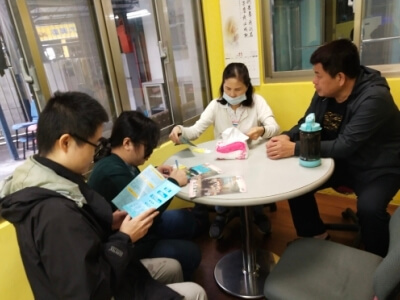
Once we knew people would soon be released, we visited Prison Fellowship programs in Keelung and Taipei and asked interns to review literature on Taiwan's aftercare and reentry system.
The literature traces Taiwan's formal aftercare system back to the Japanese colonial period. Wu Fu-Jung (2009) notes that, after the postwar government took over programs developed under Japanese rule, the official philosophy remained one of helping formerly incarcerated people become self-reliant and readjust to social life. Over the following decades, however, an aftercare philosophy inherited from earlier social-welfare models gradually diverged from the system actually operating in practice.
Li Ling-Wei (2019) argues that, despite the Prison Act's stated commitment to social reintegration, prison practice often neglects rehabilitation and education in favor of managing recidivism risk and monitoring incarcerated people. The underlying logic is one of social defense: isolating and neutralizing people viewed as risks. Lu Meng-Han (2012) similarly argues that the insecurity associated with modern "risk society" has encouraged harsher, populist criminal policy and deepened the social exclusion faced by people leaving prison. The stated aim remains rehabilitation and reintegration, but the system can operate instead as risk control and surveillance, making genuine return to society more difficult.
Research also identifies numerous weaknesses in how aftercare is delivered. Chen I-Ching (2007) notes that the Taiwan After-Care Association offers a wide range of services, but faces systemic problems: the assigned-counseling model is poorly designed; aftercare counseling depends heavily on volunteers who may lack sufficient training; halfway houses, placement services, and medical resources are inadequate; microloan standards are strict and procedures complicated; job referrals often involve low wages; vocational training may not match contemporary labor-market needs; and in-prison outreach and counseling remain insufficient.
Economic transition is only one part of reentry. Liu I-Hsin (2011), studying five formerly incarcerated people, found that stronger social support-through changes in family relationships, roles, and family structure-and cognitive change triggered by major life events, maturity, new information, guidance, and environmental shifts helped participants leave earlier criminal lifestyles behind. The findings suggest that reentry work must address not only income and employment, but also rebuilding social and family relationships and supporting changes in motivation and self-understanding. Taiwan's aftercare system currently lacks enough mental-health professionals to address those needs comprehensively.
Former prison social worker Wu Fu-Tung told us that the Taiwan After-Care Association, which bears primary responsibility for this work, lacks sufficient full-time staff and depends heavily on volunteers. Full-time personnel also do not always have professional backgrounds in psychology, social work, or employment counseling. That makes it difficult to build trusting relationships and creates fragmented services with weak continuity across housing, employment, and medical needs. Other concerns include overly strict management in placement facilities, job referrals concentrated in low-status manual work, and insufficiently transparent information about available services.
The problem begins even earlier. If treatment inside prison does not prepare a person to return to society, aftercare alone will struggle to succeed. Wu Yung-Ta, Tsai I-Chia, Chung Chih-Hung, Lin Chen-Wei, and Huang Chi-Wen (2019), reviewing Taiwan's parole system, argue that parole should balance "helping incarcerated people return to society" with "maintaining public safety." That requires stronger social-treatment programs before release and practical assistance with work and daily life afterward.
The literature provides a starting point for understanding the weaknesses of Taiwan's reentry environment. Our own experience after Interpretation No. 796-and that of the Correctional Institutions Watch Group in helping people connect with social-welfare resources-also suggests that one important development has received too little attention: the social-safety-net resources the government began building more actively in 2018. In practice, needs that the formal aftercare system cannot absorb are sometimes picked up by religious communities and local social-welfare centers. How much those resources can accomplish deserves closer attention.
The recent scandal involving businessman Weng Mao-Chung and improper contacts with judicial officials unexpectedly drew attention to another structural issue. Administrative-investigation materials showed that Weng had served as an honorary probation officer, prompting broader questions about placing the Crime Victims Protection Association, Taiwan After-Care Association, and probation-related associations within the prosecutorial system. The prosecutors association called for prosecutors to withdraw from the three organizations, and the Minister of Justice instructed a task force to accelerate planning for withdrawal and greater involvement by professional judicial-protection personnel. Whether this produces a deeper restructuring of Taiwan's aftercare system remains to be seen.
They Are Already Around Us
JRF is a legal advocacy organization, but because people trusted us, some stayed in basic contact after leaving prison. We cannot claim to have guided their reentry, but those relationships allowed us to observe part of the process. People released after very long sentences return to a society transformed almost beyond recognition. Where public reentry resources remain incomplete, family support inevitably becomes central. At the same time, we also saw important resources and capacities within the communities themselves.
Many people had taken sleeping medication in prison to endure the hopelessness of facing a 25-year remaining sentence. After release, some continued taking psychiatric medication and needed regular hospital visits for prescriptions. Visiting the communities where they lived also made one thing clear: the more rural the area, the more daily life depended on public long-term-care programs, low-income subsidies, and local village or neighborhood leaders. State medical and social-welfare systems entered their lives through those very practical points of contact.
Communication technology was another challenge. Some people quickly learned to use LINE with help from family and friends. Others were still learning, and some initially used only basic mobile phones without internet access. One case made us rethink our assumptions. We were deeply worried about his ability to communicate outside the home: he shared a phone with his wife, and in conversation he often seemed not to understand what I meant. But after visiting his community, we discovered that his local support network was actually strong-and functioned without much need for outside communication. Judging his reentry only by his ability to use communication technology would have been misleading.
Most of the people we met now work in manual labor, temporary market jobs, or traditional agriculture, livestock, and fishing. They are already around us, living through the same storms and good seasons on this land.

The Marks Left by Social Injustice
When their parole was revoked, these individuals were returned to prison to serve the remaining 25 years on the earlier life sentence. Once the parole-revocation disposition was revoked, however, they could still have a later sentence of six months or less left to serve. Some had already paid a fine in lieu of imprisonment for that later offense and were released immediately once the parole revocation was undone. Others were still serving the later sentence. That gave us an opportunity to visit them before release and ask what they might need outside.
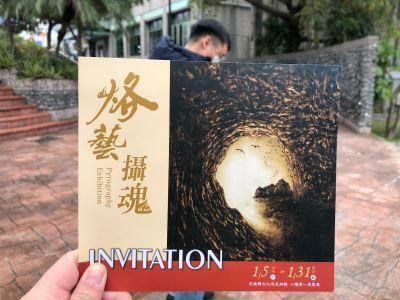

In January, we traveled to Hualien not only to visit one of the clients, but also to see a pyrography exhibition featuring the work of another, whom I will call Hsiao-Lung. Artist Weng Jui-Chung is highly skilled in pyrography and taught apprentices at Hualien Prison, later exhibiting their work together. Hsiao-Lung was one of them.
Hsiao-Lung is Amis and was born in Ji'an Township. He had little opportunity to attend school and is unable to read or write. At twelve he left home to work in glassmaking. If he did not work well enough, he was beaten; several times he thought his skull had cracked, only to discover that his head was badly swollen. He gave all his wages to his mother to support his younger siblings and did not complain, believing that this was simply his fate.
We had met other people in the parole-revocation cases who told us they could not read, but they were visibly older. One had entered prison for drunk driving at age 73 and was now 76. Hsiao-Lung looked much younger. When he told us his age, we checked his birth year on the spot: he was only 54.
After leaving the prison, we looked it up on a phone and realized that he had been born only one year apart from Tang Ying-Shen.
Tang Ying-Shen was a Tsou youth born in 1967 in Wufeng Township, Chiayi County-now Alishan Township. He went north for work, where he was cheated out of brokerage fees, had his ID withheld, had wages deducted, was forced into excessive labor, and was repeatedly subjected to an ethnic slur for Indigenous people. One night his employer woke him to work overtime; during the resulting conflict, Tang killed the employer, the employer's wife, and one child. He was executed by firing squad on May 15, 1987, at age 19, the youngest person on death row in Taiwan that year. His death became one catalyst for the Indigenous rights movement that followed.
What sounds like distant history suddenly felt very close standing in front of Hsiao-Lung. Many children who lived through the same era as Tang Ying-Shen and experienced similarly profound structural injustice and trauma are only in their fifties today. They may be anywhere around us. Or, like Hsiao-Lung, they may never have received a death sentence but may still have spent most of their lives inside correctional institutions.
The marks left by an unjust society have not yet become history. They remain beside us.
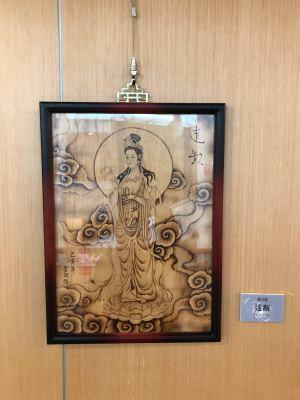


Life Is Hard: Understand the Circumstances, Pity Rather Than Rejoice
After the Interpretation was issued, we received an enormous amount of gratitude. Yet the way people thanked us never produced any feeling of triumph. Our emotions were much more complicated. As the famous line from Parasite puts it: "If I were rich, I could be kind too." We are fortunate people, which is part of why we have the privilege of standing in the position of the "kind" person. Meeting people who were born without the same resources or luck, once we understood more of their circumstances, there was little to celebrate. The appropriate response was closer to pity and concern.
We also received two calls from family members who asked, with real sadness and urgency, whether their relative could somehow remain in prison because they had no confidence in how to live with that person outside. Helping someone return from prison does not mean we have no concern for victims or for people who are genuinely afraid of someone being released. Those fears are real too. Life is difficult, and "hell is other people" can be true for both the person returning and the family receiving them. The responsibility should not be left to either side alone. There is still a great deal of work-for them and for us-to do.
This article is an AI-generated translation of the original Chinese text. In the event of any discrepancy, the Chinese version shall prevail.