
No Such Person | An Elementary-School Student Then, Confronting State Violence Seven Years Later
Last edited: 2026-08-29
The Sunflower Movement and the March 24 Executive Yuan violent eviction happened seven years ago, and their place in public memory has gradually faded. Some people may still remember the news footage from that night or the students who remained on the front line until morning, but most of those impressions have blurred with time. We thought that night was the end of the story. Who could have known then that it was only the beginning of seven years of litigation?
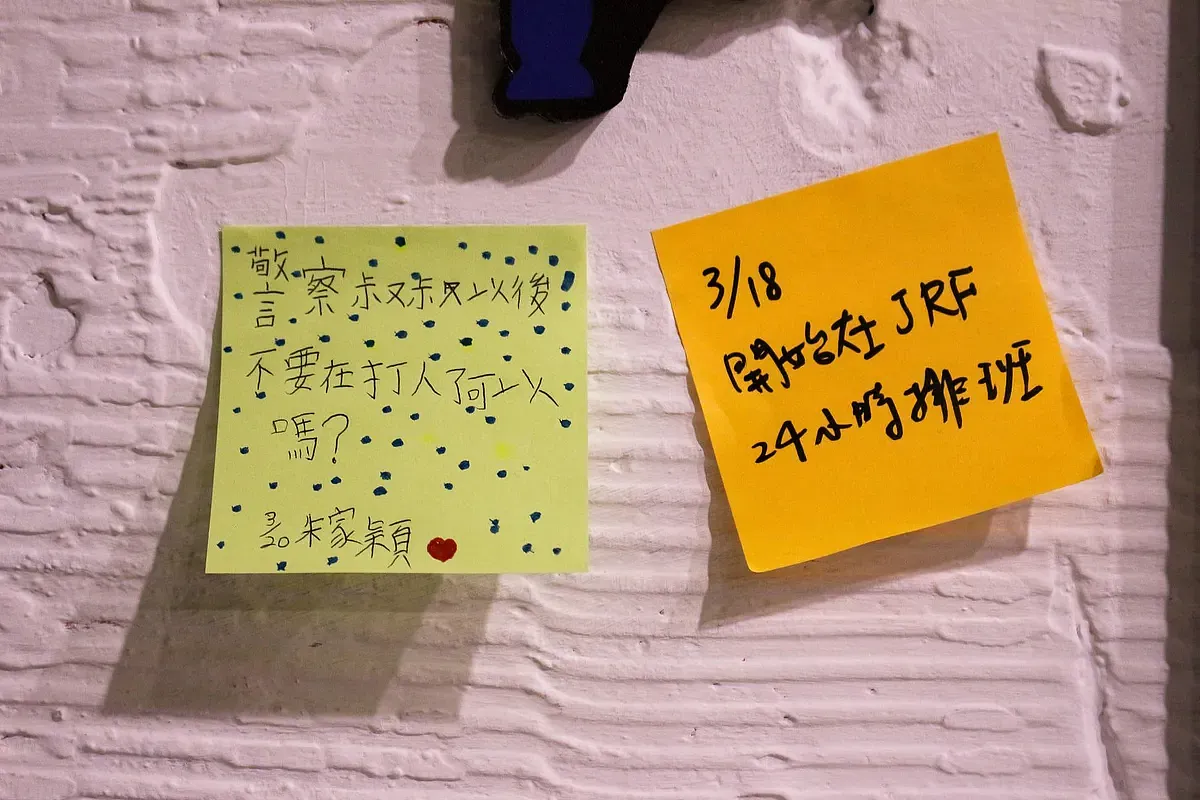
I visited JRF's "No Such Person" exhibition, held from March 18 through March 24, and attended one of its lectures,"Scars of March 24 - Seven Years Later."Attorney Lo Wan-Ting of the pro bono legal team moderated the event, where three people injured in the Executive Yuan eviction who later participated in private-prosecution cases discussed how they understand state violence seven years later.
An Elementary-School Student Then, Confronting State Violence Seven Years Later
When the Executive Yuan violent eviction happened, I was an elementary-school student who understood almost nothing about it. My memories of March 24 and the Sunflower Movement were limited to the Executive Yuan, people in black clothing, and police sirens. Only when I came to this exhibition seven years later did I really understand what had happened. For the first time, I realized that "state violence" was not an abstract idea. It had happened in broad daylight, so close to where I lived. That realization was shocking.
Born long after martial law had ended, I grew up enjoying freedom in a democratic society and treated democratic rights almost as a matter of course. Being able to say what we think and read the books that interest us seems completely ordinary to most of us. Yet that "privilege" exists because so many young people before us were willing to pay a price for their ideals.
Before I came to the exhibition, the White Terror, the Formosa Incident, and other struggles were mostly terms I memorized for examinations. A time without freedom of speech felt impossibly distant. I never imagined that a peaceful country could respond to a rational protest with bloodshed, or that a government trusted by its people could harm them. Walking into "No Such Person" forced me to realize that the democratic state governed by law I had always believed in was not as simple as I thought.
People's demands can be silenced. People's anger can be ignored. People's convictions can be trampled.
The Reality I Saw in the Exhibition
Junior-high textbooks taught me that law is a means by which people seek justice. What I saw in the exhibition made that proposition much less certain. "Confidential information" and "confidentiality of investigations" became explanations repeatedly invoked by officials as accountability was delayed. The people who were injured could not identify those who harmed them, much less hold the people who directed the operation responsible. Those who should have had to answer for the violence seemed protected in the shadows for seven years-exactly as the exhibition title says: "No Such Person."
But "No Such Person" refers not only to perpetrators who disappeared from accountability. It also evokes the unnamed protesters who struggled for a more genuine democracy. In news reports they become only a number-"the injured." Some people remember that they paid a price while seeking justice, but how many remember their names or faces? The exhibition also asks us to remember these anonymous participants.
The exhibition reconstructed the course of the events and presented a complete timeline. The moment I entered, a banner reading "When the government drives the people too far, the people resist" hung overhead, almost pulling me back seven years. I was not there that night, but through photographs and the words of people who were interviewed, I felt I could hear the protesters' demands and the ambulances whose sirens sounded through the night. The timeline stretched from 2014 to 2021. It showed seven long years of people insisting on justice and truth and the obstacles they met along the way. It felt like cutting through the sweet coating labeled "democracy" and finding something dirty and black underneath: authoritarianism, a word I once thought had receded far into Taiwan's past.
I grew up being told that Taiwan is an advanced democracy, but I had never seriously asked what democracy is worth. From the Formosa Incident onward, Taiwanese people paid for democracy with blood and tears. Has the promise behind that word really been fulfilled? If it has, how can people expressing political demands still be met with violence while commanders in positions of authority avoid responsibility for the injuries caused?
Hope Seven Years After State Violence
The exhibition's account of the victims' seven years of litigation also left me uncertain about Taiwan's justice system. Because courts are themselves part of the state, holding perpetrators of state violence accountable through the judiciary can seem extraordinarily difficult. But why should those perpetrators be treated differently from ordinary offenders? Does holding a senior position inside the state apparatus entitle someone to protection? When government institutions respond passively, victims can be denied justice and even a basic apology.
"What we want is actually very simple: admit it. Admit that it was wrong. Admit the harm they suffered that night, instead of saying you know nothing."
Those words from Attorney Lo Wan-Ting stayed with me. That night, leaders of a democratic society chose not to see and then spent seven years covering the mistake with implausible explanations.
The struggles Taiwanese people waged decades ago for genuine democracy-and the March 24 case, which ended seven years ago and yet has still not truly ended-cannot and should not be forgotten. Our own struggle remains ongoing. For ideals, freedom, justice, and democracy, that determination should continue until those who remain "no such person" step out from the shadows and stand in the same sunlight as everyone else.
This article is an AI-generated translation of the original Chinese text. In the event of any discrepancy, the Chinese version shall prevail.