

Inmates' Rights Manual | Remedies and Feedback
Last edited: 2026-08-29
Introduction
After the new Prison Act and Detention Act took effect on July 15, 2020, JRF began preparing materials to explain the rights of people held in correctional institutions. This simplified chapter of the "Inmates' Rights Manual - Remedies and Feedback" explains what remedies are available when you disagree with a disposition, management measure, or other treatment, what channels you can use to suggest improvements, and how inmates and their families can ask JRF for assistance.
A full version of the "Inmates' Rights Manual - Remedies and Feedback" is also available. You can write to JRF for a copy or download it using the button below. If you have other questions or need assistance, you are welcome to contact us by mail or telephone.
- JRF Address: 7F., No. 3, Ln. 90, Songjiang Rd., Zhongshan Dist., Taipei City 10456
- JRF Complaint Hotline: 02-2542-1958
- JRF LINE ID for Complaints: @jrftw
Overview of the Main Remedies Available to People in Custody
The available remedy depends on your legal status. The chart below provides a quick overview of the principal remedies under the Prison Act and Detention Act.
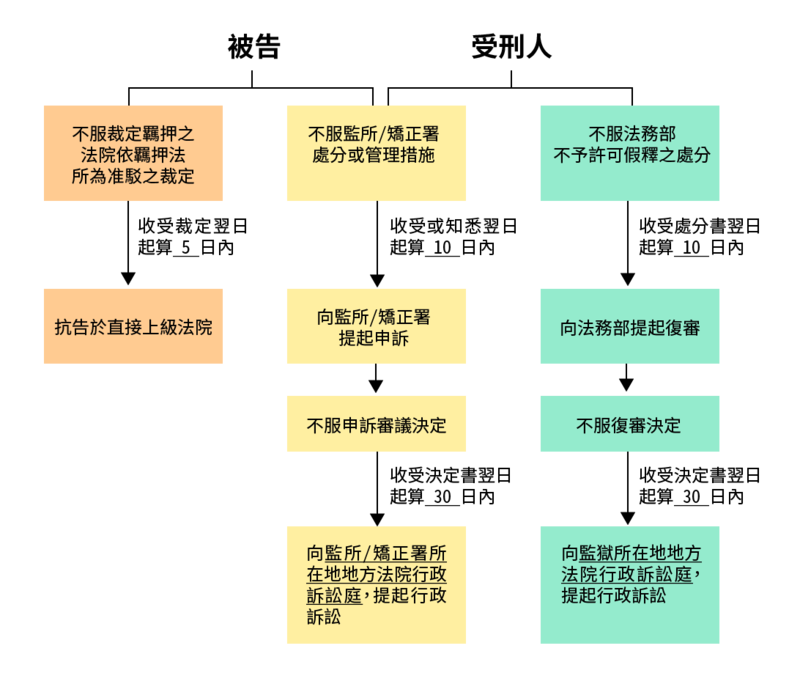
Remedies for People in Custody
I Am Serving a Sentence - What Can I Do?
For inmates serving sentences, the principal remedies fall into two categories: (1) complaints and litigation concerning dispositions or management measures that affect personal rights and interests; and (2) remedies relating to parole review and decisions denying parole. The following sections explain which route applies in different situations.
Remedies for Dispositions and Management Measures Affecting Personal Rights and Interests
Overview of the Complaint and Litigation Process
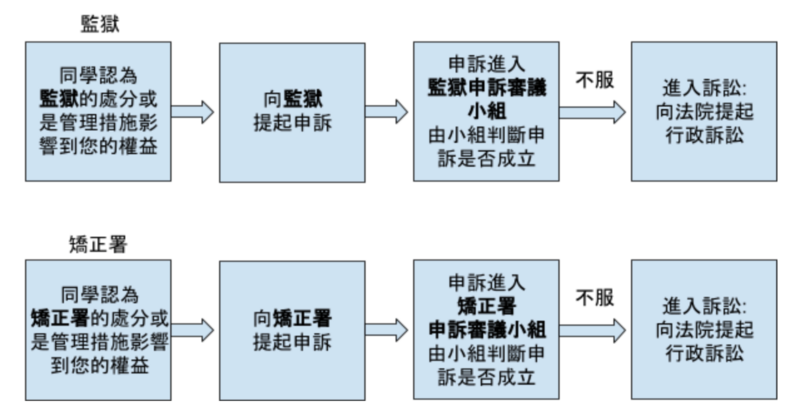
If you disagree with a disposition or management measure because you believe it affects your rights or interests, you may file a complaint. First determine whether the measure was issued by the prison or the Agency of Corrections, and file the complaint with the authority that issued it. You may complain even if the disposition or management measure has already been carried out.
For example, if the Agency of Corrections denies your request to transfer to a prison closer to home so that elderly parents can visit more easily, you may complain to the Agency. Or suppose prison staff believe you violated a rule, take your statement, and then keep you handcuffed until just before four hours have elapsed. If you believe the handcuffs were deliberately used as punishment, you may still file a complaint with the prison after the cuffs are removed.
After you file a complaint, it is reviewed by the complaint review panel of the prison or the Agency of Corrections, depending on which authority issued the measure. If you disagree with the resulting complaint decision, you may then seek judicial review.
Important: this complaint procedure applies only to matters arising under the Prison Act. If the dispute arises under another statute, the ordinary administrative appeal and administrative litigation procedures apply. For example, if a prison or the Agency of Corrections rejects a request for government information or archive access under the Freedom of Government Information Law or the Archives Act, you must use the ordinary administrative appeal procedure rather than the Prison Act complaint process.
Q1: How Do I File a Complaint?
If you disagree with a disposition or management measure issued by a prison or the Agency of Corrections, you must file the complaint within 10 days beginning on the day after you receive or become aware of it.
If filing a complaint with the prison, it can be done in writing or orally. If filing a complaint with the Agency of Corrections, it can only be done in writing. We advise inmates to file complaints in writing as much as possible. If you would like JRF to provide legal advice, keep a copy of the written complaint and mail it to us. A written complaint must include:
- Your name.
- The name and address of your agent or assistant, if any.
- The reasons for the complaint.
- The facts underlying the complaint and when they occurred.
- The date on which the complaint is filed.
- Your signature or seal.
If you complain orally, prison staff will complete the complaint form for you. They must read it aloud to you or let you review it; after confirming that it is correct, you must sign or affix your seal.
Q2: My Complaint Is Being Reviewed. What Can I Do to Protect My Rights?
During complaint review, you may:
- Appoint an attorney to act as your agent.
- With approval from the prison or Agency of Corrections, appear with an assistant. An assistant can help you communicate if you have difficulty explaining the facts clearly.
- State your views. (1) If your complaint was filed with the prison, the complaint review panel should allow you to attend and speak. If you are housed at another institution and cannot attend, you may provide your statement in writing, by audio or video, by video conference, by telephone, or through another appropriate method. (2) If your complaint was filed with the Agency of Corrections, you generally will not attend the panel's meeting in person because you remain housed in prison; your views can instead be submitted in writing, by audio or video, by video conference, or by telephone.
- Ask the complaint review panel to investigate facts and evidence. If the panel considers an investigation unnecessary, it must explain why in the complaint decision.
- In theory, you may also seek access to complaint materials under the Administrative Procedure Act, Archives Act, and Freedom of Government Information Law. JRF has not yet assisted an inmate in obtaining such materials at the complaint-review stage, so we cannot say with certainty what will be available.
Q3: I Disagree with the Complaint Decision. What Can I Do?
You may file suit within 30 days beginning on the day after the complaint decision is delivered. If you disagree with a decision of a prison complaint review panel, file with the administrative litigation division of the district court where the prison is located; if you disagree with a decision of the Agency of Corrections complaint review panel, file with the administrative litigation division of the district court where the Agency of Corrections is located (Taoyuan). Administrative litigation is specialized, and the Prison Act contains special requirements and types of action for prison matters. If you plan to go to court, JRF recommends obtaining legal assistance.
Q4: I Need a Lawyer but Cannot Afford Legal Fees. What Can I Do?
You may apply to the Legal Aid Foundation for assistance. You can ask the prison for a Legal Aid Foundation application formor submit a declaration that you meet the Foundation's financial-eligibility standard (monthly income below NT$22,000 and assets below NT$500,000). If legal aid is approved, the Foundation will assign an attorney to assist you.
You may also write to JRF for assistance. Because JRF's mission is judicial reform, it provides pro bono representation only in cases that present a public-interest issue related to judicial reform and only after internal review. (See "Seeking Assistance from JRF," page 13 and following.)
If you become aware of a possible violation of your rights and think litigation may eventually be necessary, seek assistance from the Legal Aid Foundation or JRF as early as possible. Do not wait until the complaint process is over. JRF has seen cases in which an inmate filed a complaint without clearly raising an important issue and the court later dismissed the claim procedurally because that issue had not been included in the complaint. Legal assistance is therefore most useful from the beginning.
Q5: I Cannot Afford the NT$1,000 Court Fee. What Can I Do?
A plaintiff ordinarily must pay the court fee before the case can proceed. The fee for these actions is NT$1,000, but many inmates earn less than that amount each month from prison work. If you cannot afford the fee, consider the following options:
- Apply to the administrative court for litigation aid and ask the court to defer collection of the fee. The costs will ultimately be allocated after judgment according to the result.
- Apply to the Legal Aid Foundation. If the Foundation grants legal aid, the court will ordinarily regard that as supporting eligibility for litigation aid as well.
- Ask JRF for assistance. If JRF accepts the matter as a public-interest case and you cannot pay the fee, JRF may pay it on your behalf.
Q6: Will the Court Hold a Hearing? Will I Be Able to Explain My Position to the Judge?
Not necessarily. The Prison Act allows the court to decide these cases without oral argument, so a case may be dismissed without a hearing. In JRF's experience with prison litigation, whether a person has an attorney can affect how willing a court is to hold a hearing.
Q7: Is It Worth Filing a Complaint or Going to Court?
Based on JRF's past experience, we do not place great confidence in internal prison complaint review. A complaint system existed even before the 2020 amendments to the Prison Act and Detention Act. The prior committees-whose names varied among institutions and are now standardized as "complaint review panels"-often appeared to endorse the prison's position. Their decisions also did not always clearly state the facts, legal rules, or administrative interpretations being applied. The 2020 amendments did not fundamentally change how the panels are constituted: outside members are still appointed by the head of the agency. For that reason, our expectations remain limited.
Courts are institutionally separate from prisons and therefore offer a more independent forum. Even so, administrative courts often defer to agencies, and success may depend on encountering a judge willing to overturn an agency decision. When JRF assists with a complaint, the goal is often to preserve the issues for litigation rather than to expect the complaint itself to solve the problem. We have also seen courts reject a case without a hearing and adopt the agency's account in full.
Q8: After I Filed a Complaint or Lawsuit, I Feel the Prison Started Giving Me a Hard Time. What Can I Do?
The law prohibits a prison from discriminating against or unreasonably punishing an inmate because the inmate filed a petition, complaint, or legal action. In practice, however, that does not guarantee staff will never retaliate. Inmates have reported increased searches for tobacco, being assigned to live with difficult cellmates, or being placed in protective isolation after filing complaints. From outside the institution, it can be difficult to determine whether a particular measure is retaliation or was taken for another reason. If you genuinely believe a prison is targeting you because you filed a complaint, you may still contact JRF.
JRF can help distinguish among measures that may be unlawful, measures within the prison's discretion, and measures that are clearly lawful. For example, smoking in a housing area violates prison rules. If the prison stops overlooking the practice and begins enforcing the prohibition after you file a complaint, the enforcement itself is lawful. Room assignments involve broad institutional discretion and may be better addressed through a petition. Protective isolation, by contrast, has strict legal requirements and can seriously affect human rights; depending on the facts, a complaint to the Control Yuan or judicial relief may be worth considering.
Parole Review and Remedies for Denial of Parole
Overview of Parole Review and Parole-Petition Procedures
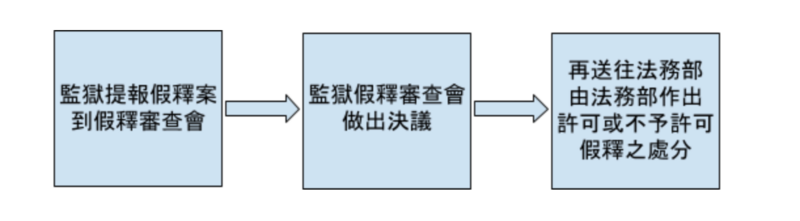
Parole is a matter of obvious importance to people serving sentences. If you meet the statutory requirements, the prison must submit your case to its parole board. After the parole board reaches a decision, the matter is reported to the Ministry of Justice for review. The Ministry then decides whether to approve or deny parole.
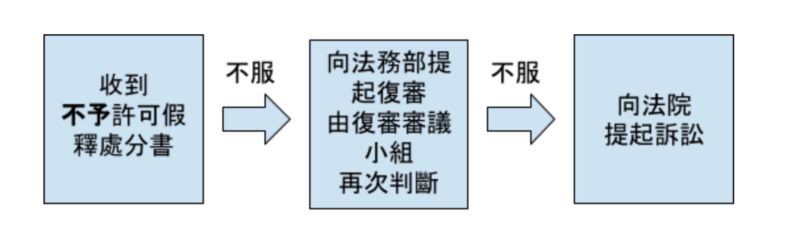
If the Ministry denies parole, you may file a petition with the Ministry of Justice. The Ministry's petition review panel will determine whether the petition has merit. If you disagree with the petition decision, you may then file an administrative suit.
The Ministry of Justice currently delegates parole review and petition-review functions to the Agency of Corrections. It is therefore normal for the Agency of Corrections, rather than the Ministry itself, to appear on the decision documents you receive.
Q9: My Parole Case Was Removed at a Prison Affairs Meeting and Never Sent to the Ministry of Justice. What Should I Do?
JRF sometimes hears inmates say that their parole cases were removed at a prison affairs meeting and never forwarded. Under the new law, however, once you satisfy the eligibility requirements, the prison must submit your case to the parole board. Even if the parole board votes against parole, the matter must still be reported for review by the Ministry of Justice (in practice, the Agency of Corrections under delegated authority). If you believe your case was stopped before that point, contact JRF.
Q10: What Standards Are Used to Review Parole?
Article 116 of the Prison Act provides that parole review should consider the circumstances of the offense, conduct in prison, criminal record, effectiveness of edification or correctional treatment, the after-care plan, and other relevant matters in order to assess the inmate's repentance. The Ministry of Justice must establish and appropriately publish reference standards for parole review.
The publicly available "Reference Standards for Parole Review" appear as an attachment to the Ministry of Justice's January 13, 2016 press release,"Ministry of Justice Enhances Parole Efficiency to Alleviate Overcrowding."".
Under the reference standards, relatively lenient review applies to, among others, shorter sentences, open-prison inmates, elderly or frail inmates, women and juveniles, first-time or secondary participants in an offense, negligent or occasional offenses involving relatively little harm, and people with a low risk of recidivism or a well-developed after-care plan. Parole may be considered favorably in cases including:
- A first-time offender whose offense did not harm life or bodily integrity.
- A remaining sentence of one year or less with no serious disciplinary violations.
- Serious illness, physical disability, advanced age or frailty, an evident lack of recidivism risk, or inability to care for oneself.
- A good post-offense attitude together with meaningful efforts to compensate losses or repair harm.
More rigorous review may be applied to major criminal cases and offenses characterized by continuity, organized participation, widespread harm, violence, or randomness; complicated repeat offending; reoffending while on parole; or repeated prison-rule violations indicating serious difficulty with rehabilitation. Stricter review may also be applied to offenses with comparatively high recidivism rates, such as drug, theft, or public-endangerment offenses, where the person has previously had parole revoked. The reference table is summarized below:
| Factor | Factors Supporting More Lenient Review | Factors Supporting More Rigorous Review |
| Circumstances of the Offense |
|
|
| Post-Offense Conduct (including conduct in prison) |
|
|
| Risk of Recidivism (including criminal record) |
|
|
The Ministry of Justice has specifically emphasized that actual evidence of repentance during imprisonment should be the primary consideration and that reviewers should abandon the unwritten practice of automatically rejecting an initial parole application and should not rigidly focus on the percentage of the sentence already served. Inmates nevertheless frequently write to JRF saying that prisons still look heavily at the percentage of sentence served. Because this is an unwritten practice, even if an application is effectively denied for that reason, the written decision generally states something else. From outside the system, civil-society organizations have no reliable way to verify what actually drove the decision.
Q11: My Case Has Reached the Parole Board. What Can I Do to Protect My Rights?
- You may state your views before the parole board meets, either orally or in writing, and they should be recorded on the inmate's parole statement form. An interview with parole-board members may also be arranged for inmates serving sentences of 15 years or more, when a victim or surviving family member asks to express views, or when the guidance team or a parole-board member considers an interview necessary.
- You may appoint an attorney or assistant to help present your views.
- Under Article 117, Paragraph 2 of the Prison Act, you may request to read, copy, or duplicate information relating to parole review. Some inmates have told JRF that they were able to obtain the prison's parole report form.
Some inmates tell us the process still feels opaque. Although they can obtain the parole report and express views before the board meets, they cannot attend the meeting itself and may not know how prison staff present the case to the board. They therefore have no direct opportunity to rebut unfavorable statements as they are made. JRF agrees that this is a serious problem, but we have not yet found an effective way to address it.
Q12: If Parole Is Denied, How Do I Seek Relief?
If parole is denied, you must file a petition with the Ministry of Justice within 10 days beginning on the day after the decision is delivered. The petition must be submitted on the required form and signed or sealed by the petitioner. It must state:
- Your name.
- The name and address of your agent or assistant, if any.
- The facts and reasons supporting the petition.
- The date on which the petition is filed.
The most common complaint JRF hears about parole denials is that the reasons are so vague that an inmate cannot tell what would improve the chances of parole. A decision may say only, for example, that an inmate has prior drug offenses, again committed drug-related offenses, seriously harmed public safety, and has been unable to stop using drugs, so "further evaluation" is necessary. But the document may reveal nothing about the standards or assessment tools used to conclude that the person cannot stop using drugs, or what "further evaluation" is supposed to measure. In principle, a decision denying parole should state reasons concrete enough to be tested and should tell an inmate what can be done-such as completing a particular treatment program or demonstrating a specified behavioral change-to improve the prospects for parole. JRF has not yet found an effective way to require reasons at that level of specificity.
Q13: My Parole Petition Is Under Review. What Else Can I Do to Protect My Rights?
- You may appoint an attorney as your agent.
- With approval from the Ministry of Justice, you or your attorney may appear with an assistant.
- You may state your views in writing, by audio or video, by video conference, by telephone, or through another method. Unless the Ministry permits otherwise, you will not appear in person at the meeting of the petition review panel.
- In theory, you may also seek access to petition materials under the Administrative Procedure Act, Archives Act, and Freedom of Government Information Law. JRF has not yet assisted an inmate with access at this stage, so we cannot say what materials will be available.
Q14: I Disagree with the Petition Decision. What Can I Do?
Within 30 days beginning on the day after the petition decision is delivered, you may file an action for revocation in the administrative litigation division of the district court where the prison is located. The court fee is NT$1,000.
Q15: Will a Parole Petition or Administrative Suit Help Me Get Out Sooner?
It is difficult to say that challenging a denial of parole through a petition or administrative litigation will lead to earlier release. The Agency of Corrections publishes petition decisions on itsPetition Decision Searchwebsite. From July 15, 2020, when the amended Prison Act took effect, through June 8, 2021, 43 published petition decisions concerned denial of parole. Only one revoked the original decision.
As for administrative litigation, only one judgment had then granted meaningful relief. In that case, the prison supplied incorrect parole information to the parole board, and the court concluded that the Ministry's denial rested on inaccurate information. It revoked the denial and ordered the Ministry to make a new disposition consistent with the court's legal analysis. Courts generally do not conduct searching substantive review of the reasons for denying parole, however, because they treat parole assessment as a highly specialized matter entitled to deference. That helps explain why vague, difficult-to-test reasons can persist: the later review mechanisms usually accept the form of reasoning rather than treating its lack of specificity as an independent defect.
I Am a Defendant in Detention - What Can I Do?
Overview of Remedies for Defendants
Some remedies for defendants in detention are the same as those available to inmates serving sentences. If you disagree with a disposition or management measure issued by a detention center or the Agency of Corrections that affects your rights, the complaint and administrative-litigation route generally applies.
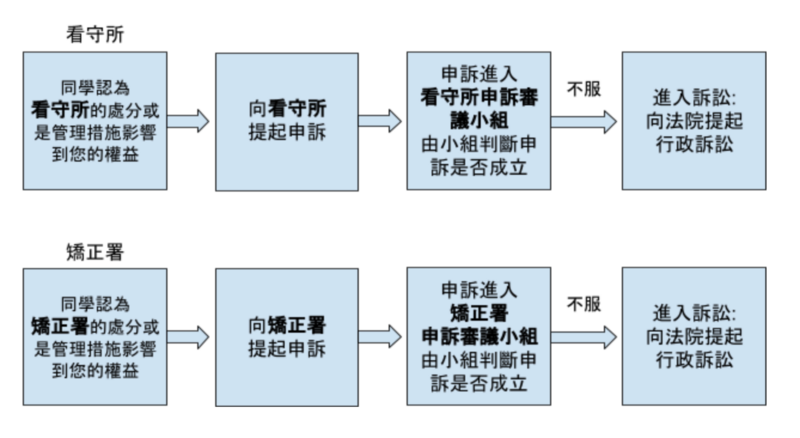
The main differences are:
- Defendants are not serving a sentence and therefore do not use the parole or parole-petition procedures.
- Some decisions affecting defendants are made by the court that ordered detention or by a prosecutor. Challenges to those decisions use criminal-procedure remedies rather than administrative remedies.
For example, under the Detention Act, use of guard instruments, protective restraint, or placement in a protective cell must be reported to the court that ordered detention, which decides whether the measure is permitted. If you disagree with the court's ruling, you do not use the complaint and administrative-litigation route. Instead, you file an interlocutory appeal with the immediately superior court under the Code of Criminal Procedure.
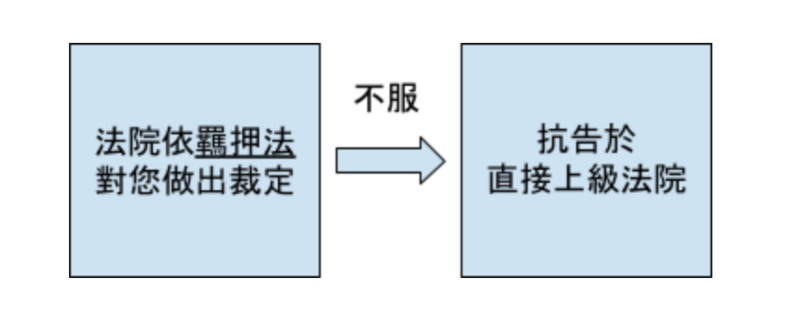
The basic rule is:
- If the measure is a disposition or management measure of an administrative authority, such as a detention center or the Agency of Corrections, use the complaint and administrative-litigation route.
- If it is a court ruling or a prosecutor's disposition, use the remedies provided by the Code of Criminal Procedure.
(Rare exceptions are not covered in this simplified guide.)
Q16: How Do I Challenge a Court Ruling Under the Detention Act?
If you disagree with a ruling under the Detention Act, you may file an interlocutory appeal with the immediately superior court within 5 days beginning on the day after the ruling is served. File the written interlocutory appeal with the court that issued the ruling. If that court agrees with your arguments, it may correct its own ruling; otherwise it forwards the matter to the appellate court. A ruling by a district court is appealed to the high court, while a ruling by a high court is appealed to the Supreme Court. These appeals are ordinarily decided on the written record without a hearing, and no court fee is charged.
Q17: I Am Both an Inmate Serving a Sentence and a Defendant in Another Case. Which Remedy Applies?
Return to the same basic rule:
- For a disposition or management measure issued by an administrative authority such as a detention center or the Agency of Corrections, use the complaint and administrative-litigation route.
- For a court ruling or prosecutor's disposition, use the remedies provided by the Code of Criminal Procedure.
Feedback and General Petitions
If you want to raise a concern or propose an improvement, you can submit a petition. A petition may address a general administrative policy or supplement the formal remedies available for an individual violation of rights. Unlike complaints and litigation, which have strict procedural requirements, petitions allow an agency more flexibility to respond proactively. If the agency accepts the suggestion, improvement can sometimes come much faster than through formal proceedings. Possible recipients include the Ministry of Justice, Agency of Corrections, the prison or detention center, the Control Yuan, legislators, and the external inspection panel created under the new Prison Act and Detention Act.
Q18: When Should I Use a Petition?
Use a petition when you want to propose a general administrative improvement. For example, if a housing area has only one exhaust fan and poor ventilation, you might ask the institution to install additional fans to improve air flow. Such a change could benefit many people and does not require an individual rights violation to have already occurred.
A petition can also be useful when the deadline for a formal complaint has already passed. One prison, for example, adopted an internal handbook rule deducting points after two violations. An inmate initially accepted the penalty but later questioned whether the rule had any legal basis. By then, the complaint deadline had expired. The inmate petitioned the Agency of Corrections, which concluded that the prison's internal rule lacked legal authority and required the prison to correct it.
Q19: There Are Many Petition Channels. Which One Should I Use?
The best channel depends on which agency has power to address the problem. Based on JRF's experience:
- If the issue can be decided within the authority of an administrative agency, we recommend petitioning the prison, detention center, or Agency of Corrections. For example, a family member told us that remote visits had previously been available once a week under older Agency of Corrections rules but were reduced to once every two weeks after new communication-equipment regulations took effect. Because the new rules still allowed institutions to adjust frequency based on available equipment, JRF helped the family petition the Agency through a legislator and retain weekly remote visits with the inmate housed far from home.
- If the issue involves unlawful conduct or dereliction of duty by an institution or its staff, you may file a complaint with the Control Yuan. JRF once received information from an inmate at Green Island Prison alleging serious problems with long-term solitary confinement and resulting deterioration in mental health. Prolonged solitary confinement raises serious concerns under the United Nations Standard Minimum Rules for the Treatment of Prisoners (the Nelson Mandela Rules). JRF assisted with a Control Yuan complaint, and the Control Yuan later issued corrective measures concerning the Ministry of Justice and Green Island Prison. Before contacting the Control Yuan, however, it is generally advisable to petition the agency responsible for the issue first. The Control Yuan may also decline to act while a formal complaint or lawsuit concerning the same matter is pending.
- If the issue requires legislation to be amended, you may petition the agency responsible for the law or a legislator. For example, after the amended Prison Act took effect, Class 4 inmates could possess small televisions but not radios. That restriction derived from the Progressive Execution of Penalty Act, so changing it requires legislation rather than an administrative adjustment.
- The new Prison Act and Detention Act also require each institution to establish an independent external inspection panel, which may receive petitions. Because the mechanism is still new, its practical effectiveness remains to be seen.
Seeking Assistance from JRF
Q20: I Have a Legal Question or Concern About a Correctional Institution. How Do I Ask JRF for Advice?
If you have a legal question or concern relating to a prison or detention center and would like to know how a civil-society organization views the available options, you are welcome to write to JRF. All JRF services are free. Please do not enclose postage.
If your question concerns whether to file a complaint or lawsuit to protect your own rights, contact JRF as soon as you become aware of the possible violation. If there is enough time, we may be able to identify important facts or legal grounds that should be raised during the complaint stage so they are not lost later in court.
Even if you write to JRF, do not miss a statutory filing deadline while waiting for our reply. Mail delivery and response time can be unpredictable. If you intend to file a complaint or lawsuit, file within the legal deadline. When writing to us, include copies of relevant documents whenever possible. For the following issues, the listed documents are especially helpful:
- Protective isolation: written notice imposing protective isolation.
- Guard instruments used for more than four hours: copy of the inmate or defendant guard-instrument record.
- Protective restraint: written notice imposing protective restraint on the inmate or defendant.
- Placement in a protective cell: written notice placing the inmate or defendant in a protective cell.
- Complaint review: complaint decision.
- Parole: decision denying parole.
- Parole petition: petition decision.
If, after receiving your letter, JRF asks you to provide a written record of a disposition or management measure that was originally made in another form, you may rely on Article 93, Paragraph 4 of the Prison Act and Article 85, Paragraph 4 of the Detention Actto request that the prison or detention center put the measure in writing. The institution may not refuse a legitimate request. To protect yourself and preserve the ability to seek help elsewhere, send JRF copies, not original documents.
Q21: What Will JRF Do After It Receives My Letter?
JRF generally replies to every letter. If a month has passed without a response, you may write again to ask about the status. Depending on the issue, staff may answer the legal question directly, provide requested materials, ask for additional information, or explain that JRF cannot assist. Some matters require internal review-for example, whether JRF should help with a petition, complaint, or lawsuit, or whether the issue suggests a broader need for institutional reform. In those cases, staff may present the matter at an internal meeting and assign it to a pro bono attorney for research or assistance, so the reply may take longer.
Q22: I Am a Class 4 Inmate and Cannot Write Directly to JRF. What Can I Do?
Class 4 inmates are generally permitted to correspond only with relatives. Some people therefore ask a relative or another inmate who is not in Class 4 to tell JRF that they have a legal question but cannot write directly. If this applies to you, you can try labeling your letter as a "petition" and see whether the institution permits it. If the institution still refuses, ask a relative or another inmate who can correspond freely to notify JRF, and we will try to understand what is preventing contact.
This article is an AI-generated translation of the original Chinese text. In the event of any discrepancy, the Chinese version shall prevail.