
No Such Person | Realizing That "State Violence" Is Not an Abstraction
Last edited: 2026-08-30
During the March 18 Student Movement and the March 24 Executive Yuan eviction in 2014, I was a junior-high student watching the shocking live footage on television. Embarrassingly, my first thought was how the events might appear on a civics exam. I lived in Taipei and everything was happening so close to me, yet I remained largely indifferent. It was not until seven years later, through a school internship, that I truly encountered the state violence of that night.
Most people my age grew up in a relatively peaceful and stable period. We can speak our minds without much fear, rarely thinking about how much of the freedom surrounding us was bought through the blood, tears, and effort of earlier generations of student activists. Once I began to think about that, what I felt most strongly was gratitude and respect.

I used to think the phrase "state violence" sounded contradictory. A state is constituted by its people and is supposed to protect them. How could it turn around and use the coercive power available only to government to harm those same people?
An individual has very little power compared with the state. March 24 made that imbalance concrete for me. Even people who were not resisting, but merely sitting peacefully or assembling, could be treated violently by state authorities. That was when I understood that the seemingly irrational idea of "state violence" is not a contradiction in terms. It can actually happen.
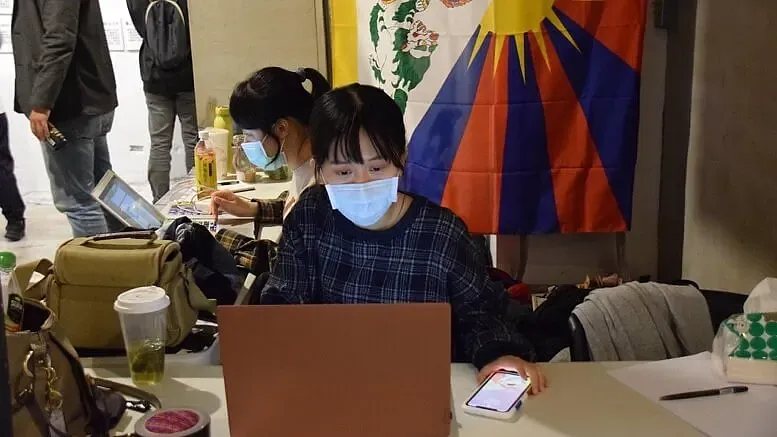
While preparing the exhibition, I also saw how carefully the team had tried to reconstruct the scene. Each area had a deliberate title-such as "The Premier's Lullaby"-and every exhibit served a purpose. A simulated water-cannon vehicle stood beside projected footage of confrontations between police and protesters and statistics on people who sought medical treatment that night, making the scene feel almost present again. A map tracked the movements of police commander Fang Yang-Ning, with QR codes at individual locations linking to specific incidents of violence. For graphic newspaper photographs, black screening lines were placed so visitors would not be confronted with bloody images without warning.
Many visitors had continued following social movements, and some had been directly involved in 2014. They would patiently tell us what they remembered-how police officers harmed people and how the government ignored their voices. Listening was shocking. The blood and tears I had known only through documents and exhibits suddenly crossed seven years of time and appeared before me as someone's lived experience. I had assumed that, as a guide, I was the one who would explain March 24 to visitors. In the end, they were the ones teaching me.
After the exhibition ended, we also attended JRF's seminar at National Taiwan University's Tsai Lecture Hall on "Occupation Movements and Freedom of Expression," which explored civil disobedience and the right of resistance. It made me ask again what Taiwan had actually changed in seven years. People who fought for freedom and democracy paid in injuries, financial losses, and years of litigation against the state. Many never became famous names in history, yet their efforts helped support the long road of social movements that followed.
In the end, I think the meaning of the exhibition title "No Such Person" captures the movement well. It describes the painful reality of accountability that leads nowhere, but it also names a result we can resist through memory. Remembering is one way to honor the people who had the courage to take to the streets to protect Taiwan's democracy.
This article is an AI-generated translation of the original Chinese text. In the event of any discrepancy, the Chinese version shall prevail.