
Internship Reflection | Without a Legal Background, I Still Found Ways to Contribute to Issues I Care About
Last edited: 2026-08-30
I had just graduated from high school and was taking a gap year. Although I had no legal background, I was interested in the field, so I found JRF, which accepts interns without a legal background. At first, I worried that my internship might end without my understanding anything, but I soon realized I had worried too much. Even without a legal background, I found that I could contribute to issues I care about and broaden my understanding of social issues.
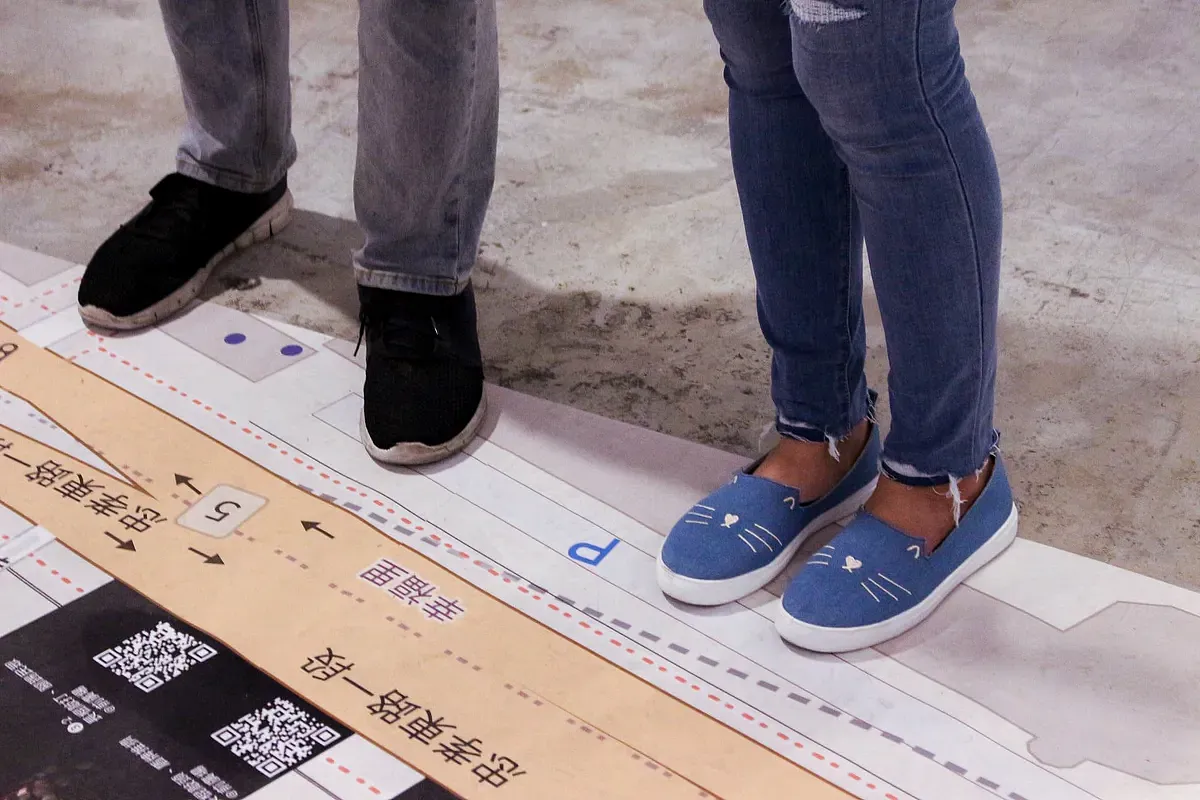
At the start of my internship, I took part in the "No Such Person" exhibition, which documented the litigation arising from the Sunflower Movement, and served as a guide. I actually remembered almost nothing about the event. I was only in sixth grade when it happened, and all I remembered was a group of "rioters" rushing into a government building. Learning about the Sunflower Movement and the litigation pursued by people harmed during the action was an entirely unexpected gain for me. It helped me understand the relationship between the people and the state and think about the reasons and logic behind court judgments. We also discussed questions that seemed to have no clear answer, such as whether restricted areas are necessary. What left the deepest impression on me was a mother who brought her two-year-old son to the exhibition. After the tour, she began to cry as she spoke. I was caught off guard and unexpectedly felt tears welling up too. She said, "I was not one of the people beaten by the police, but when I saw those images-the police attacking seated protesters-I did not understand why the state would treat us this way..." Before seeing the exhibition, I had thought of state violence only in terms of the White Terror seventy years ago. I had not realized that state violence for which transitional justice had still failed to provide redress had occurred only seven years earlier. That shocked me. Seeing how the state concealed the truth over the course of the litigation made me worry that, if another moment of resistance comes in the future, the state may use the same methods against the people. After all, once those responsible have successfully escaped accountability once, it can happen again.
JRF works on an extremely wide range of issues. After the exhibition ended, I helped draft a handbook on the rights of people in correctional institutions, turning complex, difficult language into plain language. Before receiving this assignment, I had never encountered any issues relating to correctional institutions, much less known that the term refers to both prisons and detention centers. During the drafting process, I frequently met with JRF colleagues to check the content. At one meeting, a colleague told me, "You are doing something very meaningful-a task that very few people can persevere long enough to finish." Those words gave me tremendous motivation and moved me deeply. Admittedly, correctional issues do not readily ignite people's sense of justice. Yet their very obscurity made me more interested. Editing the handbook gave me the chance to learn about people whose lives barely overlap with my own and to see very different lives and circumstances. Because I was working on the handbook, I also joined a prison-rights group's correspondence program and became a pen pal with an inmate. Drafting the handbook helped me understand the correctional system, while the inmate's letters helped me understand the backgrounds and daily lives of people in prison.
During my two-month internship, I felt how distant legal issues can be from ordinary people-especially people without a legal background. Precisely because I did not have a legal background, I could approach complex text as a "translator" and make difficult material more accessible. I tried to get friends and family to pay attention to these issues, but I found that even when an issue is presented in plain language, someone still has to be interested enough to read about it. I found that regrettable, because every social issue affects us in some way. That is why I especially enjoy plain-language work: I hope my writing can draw more attention to these issues or help the people affected understand their legal rights.
The JRF internship was extremely rich, not only in the range of issues but also in opportunities for teamwork and discussion with colleagues. JRF adjusts the internship around each intern's learning plan, and supervisors are generous in making the organization's resources available to students. I liked this freer and more flexible environment. At the same time, I realized that to get the most out of it, I had to keep asking questions and actively look for resources and answers, rather than simply complete assigned tasks one by one. I am very grateful for the opportunity to intern at JRF. It gave me a chance to experience legal work firsthand and to explore both social issues and my own aspirations. The internship was not limited to writing: I also took part in in-person events, court observations, and seminars, which broadened my horizons and helped me understand what legal professionals do and what their working environments are like.
I highly recommend JRF to students who are interested in law or social issues!
Special thanks to supervisors Mei-Hui and Chang Chih, as well as Wei-Ting and Jun-Wei, for all the help you gave me during my internship.
This article is an AI-generated translation of the original Chinese text. In the event of any discrepancy, the Chinese version shall prevail.