
Accelerating Judicial Reform: Bridging the Gap Between "Dinosaur Judges" and the Public
Last edited: 2026-08-30
- Interview and Article by: Hung Yueh-Ho
- Original Source: The Storm Media https://www.storm.mg/lifestyle/3741908
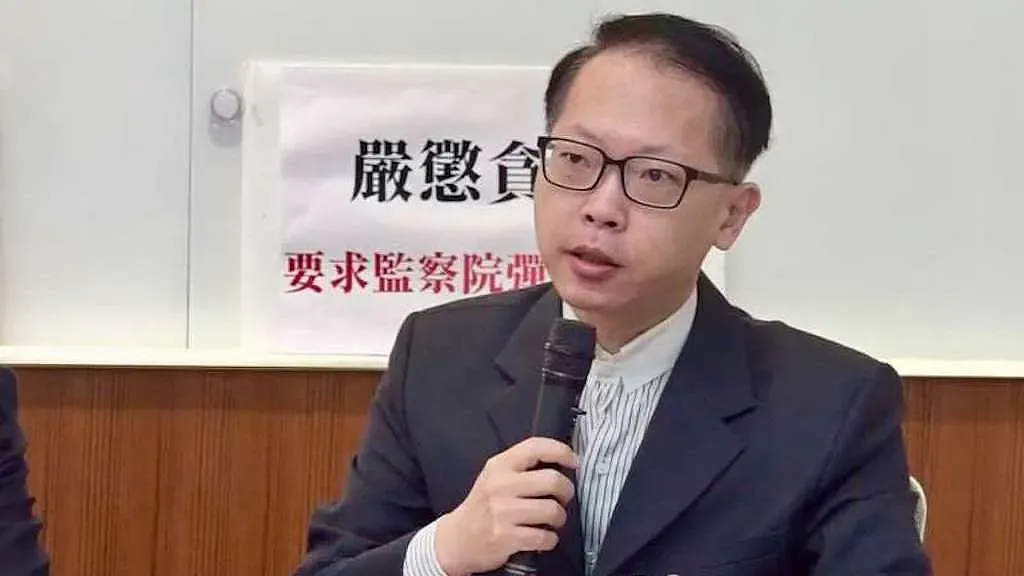
- Attorney Chiang Jung-Hsiang (Chair of the Judicial Reform Committee of the Taipei Bar Association and Standing Executive Committee Member of the Judicial Reform Foundation) was interviewed by Storm Media reporter Hung Yueh-Ho. Hung's questions included: Should a judge's abuse of free evaluation of evidence trigger disciplinary proceedings? How should the grounds for judicial evaluation and the requirement of "serious circumstances" be interpreted? What remedies are available to the public when facing an unfit judge? Is the Citizen Judge system something the public can look forward to? Chiang addressed these questions one by one, discussing free evaluation of evidence, judicial evaluation, disclosure of information about judges, citizen judges, and other judicial-reform issues. Storm Media published the original article on June 10, 2021, and authorized JRF to republish it.
Law exists to resolve problems between people and society, yet judicial decisions in recent years have often been criticized for "dinosaur judges" and bewildering rulings. Taiwan's system for training and selecting judicial personnel is relatively closed, while judges enjoy constitutional protections in office and, absent criminal or disciplinary sanctions, face few mechanisms for removal. Growing public support for comprehensive judicial reform reflects a desire for a sound mechanism to remove unfit judges and safeguard the fairness people are entitled to expect from adjudication.
Many controversies over judicial decisions center on accusations that judges have "abused the free evaluation of evidence." Attorney Chiang Jung-Hsiang explained that Article 222 of the Code of Civil Procedure provides that, when rendering judgment, a court shall consider the entire import of the oral argument and the results of evidence-taking and determine the facts by free evaluation. Article 155 of the Code of Criminal Procedure likewise provides that the probative value of evidence is determined by the court, but this judgment may not contravene the rules of experience and logic. "Free evaluation does not mean a judge may decide a case however they please," Chiang said. "Evidence must be obtained and examined through lawful procedures and must not be legally excluded-for example, evidence obtained through torture or other unlawful means may be inadmissible. Only then may the judge assess its probative value and use it as a basis for fact-finding and judgment." When controversy arises over an abuse of free evaluation, he added, the core problem is often that the decision is too far removed from ordinary public understanding. Judges may not violate the rules of logic or experience: logic must remain logical, and the rules of experience cannot stray too far from ordinary social experience.
Note 1: Article 222, Paragraph 1 of the Code of Civil Procedure provides: "Except as otherwise provided, in making a judgment the court shall, taking into consideration the entire import of the oral argument and the result of evidence-taking, determine the facts by free evaluation." Paragraph 3 provides: "The court shall not violate the rules of logic and experience in finding the facts by free evaluation." Paragraph 4 provides that the judgment shall state the reasons on which the determination is based. Article 155, Paragraph 1 of the Code of Criminal Procedure likewise provides that the probative value of evidence shall be determined by the court, but not contrary to the rules of experience and logic; Paragraph 2 provides that inadmissible evidence or evidence not lawfully examined may not serve as the basis for a decision.
Under these provisions, judges have discretion to evaluate the probative value of evidence and determine facts, but that discretion is not unlimited. They must consider the parties' submissions and the evidence as a whole, comply with the rules of logic and experience, and fulfill the duty to give reasons.
The Current System Makes It Difficult to Review Claims of Abuse of Free Evaluation of Evidence
Article 30, Paragraph 2 of the Judges Act provides that a judge may be subject to individual case evaluation for serious violations of official duties, neglect of duty, or serious misconduct, and an evaluation finding unlawful or derelict conduct may lead to disciplinary referral. "The difficulty arises when free evaluation of evidence is involved," Chiang said. "Many judges emphasize that judicial independence is constitutionally protected. They view both legal opinions and decisions about whether to credit evidence as part of the core of adjudication, and therefore argue that a judge should not be disciplined simply for making those determinations." Chiang explained that this concern is reflected in Article 37, Subparagraph 4 of the Judges Act. When a party alleges a problem with a judge's evaluation of evidence and seeks individual case evaluation, the Judges Evaluation Committee often treats it as a request to evaluate a legal opinion and resolves not to proceed-in practical terms, declining to hear the request.
Although abuse of free evaluation of evidence (Note 2) can be a serious judicial problem, the text of the current Judges Act does not categorically prevent an individual case evaluation request on that basis. In practice, however, the Judges Evaluation Committee has generally been reluctant to conduct substantive review of a judge's legal opinions or evaluation of evidence, making such requests exceptionally difficult to sustain (Note 3).
A party may also request evaluation when a judge violates case-handling procedures or official rules and thereby infringes the party's rights, but success often turns on whether the violation is sufficiently "serious." "Serious circumstances" is an indeterminate legal concept: an abstract term that leaves the Judges Evaluation Committee substantial room for judgment. As Chiang noted, the committee's determination of whether unlawful or derelict conduct is sufficiently serious is itself an exercise of judgment.
Note 2: Article 30, Paragraph 2, Subparagraph 5 of the Judges Act provides that a judge shall be subject to individual case evaluation for a serious violation of case-handling procedures or official rules. A judge who fails to consider the record as a whole, reaches conclusions contrary to the rules of logic or experience, or fails to give adequate reasons may therefore fall within the text of that provision. In practice, however, Paragraph 3 of the same Article and Article 37, Subparagraph 4 substantially limit its operation, as explained in Note 3 below.
Note 3: Article 30, Paragraph 3 of the Judges Act provides that an opinion on the application of law may not serve as a ground for individual case evaluation. Article 37, Subparagraph 4 further requires the Judges Evaluation Committee to resolve not to proceed where the request seeks evaluation of a legal opinion. Because a judge's assessment of the probative value of evidence and findings of fact have often been characterized as part of the judge's legal opinion in adjudication, even an erroneous assessment may be excluded from individual case evaluation and therefore never reach disciplinary proceedings.
An Overly Homogeneous Evaluation Committee Can Foster Institutional Self-Protection
"If we want judicial reform, we should not get stuck on how to interpret 'serious circumstances,'" Chiang argued. "We need to look instead at the evaluation committee that makes the judgment. If the committee consists entirely of legal professionals or people selected by the President of the Judicial Yuan, then those insiders will naturally control the meaning of 'serious circumstances,' creating a risk of officials protecting one another. If the committee's composition truly implemented the resolutions of the National Conference on Judicial Reform and reflected a diverse cross-section of society, might its judgments also better reflect social diversity?"
Taiwan's Judges Evaluation Committee remains relatively homogeneous and is still dominated by legal professionals. "The first committee did include Lin Ping-Wen, superintendent of National Cheng Kung University Hospital, which was a bright spot," Chiang said. "Prosecutor Chen Jui-Jen noted at the National Conference on Judicial Reform that Superintendent Lin once approached an individual evaluation case from the perspective and methodology used to assess medical negligence. That brought a very different and valuable perspective to the committee. Unfortunately, we have not seen many similar examples since."
What, then, is an unfit judge? In a sense, that ultimately depends on the public's own judgment. Assessing fitness means "reviewing the personality traits reflected in the judge's overall conduct and asking whether the person remains suited to serve as a judge." Judicial-reform groups therefore advocate a holistic form of evaluation. "From our perspective, the Judges Act tends to overprotect judges," Chiang said. "The former Article 31 once required a comprehensive evaluation of judicial officers every three years, but that provision was deleted. Removing it meant losing another opportunity for an overall review of judges."
Regarding the forthcoming Citizen Judge system, Chiang said, "We hope citizen participation will bring judgments closer to public sentiment. From that perspective, it is worth looking forward to." At the same time, questions about admissibility of evidence and the necessity of examining evidence are decided by the three professional judges. "During trial and final deliberations, could the six citizen judges' assessments be overly influenced by the three professional judges? And what evidence will the citizen judges actually be allowed to see? Those issues still require careful observation (Note 4)."
Note 4: Returning to Reporter Hung's original question about judges' abuse of free evaluation of evidence, Article 69, Paragraph 1 of the Citizen Judges Act provides that rulings on admissibility of evidence, the necessity of examining evidence, procedural matters, and interpretation of laws and regulations are decided exclusively by the professional judges. The evidence presented to the six citizen judges has therefore already been screened by the three professional judges. Article 88 further provides that a judgment of conviction may state only the names of the evidence and the reasons for deciding important disputed issues when explaining the factual findings. The reasoning may therefore be relatively concise, making it difficult for outsiders to reconstruct afterward how the citizen judges formed their views and why.
Greater Public Disclosure Can Reduce Excessive Self-Protection Among Judges and Prosecutors
"Judges' excessive self-protection and resistance to broader public oversight is a core issue in judicial reform," Chiang said. "Because judges exercise power with far-reaching consequences, the public reasonably expects authority and accountability to match. That is a very modest request." He noted that Judge Tsai Chia-Yu had proposed that the Judicial Yuan publish judges' professional information on its website (Note 5), so the public could identify the judge handling a case and understand that judge's qualifications and experience. "I think that is a very good proposal. Under the Attorney Regulation Act, the Ministry of Justice requires substantial information about attorneys-including disciplinary records-to be publicly available. The Judicial Yuan should likewise disclose information about judges."
Note 5: Tsai Chia-Yu, "How Can a Judiciary That Communicates Poorly Win Public Trust?," Apple Daily, Forum, January 18, 2017. The article proposed that the Judicial Yuan website serve as a portal for public information and communication, allowing users to look up publicly available information about each judge.
In Japan, private publishers have produced Who's Who Among Judges, disclosing evaluations, professional backgrounds, cases handled, and publications for more than one hundred presiding judges of the Tokyo District Court and Tokyo High Court. "By contrast, why is there such strong resistance in Taiwan from judges and prosecutors whenever disclosure is discussed? It is fundamentally a matter of excessive self-protection," Chiang emphasized.
"A single touch of vermilion on the bench costs the people a thousand drops of blood." The saying captures both the immense power of a judge and the enormous consequences that even a small judicial error can have for the parties. That is why judicial-reform groups have worked so hard in recent years: not only to improve the quality of justice, but also to reduce the risk of wrongful judgments by unfit judges.
This article is an AI-generated translation of the original Chinese text. In the event of any discrepancy, the Chinese version shall prevail.