
Sidelights | The Public Sphere in Trials-How Citizen Judges and the Public "Talk About" Justice Through the Lens of Constitutional Theory
Last edited: 2026-08-30
Photo credit / Judicial Yuan
These lecture sidelights record the June 10, 2021 lecture hosted by the Academic Department of the Student Association of the National Taiwan University College of Law, featuring Judicial Reform Foundation attorneys Lin Chun-Ju and Lu Cheng-Yen. For a more complete account of the lecture, please refer to the Lecture Minutes.
The Context of Public Participation in Trials

Attorney Lin first introduced the history of public participation in trials in Europe and Taiwan. The evolution of European penal and judicial systems shows that members of the public participated in resolving disputes and imposing sanctions even before modern criminal procedure was established. As for the relationship between society and adjudication, David Garland's concept of penality shows that punishment concerns not only courts and trials, but the criminal process as a whole and its interaction with society.
Turning to Taiwan, earlier calls for citizens to enter the courtroom arose in the wave of democratization following the lifting of martial law, based on the view that the judiciary itself also needed to be democratized. Article 1 of the Draft Act for Lay Participation in Trials proposed in 2006 stated that its purpose was "to enhance the democratization of the judiciary." More recent reforms have focused on responding to the public's lack of trust in the judiciary. Article 1 of the Citizen Judges Act, enacted in 2020 and taking effect in 2023, states that one purpose is "to enhance the public's understanding of and trust in the judiciary." In this lecture, the speakers connected penality with democratic theory and used deliberative democracy to explore how the democratization of justice can be understood and put into practice.
Traditional Constitutional Law's Concept of Democracy

Next, Attorney Lü introduced the traditional constitutional law concept of democracy. He emphasized that the core concept of the constitutional democratic principle is that "the legitimacy of all political power comes from the citizens," and briefly reviewed theoretical contents such as the three elements of democratic legitimacy (system and function, organization and personnel, matters and content).
If the inquiry focuses on whether an individual judge's interpretation of law can respond to democratic demands, existing theories make it difficult to identify concretely the democratic basis for the legitimacy of judicial power and thereby address public distrust of the judiciary. To broaden the perspective of traditional constitutional theory, Attorney Lu introduced Jürgen Habermas's discourse ethics as a way to supplement the limitations of constitutional theory and contemporary democratic theory in analyzing these questions.
To Talk About Society, One Must First Talk About Norms
These questions all concern how society constrains political power. Attorney Lu therefore emphasized the need to clarify the nature of "norms," which shape society and provide a means of limiting political power. Such norms are behavioral norms, not objectively and absolutely correct truths. Their legitimacy arises from the possibility of universal agreement among people and must be understood from an "intersubjective" perspective.
To Talk About Norms, One Must First Talk About Language

Habermas argued that norms must be constructed through rational discourse conducted in language, in which people's views converge toward consensus. His discourse ethics seeks to identify the rules people should observe when using language so that discourse can proceed under those rules. Robert Alexy, a scholar of legal argumentation, further systematized these ideas into rules of discourse. Attorney Lu grouped them into four categories: logical rules, rules governing burdens of argumentation, rules governing participation in discourse, and rules of communicative freedom. These rules make it possible to understand more concretely what democracy requires and how democratic institutions should be structured. In this sense, Habermas's discourse ethics suggests that democracy itself is realized through discourse grounded in communicative rationality: the concept of democracy is discourse, and the spirit of discourse is the spirit of democracy.
Reflecting on Constitutional Theory: Examining the Citizen Judges System Through Habermas's Democratic Theory

Attorney Lu then used Habermas's democratic theory to reconsider constitutional theory and examine how the Citizen Judges System understands the democratic legitimacy of judicial power. Habermas's discourse ethics can first help explain the separation of powers. Among the four categories of discourse rules, judicial power places particular emphasis on logical rules and rules governing burdens of argumentation. Judicial legitimacy is obtained by persuading people through reasoned judgments, while the significance of a norm lies in its ability to gain general acceptance through discourse rather than in the words of the norm alone. Accordingly, whether people can accept a court's reasoning and methods of statutory interpretation also bears on the legitimacy of its judgment.
Habermas proposed the concept of the "public sphere": a public space outside political power in which citizens can participate freely in public affairs without interference. From the perspective of discourse ethics, a constitution should construct not only institutions of the state, but also a public sphere encompassing at least the state, political parties, and the news media.
Through reasoning, the judicial power enables people to be voluntarily convinced, and ensures the universality of its content through public discourse. This democratic process is also reflected in constitutional adjudication. Attorney Lü quoted an interview with a judge from the book *Unveiling the Mysteries of the German Federal Constitutional Court* to illustrate this point:
We always consider this point. Although we are not a court that makes decisions based on opinion polls, we are certainly a court situated within the overall political and social reality. We must always weigh what can be implemented, what can be expected, what can be enforced by the legislature, and where the limits lie. ... Courts must sometimes have the courage to make decisions contrary to majority opinion, because fundamental rights are sometimes the fundamental rights of minorities. And sometimes having the courage to make unpopular decisions is part of that. However, here too we are part of the whole-the state and society-and therefore we must also accept the reality of life as much as possible. Nothing is more fatal than selectively knowing nothing about the living conditions of our people.
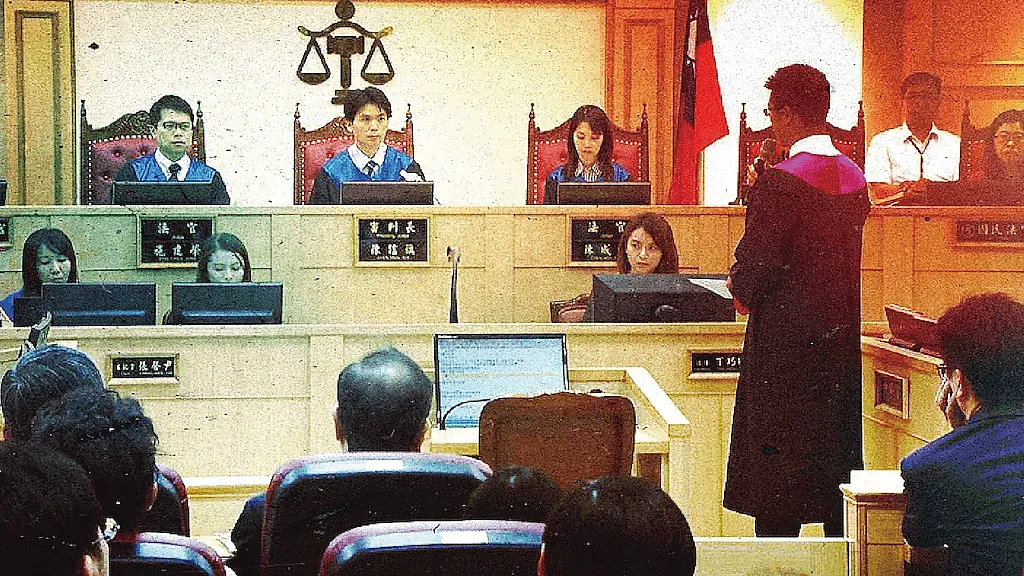
Courts and trials themselves exist within the public sphere, and the Citizen Judges System gives citizens an opportunity to participate in courtroom adjudication. Their presence allows courtroom discourse and legal interpretation to be reconsidered and supplemented from a non-professional perspective. At the same time, the resulting friction creates renewed space for the news media to intervene and can rekindle public discussion. The media must present viewpoints and stimulate social debate so that the public can understand judgments and develop support for them. Unlike constitutional adjudication, where the legal issues often already attract broad public attention, trials of serious criminal offenses with citizen judges allow the public to examine how courts determine facts. From the perspectives of democratic legitimacy and discourse ethics, the democratic significance of the Citizen Judges System lies in the idea that legitimacy of legal norms is grounded in agreement reached through discourse. Public participation may not necessarily bring judgments closer to objective truth, but the public's voluntary pursuit of democratic legitimacy through participation and agreement is central to the system.
Observing the Inside and Outside of the Courtroom from Theory: Norms and Case Analysis
At the end of the lecture, Attorney Lin examined the Citizen Judges System and mechanisms for public understanding from the perspective of deliberation. In evaluating the system, Marike Malsch's concepts of participation, representation, and deliberation can serve as basic elements. Using a metaphor of product, quality control, and consumption-corresponding respectively to testing legal reasoning, creating conditions for applying law, and creating stages for citizen discussion-he used specific statutory provisions and mock-trial examples to explain how procedures inside the courtroom, including selection, pretrial instructions, and deliberation, can be adjusted to produce a good "product" through sound "quality control." Outside the courtroom, the question is how to realize the public sphere and foster community discussion without interfering with the substantive trial, thereby creating good "consumption." Deliberative-democracy theory and argumentation ethics seek to refine this process. Public discussion of public issues on social media also plays an important role. These forms of "consumption" influence the broader world; only through participation by both the media and the public can the significance of court proceedings and the democratic spirit behind them become part of everyday life.
Conclusion
The Citizen Judges System gives citizens an opportunity to participate in trials, discuss and communicate with judges, develop shared understandings, and ultimately reach a deliberative decision. Enriching communicative-rational discussion both inside and outside the courtroom through discourse ethics is a way of putting democratic ideals into practice and forms part of the democratic legitimacy of judicial power.
This article is an AI-generated translation of the original Chinese text. In the event of any discrepancy, the Chinese version shall prevail.