

Seminar Report | Building an Evaluation System That Listens to the Public: Reviewing the New Judge and Prosecutor Evaluation System
Last edited: 2026-08-30
At the 2017 National Conference on Judicial Reform, resolutions concerning individual evaluation of judges and prosecutors were partly implemented through the 2019 amendments to the Judges Act. The new system took effect on July 17, 2020 and had been in operation for one full year.
After reviewing implementation of the amended law and examining 249 published evaluation decisions one by one, the JRF prepared a civil-society annual observation report. The review identified numerous problems in the new system and showed how difficult it was for petitions filed directly by members of the public to succeed: during the first year, not a single publicly filed petition was found well-founded.
Legislative amendment does not by itself complete reform. When the amendments were enacted and the Judicial Yuan and Ministry of Justice prepared implementing rules, the JRF raised recommendations and concerns, some of which were not adopted. To improve the individual-evaluation mechanism and make it a bridge between society and the judiciary, the JRF held a press conference at the Legislative Yuan and invited Huang Hsu-Tien, convener of the JRF Judges Act Reform Task Force; JRF Chairperson Lin Yung-Sung; staff attorney Lu Cheng-Yen; Professor Chiang Shih-Ming of National Chengchi University College of Law; and Attorney Wu Tso-Cheng, a former criminal-division judge of the Taiwan High Court, to analyze the problems in the current system.
Are All Judges and Prosecutors Fit for Office, or Has the Evaluation System Failed?
 Reporter
Lu Cheng-Yen / Staff Attorney, Judicial Reform Foundation
Evaluation Should Begin with Judicial Ethics and Examine Patterns of Conduct
 Panelist
Professor Chiang Shih-Ming / Professor, College of Law, National Chengchi University; Former Member, Judge Evaluation Committee
Thank you to the JRF for carefully preparing the civil-society annual observation report. The figures do reveal problems in the current evaluation system. One possibility, however, is that simpler cases were disposed of first, which could explain why the early results of publicly filed petitions consist largely of decisions not to initiate evaluation. More complicated cases requiring substantive review and investigation may still be pending before the committees. That possibility should continue to be monitored.
From my past experience on the Judge Evaluation Committee, committee members who do not approach the work through the lens of professional ethics may too readily borrow criminal-law standards such as the presumption of innocence or proof beyond a reasonable doubt when deciding whether an evaluation petition is well-founded. That is inappropriate. Internationally, the counterpart to judicial independence and respect is rigorous self-discipline and ethical standards, which in turn help prevent external interference. Committee members need a strong understanding of professional ethics. When I served, some of us insisted that matters requiring investigation had to be investigated. Without members willing to insist on those standards, a culture of avoiding conflict and "not offending anyone" can easily lead difficult cases to be brushed aside. But if someone insists on investigating, there is an opportunity to persuade the rest of the committee.
This is also why individual evaluation should focus on a judge's broader "pattern of conduct." Ethical discipline concerns the person as a professional and the pattern revealed by repeated behavior. A single sarcastic comment or instance of poor courtroom demeanor may not seem severe enough to justify discipline in isolation. But judges who repeatedly berate litigants, make sarcastic remarks, or improperly pressure parties to withdraw cases may exhibit a habitual pattern. In past cases, we would investigate whether similar conduct appeared in other proceedings rather than limiting the inquiry to the specific incident described in the petition.
Another issue is the current three-member panel mechanism under the regulations governing the Judge Evaluation Committee. If a panel lacks members committed to ethical discipline and professional standards, cases can easily be screened out without evaluation. That operation also deserves close attention.
Good Judges and Prosecutors Need an Effective Evaluation System Too

Panelist
Attorney Wu Tso-Cheng / Standing Executive Committee Member, Judicial Reform Foundation; Former Criminal-Division Judge, Taiwan High Court
Who needs this system? Not only members of the public. Judges and prosecutors also need a mechanism that can identify colleagues whose conduct and attitudes damage the reputation of the judiciary as a whole. It is deeply unfair to the overwhelming majority of conscientious judges and prosecutors when a small number of unfit colleagues undermine public confidence. The state likewise needs an evaluation system if it expects people to trust the judiciary. Individual evaluation should therefore not be understood as nitpicking or hostility toward judges and prosecutors; it is a mechanism for improving the quality of the justice system.
Some may think of an evaluation committee as though it were a civil court hearing opposing submissions from the person evaluated and the petitioner and then deciding who is right. I see the committee as closer to a prosecutor in criminal proceedings. It does not make the final disciplinary judgment; it helps the state determine whether the conduct warrants referral to the Disciplinary Chamber of the Judiciary. Its threshold therefore should not be proof beyond a reasonable doubt. The Judges Act even allows judges who believe their reputation needs to be cleared to request evaluation themselves. This shows that individual evaluation is fundamentally a public-interest mechanism, not litigation through which a party vindicates private rights, and not a system whose principal purpose is punishment. The committee may also investigate misconduct beyond the specific allegations in the petition, reinforcing that public-interest character. If the committee begins from the assumption that petitioners are simply disgruntled litigants who lost their cases, it will neither listen seriously nor invite clarification, much less investigate proactively.
An extremely high number of well-founded petitions would of course be alarming, because it could suggest a judiciary in crisis. But an extraordinarily low number-effectively none-also requires explanation. The first year of the amended system produced strikingly few well-founded cases.
I believe Taiwan's judiciary continues to improve, but I do not believe misconduct by judges and prosecutors has somehow fallen to zero. If evaluation committees see themselves primarily as adjudicators, place heavy evidentiary burdens on ordinary petitioners, and offer no meaningful assistance in a system without mandatory representation by counsel, the result will be what we see today: an almost insurmountable process. If the system cannot provide a prosecutor-like function that helps identify and develop the substance of a petition, then a dual-track model-allowing direct public petitions while also permitting qualified civil society organizations to file on a person's behalf-deserves renewed consideration.
The three-member panel mentioned earlier was designed to dispose quickly of cases that plainly require no further action. Even then, the panel's handling should be reported to the full committee. I do not know whether a report-and-confirmation mechanism is operating in practice, and that is something worth clarifying.
When Will the Judicial Yuan Seriously Reflect on the System?
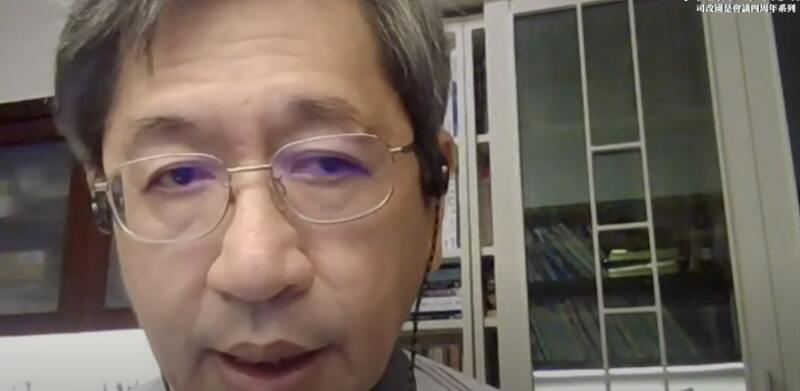
Panelist
Attorney Lin Yung-Sung / Chairperson, Judicial Reform Foundation
Looking at the data from the previous four terms of the evaluation committees and the first year under the amended system, it is possible-as Professor Chiang noted-that some complicated cases were still pending. Even so, my own experience makes me skeptical that this explains the overall result. When the JRF handled public complaints, only 6.2 percent ultimately became evaluation petitions. Our process involved four levels of screening: review by Complaint Center staff, further review by volunteer attorneys, discussion by a JRF evaluation panel, and final confirmation by the Standing Executive Committee. About half of the petitions we ultimately filed were found well-founded, which means roughly three percent of the original complaints produced a successful petition-close to the result seen in the British system.
Those figures make clear that the first year of the amended system was disappointing. What saddened me most, however, was the Judicial Yuan's response today: it did not identify even one area requiring improvement. That suggests a serious weakness in the judiciary's capacity for self-correction and reflection.
When the Judges Act was first enacted in 2011, the JRF advocated allowing members of the public to file evaluation petitions directly. The Judicial Yuan opposed that proposal, so civil society organizations initially had to file on people's behalf. The JRF continued doing this work, while bar associations showed little enthusiasm. In 2019 we proposed a dual-track system, but neither the Judicial Yuan nor the Legislative Yuan accepted it. Our experience with public complaints taught us that attitude, guidance, and commitment are crucial when handling evaluation matters. When direct public filing was finally introduced, the JRF proposed supporting measures-including staffing arrangements-to make the system work. Those suggestions were also rejected.
We previously met with President Tsai about this issue. She emphasized that even if judicial reform introduces many progressive institutions, repeated controversies involving judges and prosecutors can wipe out the public's sense of that progress. Internal mechanisms for error correction and self-reflection are therefore essential to judicial reform. The JRF has offended many people by pursuing individual evaluations, not because we seek influence, but because someone must be willing to do this work seriously.
In 2019 the JRF also argued that standing to petition should not be too narrow. Litigation representatives, experts, witnesses, and others who directly participate in courtroom proceedings may personally observe misconduct and should also be permitted to file. The final legislation remained much more restrictive.
It is reasonable that disagreement with a judge's legal interpretation, standing alone, is not a ground for evaluation. But what if the supposed "legal interpretation" reflects a plainly erroneous application of law? Should the label itself shield the conduct from review? I once appeared at a hearing concerning evaluation of a Taichung District Court judge and explained that, in a bankruptcy case, the judge had required an indigent bankrupt person to produce an additional NT$1.6 million without any legal basis. The committee nevertheless characterized the issue as falling within the judge's discretion in fact-finding and application of law.
The system as a whole is painful to watch. Why are bar associations so passive? Why do good judges and prosecutors not support an effective evaluation mechanism? How many committee members are willing, like Professor Chiang, to insist on professional ethical standards? These are the problems ordinary people experience when they go to court and ask, "Why won't the court listen to reason?"
If the results next year and the year after remain the same, I would suggest that members of the public stop relying on the individual-evaluation system altogether and instead take all complaints concerning judges and prosecutors to the Control Yuan.
This article is an AI-generated translation of the original Chinese text. In the event of any discrepancy, the Chinese version shall prevail.