
JRF Social Work Internship | Adding Up Small Efforts in the Hope That Oppression Gradually Diminishes
Last edited: 2026-08-30
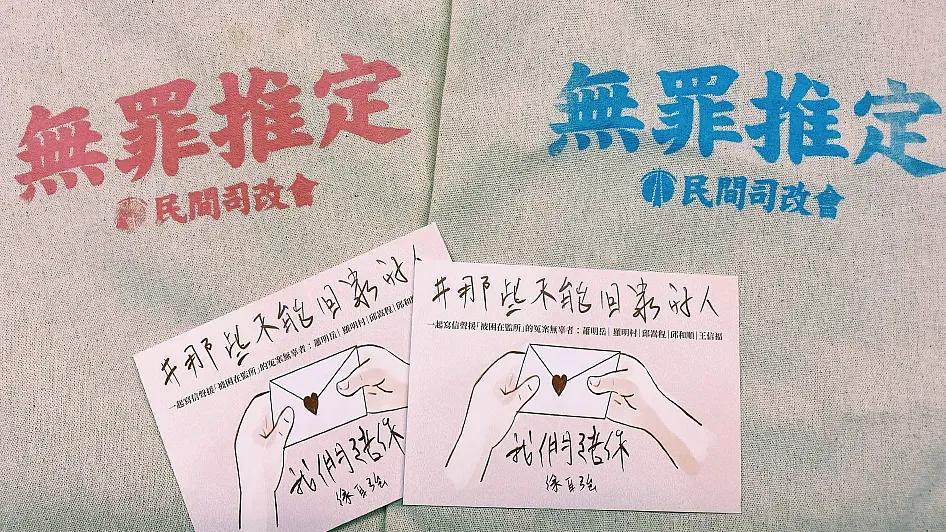
Yu Ching-Ching, a student in National Taiwan University's Department of Social Work, interned at the JRF during the summer of 2021, when Taiwan was under a Level 3 COVID-19 alert. During the remote portion of the internship, she and other interns produced an animated video about the Chen Ching-Kai case. After returning to in-person work, she took part in client interviews and case assistance and continued planning a Mid-Autumn Festival advocacy campaign on wrongful convictions. With a perceptive eye, a willingness to act, and a gentle heart, Ching-Ching reflects on what she learned and observed over those two months.
This was my first internship, and it lasted a little over two months. I worked in the JRF's Organization and Advocacy Department, helping plan, produce, and carry out advocacy projects. Over those two months, I gained a deeper understanding of the JRF, developed practical skills, and clarified and reflected on my own emotional state and personal growth.
The practical skills I developed included applying social-work concepts, learning more about relevant law, putting advocacy ideas into practice, and improving my video-editing and graphic-design skills. On a personal level, observing different cases and working in teams helped me understand my own emotions more clearly. With support from my supervisor and through self-reflection, the internship brought unexpected growth and change. That experience was especially valuable to me. Below are some of the things I learned and observed along the way.
Reimagining Social Work: From the Micro to the Macro
When I first chose to intern at the JRF, I worried that the work might not feel very much like "social work." The internship changed how I thought about that question. I came to see advocacy itself as an important form of social-work practice. Turning what we learn and witness into advocacy requires choices about language, target audiences, and needs assessment-all concepts closely connected to social work. Advocacy also helps the public understand an organization's issues and can build support for collective action. Seen from a macro perspective, that too is social work.
I also found social work everywhere in direct contact with clients. Interviewing someone to understand their needs, empathizing with their circumstances, and responding to crises all connected directly with what I had learned in school. Hsiao I-Min, Director of the JRF Taipei Office, once told us that even if we cannot truly rescue every person who comes to us, we can still understand what they need and offer whatever help lies within our capacity. To me, that may mean emotional support, empathetic listening, or referral to other resources. The JRF's work differs from traditional social work, but the field's methods and values can be applied far more broadly than I had imagined.
It is equally important, I think, to regulate our own emotions and establish appropriate boundaries when confronting painful and difficult cases. In helping professions, we need to remain well ourselves if we are to have space to help others. That requires emotional awareness. Establishing boundaries with clients also matters, including recognizing dynamics such as transference so that the helping relationship does not create additional burdens.
During the internship, for example, I met someone who had been released from prison following J.Y. Interpretation No. 796. After spending many years incarcerated, he had become deeply disconnected from society, and simply learning how to live outside was difficult. After speaking with him, I carried a heavy sense of sorrow and pain. Only after recognizing those emotions and understanding where they came from could I process them through reflection and self-dialogue. Over time, I moved from feeling unable to manage those reactions toward greater awareness, reflection, and healthier boundaries.
We often think about social work from a micro perspective and sometimes reduce it to direct service. But social work can be far broader. At its core are a people-centered concern and a commitment to making society better, and many of its professional methods are not limited to traditional direct-service settings. That realization emerged gradually through observation, feeling, and reflection during the internship, and it challenged my earlier impression that social work was narrow or difficult to put into practice.
In short, although the JRF has no formal position titled "social worker," social-work practice is everywhere in its work. Whether we are interacting with clients, handling cases, or designing advocacy, social-work knowledge and values appear in many forms. That broadened my imagination of what social work can be and answered the question I had when I began.
Deepening My Understanding of Advocacy
Working in the Organization and Advocacy Department gave me a much deeper understanding of advocacy. I used to think advocacy simply meant choosing a way to tell the public something we wanted them to know. During the internship, I learned that it is much more complicated. Choosing a "language" that an audience can understand is difficult in itself; different issues require different frames, and some involve especially sensitive dimensions.
Take the Chen Ching-Kai case: how do you communicate a wrongful-conviction case involving a visually impaired person accused of faking blindness in a way that the public can understand-and that may actually produce change?
During planning, we saw how many microaggressions and forms of discrimination toward visually impaired people persist in everyday thinking. Even comments made without malicious intent can make the person concerned uncomfortable. When people know little about an issue and cannot readily empathize with it, advocacy may fail to resonate. I came to think that we needed both to simplify the case enough to make it accessible and to identify the misunderstandings themselves. Our group therefore chose a relatively simple animated format to give viewers an initial way into the issue.
Planning the Mid-Autumn Festival advocacy project taught me something similar. It is not easy to design an activity that catches people's interest and actually motivates them to act. You need to identify the target audience and decide which aspects of a case to emphasize so the project has a clear focus and a genuine chance of being noticed.
Communication Challenges During the Pandemic-and How We Responded
Because of COVID-19, the first month or so of the internship took place mainly online. Remote work saved commuting time but created less visible communication costs. Without face-to-face discussion, we could not easily read one another's expressions or tone, which made assumptions and friction more likely and reduced the efficiency of discussion. Teams sometimes fell into long silences, making productive discussion difficult and lowering the group's energy.
I discussed this with my supervisor, who introduced the idea of "group dynamics." Looking at who makes up a group and how different members interact can reveal ways to improve collaboration and help us adjust our own roles. Remote discussion, however, can itself weaken a group's sense of cohesion, making those dynamics harder to sustain.
In my own experience, remote discussion was genuinely difficult. Our first advocacy team nevertheless worked relatively well because many of us were proactive and the project required close cooperation. That same initiative sometimes produced disagreement, but we worked through differences by listening, discussing, and analyzing them, and the project ultimately became richer and more complete. By observing the makeup of the team, I also learned to adjust my own role. I often became the person who synthesized different views and helped divide up the work so everyone had room to contribute.
When we worked on the Mid-Autumn Festival project, for example, disagreements arose over content and presentation. We made a point of fully explaining our views in writing or over calls and then compared the advantages and disadvantages, production time, likely impact, and other considerations. The final advocacy project was more complete than anything one of us could have produced alone. Remote work made emotional cues harder to read, but we compensated by expressing ourselves and asking questions more explicitly, rather than spending our energy guessing what others were feeling.
Overall, comparing remote and in-person work made it clear that remote communication carries higher costs and can reduce efficiency. But some of those difficulties can be mitigated by paying attention to group dynamics and adjusting how we work together, even when the underlying limitations cannot be removed.
The JRF's Bottom-Up Organizational Culture
Organizational culture is the pattern of behavior produced by shared values, beliefs, and identities. During my internship, I saw that the JRF has a distinctive culture of its own. Although staff members confront marginalized experiences, oppression, and emotionally heavy cases every day, the atmosphere inside the organization remains caring, empathetic, and remarkably harmonious.
The JRF brings together full-time and part-time staff, interns, and volunteers from different age groups, regions, and academic backgrounds. Despite that diversity, people share core values and create a recognizable organizational culture. What struck me most was the organization's "bottom-up" energy. Many initiatives do not begin as commands from above; they can start with the people doing the work. As an intern in the Organization and Advocacy Department, I was often free to develop and plan advocacy ideas and then discuss them with supervisors, who would offer feedback and help refine them. I was not simply completing assigned tasks. I could observe an issue, learn about it, use tools I already had, develop a project, and carry it through. That bottom-up culture gives the organization flexibility and helps make relationships more equal and friendly than the obvious hierarchies found in many workplaces.
The same culture appears in everyday relationships. People may hold different positions, but they interact on relatively equal terms, and staff from different departments look after one another. Perhaps that mutual care makes the heavy issues everyone confronts a little easier to bear. Even when people are busy with very different responsibilities, they still make time to check in on one another and interact naturally. For me, that was an important value made real in a way that can be difficult to sustain in a demanding workplace.
Adding Up Small Efforts in the Hope That Oppression Gradually Diminishes
Overall, this internship helped me grow in many ways: in my understanding of social work, in the practice of advocacy, and in my own development. It also made me realize more clearly how many problems remain in Taiwan's justice system and how much oppression persists in society. Change has to be built step by step. I once heard that "the ultimate goal of a nonprofit organization is its own disappearance"-meaning that if society one day becomes good enough that such organizations are no longer necessary, then they have achieved their purpose. Not every action produces an obvious result, but every action can accumulate. I especially valued both the effort involved and the relationships with the people I worked alongside. Seeing oppression can still be depressing and painful, but it can also become energy that pushes us to keep changing things. I hope that, through those gradual changes, oppression will slowly become less common.
There are many moments when the scale of change feels tiny, what we can do feels limited, and the waiting feels unbearably long. But when I think about people who have spent ten, twenty, or even thirty years insisting on their innocence, the work feels worth doing. I hope every step becomes part of the accumulation that makes change possible. I am grateful that I had the chance to intern at the JRF, and I hope my own effort can become one small part of that accumulation.
This article is an AI-generated translation of the original Chinese text. In the event of any discrepancy, the Chinese version shall prevail.