
Op-Ed | Severe Overcrowding in Detention Centers Should Not Be Left to the Agency of Corrections Alone; the Ministry of Justice Must Also Act
Last edited: 2026-08-30
Introduction
On January 19, 2022, the Control Yuan released Investigation Report No. 111000002, criticizing the Taipei Detention Center for sending an official letter on November 30, 2020, to six courts and prosecutors offices in the Greater Taipei area, including the Taipei District Court. The letter asked those agencies to take into account the detention center's overcrowding and shortage of beds for defendants held with restrictions on visits and correspondence when considering detention applications and orders restricting visits and correspondence. The Control Yuan concluded that the detention center had exceeded its institutional authority.
The Control Yuan took the position that overcrowding at a detention center is not a factor that prosecutors or courts should consider when seeking or ordering detention with restrictions on visits and correspondence. Whether a criminal defendant should be detained must be assessed under the requirements of Articles 101(1) and 101-1(1) of the Code of Criminal Procedure. Whether a detained defendant should also be subject to restrictions on visits, correspondence, and receipt of items depends on whether such contact would create a risk of flight, destruction, fabrication, or alteration of evidence, or collusion with accomplices or witnesses; these matters are governed by Article 105(3) of the Code and Points 41 and 41-1 of the Directions for Courts Handling Criminal Cases. The Control Yuan therefore concluded that detention-center capacity is not a factor courts and prosecutors may consider in deciding whether to seek or order such restrictions, and that the Taipei Detention Center's letter exceeded the lawful scope of an administrative agency's authority and impaired judicial impartiality and independence.
As to the Taipei Detention Center's longstanding severe overcrowding, the Control Yuan did recognize it as an important human-rights issue, but placed responsibility for finding solutions on the Agency of Corrections. Although the Agency has supervisory authority over the Taipei Detention Center and identified measures it has used over the years-including expansion and construction of correctional facilities, flexible transfers between institutions, and parole-the Control Yuan found that overcrowding at the Taipei Detention Center remained serious and called on the Agency to develop more proactive and effective responses.
By emphasizing judicial impartiality and independence, the Control Yuan argued that detention-center overcrowding should not be considered when courts or prosecutors seek or order detention with restrictions on visits and correspondence, while placing responsibility for a more effective response to the Taipei Detention Center's chronic overcrowding on the Agency of Corrections. That framing risks creating the mistaken impression that overcrowding is "merely" a problem for the Agency of Corrections and correctional institutions to solve-and may actually worsen the situation. As a matter of both legal principle and human rights, overcrowding is a legitimate consideration in detention decisions, and the solution cannot be left to the Agency of Corrections alone.
Why Is Overcrowding a Legitimate Consideration in Detention Decisions?
Articles 101(1), 101-1(1), and the first sentence of Article 105(3) of the Code of Criminal Procedure do not expressly mention overcrowding. From the perspectives of proportionality and international human-rights law, however, overcrowding is a factor that should be considered when deciding whether to detain a person.
J.Y. Interpretation No. 665 states: "The first sentence of Article 8, Paragraph 1 of the Constitution provides: 'Personal freedom shall be guaranteed to the people.' Detention, as a measure securing criminal proceedings, is intended to ensure the proper conduct of criminal proceedings and the realization of the State's penal power. Yet detention restrains a criminal defendant's personal liberty and confines the defendant to a designated place; it is therefore the most severe coercive measure interfering with personal liberty. It separates the defendant from family, society, and professional life, causes serious psychological harm, and significantly affects personality rights such as reputation and credit. Detention may therefore be used only as a last resort to secure proceedings and must be imposed with caution (see J.Y. Interpretations Nos. 392, 653, and 654). Accordingly, statutory requirements for detaining a criminal defendant must serve the important public interest of ensuring the effective exercise of criminal justice and must comply with the principle of proportionality."
The principle of proportionality is a fundamental principle of criminal procedure. It consists of three components: suitability, necessity, and proportionality in the narrow sense, as follows[1]:
-
Suitability
A measure adopted by a state authority to achieve a particular public-law objective must be suitable for, or conducive to, achieving that objective. -
Necessity
A measure is necessary only when no equally effective alternative would impose a lesser restriction on fundamental rights; this is also known as the principle of least restrictive means. -
Proportionality in the Narrow Sense
The extent of a restriction on fundamental rights must not exceed what is necessary to achieve its purpose, and the harm caused by the restriction must not outweigh the interest it seeks to protect.
According to the 2015 report of the Office of the United Nations High Commissioner for Human Rights, "Human rights implications of over-incarceration and overcrowding", holding defendants in severely overcrowded detention facilities may result in human-rights violations such as the following:
-
Authorities responsible for places of detention owe detainees a duty of care. Overcrowding, however, produces shortages of resources and staff that can cause this duty to be neglected. Detainees' right to security may be seriously compromised when authorities cannot protect them from violence by other detainees. Overcrowding can also heighten tensions between correctional staff and incarcerated people.
-
Overcrowding can result in violations of the prohibition of torture and ill-treatment: detainees may be forced to live for prolonged periods in extremely poor material conditions that fall below humane and dignified standards, including severely inadequate sanitation and insufficient opportunities for outdoor activity.
-
Overcrowding is also linked to violations of the right to health, particularly through the spread of infectious diseases such as tuberculosis and hepatitis C. It threatens not only other detainees but also correctional staff and, after release, public health. United Nations and regional human-rights bodies have also reported that overcrowding can impede access to medical care, leave mental-health services inadequate, result in shortages of qualified medical personnel, and prevent effective harm-reduction programs and treatment for drug dependence. Overcrowding has also been identified as a root cause of entirely preventable illnesses.
-
United Nations and regional human-rights bodies have likewise reported serious violations of detainees' rights to safe drinking water, sanitation, and food. Overcrowding can leave states unable to provide adequate food, sufficient washing and toilet facilities, safe drinking water and sanitation, basic hygiene supplies such as soap and toilet paper, or adequate sleeping materials such as clean mattresses and bedding.
-
Over-incarceration and overcrowding force detainees to live in extremely crowded conditions, seriously interfering with their right to privacy.
Treating detention-center overcrowding as one factor in deciding whether detention is warranted is primarily an application of proportionality in the narrow sense: the decision-maker must weigh whether the harms created by the restriction-including risks to the defendant's safety, health, privacy, and dignity-outweigh the interest the detention is intended to protect.
As for ways to alleviate overcrowding, the report "Human rights implications of over-incarceration and overcrowding" further states: "The capacity of places of detention must be assessed objectively, with reasonable space allocated to each detainee as part of that assessment. Effective registration systems capable of recording the period of detention of every person held before trial or after sentencing are critical to managing space in places of detention. Finally, all places of detention must have sufficient staff to operate effectively and to fully respect detainees' human rights. ...Management of places of detention should not be left to deal with overcrowding on its own. Effective channels of communication should be established among all actors in the criminal justice system to ensure that detention facilities are not operated beyond capacity. Legal measures prohibiting overcrowding should be actively considered."
The Concluding Observations and Recommendations Adopted by the International Independent Experts on the Initial State Report of the Republic of China (Taiwan) under the Two Covenants in 2013 likewise stated: "The Government of the Republic of China (Taiwan) regards prison overcrowding as an urgent issue (Initial Report, para. 146). Excessive prison populations give rise to numerous human-rights problems, including poor hygiene and health standards, lack of privacy, violence, and conditions that may amount to inhuman or degrading treatment. In addition to measures already taken by the Government, such as constructing new prisons, the experts strongly recommend effective measures to reduce the prison population, including relaxing harsh policies toward drug use and adopting less restrictive rules on pretrial bail and parole."
The Concluding Observations and Recommendations Adopted by the International Independent Experts on the Initial State Report of the Republic of China (Taiwan) under the Two Covenants in 2017 contained a similar recommendation: "As the Review Committee noted in its 2013 concluding observations and recommendations, overcrowding in correctional institutions has caused various human-rights problems, including poor hygiene and health standards, lack of privacy, and violence, and has often resulted in treatment of detainees that must be regarded as inhuman or degrading. In addition to measures already taken by the Government of the Republic of China (Taiwan), including construction of new correctional facilities, the Review Committee again strongly recommends effective measures to reduce the number of people detained, particularly by relaxing punitive policies toward drug users, applying less restrictive rules on bail and release, and using other non-custodial alternatives."
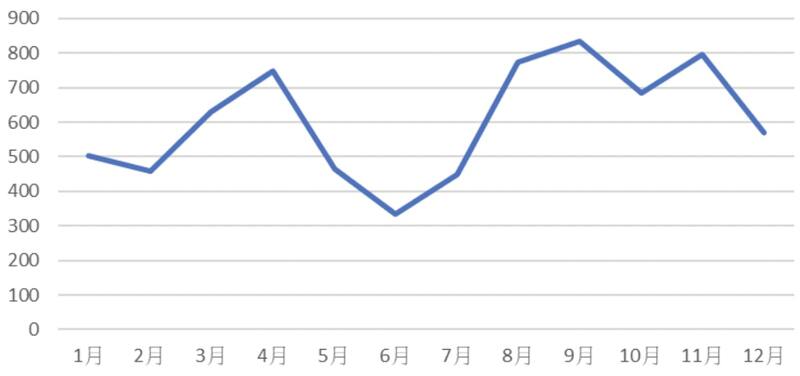
To reduce overcrowding, the criminal justice system should establish effective channels of communication among its various actors and adopt less restrictive approaches to bail, among other measures. These policies can be implemented through legislation, but also through application of the principle of proportionality. Taiwan's practice already demonstrates such flexibility. The Compilation of Operational Materials for Prosecutorial Agencies in Response to the COVID-19 Pandemicexplains: "To prevent COVID-19 infections among people held in correctional institutions, after questioning a suspect or defendant, prosecutors should consider alternatives to detention if the circumstances of the alleged offense are not serious. Such alternatives may include release on bail, release to the custody of another person, or restrictions on residence (including restrictions on leaving the country or going to sea), together with other conditions. These measures can reduce the risk that infected or potentially infected suspects or defendants enter detention centers or other correctional institutions and cause cluster infections." The line chart also clearly shows that detention applications fell from May through July 2021 as the pandemic worsened.
 Source:
Why Should the Agency of Corrections Not Be Expected to Solve Overcrowding Alone?
Overcrowding in Taiwan's detention centers cannot be separated from the broader problem of prison overcrowding. To relieve overcrowding among sentenced prisoners, detention centers in Taiwan commonly house branch facilities of prisons. The Taipei Detention Center, for example, includes the Taipei Branch of Taipei Prison, which houses people serving sentences of three years or less pursuant to prosecutors' enforcement orders. Statistics show that sentenced prisoners in fact make up a large share of the population at the Taipei Detention Center.
According to the report "Human rights implications of over-incarceration and overcrowding," major causes of overcrowding include:
-
Deficiencies Within the Criminal Justice System
The European Committee for the Prevention of Torture has observed situations in which high incarceration rates produced severe prison overcrowding. It stated that a country's imprisonment of large numbers of its citizens cannot convincingly be explained by crime rates alone; prevailing attitudes among law-enforcement and justice-system personnel also bear responsibility. Many countries have adopted so-called "zero-tolerance policies," producing sharp increases in arrests even for minor offenses such as public intoxication, crossing railway tracks, and shoplifting, and sometimes resulting in prolonged detention. Reports further indicate that incentives rewarding police for arrests, together with overly broad laws and regulations, can contribute to arbitrary detention. These practices substantially fuel over-incarceration and overcrowding. -
Lack and/or Poor Administration of Alternatives to Detention
The Special Rapporteur on Prisons and Conditions of Detention in Africa of the African Commission on Human and Peoples' Rights observed that growth in prison populations cannot be attributed solely to rising crime. In many countries, imprisonment continues to be preferred over alternatives, and its punitive character remains central to contemporary correctional and penal systems. Despite evidence that non-custodial alternatives can be efficient and effective, states continue to rely on harsher punishments such as long prison terms. -
Sentencing Policies
A state's criminal-justice policies directly affect both the number of people detained and the length of their detention. "Zero-tolerance" policies increase custodial sentences; together with low acquittal rates and widespread reliance on detention, they contribute to prison overcrowding. The Working Group on Arbitrary Detention has noted trends including habitual-offender laws, generally higher mandatory minimum sentences, reduced judicial discretion, and preventive detention after conviction. The cumulative effect of such measures contributes to over-incarceration and overcrowding. Other reported drivers include failure to credit pretrial detention toward a sentence; mandatory sentences for minor nonviolent offenses and severe penalties for drug crimes; excessively long terms of imprisonment, especially life sentences, contrary to proportionality; lack of reasonable sentencing standards allowing excessive sentences to be reduced; insufficient judicial discretion to consider the circumstances of the person and the case; severe restrictions on sentence reductions; and vague laws that lead to unnecessary detention.
All of these are matters of criminal policy. In the Control Yuan's investigation report, the Agency of Corrections explained that prison overcrowding has become increasingly severe because people convicted of certain offenses-such as drug offenses, public-endangerment offenses, and fraud-make up a high proportion of the prison population, while Taiwan's increasingly polarized criminal policy of simultaneous leniency and severity, together with the 2006 Criminal Code amendments, has lengthened actual time served and increased the number of people serving long sentences. Taiwan's experience therefore accords with the causes of overcrowding identified in international human-rights literature.
Criminal policy is not within the mandate of the Agency of Corrections; it is a responsibility of the Ministry of Justice. Article 2 of the Ministry of Justice Organization Act provides that the Ministry's responsibilities include:
4. Drafting, supervision, and implementation of civil, criminal, and administrative laws and regulations under the Ministry's jurisdiction.
5. Policy planning, drafting of laws and regulations, guidance, and supervision with respect to prosecutorial administration, including criminal investigation, public prosecution, and enforcement of criminal judgments.
More recently, in response to drunk-driving incidents, the Ministry of Justice issued a press release on January 16, 2022 titled "Strict Punishment of Drunk Driving Through Multiple Measures: Committal to Prison, Rigorous Parole Review, Strong Enforcement, and Treatment for Alcohol Dependence", which included the following:
(1) Strict Punishment of Drunk-Driving Offenses
All drunk-driving cases are to be prosecuted promptly and severely. If a court imposes an unduly lenient sentence, the trial prosecutor will appeal in accordance with law and seek a heavier sentence.
When a drunk-driving conviction becomes final, even if imprisonment could otherwise be commuted to a fine, the prosecutor responsible for enforcement will strictly review whether commutation should be permitted in light of the serious harm the offense poses to public safety and legal order. Except in special circumstances, and by reference to Article 41 of the Criminal Code-under which commutation is unavailable where a fine would fail to achieve corrective purposes or to maintain legal order-the prosecutor will deny commutation to a fine.
From January 6 through January 14, local prosecutors offices denied commutation to a fine and committed a total of 67 defendants convicted of drunk driving to prison, as part of a policy of severely punishing drunk-driving offenses.
(2) Rigorous Parole Review in Accordance with Law
For people imprisoned for drunk driving, correctional institutions are to provide systematic and effective treatment for alcohol dependence under the Agency of Corrections' "Implementation Plan for the Treatment of People Incarcerated for Drunk Driving," helping participants develop accurate understanding and change behavior so that they receive comprehensive correctional treatment while incarcerated.
People who have not completed treatment for alcohol dependence, whose treatment has been ineffective, whose conduct in prison has been poor, or who otherwise lack concrete evidence of remorse are to be denied parole after strict review in accordance with law, consistent with correctional objectives.
If a person previously released on parole commits another drunk-driving offense while on parole, revocation of parole and recommittal to prison will be considered in accordance with law on specific-deterrence grounds.
The Control Yuan criticized the Agency of Corrections for failing to develop proactive and effective strategies for overcrowding. Yet the Agency's tools are limited to flexible transfers among institutions, expansion and construction of correctional facilities, and appropriate use of parole. The investigation report overlooks the fact that the number of people entering correctional institutions is ultimately determined by the criminal policy set by the Ministry of Justice.
Conclusion: The Ministry of Justice Is Key to Reducing Overcrowding
The Control Yuan's Investigation Report No. 111000002 asks the Agency of Corrections to instruct its subordinate correctional institutions not to ask courts and prosecutors to take overcrowding and bed shortages for defendants held with restrictions on visits and correspondence into account when assessing detention applications or orders restricting visits and correspondence. It also asks the Ministry of Justice to direct the Agency of Corrections to develop proactive measures to reduce overcrowding. These two recommendations risk turning overcrowding into a problem that "only" the Agency of Corrections and correctional institutions are expected to confront and solve, potentially worsening overcrowding and further harming the human rights of people in custody.
The Ministry of Justice must take responsibility for the criminal policy within its mandate. Criminal policy is one of the principal drivers of overcrowding because it critically determines how many people are sent to prison. The proper course is to adjust criminal policy reasonably so that correctional institutions are not pushed into overcrowding and detention centers can return to their proper function, rather than being required to absorb sentenced prisoners merely to relieve overcrowding in prisons.
Finally, return to the starting point of the Control Yuan's investigation report: the Taipei Detention Center wrote to courts and prosecutors describing its overcrowding and asking them to assess carefully the number of detention applications and orders restricting visits and correspondence. International human-rights materials make clear that "management of places of detention should not be left to deal with overcrowding on its own; effective channels of communication should be established among all actors in the criminal justice system to ensure that detention facilities are not operated beyond capacity. Legal measures prohibiting overcrowding should be actively considered." Article 2 of the Ministry of Justice Organization Act also places within the Ministry's mandate the "guidance and supervision of subordinate agencies and institutions in matters including crime investigation, administrative enforcement, anti-corruption, corrections, prosecutorial investigation, public prosecution, and enforcement of criminal judgments." The Ministry of Justice should therefore help the Agency of Corrections and its subordinate institutions establish an appropriate mechanism for communicating institutional conditions to courts and prosecutors, thereby avoiding future disputes.
Notes
[1] Lin Yu-Hsiung, Criminal Procedure Law (Vol. 1) (2017, Taipei: New Sharing Culture Enterprise Co., Ltd.), pp. 323-324.
※ This article was published in The News Lens on February 1, 2022
This article is an AI-generated translation of the original Chinese text. In the event of any discrepancy, the Chinese version shall prevail.