
JRF Social Work Internship | Even If You Are Not Ready, a Bottom-Up Organizational Culture Helps You Keep Moving
Last edited: 2026-08-30
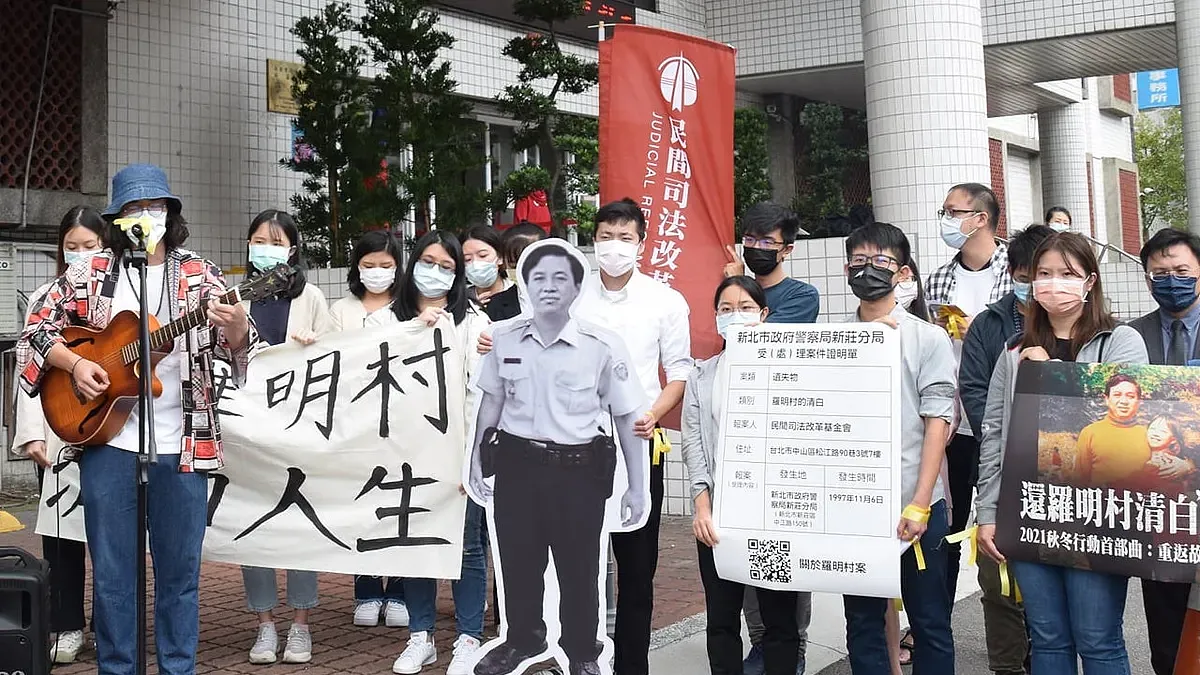
Li Yuan-Ching, a student in National Taiwan University's Department of Social Work who was also double-majoring in law, interned at JRF during the second half of 2021. During her internship, she worked on a project concerning dummy accounts involving people experiencing homelessness and on advocacy in the Lo Ming-Tsun case. She observed many moments when the organization had to communicate issues internally and externally, challenged her own habits and sense of order, and raised valuable questions from a cross-disciplinary perspective. At the end of the internship, Yuan-Ching chose organizational culture as the topic for sharing her observations.
"Bringing together the strength of civil society to continue promoting reform and build a fair and just judiciary worthy of public trust" is JRF's mission. It embodies the idea that civil society can use its own strength to create social change from the bottom up. This semester, I interned at JRF as a social work student. Over more than 200 hours, I observed that JRF has a distinctive organizational culture.
Organizations are composed of organizational structure, organizational design and change, and organizational culture. Organizational culture has been defined as "a set of shared values, norms, and beliefs developed and maintained by organizational members that guides employees' attitudes and behavior and also shapes how they perceive and respond to their environment" (Huang & Chuang, 2020). Schein (2004) divides organizational culture into three levels, from the visible to the invisible: artifacts, espoused values, and basic underlying assumptions. He argues that understanding an organization's culture requires understanding its system of values. I observed JRF's organizational culture from the following two perspectives:
Putting Organizational Values into Practice
Based on my observations, "bottom-up" is an important basic underlying assumption at JRF, and it also shapes the organization's values. Externally, JRF is an advocacy organization that has long used the strength of the third sector to monitor the judiciary. Internally, this value is reflected in how JRF members work and communicate. JRF handles a wide range of matters, but even as team members carry out their respective responsibilities, the organization places strong emphasis on participation. For example, when planning a new wrongful-conviction advocacy campaign, staff from different departments first develop proposals together. Team members have substantial room to contribute, from the form and schedule of the advocacy to its short- and long-term objectives. Departmental and cross-departmental meetings are held regularly to exchange views, with supervisors and managers acting as facilitators rather than controllers. Everyone naturally has a different communication style-some more direct, others more reserved-but because members interact frequently, they learn how one another communicates. This creates tacit understanding and a communication style unique to JRF, helping keep internal channels open.
JRF also strongly encourages interns and volunteers to participate in its activities, believing that perspectives from different disciplines and backgrounds can generate better ideas. Interns can therefore find their own ways to contribute. During my internship, I participated several times in departmental meetings and joined team members in brainstorming advocacy for the Lo Ming-Tsun case. The relationship between JRF staff and interns did not feel marked by a power imbalance; discussion and interaction were comfortable and open. Through this process, I learned how an advocacy organization turns issues it cares about into forms that can capture public attention. These details made me feel that JRF's bottom-up values are genuinely practiced in members' everyday work.
Organizational Members Share a Common Vision and Goals
One thing that left a strong impression on me during the internship was that almost none of JRF's work can be accomplished simply by being "ready," nor does an argument necessarily succeed just because we believe it is persuasive. Even when we feel "ready," advocacy remains affected by many factors beyond the organization's control, sometimes requiring short-term goals to be adjusted at any time . The organization may also invest substantial effort and resources without achieving the hoped-for results, and the ultimate impact is often difficult to quantify. Judicial reform therefore requires considerable patience and perseverance. In such circumstances, it becomes especially important for organizational members to share a common vision and goals.
A supervisor once told me that some people at JRF work out of "love," hoping to care for groups in society that need help and to make society better; others work out of "hate," because they have seen injustice and want to change it. I found that whether people came from "love" or "hate," everyone at JRF shares the goal of judicial reform. Take the Lo Ming-Tsun case. When the 52nd extraordinary appeal was quickly rejected, everyone was surprised, but I watched the team promptly revise its advocacy plans and continue searching for possible avenues of relief. The goal of clearing Lo Ming-Tsun's name never changed. I have observed that JRF members each carry a vision of fairness and justice, work toward the values they believe in, and use constant internal communication and discussion to build consensus on how to reach their goals. I think it is precisely because JRF's members identify with the ideal of judicial reform that they can keep moving toward their goals without giving up and sustain the energy needed to continue this work.
What I Want to Say to JRF
As an intern, I participated in only a small part of JRF's work. During the internship, however, I saw how the organization's culture leads members to invest themselves deeply in each task; some staff almost connect a part of themselves to the lives of the people whose cases they support. That connection can help members identify with the organization's goals and give them greater motivation, but repeatedly advocating without receiving a response can also be physically and emotionally exhausting. In facing pressure from many directions, JRF members have developed their own ways of relieving stress, and colleagues provide a strong support system by talking through problems and thinking together about how to meet challenges. In addition to encouraging individual self-care, however, JRF might consider elevating self-care to the organizational level by building a "trauma-informed organization." Incorporating trauma-informed principles into organizational culture could help members develop greater resilience and continue farther along the path of judicial reform.
Beyond learning how an advocacy organization speaks out on issues, one of the gains from my internship was observing how the "people" inside an organization interact and how group dynamics are built. JRF's organizational culture is very welcoming to interns, and I am grateful for the many opportunities I had to try new things and learn during my internship.
References
- Huang, Yuan-Hsieh, & Chuang, Li-Hsin. (2020). Social Work Management (4th ed.). Shuangye Book Gallery.
- Schein, E. H. (2004). Organizational Culture and Leadership (3rd ed.). Jossey-Bass.
Other Work from My Internship
This article is an AI-generated translation of the original Chinese text. In the event of any discrepancy, the Chinese version shall prevail.