
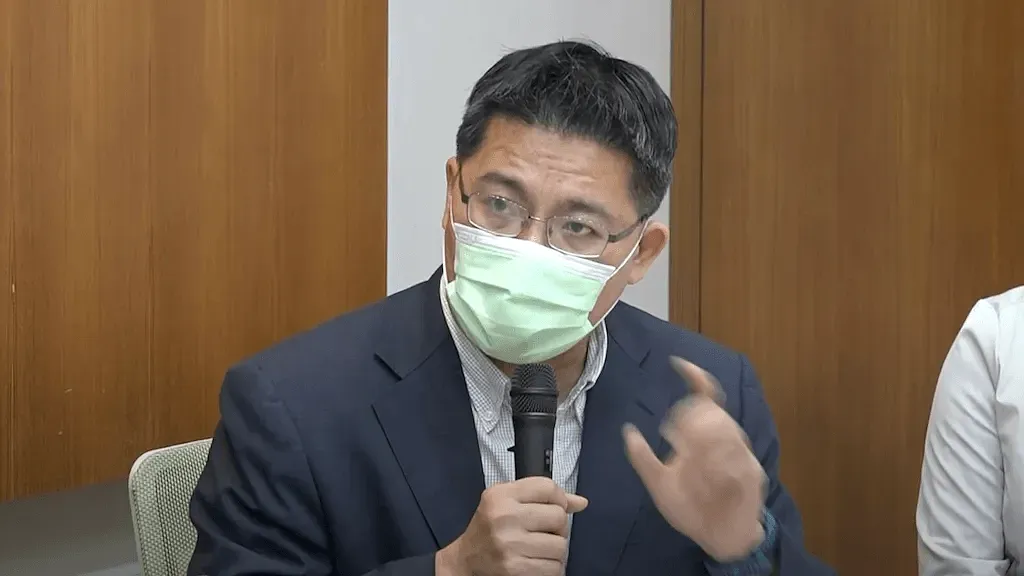
Press Conference on Opposition to the Official Amendment Draft of the Code of Civil Procedure | Remarks by Legislator Hsien-Chih Chiu
Last edited: 2026-08-24
Support Holding Public Hearings
First of all, I must emphasize that everyone's direction is the same. Both the Judicial Yuan and the JRF share the hope that our courts are efficient and trustworthy to the people. However, precisely because our goals are aligned, it is all the more necessary to point out different perspectives or even blind spots, so that we can work together to improve things. The related issues raised by the JRF today are of great concern to many experts, scholars, and bar associations, yet they may not have had the opportunity to participate or make their voices heard during the process. I also believe that with everyone's expertise and experience, more valuable opinions can certainly be put forward to help us improve the system.
Although the committee has already completed its review of this bill, the committee has not ruled out the possibility of holding further public hearings to solicit opinions, provided that all political parties reach a consensus and have no objections. I would like to remind everyone that the provisions regarding public hearings in the Law Governing the Legislative Yuan's Power are intended to allow public opinions to be expressed as fully as possible, rather than being used to restrict the expression of public opinions.
"Restricting the Right of Appeal" Requires a Robust Court of First Instance as a Prerequisite
The biggest problem with the draft lies in the "restriction of the right of appeal," which means deleting the two grounds: "additional means of attack or defense are presented for purposes of supplementing those already presented in the first instance" and "it would be manifestly unfair to prevent the party from presenting such additional means of attack or defense." The issue is not whether the theory behind the legal provisions is complete or logically contradictory, but whether it addresses practical needs. Let me remind the Judicial Yuan that Article 447 of the current Code of Civil Procedure already restricts parties, in principle, from raising new allegations or defense methods in the appellate instance. But why has the effect of existing regulations been poor? If restricting parties from supplementing their original allegations and defenses, or prohibiting them from raising allegations and defenses even when it is manifestly unfair, is applied, can these problems really be resolved?
Let us first consider the issue of the sustainment rate of judgments in the court of first instance. According to the Judicial Yuan's statistical data from 2011 to 2020, approximately 27 percent—nearly 30 percent—of civil judgment appeals were revoked by the appellate courts. Moreover, one-third of these were "completely revoked." In other words, the sustainment rate of judgments in the first instance actually leaves room for improvement. In addition to possibly involving whether allegations and defenses were raised in a timely manner, these revoked judgments may also involve the quality of the first-instance judgment or the degree of litigation care. Before clarifying the relevant causes, we should not directly and drastically restrict the people's opportunities to raise new allegations and defenses in the second instance; otherwise, it may seriously harm the rights and interests of the people and instead cause distrust in the judiciary.
Secondly, in litigation, there are indeed situations where parties or even lawyers conceal important evidence and materials, only to present them in the second instance. Even some appellate judges have expressed in court that if an appeal has nothing new to offer—meaning no new evidence or facts are presented—the original judgment should simply be upheld. However, is this situation the mainstream? In fact, no rational party hopes to "lose first and win later"; everyone naturally hopes to win a judgment starting from the first instance. Therefore, rather than focusing on restricting the parties' right of appeal, what is needed more is to first establish a culture of clarification and explanation, so that parties know from the first instance to make every effort to present allegations, defenses, and apply for the investigation of evidence.
Making the entire first instance solid does not rely solely on litigants who usually lack legal expertise; it requires the assistance of both courts and lawyers. This is why the JRF's partners mentioned strengthening the legal aid mechanism and mandatory lawyer representation, while also emphasizing the issue of lawyer quality control. It is hoped that the bar associations will exercise their self-regulatory function and prevent litigants with insufficient legal knowledge from being harmed by unscrupulous lawyers.
I must remind the Judicial Yuan once again: to restrict the right of appeal and adopt a very strict system of retrial, we must first ensure that the court of first instance is a robust court of fact. If the first instance cannot conduct extremely solid and thorough proceedings, we are essentially sacrificing the discovery of truth through judicial procedures and the realization of justice in pursuit of efficiency.
A Reasonable Period Should Be Granted to Supplement Grounds for Appeal
It is deeply regrettable that the Judicial Yuan has once again used the excuse of avoiding procedural delays to allow courts to directly dismiss an appeal without granting a reasonable period to supplement the grounds for appeal, even when the appellant has retained a lawyer to file the appeal. I would like to remind the Judicial Yuan that preparatory work takes time; it is not the case that once a lawyer is retained, they can immediately review the case file within 20 days, draft the grounds for appeal, back-and-forth confirm the contents of the statement of reasons with the client, and submit the documents to the court. Furthermore, the knowledge and experience of ordinary people are not necessarily sufficient. After filing an appeal themselves, litigants often mistakenly believe that filing a statement is equivalent to having grounds for appeal; they themselves do not understand whether they have specifically written down the grounds for appeal, and often do not even keep a copy. All of these require time to properly verify.
In fact, regarding the part concerning appeal fees, there is a similar controversy. According to Article 9 of the Enforcement Act of the Code of Civil Procedure, if an appellant has a lawyer as their litigation agent and fails to pay the court fee, the court may directly dismiss the appeal. However, this provision actually only saves the court one round of the correction-ordering procedure, and its effect on litigation efficiency is extremely limited. After all, it only takes the time of one letter, while the price paid is depriving the litigant of their day in court. Aside from potentially preventing justice from being served, this creates disputes between litigants and lawyers, spawns further litigation, and even arouses public resentment against judicial authorities. These problems are not my own words; they were stated by Grand Justice Yu-Po Cheng (鄭玉波).
Therefore, from the perspective of the principle of proportionality, since the benefits stipulated in this draft provision are minimal and the costs are extremely high, I believe the article should not be amended this way at all. Even if the Judicial Yuan believes that the procedure of issuing official letters for supplementation entails considerable costs, it could instead review whether the minimum amount of litigation fees should be adjusted. But it should never use a cannon to kill a bird—depriving litigants of their right of appeal.
This article is an AI-generated translation of the original Chinese text. In the event of any discrepancy, the Chinese version shall prevail.