
Sidelights | From "Comfort Women" to #MeToo Pioneers: The Journey of Women's Rights
Last edited: 2026-08-26
The Starting Point for Women Speaking Out for Themselves
In the river of history, there is a group of forgotten people. They are just like our grandmothers, yet in their innocent and cheerful youth, they encountered war and deception by the Japanese government. In that impoverished era, in order to earn several times more money than usual, they thought they were going to help with washing, cooking, and cleaning, never imagining that they were stepping into a living hell.
They were subjected to all kinds of abuse. Tragically, those who became pregnant were even forcibly administered abortion drugs or had their uteruses removed. Living each day like the walking dead, when they finally waited for the day the war ended, the reception they received upon returning home consisted of biased scrutiny from their families and verbal humiliation.
Hampered by the social context of that time, the grandmothers chose to remain silent to avoid facing further social discrimination. It wasn't until Grandmother Yong-Su Yi from South Korea bravely stepped forward that gradually more and more grandmothers began to speak of their pasts, allowing this forgotten history to be remembered by the public once again. After a long passage of time, they began to defend their rights and file lawsuits against the Japanese government.
Although to this day Japan has still not given the grandmothers that apology, at least it has let the public know of Japan's crimes and the justice the grandmothers rightfully deserve.
After undergoing social openness and acceptance, they began to gain strength. From initially being merely objects, they gradually came to realize that they are human beings, that they are subjects, not men's appendages or tools. Returning to their subjectivity as human beings, they were able to begin speaking out. – Attorney Mei-Nu Yu
Global Responses
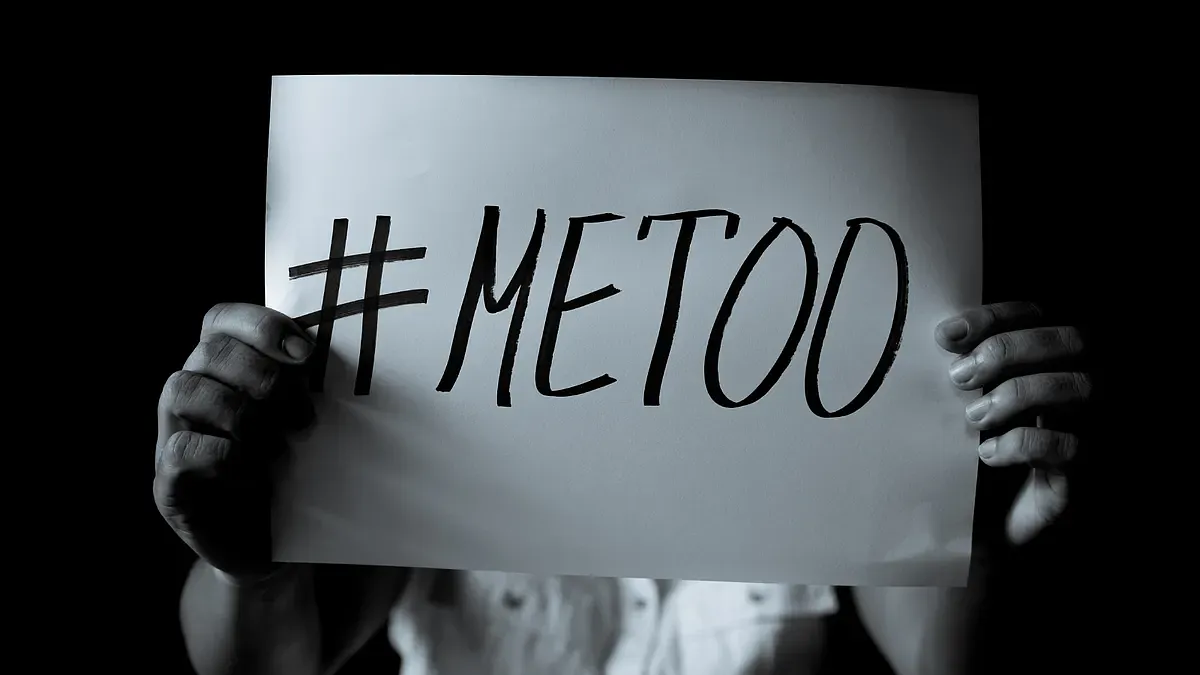
#METOO is a hashtag that spread widely on social media following the Harvey Weinstein sexual abuse allegations in October 2017. It is used to condemn sexual assault and sexual harassment behaviors and to encourage women to speak out bravely when subjected to disrespectful treatment.
Following the outbreak of the movement, women in many countries have stepped forward one after another, with numerous cases stemming from power imbalances in the workplace. In cases of sexual harassment, the perpetrator might feel that their groping action is no big deal, but to the victim, apart from the physical violation and discomfort, what collapses is the victim's trust in human beings. The damage left behind by such cases of sexual assault and sexual violence can never be erased for a lifetime.
The Awakening of Feminist Consciousness
In early traditional Taiwanese society, it was believed that the law does not enter the home, and public authority would not intervene in domestic violence. Furthermore, traditional myths surrounded sexual assault and sexual harassment; even though women were the victims, perpetrators often went unpunished, and mental compensation paid to women was even referred to as "shame money." This shows that women at the time were not treated equally, and in past social ideologies, women were merely appendages of their husbands or families.
It was not until later that women's movements and civil society organizations engaged in social advocacy, promoting the policy of "law entering the home" and regulations related to the prevention of gender-based violence, establishing the concept of sexual autonomy and ensuring that perpetrators received due punishment in trials concerning sexual assault or gender-based violence.
Establishment of Regulations Related to the Prevention of Gender Violence
In traditional Taiwanese society, the concepts surrounding marriage and domestic violence problems were mainly "the law does not enter the home" and "even an upright official finds it hard to settle family quarrels." Under such an environment, women had no other choice but to endure when subjected to domestic violence, eventually leading to the Ju-Wen Teng husband-killing case in 1993, where Ju-Wen Teng, having suffered long-term domestic violence while both her mother and younger sister were sexually assaulted and abused by her husband, ultimately killed her husband with nowhere else to turn for help.
This consequently gave birth to the "Domestic Violence Prevention Act", promoting the legislative passage of the regulation in 1998 and making the Republic of China the first country in Asia with a domestic violence prevention act and civil protection orders. Subsequently, the prevention and protection measures of the "Domestic Violence Prevention Act" gradually became complete.
Aside from domestic violence, many cases of sexual assault and sexual harassment had consistently failed to receive proper attention. In 1984, an era when women's rights consciousness was rising, Awakening Magazine conducted a questionnaire survey on the issue of women's sexual harassment. Over 500 copies were retrieved, among which 80% of the women had experienced sexual harassment, yet legislation protecting women remained stagnant until the Wan-Ru Peng murder case occurred in 1996.
Wan-Ru Peng was a Taiwanese women's rights activist who dedicated her life to gender equality education and the women's movement, promoting multiple bills safeguarding women, such as the "Sexual Assault Crime Prevention Act". However, while she was campaigning for the guaranteed women's political participation quota bill, she was found murdered. This incident caused an uproar in society and ignited the anger of women.
In the same year, the "Take Back the Night" march for women's rights took place, causing women's rights to be truly acknowledged by the government. The
"Sexual Assault Crime Prevention Act" was passed the following year, which, in addition to punishing crimes, established numerous protective measures for victims and catalyzed the "Gender Equity Education Act", which passed in 2004. Through the efforts of various sectors, the Act on Gender Equality in Employment was legislated in 2002 (later renamed the Act of Gender Equality in Employment), and the "Sexual Harassment Prevention Act" passed in 2005.
Although the journey of women's equal rights is summarized within these few brief lines, these rights were secured through the sacrifices of some and the diligent struggles of many. To this day, aside from rejoicing that we were born into this free, open, and equal era, we must also thank every predecessor who fought for our basic rights. Every step of the rights we believe we are entitled to has not come easily.
This article is an AI-generated translation of the original Chinese text. In the event of any discrepancy, the Chinese version shall prevail.