

Seminar | 2022 Independent Criminal Case Review System Seminar: United Kingdom, Norway, and Taiwan
Last edited: 2026-09-03
In Taiwan, when seeking vindication for finalized criminal convictions, individuals primarily rely on extraordinary legal remedies such as retrials and extraordinary appeals. However, opening the courthouse doors has consistently proven to be an uphill battle. To expand avenues for wrongful conviction relief, the First Division of the Presidential Office's Judicial Reform National Consultative Conference in 2017 discussed drawing inspiration from the systems of countries like the UK and Norway, recommending that the government study and establish an independently operating "review mechanism for finalized criminal cases."
How do the "Criminal Cases Review Commissions" established in countries such as the UK and Norway operate? How do these commissions conduct case reviews, investigations, and subsequent relief? When a commission issues a review resolution, how can the courts respond? After years of practical operation, what challenges or reforms has the review system encountered? To deepen Taiwan's discussion on this systemic reform, this seminar specially invites two international scholars who have dedicated many years to this field to guide us in understanding the current operational status and ongoing challenges of the independent criminal review systems in Norway and the UK. Domestic scholars are also invited to explain Taiwan's current relief system and reform proposals, culminating in a panel discussion where domestic and international scholars engage in systemic dialogue.
Keynote Speeches
Following the opening remarks, the first half of the seminar includes four keynote speeches introducing the existing criminal case review systems in Taiwan, the UK, and Norway, as well as Taiwan's current direction for systemic reform. To accommodate multilingual needs and time zone differences, the international keynote speeches will be pre-recorded videos (with translated subtitles), while the Taiwan keynote speech will be conducted in Chinese.

Speaker: Assoc. Prof. Mong-Hua Chin
LL.M. and S.J.D., Duke University School of Law. Currently an Associate Professor at the Institute of Technology Law, National Yang Ming Chiao Tung University, and a Board Director of the Taiwan Association for Innocence. His research fields include Criminal Procedure Law, Criminal Law, Evidence Law, Wrongful Conviction Studies, and Gender and Law.

Speaker: Prof. Lissa Griffin
rCurrently a Professor at the Elisabeth Haub School of Law at Pace University, Visiting Professor at Birmingham City University Faculty of Laws, and Fulbright Scholar at the University of Malaga Faculty of Laws. She teaches courses on criminal procedure, comparative criminal procedure, evidence, and professional responsibility and ethics, and is a co-founder of The Pace Criminal Justice Institute. Her research adopts local and comparative perspectives, and she has authored numerous publications related to criminal procedure, the causes and reforms of wrongful convictions, and the ethical roles of lawyers in criminal proceedings.

Speaker: Prof. Ulf Stridbeck
Doctor of Laws (LL.D.), Professor of Criminal Law at the Faculty of Law, University of Oslo, Norway. Formerly the Head of the Department of Public and International Law at the Faculty of Law, University of Oslo, and appointed Professor Emeritus since 2020. His research focuses on criminal procedure law with an emphasis on judicial wrongful convictions, and he has published works related to forensic psychology. He is the founder and editor-in-chief of the Norwegian Journal of Criminal Law, and serves as a contributing editor for the International Wrongful Convictions Blog. Since 2003, he has been a member of the executive board of the Nordic Network for Research on Psychology and Law.

Speaker: Prof. Rong-Geng Li
S.J.D., Indiana University Bloomington Maurer School of Law. Currently a Professor in the Department of Law at National Taipei University and Standing Board Director of the Taiwan Association for Innocence. His areas of expertise include Criminal Law, Criminal Procedure Law, and the Communication Security and Surveillance Act.
Panel Discussion
In the second half of the seminar, domestic experts and scholars researching criminal case review mechanisms will be invited to pose questions to foreign scholars regarding the future design direction of Taiwan's system and potential challenges it may face. A Q&A session will be reserved at the end for online participants to ask questions.
※ To accommodate multiple languages, the panel discussion will be conducted primarily in Chinese, with simultaneous online interpretation provided.

Moderator: Assist. Prof. Meng-Chang Yao
Ph.D. in Law, SOAS University of London. Currently a full-time Assistant Professor in the Department of Post-Baccalaureate Law at Fu Jen Catholic University and a Board Member of the Chinese (Taiwan) Society of International Law. His research fields include Legal Theory, Comparative Constitutional Law, Public International Law, and Constitutional Law.
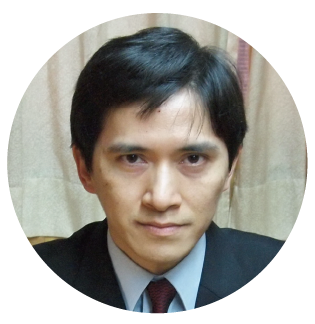
Discussant: Assist. Prof. Kuo-Hsing Hsieh
Ph.D. in Law, University of Edinburgh; LL.M., National Taiwan University. Currently teaching in the Department of Law at National Chung Cheng University, his research centers on the dual core of "Criminal Justice" and "Human Rights Law." He has published numerous papers in domestic and international legal journals and has presented papers and lectures at institutions such as the University of Manchester, the University of Washington, the National University of Singapore, and Lund University in Sweden.

Discussant: Prof. Yu-Wei Hsieh
LL.M., National Taiwan University; Ph.D. in Law, Kyoto University, Japan. Currently a Professor at the College of Law, National Taiwan University, and a Board Director of the Taiwan Association for Innocence. His research broadly covers substantive and procedural criminal law, criminology, criminal policy, and other broader criminal law domains; he has published academic papers in both Taiwan and Japan and engaged in exchanges with practitioners in both countries.
Opening Remarks

Speaker: Atty. Yung-Sung Lin
Chairman of the Judicial Reform Foundation, Managing Partner at Yung-Shin Law Firm
Time
Thursday, July 14, 2022, 3:00 PM to 10:00 PM
Location
Webex Online Meeting Room (Meeting link will be provided after registration)
Agenda
| Time | Content | Speaker |
| 14:45-15:00 | Online Meeting Room Opens | -- |
| 15:00-15:10 | Opening Remarks | Atty. Yung-Sung Lin |
| 15:10-15:40 | Keynote Speech Taiwan's Criminal Extraordinary Remedy System |
Speaker Assoc. Prof. Mong-Hua Chin |
| 15:40-16:10 | Keynote Speech Introduction to the UK Criminal Cases Review Commission System |
Speaker Prof. Lissa Griffin |
| 16:10-16:30 | Break | -- |
| 16:30-17:00 | Keynote Speech How to correct wrongful convictions in Norway |
Speaker Prof. Ulf Stridbeck |
| 17:00-17:30 | Keynote Speech Reform Proposals and System Comparison for Taiwan's Criminal Extraordinary Remedy System |
Speaker Prof. Rong-Geng Li |
| 17:30-19:00 | Intermission | -- |
| 19:00-20:20 | Comprehensive Panel Discussion ※ Simultaneous Interpretation |
Moderator Inquirers Discussants |
| 20:20-20:30 | Break | -- |
| 20:30-22:00 | Q&A and Discussion ※ Simultaneous Interpretation |
Moderator Respondents |
Organizer
Taiwan Association for Innocence
Judicial Reform Foundation
Institute of Technology Law, National Yang Ming Chiao Tung University
Taipei Bar Association Committee on Review of Finalized Criminal Convictions
This article is an AI-generated translation of the original Chinese text. In the event of any discrepancy, the Chinese version shall prevail.