

Social Work Internship at JRF: Discovering the Capabilities of Social Work at the Judicial Reform Foundation
Last edited: 2026-07-27
Wang Yu-hsiang, a social work student at National Taipei University, participated in the dummy account project and the Lo Ming-tsun legal team during his internship. He attended mock trials under the Citizen Judges Act and retrial hearings, and participated in various evening committee meetings. Yu-hsiang is quick-witted and perceptive, understanding how to maintain a sense of humor in critical arenas, and demonstrated great adaptability during his time at JRF. At the end of his internship, he conceptualized some of the social work capabilities he observed in the field of judicial reform and shared them with everyone.
Internship Content
For this mid-term internship, I interned at the Judicial Reform Foundation (hereinafter referred to as JRF), a non-profit organization, for a total of approximately 350 hours. Founded in 1995, JRF is committed to promoting judicial reform based on the philosophy of civil oversight, aiming to move toward an egalitarian, professionalized, and humanized judiciary that builds a judicial system worthy of public trust. While the interns it recruits are predominantly law students, it accepts only one to two social work interns per semester. JRF did not make any special arrangements for the social work internship plan. Although my social work supervisor holds a social worker qualification, their primary role within the organization is that of a full-time lawyer, mainly handling highly professional legal work. My internship work was essentially akin to shadowing my supervisor. Consequently, I participated in all kinds of meetings at JRF, ranging from legally-oriented committee meetings—such as the rescue team, constitutional litigation team, evaluation team, prison issues team, litigation pyramid team, and legal team meetings—to administrative and decision-making level meetings, such as press conference preparation meetings, secretariat work arrangement meetings, and various regular meetings. This gave me a more comprehensive understanding and growth regarding the work of NGOs.
Given the longer hours required for a social work internship, in the later stages of my internship, my supervisor also allowed me to lead new interns in forming a project group focused on the issue of dummy accounts to explore more advocacy approaches. Additionally, I wrote a group observation report for the Lo Ming-tsun Volunteer Team, hoping that the report would enhance the group dynamics of the volunteer team.
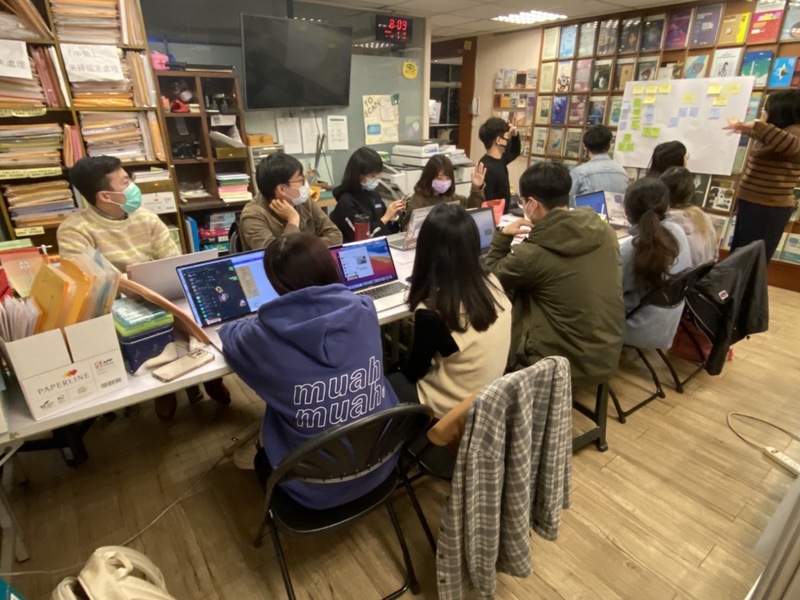 Photo / Lo Ming-tsun Volunteer Team Gathering
What Social Work Taught Me
To be frank about undertaking a mid-term internship in my fifth year, it was precisely because I had deeply resisted social work in my previous years, avoiding both coursework and social work internships. In my senior year, I took 80 credits, essentially completing my graduation requirements for social work within a single year. To me, such a rushed way of taking courses was merely a means to get my diploma quickly, and to be honest, I did not expect to genuinely learn anything. However, during my internship at JRF, I found that a year of social work studies had imperceptibly enhanced many of my abilities—abilities that are not confined to the social work profession alone, but are applicable across various professions and work environments.
1. The Ability to Communicate with Clients
JRF frequently receives complaints from citizens who mostly feel oppressed by the judiciary and carry many grievances, making them relatively agitated emotionally. I observed that my supervisor, who has a social work background, would always first use interviewing techniques such as empathy to soothe the client's emotions before starting the consultation. Even if the case was ultimately declined, they would help the client find an outlet for emotional release. This approach reminded me that I could apply the experience I previously gained interning at the Life Line Association to conversations with clients. Although placed in a legal environment, to put it crudely, it ultimately boils down to human-to-human communication; only by first calming the client down is it possible to convey information efficiently, and only by helping them find an outlet for release when declining a case can we prevent them from feeling helpless and subsequently blaming JRF for not genuinely pursuing judicial reform.
The most memorable interview was with a citizen whom the organization asked me to handle alone because they were originally just dropping off case files. I initially thought the client would leave after handing over the files, but instead, the client became extremely anxious, started crying, and began hitting their own head. They were involved in a criminal case concerning the distribution of nude photos, but felt they were wrongly accused. The court of first instance found them guilty, and the second instance verdict was just a few hours away, so the client insisted on speaking with the director-in-charge. However, the director happened to be out and had a very full schedule, hoping I could escort the client away first. Yet, the client's emotions were extremely agitated and insistent. I felt this was an opportunity to test the application of the interviewing techniques I learned at my previous organization, the Taichung Life Line, in a face-to-face relationship. Therefore, I began trying to empathize with them, saying that regardless of the facts of the matter, the feeling of being wronged must be very difficult and that they must desperately want to escape this predicament... I then explained the current situation to them: the court was going to hand down the second-instance verdict in just a few hours, and during this period, no matter what anyone did, they could not immediately help change the outcome of the court's verdict. Moreover, for us to provide opinions, we needed to read all the case files ourselves rather than simply listening to their version of events, and I hoped they could understand that the organization's position at present was not to provide immediate assistance. The client's emotions calmed down somewhat, but they continued to say they felt too nervous to breathe. So I continued by telling them that I was only an intern and could not offer substantive opinions, but if they felt that talking about their case with someone would help soothe their emotions, I could listen to them, while reiterating once more that I could not offer any opinions after listening. After finishing recounting their case, their emotions calmed down, and they left the organization.
I felt that throughout the entire process, I tried hard to apply the techniques of "listening, supporting, and accompanying" learned at Life Line to soothe the client's immediate emotions, while appropriately "setting boundaries" to spare myself the responsibility of having to provide answers. I also realized that under social work education, I had already learned certain techniques for soothing emotions—techniques applicable in any arena requiring human-to-human interaction.
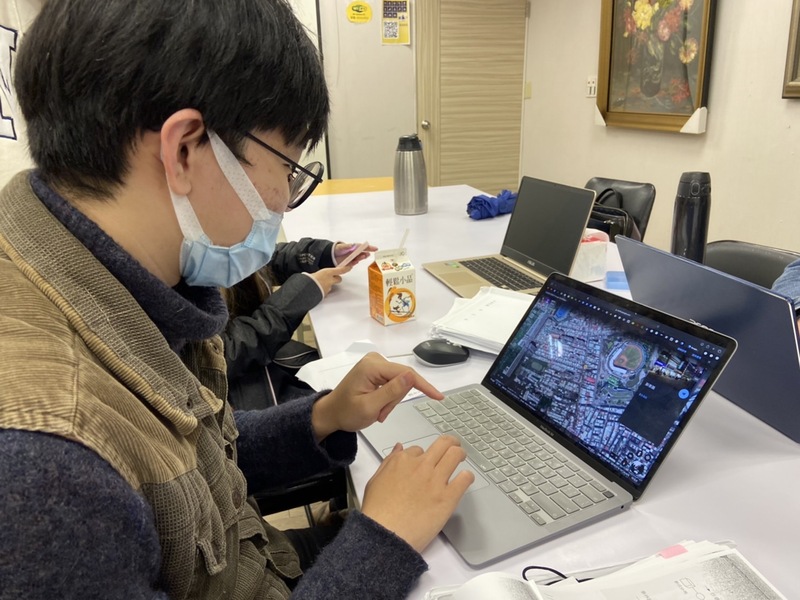 Photo / Studying Lo Ming-tsun's Alibi
2. Perspectives and Horizons for Engaging with Issues
During my internship, a very important project was the issue of dummy accounts. The main controversy surrounding dummy accounts is that relevant judgments often conceptually expand the application of conditional intent. An article by Professor Hsu Wei-kuun (徐偉群) mentions the typical argumentation steps for conditional intent in judicial practice: (1) Ordinary people know that handing over an account and password to a third party may result in them being used for fraudulent activities; (2) The defendant ought to know that handing over an account and password to a third party may result in them being used for fraudulent activities; (3) The defendant still handed over the account and password to a third party; (4) Therefore, it is difficult to say that conditional intent for aiding fraud is lacking. This has resulted in a national conviction rate as high as 96% for dummy account cases, causing many individuals who actually lacked aiding intent to bear criminal and civil liabilities.
When reviewing judgments, my supervisor also discovered that current judicial practices harbor biases against individuals with intellectual disabilities. In dummy account cases, judges are often willing to acknowledge that intellectually disabled individuals lack cognitive capacity and thus acquit them. However, there are still many cases, such as the Taichung District Court Case Li O-ching (108年度簡上字第43號), where the judge concluded that their cognitive capacity was comparable to that of ordinary people based on their ability to "answer questions fluently," and convicted them on that basis. When we consulted the League of Organizations for Persons with Intellectual Disabilities, Taiwan (LOPID) regarding related issues, their social workers suggested that we simply do fieldwork at the empowerment camp they were organizing to find the answer.
The empowerment camp is hosted by LOPID, inviting thirty to forty related organizations to bring their participants. Discussions and presentations in the courses are hosted entirely by the intellectually disabled participants themselves. During the observation process, based purely on appearance or looks, one could not distinguish participants from teachers 100%. We also witnessed so-called fluent responses, but such fluent responses were limited to superficial communication; when we asked them in-depth to make comparisons or describe feelings, their differences from ordinary people became very apparent. For example, we interviewed one participant who gave a very fluent presentation and used language with particular precision. My supervisor asked her what she meant to share with everyone when she raised her hand earlier to share her experience with singing. She told me about attending a singing class at a local foundation, mentioning that it was arranged by an "assistant." My supervisor asked her who the "assistant" was and how they differed from a social worker. Until the end of the conversation, we still could not quite clarify her true meaning. Later, when we asked the organization's social worker, we learned that the so-called assistant was simply how other organizations referred to social workers. I also observed that the expressions of intellectually disabled individuals are usually one-way; most of them express their own thoughts to others, and there is no clash or interaction of words between people in their conversations. These observations convey the signal that their cognitive capacity may indeed fall short of that of ordinary people (detailed records can be referred to: Jiyu E-Paper|When Intellectually Disabled Persons Encounter Dummy Account Fraud Cases: Interview with the League of Organizations for Persons with Intellectual Disabilities, Taiwan).
I feel this is the value of social workers existing within this organization and even within the legal field: we can use a more nuanced perspective to discover a group of misunderstood and oppressed people. Such misunderstandings may merely stem from the public having too flat an imagination of them, whereas we can reconstruct their three-dimensional and diverse profiles. Inspired by this, I also tried to observe which groups have been treated unfairly in dummy account-related judgments, discovering that the homeless face oppression not only in dummy account cases but throughout the entire criminal procedure, and I wrote a research proposal based on this.
In the process of writing this research proposal, I gradually realized that social work training cultivates a worldview and a set of values. Wearing this filter, it seems easier for us to identify some oppressed groups. Or rather, because we understand these groups, we can comprehend the structural factors that influence them behind their decisions. This perspective prevents the value of social work from being confined to a narrow social work sphere; across different fields, as long as we keep wearing that filter, we will surely be able to uncover social oppression that others have missed, and further cooperate with expertise from other fields to solve problems in different ways.
The Social Work Internship at JRF Has Imbued My University Studies with Different Value
"Bottom-up" is a very important foundational assumption for JRF when conducting judicial reform, and it also influences the organization's values. JRF attaches great importance to the process of participation, so it encourages interns to participate in various meetings. Because my internship hours were particularly long, I also additionally participated in many administrative meetings, where everyone's opinions were discussed and everyone's questions were answered. In this atmosphere, I could continuously ask questions and make attempts throughout my internship. I feel these questions and attempts are important; the former lets me know how society differs from what you imagine, and the latter lets me know where my abilities lie.
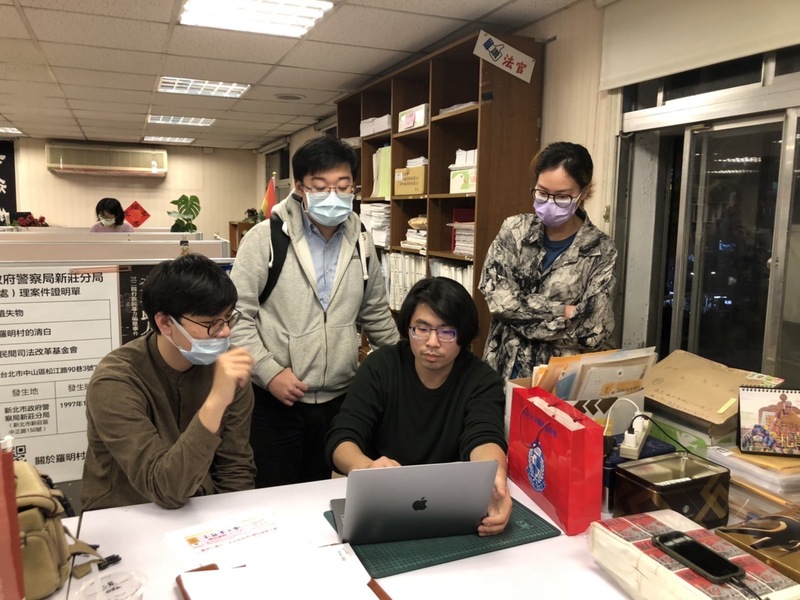 Photo / Discussing the research project together
I feel the most important task of doing a social work internship in such a non-social work organization is to find out what role social workers can play in different fields, and how profession and profession can be integrated. Perhaps, ultimately, one must imbue these hours and what has been learned with some value. The reflection on the situations of intellectually disabled and homeless individuals in the dummy account cases is, in my view, precisely the possibility of integrating legal expertise with a social work perspective. Social work and law both fundamentally strive to uphold social justice. Social work starts from a micro perspective, helping clients find an exit from oppressive structures; law starts from a macro perspective, solving social oppression by enacting regulations. Seemingly independent, they actually complement one another: social work needs legal expertise, while law needs social work expertise to uncover blind spots in the system and find those who were accidentally struck down by the banner of "justice." How to integrate social work expertise with other professions is not only a question that social work students who do not wish to follow the traditional path must seriously consider; even social workers in the traditional social work field can explore more dimensions and possibilities of social work through this approach.
If I truly had to summarize my mid-term internship in one sentence, it would probably be "imbuing my university studies with a different kind of value." Thank you, JRF, and thank you, Ming-ju, Chih-fang, Chien-ya, and I-min, for accompanying me in drawing a perfect period at the end of my university life.
This article is an AI-generated translation of the original Chinese text. In the event of any discrepancy, the Chinese version shall prevail.