
Exhibition Sidelights | REST: Kao Chung-ming Photography Exhibition
Last edited: 2026-11-04
As Hannah Arendt said: That humans love the world through political action is the human condition.—Excerpt from Curator Li Tien-chueh's statement.
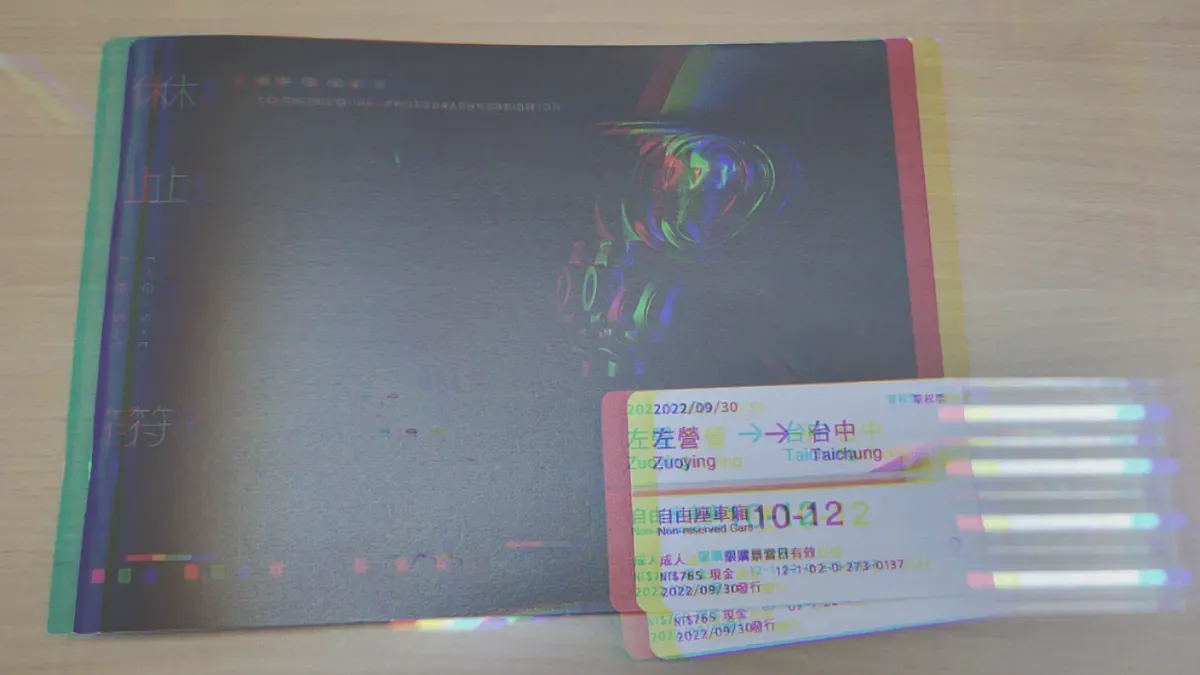
On a Friday afternoon in late September, I hopped on the High Speed Rail from Tsooying and headed straight to the JRF Taichung Office to take in the "REST: Kao Chung-ming Photography Exhibition." I wanted to use this concrete action to remember—to remember the stories of a group of Hongkongers who, after leaving Hong Kong, live scattered bit by bit in Taiwan. Over the past two years amid the major epidemic, I haven't gone anywhere and my passport expired, but meeting some friends from Hong Kong in the Harbor City and listening to their stories made me determined to come see the exhibition.
An hour later, as I walked out the doors of the JRF Taichung Office, I felt very glad I had traveled north for the visit, and I felt that the preparation and curation team at the JRF Taichung Office put a tremendous amount of care into it. I wanted to share my reflections on the exhibition, hoping that everyone will go take a look and chat with the staff about Hong Kong's past and present.
Walking into the first floor of the JRF Taichung Office, photos featuring the imagery of Hong Kong comrades wearing gas masks, accompanied by text written by curator Li Tien-chueh, meticulously explain the significance of the three photography series: Hong Kong Wounds, Chronic Hong Kong Wounds, and Post-Era Revolution, recording the portraits of the people of Hong Kong and the stories of the Hong Kong diaspora. I stood in front of the orange-red curator's statement and read it twice; the questions posed within are so profound. Such as: "People do not want war, and even less do they want to lose freedom; what caused all of this?"
While continuously photographing during the Anti-Extradition Law Amendment Bill Movement, photographer Kao Chung-ming unwittingly found himself caught in the same predicament as his subjects and relocated to Taiwan, subsequently giving rise to the "REST: Kao Chung-ming Photography Exhibition," using the exhibition as a medium to forge a miniature public sphere.
The JRF staff first led me and other visitors to the second floor to appreciate the series *Hong Kong Wounds*. This series features photographs of figures such as Yang Tzu-chun and the "eye-ruptured girl" K, while other subjects are marked with pseudonyms. Regarding the works, my eyes first gazed upon the darkness—an unfathomable darkness—before I could discern the silhouettes of the subjects. But even more unignorable in that darkness was the light; every single subject radiated light.
The curation team put genuine thought into the design. Next, the space was filled with smoke, and things before our eyes began to blur. Eventually, the smoke made it impossible to tell directions or see the artworks clearly, as if one were placed right in the heart-pounding tear gas battles of the Anti-ELAB movement. Yet it also prompted a re-thinking: how did the people of Hong Kong at that time view and understand tear gas becoming an everyday urban landscape? Some people would even carry normal saline in their backpacks, to save themselves and to help others. How did the people of Hong Kong manage to do that? I feel that *Hong Kong Wounds* captures images of Hongkongers with physical injuries, but what it depicts is the piercing pain of the entire city—the kind of spiritual trauma that is even harder to erase, coupled with the perseverance that light still exists in the darkness.
As the smoke dissipated and my sense of direction returned, I walked up to the fourth floor to view the *Post-Era Revolution* series. The faces of every subject were shrouded in a strong white light. Regarding the stories of these 14 subjects, The Reporter had also previously done a series of reports; after reading them, people will gain a deeper understanding of the joys, sorrows, partings, and reunions of certain individuals wandering between Taiwan and Hong Kong. The trade-offs of staying versus leaving, the fear and confusion, are heavier than the white light on their faces.
While viewing this series of works, the question that came to mind was: as Taiwan, having walked through the White Terror and taking pride in democracy and human rights, how should we contemplate our own responsibilities when facing this displaced group, some of whom even require political asylum? Flipping through Taiwan's history, at critical moments of democratization, other nations also extended a helping hand. Mr. Li Yi, who recently passed away in Taiwan, founded *The Seventies* in Hong Kong; after interviewing Linda Gail Arrigo in Hong Kong, the magazine published a Chinese-language report that critically overturned the Kuomintang's previous narrative of the Formosa Incident participants as rioters, influencing international rescue efforts and the attention both inside and outside the island toward the Formosa mass trials. When Li Yi conducted that interview, could he have anticipated the surging tides that followed? Yet it so truly influenced and intersected with Taiwan's democratization process.
Decades later, will another Li Yi emerge in Taiwan, faithfully recording everything that happened during the Anti-ELAB movement and the post-National Security Law era, competing with the Hong Kong government's different narrative framing of rioters, and then bit by bit influencing the people beneath Lion Rock? I am pondering this question.
Moving on to another space, *Chronic Hong Kong Wounds* records the streetscape of Hong Kong after the movement experienced successive movements—large and small white paint patches covering up the graffiti and slogans from the period of the movement. "Liberate Hong Kong, revolution of our times" has become unspeakable and invisible in the public sphere, but amidst the interwoven patches of various sizes, the shadows of the characters are still discernible. The struggle of human beings against power is the struggle of memory against forgetting; the white patches are forced forgetting, but precisely because they are so jarring and so white, they make forgetting impossible.
There were still a few pieces from *Post-Era Revolution* on the first floor. The overall viewing process was very relaxed, leaving ample space and time to slowly observe and ponder. Toward the end of the exhibition, guided by the staff, I walked down to the basement to view the final piece. Walking down the narrow staircase into the dim room felt rather uncomfortable—so uncomfortable that it made me almost forget what the artwork looked like because my instinct wanted so badly to leave. I surmise that this piece is intended to convey the long, dark nights and oppression felt during the sieges of the Chinese University of Hong Kong (CUHK) and the Hong Kong Polytechnic University (PolyU).
A Taichung Office intern with beautiful eyes introduced the work to me and reminded me to watch my step so I wouldn't trip. In that basement, sealed shut once the door was closed, I suddenly deeply understood how, amidst the darkness, the aid of supplies and companions illuminates the unfathomably deep night—much like the intern's thoughtful reminder flowing like a warm current through my previously uncomfortable self.
Returning to the first floor with a somewhat subdued mood, the afternoon sunlight slanted in. I re-read Li Tien-chueh's curator statement, thinking about the conversations I had with the staff while viewing the exhibition—a space for discussing Hong Kong was opened up precisely while observing the artworks.
Such a thoughtful exhibition is a must-share with everyone. I hope you will all come to view it and feel it—to feel the beauty and pain of Hong Kong, to feel the light and love of the people of Hong Kong. A rest is not a full stop; it is the next beginning. May the Hongkongers displaced in Taiwan all encounter their own light, and may Taiwan one day also become a light in a foreign land.
This article is an AI-generated translation of the original Chinese text. In the event of any discrepancy, the Chinese version shall prevail.