

Legislative Amendment Progress Summary | Loopholes in the Prevention of Sexual Intimate Images? Cross-Party Legislators Demand Further Review by the Ministry of Justice
Last edited: 2026-11-03
In 2018, South Korea's Nth Room case was made public, shocking the world and alerting governments globally to the dangers of digital sexual violence. In 2022, Mirror Media published an investigative report titled "Purgatory of Youth: Network Hunting and Trapping of Sexual Intimate Images," exposing Taiwan's version of the Nth Room case and further confirming that the prevalence of such incidents is by no means limited to specific regions. In the modern digital and technological era, various issues surrounding sexual intimate images urgently need to be addressed.
On March 10, 2022, the Executive Yuan passed the draft amendments to the Criminal Code, the Protection of Children and Youths Welfare and Rights Act (Note: Act Governing the Punishment of Sexual Exploitation of Children and Adolescents), the Crime Victim Protection Act, and the Sexual Assault Crime Prevention Act (collectively known as the Four-Law Joint Defense) to curb the frequent occurrence of digital sexual violence and protect the rights of victims.
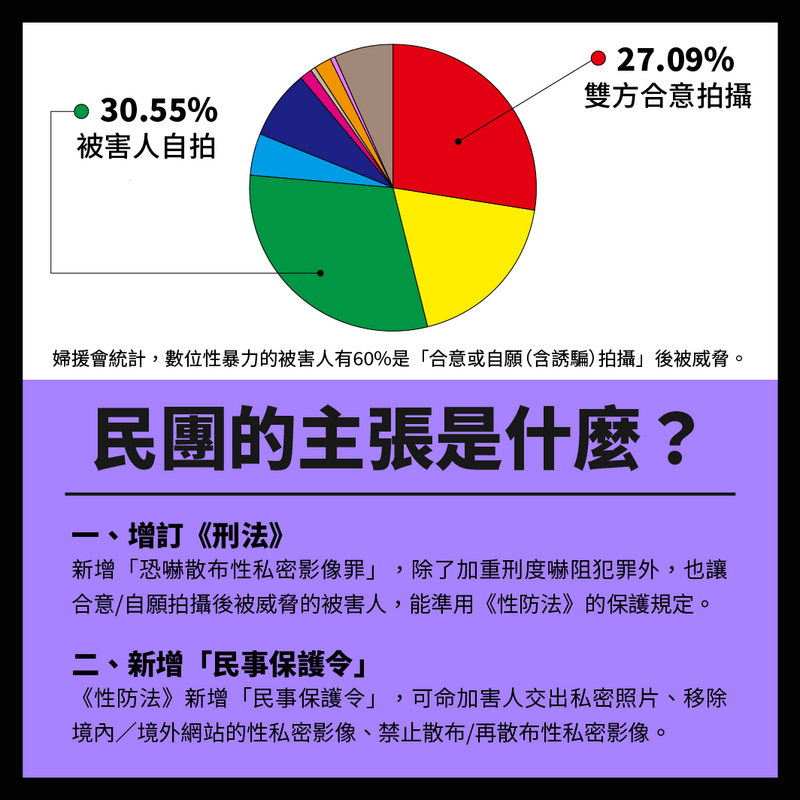
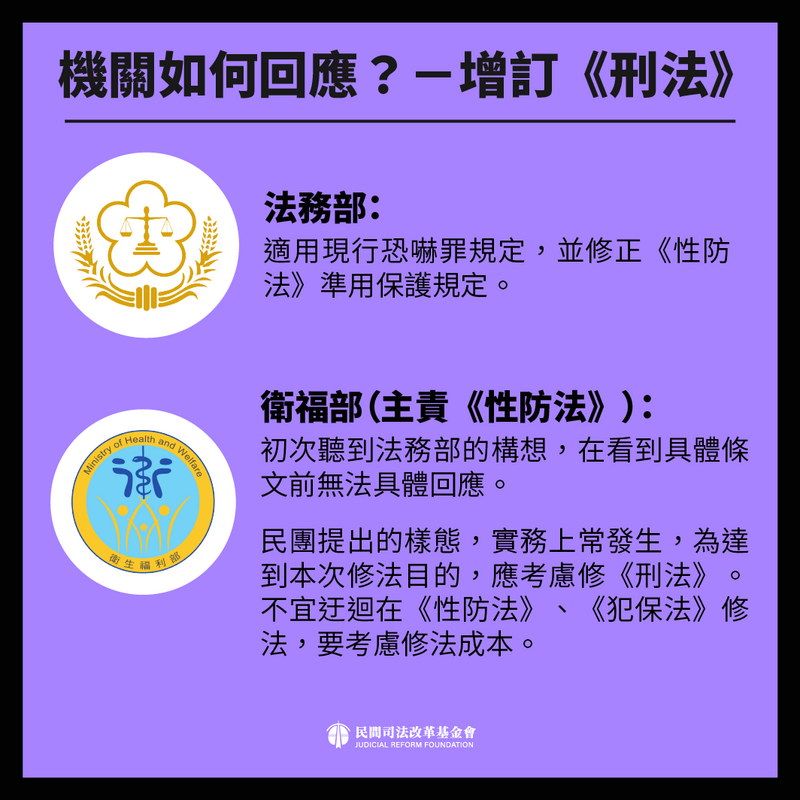
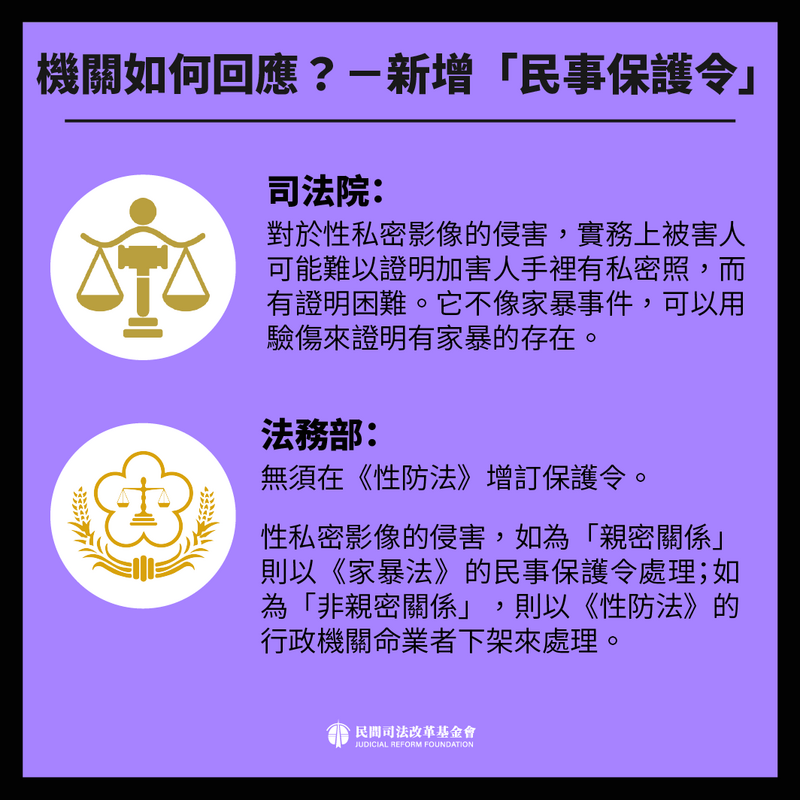
However, regarding the aforementioned drafts, civil society organizations such as the Taipei Women's Rescue Foundation, the Judicial Reform Foundation, the The Garden of Hope Foundation, Women in Digital Empowerment (WIDI), and ECPAT Taiwan, believe there are loopholes in protection and have repeatedly held press conferences to advocate for plugging these gaps.
The first cross-caucus consultation was held on November 9, 2022. Here is a summary of the latest progress for everyone!











【Related Information】
April 28, 2022 - 1st Press Conference by Civil Society Organizations
October 18, 2022 - 2nd Press Conference by Civil Society Organizations
This article is an AI-generated translation of the original Chinese text. In the event of any discrepancy, the Chinese version shall prevail.