

2022 Work and Financial Report|Micro-Tenderness, Macro-Resilience
Last edited: 2026-11-03
The year 2022 marked the 27th anniversary of the founding of the Judicial Reform Foundation (JRF). The theme of our year-end fundraising concert, "Echoes of Whale Songs," sought to convey that while an organization like the JRF is minuscule compared to the vast ocean, we still strive to make our voices heard and transmit our frequencies in the pitch-black deep sea. At the same time, we are as large as a whale, equipped with sound internal organs and senses, and only through the concerted cooperation of our various parts can we sing the finest whale song.
The work report introduces our endeavors across different themes; examined closely, they are diverse and functionally distinct, but viewed from afar, they form a single entity. In such a pluralistic era, the JRF maintains its resilience through macro-perspectives while driven by micro-tenderness.
Core Work Focus and Expenditures
Figure: 2022 Expenditure Distribution
| Category | Key Work | Expenditure (NTD) |
| Legal Policy | Citizen Participation in Trials, Crime Victim Protection, Amendments to Subordinate Statutes of the Judges Act, Establishment Guidelines Project for External Prison Inspection, Monitoring the Implementation of the National Congress on Judicial Reform, Technology-Based Investigative Procedures Act | 3,124,911 |
| Case Rescue & Monitoring | Anti-Black-Box Cross-Strait Service Trade Agreement Case, Ch'en Ching-k'ai Case, Minor Offense Parole Revocation Project, Monitoring the Shih Mu-ch'in Case | 3,576,804 |
| Advocacy Actions | Citizen Participation in Trials, Chiou Ho-shun Exhibition and Solidarity Activities, Campus Band Course Cooperation, Themed Lectures, Campus Mock Trials | 3,486,754 |
| International Networking | July 9 Global Network Commemoration Activities, International Organization Exchanges and Cooperation | 7,175,360 |
| Resource Development | Annual Thanksgiving Banquet, Artwork Charity Auction, Supporter Relationship Management | 6,423,932 |
| Administrative Affairs | Daily Administration, Routine Association Affairs (Board of Directors / Supervisors / Standing Executive Committee / Annual Planning), Volunteer Lawyer Recruitment, Education and Training, Information Security Maintenance, Office Equipment Maintenance and Updates | 5,944,050 |
| Taichung Office | Wrongful Conviction Rescue, Monitoring Evaluations and Judicial Sunshine Net, Local Lectures, Rule of Law Education Rooted in Campuses, Intern and Volunteer Capacity-Building Projects, Administrative Affairs, Organizational Development | 4,040,203 |
| Legal Ethics Center | Reading Clubs, Book Publication | 3,257,747 |
| Total | 37,029,761 | |
Project Briefings
Legal Policy
- Criminal Procedure and Technology-Based Investigation
- Project on Alleviating Judicial Burden and Enhancing Judicial Quality
- Drug Safety Education
- Monitoring the Citizen Judges Act
- Crime Victim Rights Protection
- Reform of the Police, Prosecutor, and Investigation Systems
- Civilian Coalition for Monitoring the Implementation of Resolutions of the National Congress on Judicial Reform
- Forensic Science and Expert Testimony
- Constitutional Court Procedure Act
- Research and Revision of the State Compensation Act
- Research and Revision of the Code of Civil Procedure
- Research and Revision of the Code of Administrative Procedure
- Prison Grievances and Systemic Reform
- Advocacy for an Independent Criminal Case Review System
Learn More
Criminal Procedure and Technology-Based Investigation In September 2020, the Ministry of Justice announced the draft Technology-Based Investigative Procedures Act, incorporating global positioning systems, online searches, and other investigative methods, which garnered significant attention. The JRF immediately formed a dedicated team, began drafting a non-governmental version of the bill, and held multiple seminars inviting experts, scholars, and practitioners from the legal and technological sectors to foster social dialogue.
Meanwhile, regarding various amendments to the Code of Civil Procedure proposed by the government, we also hold regular monthly revision meetings, drafting non-governmental versions or providing amendment suggestions to ensure that the direction of legislative amendments safeguards human rights.
- 2022.5.19 Participated in a Judicial Yuan symposium, offering amendment suggestions regarding the "pyramidal" reform of the Code of Criminal Procedure
Project on Alleviating Judicial Burden and Enhancing Judicial Quality Taiwan's judicial burden has been overly heavy for a long time. Judges, prosecutors, court clerks, and court bailiffs are all overworked, facing tight staffing and heavy caseloads, which in turn affects the quality of case handling. The National Congress on Judicial Reform also passed resolutions on this issue, successively proposing solutions such as reform of the disposition system, simplification of legal documents, and the establishment of case-filing review centers.
To address this issue, the JRF has also formed a dedicated team. Through long-term research and discussion, we hope to propose more potential solutions to achieve the goals of alleviating the judicial burden and enhancing judicial quality.
- 2022.1.10 Press Conference on the Announcement of the Draft for Alleviating Judicial Burden and Enhancing Judicial Quality
- 2022.5.7 Symposium on Alleviating Judicial Burden and Enhancing Judicial Quality
Drug Safety Education Law plays an important role in early intervention measures for drug-using children and adolescents. However, Taiwan's legal system is scattered across various domains, making it difficult for school partners who wish to help to mobilize resources and provide assistance across teaching, student affairs, and counseling. Moreover, shifts in counseling interfaces involve different legal obligations and room for action; legal issues consistently persist throughout the counseling process.
To enhance front-line teachers' drug safety literacy and appropriately handle the privacy and disciplinary strategies of drug-using youth, we brought together partners concerned with this issue from all walks of life to produce the Drug Safety Education Handbook. Through concrete case studies, we guide basic response concepts, enabling teachers to understand how to interact with drug-using youth in educational settings and their statutory responsibilities, while appropriately cooperating and providing assistance with social workers and the judiciary.
Monitoring the Citizen Judges Act Facing the Citizen Judges Act, which is set to take effect on January 1, 2023, the JRF has compiled first-hand documents from courts across Taiwan, observed from various angles, and provided observation guidelines and questionnaires. We have also gathered reform-minded partners from across the region to offer recommendations on the system, voice opinions on subordinate statutes, and hold press conferences, workshops, and seminars. These efforts help judges, prosecutors, defense lawyers, scholars, and the general public better understand how the system operates, assisting in the smooth implementation of the citizen participation in trials system in Taiwan.
To popularize related literacy, between 2021 and 2022, we accepted invitations from organizations such as Daan Community College, Songshan Community College, the Academic Department of the National Taiwan University Student Union, National Chung Cheng University, and the Affiliated Senior High School of National Chiayi University to introduce the citizen judges system; held three "Citizen Judge Seed Lecturer Workshops" in Taipei, Tainan, and Hsinchu; and hosted three "Citizen Observation Group Briefing Sessions" to allow members of the general public to sit in and participate in mock trial proceedings in courts.
Crime Victim Rights Protection In 2020, we officially established the "Crime Victim Rights Protection Alliance," hoping to establish a brand-new institution modeled after the Legal Aid Foundation. Operating under a "government-funded, privately-operated" model, this alliance aims to enhance the efficiency of resource utilization and strengthen the protection of crime victims' rights. Over two years since the establishment of the dedicated team, we have drafted a brand-new non-governmental Crime Victim Rights Protection Act, conducted nationwide visits to crime victim protection associations, and held five press conferences to actively facilitate the passage of the new law.
- 2022.4.7 Press Conference of the Crime Victim Rights Protection Alliance: Seeing the Dawn of Victim Rights, Hoping for More Pragmatic and Complete Reforms
- 2022.9.22 Press Conference of the Crime Victim Rights Protection Alliance: Reform Is Just One Step Away—Pass the Crime Victim Protection Act Expeditiously
Reform of the Police, Prosecutor, and Investigation Systems Taiwan's unreasonable police performance evaluation system not only leaves front-line police officers exhausted in pursuit of quotas, but has even driven some to take risks and conduct illegal investigative acts to meet those demands. Incidents such as a Zhonghe police officer kicking a teenager's head, a music teacher being unreasonably subdued and handcuffed in the street, and Sanchong police officers improperly questioning a migrant worker all demonstrate that police misconduct and overzealous enforcement continue to occur.
In addition to continuously monitoring the follow-ups of the National Congress on Judicial Reform regarding police system reform, the JRF actively intervenes when police abuse of power makes news headlines to help victims seek state compensation resources, hold press conferences, and form advocacy campaigns. For example, regarding the incident where Sanchong police officers improperly questioned a foreign migrant worker, we issued a joint statement with 20 migrant worker organizations and produced a documentary to continue monitoring this issue.
- 2022.1.20 Press Conference: Willing to Violate the Principle of Non-Publicity of Investigation Just to Grab Media Headlines? Demanding the Prompt Establishment of a Police Performance Management Committee
- 2022.6.22 Statement by Civil Organizations Calling on Police to Cease Discriminatory Enforcement Practices Against Migrant Workers
Civilian Coalition for Monitoring the Implementation of Resolutions of the National Congress on Judicial Reform Following the concluding meeting on August 12, 2017, the Office of the President's National Congress on Judicial Reform—which lasted over ten months—came to a close. However, the many tasks of judicial reform were only just beginning after the meeting. The JRF and other civil organizations jointly formed the "Civilian Coalition for Monitoring the Implementation of Resolutions of the National Congress on Judicial Reform," tracking the implementation status of judicial reform resolutions every year through press conferences, seminars, or lecture series.
- 2022.8.11 Five-Year Anniversary Press Conference of the National Congress on Judicial Reform: Do Not Give Up on Judicial Reform Scores—Final Sprint Requires Effort
Forensic Science and Expert Testimony The JRF began focusing on the reform of forensic and appraisal systems in its early years, including concerns raised in 2002 regarding the reform of forensic medicine and criminalistics systems, followed by a symposium on "Preliminary Crime Scene Handling Guidelines" the next year. In 2008, the JRF participated in the Criminal Human Rights Legislation Promotion Alliance, jointly proposing a non-governmental draft of the Code of Criminal Procedure to demand the introduction of an expert witness system.
In recent years, the Forensic Science Alliance has dedicated itself to researching the organizational laws related to a specialized National Forensic Science Research Institute in Taiwan, continuing to promote and explore comprehensive reforms of our forensic science system while providing oversight and demands during major news events.
- 2022.1.12 Press Conference: Drug Testing Blunders Expose Systemic Flaws in Forensic Science—Establish a National Forensic Science Commission Expeditiously
- 2022.5.28 Online Seminar: Review and Prospects of the Kaohsiung Medical University Drug Testing Incident
- April 2022 to Present: Drafting the non-governmental National Forensic Science Research Institute Organization Act
Constitutional Court Procedure Act The JRF has consistently accepted public petitions for cases where fundamental human rights have been severely violated, involve significant public interest, and meet constitutional litigation requirements. Cases assisted in recent years include: Tai Li-chen's whistleblower dismissal case, Hsu Kuo-yao's unjust dismissal case, Su Chien-he's mitigation of criminal compensation due to attributable coerced confessions, the unconstitutional manufacturing, sale, and transport of drugs case, and the minor-offense parole revocation constitutional interpretation project—all achieved through our collective efforts.
Following the launch of the new system, we have also issued amicus curiae briefs for significant cases such as the Indigenous Status Act case, the D-grade performance rating dismissal case, Hsu Kuo-yao's working hours case, the National Health Insurance Database case, and the retrial consecutive-sentencing clause case, while continuing to care for and monitor the operation of constitutional litigation.
- 2022.11 Responded to the Judicial Yuan's draft amendments to the Constitutional Court Procedure Act by proposing a counter-proposal and attending a Legislative Yuan public hearing
Research and Revision of the State Compensation Act On September 2, 2021, the Executive Yuan passed a full amendment draft of the State Compensation Act, which will have a profound impact on people's rights, institutional actions, and the state responsibility system.
The JRF thus established a legislative revision research group to immediately draft a non-governmental amendment proposal. Within one year of its establishment, the group has held over 10 meetings. A non-governmental initial draft has now been completed, and subsequent seminars will be held to gather broader opinions, promoting progressive legal revisions so that every citizen harmed by illegal state actions can seek justice.
Research and Revision of the Code of Civil Procedure The JRF has always supported the reform direction of a "pyramidal litigation system," but advocates for comprehensive supporting measures and the enhancement of trial quality in factual adjudication to advance reforms steadily and progressively. Therefore, regarding the Judicial Yuan's reform direction focusing on "narrowing the people's right of appeal," not only are the objective conditions unripe, but it also lacks proper buffering. In addition to opposing the Judicial Yuan's direction, we are actively researching amendment proposals to strengthen factual adjudication, striving to build a civil trial system that effectively protects private rights.
- 2022.3.16 JRF invited lawyers from across regions: Consultation meeting on monitoring the "pyramidal litigation system" amendments to the Code of Civil Procedure
- 2022.3.21 Petition press conference opposing the official draft amendment to the Code of Civil Procedure: "President Tsai, Do You Support Judicial Reform That Infringes Upon People's Right of Appeal?"
- 2022.4.20 Public Hearing on Narrowing People's Right of Appeal and Where Is the Impact Assessment? Implementing Judicial Reform and Constructing a Pyramidal Litigation System
- March 2022 to Present: Continually convening revision meetings to research the non-governmental reform draft of the Code of Civil Procedure
Research and Revision of the Code of Administrative Procedure On June 22, 2022, the Code of Administrative Procedure was promulgated by the President and is scheduled to take effect in August 2023.
To ensure that the amendments to the Code of Administrative Procedure reflect the actual needs of the people and enable administrative litigation brought against the government to be handled more effectively and fairly, the JRF established a specialized legislative revision team to review the Judicial Yuan's draft and practical issues in current administrative litigation cases, while continuing to research systems such as the Petitions Act to enhance the protection of people's rights and strengthen the effect of using litigation to monitor the government.
- 2022.5.24 Statement: Complete Overhaul of the Administrative Litigation System—The Legislative Yuan Must Safeguard People's Rights
- 2022.7.22 Comments on the amendment of retrial provisions under Article 273 of the Code of Administrative Procedure
- 2022.7.27 Comments on the formulation of methods under Article 232, Paragraph 3 of the Code of Administrative Procedure
Prison Grievances and Systemic Reform Everything happening behind prison walls is not severed from the lives of people in a free society. In fact, prison human rights conditions serve as an important indicator for examining a country's fundamental human rights. In 2020, the new Prison Act and Detention Act took effect, responding to the National Congress on Judicial Reform held in 2017. Based on the fundamental principles of legalization and transparency, and meeting the demands of legalization, 32 authorized regulations and enforcement rules were formulated, greatly increasing the density of legal norms. After the new law went into effect, the JRF completed a series of "Inmate Rights Handbooks" for inmates to request, continued to provide legal consultation and assistance through correspondence with dozens of inmates each month reporting prison issues, and accumulated material for systemic reform through prison grievance cases. In particular, regarding the operation of the external inspection groups under the new law, we organized volunteer teams, held press conferences to issue commentaries, wrote opinion pieces, and maintained particularly close oversight.
After the Ministry of Justice announced the draft Juvenile Correctional Schools Treatment Enforcement Regulations, we continuously participated in the Ministry of Justice's revision meetings to provide non-governmental amendment opinions and suggestions.
- 2022.1.19 Press Conference: Implementing External Independence and Thorough Transparent Oversight—Annual Health Check of the 2021 External Prison Inspection Groups
- 2022.6.5 Opinion Piece: Letting Sunshine into Prisons: Expectations for the Selection of External Prison Inspection Members
- 2022.10.6 Opinion Piece: External Prison Inspection Groups Must Be More Independent and Proactive
- 2022.9.19 Article: Clarification of Issues Related to Out-of-Prison Programs Following the Police Murder Case
- 2022.10.24 Article: Are We Safe Just Because Out-of-Prison Programs Exclude Major Crimes?
Advocacy for an Independent Criminal Case Review System In Taiwan, if individuals seeking vindication for a final criminal conviction wish to do so, they primarily rely on extraordinary remedy channels such as retrial and extraordinary appeal, but pushing open the doors of the court has always been exceptionally difficult. To increase channels for wrongful conviction relief, the First Division of the Office of the President's National Congress on Judicial Reform discussed in 2017—referencing systems in countries such as the United Kingdom and Norway—recommending that the government study the establishment of a "criminal final case review mechanism" that exercises its powers independently. The JRF established a research group on the independent criminal case review system to study how the Criminal Cases Review Commission established in countries like the United Kingdom and Norway operates, drafted indigenous version revision articles, and continues to engage in rolling revisions and lobbying.
- 2022.7.14 2022 Symposium on the Independent Criminal Case Review System: United Kingdom, Norway, and Taiwan
Case Action
- Wrongful Conviction Rescue
- Non-Publicity of Investigation
- Gender Judicial Reform
- Dummy Accounts
- Monitoring Unfit Judges and Prosecutors
- Volunteer Lawyer Team for eID Chip ID Card Litigation
Learn More
In 2022, the total number of cases received by the Petition Center was 1,581.
Wrongful Conviction Rescue
- Chiou Ho-shun Case On October 14 and October 24, the legal team submitted a statement of objection and application for court appearance, along with a supplementary brief, for the constitutional interpretation case regarding the consecutive-sentencing clause for retrials. The Third Periodic Review under the Two Covenants on May 13, 2022 saw the Committee issue concluding observations and recommendations, explicitly stating in paragraph 72 that the government "should pardon Chiou Ho-shun, who has served 33 years on death row." On August 13, 2022, we held a street rally action titled "National Day Is Dead; Hoping Faith, Fortune, and Harmony Will Return."
- Su Chien-he Case June 26 Anti-Torture Day Lecture Series|"Torture Evidence Resurrected? The Unfinished Business of Vindicating the Su Chien-he Trio."
-
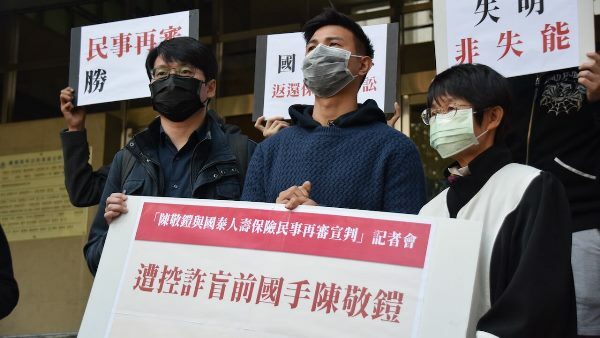
Ch'en Ching-k'ai Case Determined in civil proceedings that he does not need to return insurance payouts to three insurance companies. In criminal proceedings, following a resolution by the Taiwan High Prosecutors Office's Review Committee for Final Conviction Cases, prosecutors from the Taiwan Kaohsiung High Prosecutors Office initiated a retrial. The Kaohsiung Branch of the Taiwan High Court held retrial investigation hearings on April 1, June 27, and August 4.
-
Ch'iu Sung-ch'eng Case Received the retrial dismissal ruling on January 11, 2021; the legal team filed an interlocutory appeal against the retrial dismissal on January 20; held a retrial investigation hearing in the 9th courtroom of the Kaohsiung Branch High Court on May 13; and submitted a supplemental criminal retrial brief on June 15. The investigation procedure continued at the Kaohsiung Branch High Court on August 19, and the fourth supplemental criminal retrial brief and application for evidence investigation were submitted on September 8.
-
Lo Ming-ts'un Case May 15 Former Xinzhuang Precinct Criminal Investigation Division Chief Corruption Wrongful Conviction Case|"Lo Ming-ts'un Case" Seed Lecturer Work.
Non-Publicity of Investigation A dedicated team was established in 2018 to monitor the implementation of the Directions for the Implementation of the Non-Publicity of Investigation Principle, inviting volunteers and interns to monitor news, discuss cases, and actually assist victims in filing state compensation claims. At the same time, when news events occur that risk violating the principle of non-publicity of investigation, statements are issued immediately to call for compliance.
- 2022.7.25 Statement|Regarding the Nantou Shooting Incident, Calling on Prosecutors and Police to Comply with the Principle of Non-Publicity of Investigation
- 2022.8.24 Statement|Enhance Law Enforcement Culture of Rigorous Case Handling and Strictly Comply with Regulations on Non-Publicity of Investigation
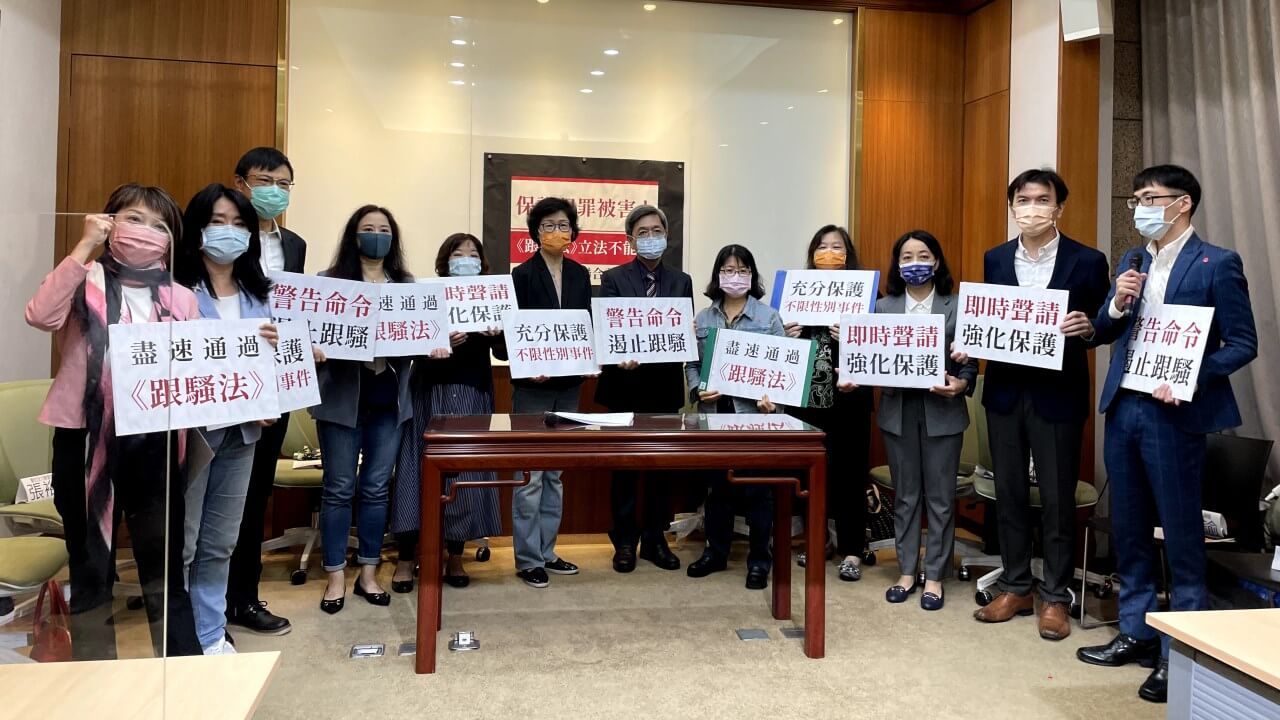
Gender Judicial Reform The JRF and gender organizations jointly focused on the amendments related to the Stalking Prevention Act and the prevention of sexual and intimate image violence, while participating in the 2022 CEDAW review, hoping to continuously promote gender equality within the judiciary.
- 2022.4.28 Recognizing the Physical and Mental Trauma of Victims of Digital Sexual Violence and Practical Handling Dilemmas: We Need Legislative Amendments Capable of Preventing the Continued Dissemination of Digital Sexual Violence
- 2022.10.18 Official Draft on Sexual Intimate Images Has Loopholes; We Must Thoroughly Prevent the Rampancy of Digital Sexual Violence: Non-Governmental Amendment Draft Press Conference
Dummy Accounts In recent years, online fraud has been rampant. Fraud syndicates often use job postings, loan applications, mobile phone number applications, and online shopping as bait to trick people into handing over bank accounts or phone numbers, which are then used to defraud other members of the public. In recent judicial practice, the approach of "presuming intent" has been routinely adopted to determine that victims whose accounts were swindled possessed "accessory intent," prosecuting and convicting them as "accomplices to fraud" or under the heavier statutory penalty of "accomplice to money laundering," or forcing them to compensate other victims, leading to mutual predation among the vulnerable and gradually becoming an immeasurable social tragedy.
- 2022.2.21 Meeting Notice|Non-Governmental Analysis Meeting on the Ministry of Justice's "Draft Amendments to the Money Laundering Control Act"
- 2022.2.27 Statement of Opinion|Regarding the Ministry of Justice's 2021 Draft Amendments to the Money Laundering Control Act
- 2022.4.23 Should Our Country's Money Laundering Control Act Add an Offense of Supplying Dummy Accounts|Debate Competition & Symposium
- 2002.5.14, 21 Lawyer Session, Social Worker Session|Cases of Dummy Accounts Involving the Homeless – Education and Training for Lawyers and Social Workers
Monitoring Unfit Judges and Prosecutors On July 17, 2020, the new Judges Act took effect, allowing citizens to initiate evaluations directly without going through the JRF. Aside from continuing to assist citizens seeking help via LINE and guiding them on how to file complaints, the JRF also provides methods and petition form templates for filing evaluations on its official website. Through feedback from cases, the JRF continues to monitor operational conditions, analyzing the achievements of the evaluation committee using qualitative and quantitative methods upon its anniversary to accumulate momentum for subsequent reforms. In addition, regarding major judicial disciplinary incidents, the JRF held a total of five press conferences and called for open trials regarding the proceedings at the Disciplinary Court for cases involving Shih Mu-ch'in, Lo Jung-ch'ien, Cheng Hsiao-kang, Tseng P'ing-shan, Lin Ch'i-fu, Yen Nan-ch'üan, and Su I-chou, while recruiting volunteers to conduct courtroom observation.
- 2022.6.8 Press Conference on the Disciplinary Court Courtroom Observation Series|Not a Thing of the Past—Seven Major Cases of the Shih Mu-ch'ins Are Under Trial; the Disciplinary Court Should Be Subject to Public Oversight
- 2022.9.2 Statement on the Second-Instance Verdict of the Shih Mu-ch'in Case|Shih Mu-ch'in Resentenced to Removal from Office; the Foundation Will Continue to Monitor Other Related Cases!
Volunteer Lawyer Team for eID Chip ID Card Litigation The Ministry of the Interior originally planned to mandate the nationwide replacement of all citizen ID cards with "Digital Identity Cards" (eID) starting in October 2020, raising concerns over violations of people's right to privacy and informational self-determination in the digital age. Through the litigation and advocacy efforts of the lawyer team alongside civil organizations such as the Taiwan Association for Human Rights and the Open Culture Foundation, the Executive Yuan passed a resolution at its 3736th meeting on January 21, 2021, to suspend the eID replacement, stating that implementation would proceed according to law only after enacting special legislation and building social consensus.
- Submitted 2 amicus curiae briefs between February and April 2022 regarding the National Health Insurance Database constitutional litigation case (Case No. Hui-Tai-Tzu 13769)
- 2022.8.20 Held a Symposium on Digital Rule of Law and Human Rights Protection|The Right to Refuse Being "Digitalized": Evaluating the Constitutional Court's Judgment on the National Health Insurance Database Case
Organizational Advocacy
- Exhibitions
- Newsletters
- Website Maintenance
- Social Media Management
- Thesis Grant Program
- Campus Lectures and Mock Trials
- Internship Program
Learn More
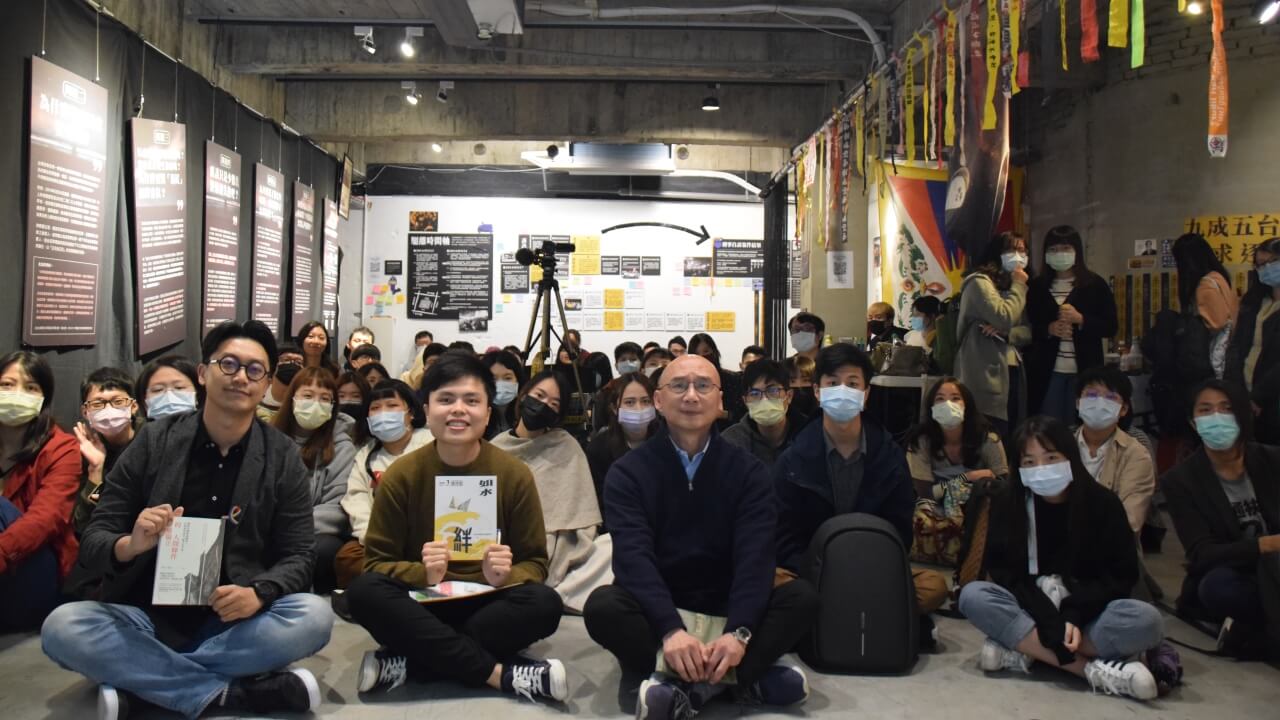
Ocean Net and Heavenly Light: Chiou Ho-shun's 32 Forgotten Years Special Exhibition Traveled to Tainan in cooperation with Amnesty International in April 2022.
Grandma's House in Taichung | Peace and Women's Human Rights Special Exhibition In cooperation with the Women's Rescue Foundation, this exhibition not only presented the life stories of the "grandmas" (comfort women) but also recreated the mock trial of the 2000 Women's International War Crimes Tribunal on Japan's Military Sexual Slavery, presenting the process of the litigation against Japan to fight for their rights through judgments, testimonies, and related images from the trial.
Campus Mock Trials Since 2015, we have regularly entered classrooms to lead students in conducting teaching material drills for "Campus Mock Jury Trials." With the Citizen Judges Act officially taking effect in 2023, the JRF developed a new version of teaching materials and continues to enter campuses, working alongside teachers to conduct campus mock trials based on the Citizen Judges Act, witnessing many young students develop their abilities in dialogue and critical thinking.
Campus mock trials were invited for cooperative implementation in 76 sessions in 2022, reaching 3,130 participants.
Lecture Cooperation The judicial reform work that the JRF has long dedicated itself to—including bill promotion, monitoring and evaluation, and case rescue—serves as essential material for promoting rule of law education. We hope to enable more teachers and students to understand the cases long rescued and issues promoted by the JRF, bringing judicial reform into campuses.
Campus lectures were invited for cooperative implementation in 32 sessions in 2022, reaching 2,373 participants.
Internship Program 180 students interned at the Foundation, totaling 17,249 hours.
- Taipei Office: 137 students interned at the Foundation, totaling 10,049 hours
- Winter Term: 30 students, over 1,940 hours
- First Half of the Year: 50 students, over 3,140 hours
- Summer Term: 42 students, over 4,273 hours
- Second Half of the Year: 15 students, over 696 hours
- Taichung Office: 43 students interned at the Foundation, totaling 7,200 hours
- Summer Term: 35 students, over 6,830 hours
- Winter Term: 8 students, over 370 hours
-
"Szu-Szu 2022.02" Long Lens on the Shelf: The Unfinished Story of Dummy Account Fraud Cases
-
"Szu-Szu 2022.04" Those Who Wait in Vain for Vindication, and the Songs That Still Reverberate
-
"Szu-Szu 2022.06" Stepping Stones on the Road to Vindication: Written Before the Retrial Investigation Hearing of the Ch'en Ching-k'ai Case
-
"Szu-Szu 2022.08" Rootless Residency: Uncle Fang's Life
-
"Szu-Szu Winter 2022.12" Early Unboxing of the Citizen Judge: I Am an Ordinary Citizen! I Stand in the Courtroom!
Taichung Office
- Local Case Rescue
- Venue Operation
- Petition Center
- Local Activities
- Campus Activities
- Interns and Volunteers
Learn More

Local Case Rescue
- Current active cases in Taichung Office: Yang O-chih Case, Hsiao Ming-yueh Case, Tai O-hui Case, Chang O-k'uei Case, Yüan O-ya Case, Lin O-wen Case, Ho O-liang Case
- Cases pending review: 3 cases in total
Venue Operation Since 2021, the Taichung Office has hosted special exhibitions such as "Ocean Net and Heavenly Light: Chiou Ho-shun's 32 Forgotten Years Taichung Special Exhibition," "No Such Person: 7th Anniversary Exhibition of the March 24 Executive Yuan Violent Eviction Incident Taichung Edition," "Grandma's House in Taichung | Peace and Women's Human Rights Special Exhibition," and "REST: Kao Chung-ming Photography Exhibition." It also hosted a debate competition and symposium themed "Should Our Country's Money Laundering Control Act Add an Offense of Supplying Dummy Accounts," reaching over 500 citizens through a combination of on-site venues and online live streaming. The Taichung Office continues to operate locally, deeply cultivating the rule of law and democracy in Taiwan, hoping to connect local resources more effectively on the existing foundation.
Rule of Law Education In 2022, in conjunction with the upcoming implementation of the Citizen Judges Act, scripts were adapted based on the citizen judges system. By leading students to participate in simulated trial proceedings, students can experience important principles of criminal trials such as the presumption of innocence and rules of evidence, and practice the spirit of deliberative democracy through dialogues between jurors and citizen judges.
- Cooperating Schools: Total of 14 junior and senior high schools including Hsinchu, Miaoli, Yunlin, Taichung, Changhua, and Tainan, averaging 2–3 sessions per month.
- Number of participating volunteer lawyers: Approx. 7
Intern and Volunteer Capacity-Building Provides students with opportunities to experience judicial settings firsthand and cultivate future talents. Through assisting in case rescue work, conducting courtroom observations, and participating in or organizing serial activities, interns gain a deeper and more complete understanding of judicial reform issues, thereby becoming future seeds of judicial reform.
- Cooperating Schools: Total of 16 universities and high schools, approximately 40 students per semester.
- Total hours: 7,200 hours.
International Networking
- Human Rights in China
- Human Rights in Hong Kong
- International Exchanges
Learn More
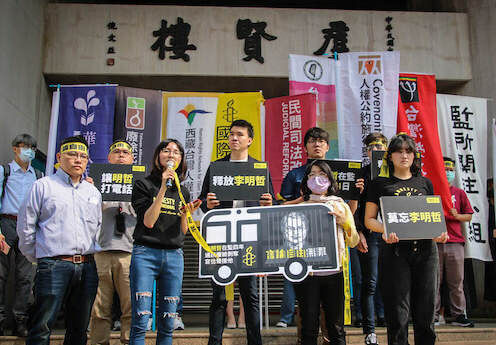
Human Rights in China and Hong Kong Starting July 9, 2015, the Chinese government launched interviews and arrests across as many as 25 provinces, implicating over 300 human rights lawyers, law firm personnel, and rights defenders who suffered harassment, arbitrary detention, torture, or sentencing. Following the "709 crackdown," the government has even more frequently suppressed lawyers by revoking their practicing licenses. For many consecutive years, the JRF has held Chinese Human Rights Lawyers Day to show solidarity and advocate for the protection of human rights for Chinese rights-defending lawyers. Meanwhile, the JRF has also continuously fostered dialogue and change regarding civil society issues under authoritarian rule in China, Hong Kong, and elsewhere through seminars, photography exhibitions, theater, and other activities.
- 2022.4.4-4.10 Photography Exhibition _ Series of Seminars _ Prospect Theater | "Era of Revoution" Kao Chung-ming Photography Exhibition
- 2022.7.9 2022 Sixth Chinese Human Rights Lawyers Day Online Seminar
- 2022.9.17-1.14 REST — Kao Chung-ming Photography Exhibition
Day of the Endangered Lawyer January 24 is the "Day of the Endangered Lawyer" initiated by Dutch human rights lawyer Hans Gaasbeek. Each year, a country is selected for focused attention, and solidarity events are held worldwide. Past countries include Azerbaijan, Turkey, China, and the Philippines. This year, the Republic of Colombia, where severe human rights violations continue to occur, was selected. In 2021, the JRF responded in solidarity with Colombian lawyers by holding the Taiwan premiere and seminar of the documentary *Nos están matando (They’re killing us)*, and we will continue to follow this issue in the future.
Administrative Affairs
- Routine Association Affairs Work
- Daily Administrative Matters
- Standing Executive Committee Meetings
- Volunteer Lawyer Recruitment
- Education and Training
- Equipment and Information Security Health Check
- Office Equipment Maintenance and Updates
Regularly execute the affairs and administrative work of the foundation, including board meetings, standing executive committee meetings, annual planning, financial management, etc., and irregularly review internal regulations. Beyond the maintenance of "things," "people" are an even more important asset to the JRF. We irregularly conduct internal education training and provide learning resources for staff within the foundation.
Resource Development
- Fundraising Activities
- Charity Merchandise
- Supporter Relationship Management
We regularly hold thanksgiving banquets or fundraising activities every year to raise funds from supporters of various projects, and also collect artworks from artists for charity auctions, attempting to expand sources through different schemes. In 2022, due to the pandemic, we conducted project fundraising through a concert format.
Legal Ethics Center
- Reading Clubs
- Book Publication
Therefore, alongside its original core work, the JRF specially established the "Legal Ethics Center" dedicated to research and promotional work in legal ethics. The Center collects important treatises on legal ethics from rule-of-law-advanced countries and conducts translation work, hoping to lay the foundation for indigenous research in legal ethics.
Statement of Revenues and Expenditures (Final Settlement)
| Previous Year's Final Settlement Amount | Item | Current Year's Budget Amount (1) |
Current Year's Final Settlement Amount (2) |
Comparative Increase (Decrease-) | |
| Amount (3)=(2)-(1) |
% (4)=(3)/(1)*100 |
||||
| 24,867,219 | Revenues | 26,580,000 | 38,375,174 | 11,795,174 | 44.38% |
| 24,223,404 | Donation Revenues | 26,000,000 | 36,608,275 | 10,608,275 | 40.80% |
| 275,466 | Interest Revenues | 500,000 | 403,943 | -96,057 | -19.21% |
| 368,349 | Other Revenues | 80,000 | 1,362,956 | 1,282,956 | 1603.70% |
| 28,816,386 | Expenditures | 26,580,000 | 37,029,761 | 10,449,761 | 39.31% |
| 17,008,918 | Personnel Expenses | 15,825,900 | 17,932,316 | 2,106,416 | 13.31% |
| 14,530,501 | Salary Expenses | 13,500,000 | 14,975,333 | 1,475,333 | 10.93% |
| 212,828 | Overtime Pay | 150,000 | 296,521 | 146,521 | 97.68% |
| 591,565 | Retirement Pensions | 550,000 | 676,872 | 126,872 | 23.07% |
| 1,526,811 | Insurance Benefits | 1,325,900 | 1,802,827 | 476,927 | 35.97% |
| 147,213 | Other Personnel Expenses | 300,000 | 180,763 | -119,237 | -39.75% |
| 4,998,331 | Office (Administrative) Expenses | 4,024,100 | 7,971,313 | 3,947,213 | 98.09% |
| 89,829 | Stationery, Books, and Magazines Expenses | 65,000 | 127,158 | 62,158 | 95.63% |
| 417,725 | Printing and Binding Expenses | 250,000 | 343,945 | 93,945 | 37.58% |
| 136,102 | Utilities and Fuel Expenses | 150,000 | 127,817 | -22,183 | -14.79% |
| 848,171 | Travel Expenses | 950,000 | 778,847 | -171,153 | -18.02% |
| 277,233 | Postal and Telecommunication Expenses | 200,000 | 269,978 | 69,978 | 34.99% |
| Taxes and Dues | 0 | 0 | 0 | - | |
| 1,980,224 | Rent Expenses | 1,553,100 | 1,931,311 | 378,211 | 24.35% |
| 62,675 | Repair and Maintenance Expenses | 100,000 | 142,467 | 42,467 | 42.47% |
| 3,794 | Property Insurance Expenses | 36,000 | 0 | -36,000 | -100.00% |
| 6,514 | Public Relations Expenses | 20,000 | 78,409 | 58,409 | 292.05% |
| 1,176,064 | Other Office (Administrative) Expenses | 700,000 | 4,171,381 | 3,471,381 | 495.91% |
| 5,188,084 | Meeting and Event Expenses | 5,830,000 | 9,348,883 | 3,518,883 | 60.36% |
| 108,405 | Venue Expenses | 1,000,000 | 364,916 | -635,084 | -63.51% |
| 1,781,343 | Business Promotion Expenses | 2,000,000 | 3,620,829 | 1,620,829 | 81.04% |
| 2,908,434 | Lecture Hourly Fees, Writing Fees, or Attendance and Review Fees | 2,500,000 | 5,209,081 | 2,709,081 | 108.36% |
| 66,507 | Publishing and Distribution Expenses | 30,000 | 20,339 | -9,661 | -32.20% |
| 323,395 | Other Business Expenses | 300,000 | 133,718 | -166,282 | -55.43% |
| 1,055,051 | Acquisition Expenses | 350,000 | 572,236 | 222,236 | 63.50% |
| 525,700 | Donations | 500,000 | 1,168,641 | 668,641 | 133.73% |
| 40,302 | Depreciation | 50,000 | 36,372 | -13,628 | -27.26% |
| 0 | |||||
| 0 | Income Tax Expense (Benefit) | 0 | 0 | ||
| -3,949,167 | Current Period Surplus (Deficit) | 0 | 1,345,413 | 1,345,413 | - |
This article is an AI-generated translation of the original Chinese text. In the event of any discrepancy, the Chinese version shall prevail.