

JRF Newsletter
First Look at the Lay Assessors System|The Lay Assessors Who Are Hard to Fool: An Interview with a Mock Trial Observer
Last edited: 2026-11-03
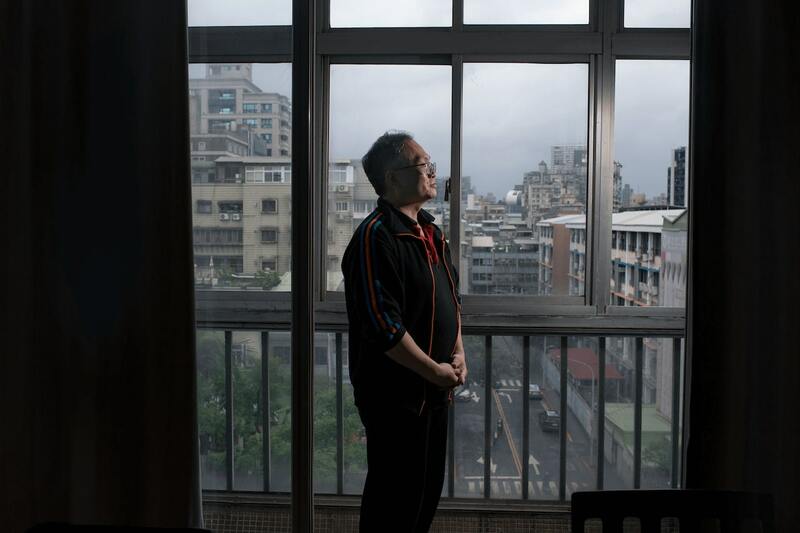
Mr. Lu participated in the Lay Assessor Citizen Observation Group organized by the Judicial Reform Foundation, serving as an observer at the Shihlin District Court Lay Assessor Mock Trial held from April 12 to April 14, 2022.
Mr. Lu, a 50-year-old freelancer, began paying long-term attention to information and platforms related to judicial reform influenced by his teachers during his student days. He deeply admires those who have contributed to Taiwan's democracy, freedom, human rights, social issues, and judicial reform, and therefore hopes to do something more for Taiwan's future.
Curious about Citizens Entering the Sanctuary of Trials
Across the globe, systems allowing citizens to participate in case adjudication are broadly divided into the jury system and the lay assessor (or mixed court) system. In the former, citizens determine only questions of fact while professional judges determine questions of law; in the latter, citizens determine both questions of fact and law—meaning they decide not only guilt or innocence, but also the offense and sentencing. Taiwan has chosen the Japanese Saiban-in system as a reference, which is a system similar to a mixed court.
The lay assessor system is composed of a collegiate panel of 3 professional judges and 6 lay assessors. Unlike past practices where cases were tried solely by professional judges, the voices of ordinary citizens are now incorporated. Mr. Lu remarked, "This is a rather significant reform for the judiciary!" Mr. Lu's prior imagination of judges was akin to deities or Justice Pao. Finding it very novel that ordinary people can now assume this role, he signed up as an observer to get a glimpse of how the lay assessor system operates.
The lay assessor system can be mainly divided into 6 procedures:
- Preparation: Clarifying issues and investigating evidence, with the court formulating a trial schedule and estimating trial days.
- Selection: Prosecutors, defense counsel, and professional judges select the lay assessors.
- Pre-trial Instructions: Professional judges explain legal principles and trial procedures to the lay assessors.
- Trial: Prosecutors explain the gist of the indictment, followed by prosecutors and defense counsel explaining their arguments using evidence, leading into oral arguments.
- Deliberation: Lay assessors and professional judges jointly discuss the judgment outcome.
- Pronouncement: Reading out the trial outcome of the case.
Below, Mr. Lu shares what he saw, heard, and thought throughout these procedures.
Case Content
The case involved a patient suffering from schizophrenia who wielded a knife and hacked a security guard to death. The prosecutor indicted the defendant for homicide and requested a sentence of life imprisonment, while defense counsel argued that the defendant had no motive and lacked consciousness at the time of the offense due to schizophrenia.
Selection Procedure: Citizens' Educational and Knowledge Levels Have Risen; They Do Not Necessarily Blindly Follow Authority
During the selection procedure, prosecutors, defense counsel, and the presiding judge may question candidate assessors to screen their qualifications. Prosecutors and defense counsel may apply to the court to disqualify unsuitable candidate lay assessors, and the court will then rule on whether there are grounds. Furthermore, after the court rules, they may additionally challenge specific candidate assessors "without stating reasons," though there is a limit on the number of such challenges; applications to the court with stated reasons have no numerical limit. (Referring to Articles 27 and 28 of the Citizen Judges Act)
Mr. Lu offered a novel reflection on this selection step, observing that prosecutors and defense counsel conduct adversarial arguments during the trial based on the preferences of the lay assessors, which substantially influences the trial procedure as well. He believes this stems from giving prosecutors and defense counsel the opportunity to screen candidates during the selection procedure. Candidate lay assessors are screened out of fear of biased members of the public, but wouldn't professional judges have biases too? Incorporating diverse public opinion widely is the purpose of implementing this system; thus, Mr. Lu reflected on whether the selection step is even necessary. Even if candidate lay assessors must be screened, the system should prevent prosecutors and defense counsel from using specific questions to figure out the backgrounds and weaknesses of lay assessors before the litigation begins.
When we further asked whether using the selection procedure to reject professionals who might more easily trigger authority effects could make the exchange of ideas during deliberation more diverse, Mr. Lu drew upon his observations of the psychiatrist acting as an expert witness in the mock case. He noted that authoritative professionals, like the psychiatrist in this case, are able to ask more professional questions. While authoritative professionals are currently incorporated into the lay assessor system through the expert witness system, expert witnesses can only answer questions and cannot ask them; this prevents deeper-level questions in the case from being unearthed, stopping lay assessors from engaging in more profound contemplation. Therefore, Mr. Lu believes that instead of excluding authoritative professionals from being lay assessors, the system should be perfected precisely through authoritative professionals. He thus proposed that judges should be categorized into professional judges, lay assessors, and professionals relevant to the case acting as specialized judges.
As for whether professional judges exerted an authority effect on lay assessors during the deliberation process, Mr. Lu believes that with today's rising educational and knowledge levels, people do not accept the opinions of professionals unconditionally and without reason. They also wish to examine the logic of professionals and will even debate with them to ensure the professionals' views are persuasive. Moreover, Mr. Lu believes that past concerns—that professional judges might be "fooled" because their legal training does not necessarily enable them to judge unfamiliar fields—can be looked at from another angle: the advantage of the lay assessor system lies precisely in having a total of nine judges (six lay assessors and three professional judges) with all kinds of varied training. "It is hardly likely that everyone would be 'fooled,'" which perhaps can reduce the external public skepticism seen in many major cases of the past.
Pre-trial Instruction Procedure: Legal Professional Knowledge is a Burden for Both Lay and Professional Judges
Mr. Lu observed that it is extremely strenuous for lay assessors to instantly comprehend legal professional terms—such as statutory elements, unlawfulness, and culpability under the three-tier theory of criminal law. It is also a major headache for professional judges, who must strive to translate legal jargon into plain language. This is time-consuming and laborious, yet does not necessarily enable citizens to understand these legal concepts. Compared to legal determination, fact-finding is where the expertise of lay assessors truly lies. Mr. Lu stated, "How rich are the social experiences and life background of lay assessors! They might well have different perspectives on the exact same matter! And different perspectives will lead to different judgment outcomes!" Therefore, Mr. Lu believes that involving citizens in judicial trials helps approach the truth to render judgments with multifaceted considerations, while legal determination should be ascertained by personnel who have undergone years of professional legal training.
Trial Procedure: Lay Assessors Bring All-Encompassing Life Experiences That Professional Judges Lack
Mr. Lu felt that the questioning performance of lay assessors in the courtroom was outstanding! Some perspectives were angles he had not thought of, which he surmised might also be dimensions professional judges had failed to notice. He believes that while professional judges have naturally honed their expertise through years of practice, they may also be confined by their working environment, making them unfamiliar with other social realities or prone to rigid thinking. The lay assessor system, by incorporating all sorts of people from society, can fill this gap.
Deliberation Procedure: Anticipating Sparks to Fly from Discussions Between Professional Judges and Lay Assessors
During the deliberation process, Mr. Lu observed that although professional judges offered pointers to lay assessors regarding provisions on sentence reduction for mental disorders and provisions on the death penalty, they did not explain to the lay assessors which specific parts of the case triggered these provisions. Mr. Lu noted, "This leaves lay assessors unclear on how to apply these legal concepts, and even drives lay assessors to rely on emotional discretion. Amid major social incidents like the Wang Hao-chung (Little Teng-teng) case and the Ceng Jier (Cheng Chieh) murders, along with the media's repetitive sensationalism regarding the severity of these offenses, people tend to lean toward retribution and feel that a life must be paid for with a life!" Mr. Lu also observed that professional judges rarely spoke up. On one hand, this might be because speaking triggers discussions that prolong trial time and increase operational pressure; on the other hand, it might be to avoid authority effects influencing the judgment of lay assessors. Mr. Lu believes that judicial quality should not be sacrificed for efficiency, nor should judges withhold guidance on how to conduct legal judgments for a case simply out of fear that their own speech will influence lay assessors.
Expanding on the thought above, Mr. Lu further discussed a concern troubling many legal professionals: that professional judges might influence lay assessors' judgments by putting forward their own views. Mr. Lu felt that: "If professional judges do not share their views with lay assessors, they become mere observers of the deliberation process, and no discussion or exchange will occur between the lay assessors and professional judges." In other words, he affirms professional judges sharing their views with lay assessors, provided that malicious guidance is still avoided. The reason why the sparks of discussion are important is that both sides can weigh each other's arguments. However, this is bound to be accompanied by situations where professional judges influence lay assessors' thoughts. Yet, Mr. Lu views this as a positive influence: "It can prevent lay assessors from exercising unfettered legal emotions in court," returning to the point mentioned earlier that "lay assessors are hard to fool"—lay assessors will only believe something if it makes sense.
Recommendations on the Lay Assessor System and Enhancing Judicial Trust After the Mock Trial
Article 1 of the Citizen Judges Act proclaims the purpose of this system: "To enable citizens and judges to jointly participate in criminal trials, enhance judicial transparency, reflect citizens' legitimate legal sentiments, enhance public understanding and trust in the judiciary, and manifest the ideal of popular sovereignty." Mr. Lu affirmed that if the lay assessor system can repeatedly revise itself based on encountered problems, these objectives can be achieved, and he also affirmed that reforming into the lay assessor system promotes the judiciary toward the right path!
However, through this mock trial—where four out of the six lay assessors believed the death penalty should be imposed, with one death-penalty-voting lay assessor remarking: "Life imprisonment can still be subject to parole; what if he comes out and kills again? Better make it the death penalty after all"—Mr. Lu reflected that if social problems emerge endlessly, people will believe that severe punishments are called for in chaotic times. Yet social problems are constructed by economic, political, environmental, and other factors, and judicial procedures alone cannot solve the root causes of social problems. Therefore, Mr. Lu believes: "Do not expect the lay assessor system to enhance public trust in the judiciary. Only when society becomes better will people feel the judiciary is worthy of trust."
Consequently, Mr. Lu proposed that criminal cases require not only judicial transparency, but also public disclosure of what leads to crimes, thereby prompting relevant systems to reform systemic problems—such as the Little Teng-teng incident, which exposed vulnerabilities in the social safety net and prompted its upgrade. It is also necessary to continuously track the subsequent developments of cases, letting the public witness the efficacy of prison rehabilitation and performance in reintegrating into society, in order to overturn public perceptions of recidivists.
Conclusion
Lay assessors and professional judges each have their respective areas of expertise during the trial process. Mr. Lu stated, "The two should form an 'equal' partnership of mutual complementarity," so as to make judgments richer in humanity and endowed with multifaceted consideration!
This article is an AI-generated translation of the original Chinese text. In the event of any discrepancy, the Chinese version shall prevail.