

JRF Newsletter
A Sneak Peek at Lay Assessors | Seeing What the Lay Assessors Cannot See: An Interview with a Psychiatrist Who Played the Expert Witness
Last edited: 2026-11-03
"After the incident, when I interviewed the defendant, the defendant's symptoms were obvious... Therefore, I judged that the defendant's symptoms were still present at the time of the homicide, and were even more severe than when he was taking his medication regularly."
This is Yang Hai-shun—a psychiatrist acting as an "expert witness" in court. However, outside of the mock trial, he is Chang Fu-shun, also a psychiatrist, presenting an entirely different side from his courtroom persona.
rCuriosity about the new system led to this rare experience
"At the time, I thought that if it was just about portraying a psychiatrist and explaining an evaluation report, I should be able to do it. I was also quite curious about what this thing was, and since it was a friend of my wife's, I thought I'd give it a try."
Because the role of the expert witness has no script, actors can only improvise freely in the mock trial based on the contents of the actual evaluation report and their own professional knowledge; not many people are capable of handling it. After struggling to find an actor, a full-time lawyer at the JRF reached out to Dr. Chang through his wife, who is also a psychiatrist.
When he decided to take on the role of the expert witness in the mock trial, he was not very familiar with the JRF or the Citizen Judges Act. He simply took on the job out of curiosity about the lay assessors, viewing it as a rare opportunity. Dr. Chang mentioned that prior to participating in this mock trial, other than attending a JRF camp in college, he did not know much about judicial issues. It was only after getting this opportunity that he looked up what the Citizen Judges Act was, and learned at that time that the Citizen Judges Act would take effect next year (2023).
After gaining a preliminary understanding of the system, Dr. Chang felt that it is somewhat similar to the "jury system" seen in foreign dramas. He believes that this system, especially when trying cases involving mental illness, may help lay assessors appreciate the difficulties judges face in adjudicating cases. If people can better understand the content and legal aspects of psychiatric evaluations, they will no longer jump to conclusions based solely on news reports and impressions, assuming that "you can get away with a crime just by claiming mental illness" or that judges are out of touch ("dinosaur judges").
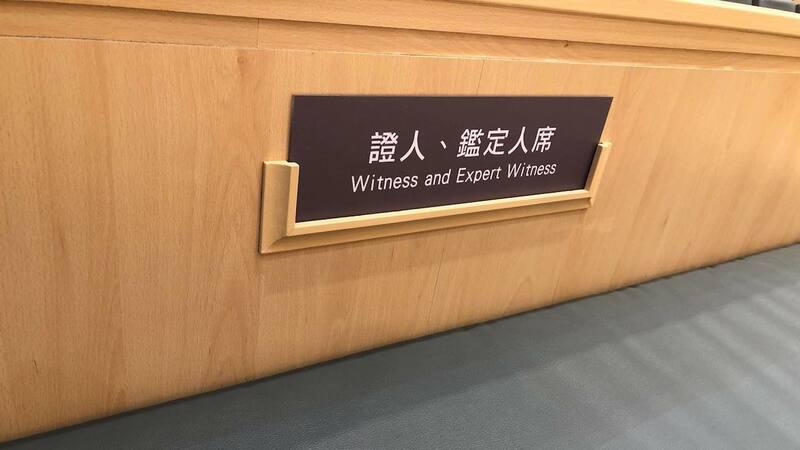
The dual stance of the psychiatrist and the judicial evaluator
"Although as an expert sometimes I felt a bit overwhelmed by the questioning, as an actor I thought the prosecutor was amazing."
Recalling the courtroom proceedings, Dr. Chang laughed and said he was still very nervous sitting on the bench. During the "swearing-in" process, he almost blurted out his real name instead of the pseudonym in the evaluation report. But because it was a mock trial, the lawyers had informed him beforehand what questions might be asked. Furthermore, the prosecutor specifically called Dr. Chang beforehand to give him a heads-up, asking him to bear with any parts that might feel offensive in court. While surprised that the prosecutor made the special effort to call, Dr. Chang was also grateful for the advance notice of potential situations, which allowed him to prepare for specific questions in advance.
When asked about his impressions of interacting with the prosecution and defense, Dr. Chang noted that he found the prosecutors' questioning style very sharp, striving to elicit the key disputes of the case. Although some questions might make certain doctors feel their professionalism was being challenged, he believes this is a manifestation of the prosecution and defense doing their utmost to resolve the issues. Among them, the question that left the deepest impression on him was when the prosecutor first asked: "Isn't a doctor's ethics centered around the patient?" and then followed up with: "Then is a judicial evaluation likewise centered around the patient?" This made Dr. Chang feel as though it were a trick question—as if answering "yes" would imply the evaluator was advocating for the defendant. This made him realize that those slightly tricky questions studied in past judicial evaluation courses are precisely the situations one encounters in a real courtroom. It also helped him understand that in judicial cases, a defendant who needs to be evaluated is also a patient; this dual identity requires evaluators to firmly maintain their stance.
"Explaining the evaluation and the deductive reasoning process clearly, and helping to clarify the disputes—these are the roles a doctor (evaluator) should play in court."
Dr. Chang also shared some interesting aspects of the evaluation report. The evaluation report in this real-life case leaned toward the view that "the defendant was severely affected by the illness at the time of the homicide," but he actually had another version of the evaluation report in his own mind. Therefore, Dr. Chang pointed out that sometimes it is not that the expert witness leans toward the defendant, but rather that the prosecution and defense screen and select witnesses who are favorable to their own side. However, he added that in practice, there is usually only one evaluation report, so there is little room to "choose" reports. In addition, while reading the defendant's medical records, Dr. Chang also discovered an unusual situation: the defendant likely never actually visited the hospital in person, and his wife always picked up the medication for him. Although he raised this situation in court, he still wondered in his heart: "If it were the evaluator who actually produced the report, would they have the same view as I do?" This is the part that others in the courtroom cannot see, and precisely why an evaluator is important.
Facing major cases involving mental illness, is the new system ready?
"I feel that lay assessors still experience an information gap. If the lay assessors' prior preparation is insufficient, it will inevitably affect the case to some extent; but because the preparation process is unclear, I don't know if they can prepare adequately or how much they can absorb."
We also asked him how he felt about the process of interacting with the lay assessors. Dr. Chang mentioned that some questions were indeed quite good, mostly asking how to assess the evaluation report and how to determine whether the defendant was truly affected by the illness at the time of the act; however, there were also some questions which showed a lack of basic understanding regarding mental illness, or were less relevant to the case. In terms of reviewing the case from various angles, he believes that the focus of the lay assessors is similar to that of the prosecution and defense. The only difference is that defense counsel, in order to defend the defendant, will try their best to guess the focus of the prosecutor's cross-examination; meanwhile, the professional judges play a role primarily focused on clarifying the case, asking only one or two additional questions while mainly dedicating their energy to listening to evidence and arguments.
Mentioning that defense counsel stand on the side of the defendant, Dr. Chang said that although he did not know what the evaluator who actually produced this evaluation report thought, he felt that in this simulation, he was relatively on the side of the defendant and defense counsel. This might be because he was invited by the defense and interviewed before the trial, or perhaps because the results of the evaluation report were more favorable to the defendant. He guessed that this might also be why interviews between defense counsel and expert witnesses need to be documented.
After serving as an evaluator in the mock trial, Dr. Chang believes that for cases involving insanity defenses, lay assessors still need a basic understanding of the relationship between illness and crime, and why mental illness can lead to sentence mitigation; otherwise, doubts will remain regarding the judgments made by lay assessors on the case. How should lay assessors be helped to absorb this prerequisite knowledge? While Dr. Chang agrees that "pre-trial instructions" need to include explanations in relevant fields, he also reminded that how to control the quality of experts is another issue, and having a dedicated team responsible for comprehensive knowledge explanation might be a good idea.
Although he worries that the Citizen Judges Act grants lay assessors such immense power right out of the gate, because the law has not yet been formally implemented and legal provisions can be amended based on implementation conditions in the future, Dr. Chang still maintains an attitude toward the implementation of this system that allows more people to popularize legal knowledge and reduce misunderstandings about cases, looking forward to the general public better understanding the world inside the courtroom.
This article is an AI-generated translation of the original Chinese text. In the event of any discrepancy, the Chinese version shall prevail.