
Joint Statement|2023 Day of the Endangered Lawyer: Afghanistan
Last edited: 2026-07-27
Introduction
Since 2010, cities, countries, and continents around the world have designated January 24 as the Day of the Endangered Lawyer.
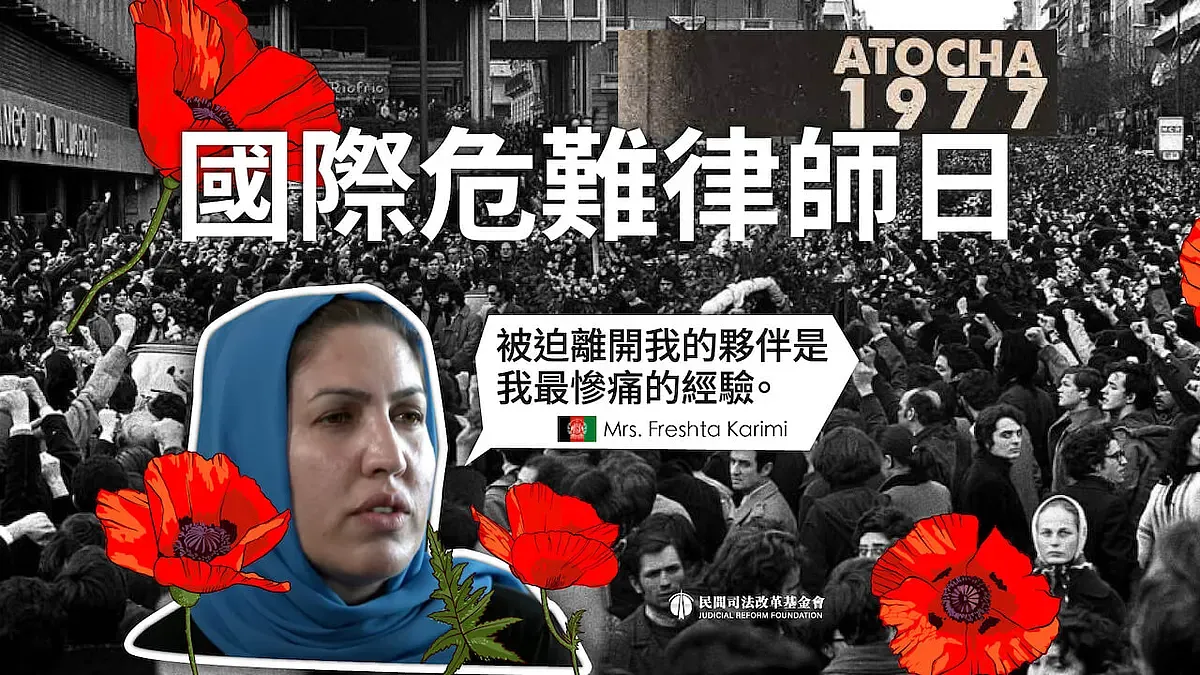
On January 24, 1977, four lawyers and one colleague were assassinated at their office at 55 Atocha Street in Madrid, an event that later became known as the Massacre of Atocha. Consequently, this date was established as the annual Day of the Endangered Lawyer.
The "Day of the Endangered Lawyer Foundation" is a network composed of various national and international organizations as well as bar associations, which organizes commemorative events each year.
The purpose of establishing an international commemorative day is to draw the attention of government officials, international bodies, civil society, the media, and the public to the plight of lawyers in specific focus countries, and to raise awareness of the threats faced by lawyers in the practice of their profession.
Past international commemorative days have focused on countries including Colombia (2022 and 2014), Azerbaijan (2021), Pakistan (2020), Turkey (2019 and 2012), Egypt (2018), China (2017), Honduras (2016), the Philippines (2015), the Basque Country/Spain (2013), and Iran (2010).
This year's focus is on Afghanistan. As detailed below, the situation currently faced by its lawyers is extremely dire. This report begins with an overview of the applicable legal framework, with special reference to the United Nations Basic Principles on the Role of Lawyers, followed by an account of the situation of the Afghan judicial system and bar association, and illustrates through several cases the risks faced by lawyers and legal professionals. The report also highlights the international community's responsibility to respond to calls for help from Afghan lawyers. Finally, the report puts forward demands and recommendations to improve the situation of Afghan lawyers both within their home country and in other regions of the world.
Applicable Legal Framework
International law clearly recognizes the unique role that lawyers play in society. Because lawyers are guardians of justice for all, international law affords them special protection.
For example, the United Nations Basic Principles on the Role of Lawyers stipulates that "[l]awyers shall not be identified with their clients or their clients' causes as a result of discharging their functions." In other words, a client's position and cause should not be attributed to their lawyer. The UN Basic Principles also provide that governments shall "ensure that lawyers are able to perform all of their professional functions without intimidation, hindrance, harassment or improper interference." Furthermore, "[w]here the security of lawyers is threatened as a result of discharging their functions," the UN Basic Principles dictate that they "shall be adequately safeguarded by the authorities." In addition, the UN Basic Principles prohibit discrimination in the provision of access to the legal profession based on, for example, sex, race, ethnic origin, religion, or "political or other opinion." The UN Basic Principles state that governments shall ensure that "efficient procedures and responsive mechanisms for effective and equal access to lawyers are provided for all persons within their territory."
The UN Basic Principles explicitly recognize the "vital role" played by bar associations in "protecting their members against persecution and unjustified restrictions and infringements." The UN Basic Principles also emphasize that lawyers enjoy the right to "freedom of expression, belief, association and assembly," and explicitly stipulate that bar associations must be allowed to "perform their functions without external interference."
Like all lawyers around the world, lawyers in Afghanistan are entitled to all of these rights and safeguards.
Overview of the Afghan Judicial System and Bar Association
Prior to 2001, Afghanistan's infrastructure was devastated by decades of war and other conflicts, and its legal and judicial systems were no exception. However, following the fall of the Taliban regime in November 2001, a series of programs were implemented in Afghanistan to increase staffing and to rebuild, reform, and modernize government systems, including the courts and the legal profession.
Prior to the reforms, Afghanistan's laws, judges, and juries were comprised of a single religion-based entity known as Mullahs (religious clerics). The new system implemented after the fall of the Taliban separated law from religion (Islamic jurisprudence) and separated the judiciary from the clergy or tribal "shuras"—that is, trials by local elders.
The Independent Bar Association of Afghanistan (AIBA) was established in 2008 pursuant to the Advocates Law of Afghanistan. With over 6,000 members (including approximately 1,500 women), the AIBA was responsible for overseeing the licensing and regulation of lawyers, promoting excellence and equal opportunities in the legal profession, training future lawyers, and advancing the rule of law and social justice. The AIBA developed into an independent institution promoting fundamental rights, due process, judicial independence, the rule of law, and democratic values. Since its inception, despite cultural,
social, and economic constraints, the AIBA has been committed to promoting the role of female defense counsel and advocating in the field of social justice, particularly in defending the rights of victims in cases of violence against women and children.
Other post-2001 investments in the judicial system included the development of a well-trained, independent judiciary, which (for the first time) appointed over 270 female judges. Similarly, extensive training was provided to the prosecutorial corps, diversifying its ranks and incorporating approximately 400 female personnel.
In August 2021, the Afghan government collapsed, and 20 years of progress was almost entirely wiped out overnight. The entire judicial system has essentially collapsed. In August 2021, written laws, including the 2004 Constitution of Afghanistan, were stripped of all effect. Currently, the country applies the principles of Sharia law, with the Taliban acting as the de facto governing authority, issuing numerous decrees that restrict fundamental human rights, including freedom of the press, expression, and movement, as well as the protection of the right to privacy. Furthermore, the new regime has dismissed approximately 2,000 judges. Reports indicate that the new judges appointed by the Taliban are predominantly those qualified in religious rather than secular legal institutions.
Judges, prosecutors, and Afghan lawyers who served prior to the Taliban's retaking of power in August 2021 now face the risk of retaliation from both the Taliban itself and numerous criminals. When the Taliban retook power, they opened prisons across the country, releasing thousands of inmates. Taliban members demanded that their former defense counsel, judges, or prosecutors be held accountable for their convictions. Furthermore, Taliban members targeted lawyers, especially female lawyers, holding them accountable for representing victims in past cases that resulted in the conviction of Taliban members. Having diligently worked in the past to defend the rule of law by protecting the public's—particularly women's—right to access justice, as well as their fundamental human rights and freedoms, lawyers have consequently been persecuted by the de facto authorities. Given that the lives of both themselves and their families are under grave threat, many Afghan judges, prosecutors, and lawyers, both men and women, have been forced to flee the country or go into hiding.
On November 22, 2021, the Taliban Ministry of Justice issued a decree stripping the AIBA of its independence, including its authority to grant licenses to lawyers. The following day, Taliban forces stormed the AIBA headquarters in Kabul, violently expelling its employees and members from the premises. The Taliban gained access to the AIBA database, obtaining information on over 2,500 lawyers and non-lawyer employees, including lawyers' personal information, family members' names, residential addresses and phone numbers, details of handled cases, lawyers' contacts with government and international organizations, and information on prosecutors and judges. The Taliban also seized control of the AIBA's bank accounts and funds. The AIBA has since been forced to cease operations and has been placed under the control of the de facto Taliban Ministry of Justice.
Using the information gathered from the database, the Taliban has targeted lawyers who previously handled "sensitive" cases (e.g., those involving human rights advocacy, including women's rights and other similar matters).
According to the AIBA, since its dissolution, 7 lawyers have been killed, and 146 lawyers have been arrested or subjected to investigation. Many of their colleagues have been forced to flee Afghanistan or go into hiding with their families in an attempt to escape the Taliban government.
The decree of November 22, 2021 also stipulated that only lawyers approved by the Taliban may appear in court. Consequently, lawyers previously registered with the AIBA must meet criteria established by the Ministry of Justice to obtain a new license. In practice, the vetting of lawyers is based on their past activities and understanding of Sharia law principles. Those who were active in the field of human rights—even to a minor degree—or who have ties to international organizations are automatically denied licenses and barred from practicing. Moreover, prior to the Taliban's takeover, women accounted for 25% of AIBA members, but the Taliban has thus far issued licenses exclusively to men. As a result, the vast majority of lawyers legally registered with the AIBA are now barred from practicing, with no clear prospects for the future.
Female lawyers have become specifically targeted, making daily survival a challenge. In Afghanistan, every female lawyer attempting to work faces constant threats, as do other legal professionals such as female judges and prosecutors. The rights of women, including lawyers, have been progressively crushed out of existence, plunging them into a desperate predicament.
The Taliban's takeover of Afghanistan has brought devastating changes to the country's legal profession and administration of justice. Many lawyers capable of leaving the country have done so—though many continue to struggle under harsh living conditions in transit countries while awaiting permanent resettlement, and may still face risks. Even those who have achieved permanent settlement often require far greater support and assistance than what they currently receive.
Lawyers remaining in Afghanistan no longer possess the independence necessary in a society governed by the rule of law. Many are now barred from practicing and unable to support themselves and their families. Many others are in hiding, forced to live in rudimentary quarters under extremely harsh conditions. Their sole hope is to be able to leave the country. Unfortunately, however, their pleas for help often fall on deaf ears.
Lawyers in Danger
The following cases illustrate the real challenges and risks faced by Afghan lawyers:
-
Z M
ZM is a defense counsel who previously worked as a NATO translator. ZM handled sensitive cases, including human rights cases, cases related to violence against women, and cases prosecuting Taliban members.
ZM once represented a woman seeking a divorce from a Taliban militant detained in Bagram. After the Taliban released prisoners in Bagram, ZM's client called to warn him that her ex-husband was looking for him, presumably for revenge. The ex-husband had gone to ZM's office, fortunately after ZM had already left.
Following August 15, 2021, ZM attempted to fly from the city of Kabul to a safe location, but was unable to enter the heavily guarded airport. He eventually managed to escape Afghanistan, but as of the time of writing, had not yet reached a safe location.
-
A M A
AMA is an AIBA member who provided legal aid services. In one case, his client was charged with murder but ultimately acquitted. Since then, AMA's life has been under threat because the victim's family in the case has ties to the Taliban. Due to the cases he previously handled and his role in the AIBA, AMA is now hunted by the Taliban. Armed Taliban members previously went to his former residence to search for him; he was ambushed and knocked down, but fortunately managed to escape.
-
A S S
ASS is a defense counsel and an AIBA member. He was actively involved in various sensitive political cases, working in commercial law and criminal law. After the Taliban released numerous prisoners seeking retribution against lawyers, ASS and his family received anonymous phone calls and death threats. Consequently, they were forced into hiding.
-
H B
HB is an AIBA member who has handled various types of civil, family, and criminal cases, including cases involving violence against women, children, and foreigners. He has been a stated target for assassination by terrorist organizations, including the Taliban, and is now forced into hiding, constantly changing locations to preserve his life.
-
Mrs M W
MW is an AIBA member who has practiced in multiple fields, including family law. She also served as a legal advisor for a human rights and women's rights organization. Having represented extremely severe cases of domestic violence, MW has continually received death threats and was thus forced to leave her home and go into hiding.
-
M J Q
MJQ is a defense counsel and an AIBA member. His legal practice areas involve criminal cases, civil cases, cases of violence against women, and internal and external security cases. Even before the Taliban takeover, MJQ was attacked twice, in 2018 and 2020. With the Taliban's release of prisoners seeking retribution, he could no longer live safely in his home.
-
M S N
MSN defended victims of violence (including violence against women and children) and cases involving allegations of corruption. He also represented individuals accused of crimes against internal and external security. In the cases he handled, he was threatened several times by opposing relatives. Furthermore, he received death threats from former clients who were convicted and refused to accept the court's judgment.
In several cases where MSN represented wives seeking divorces from husbands who were Taliban members, the Taliban threatened retaliation. Due to the danger, MSN was forced to leave his home. He now lives with his wife and young daughter in a secret location.
-
S M S
SMS is a defense counsel specializing in criminal law. SMS was appointed to defend an individual alleged to be a Taliban member. His client was ultimately convicted, but held SMS responsible for his conviction. After the Taliban released this individual from prison, he called SMS to threaten revenge. SMS fled for safety. However, this former client is now an active member of the Taliban and continues to hunt for SMS and his family.
-
Mrs M D
MD is a defense counsel and human rights activist in Kabul, as well as an AIBA member. She has handled numerous cases of violence against women, including forced marriage and honor killings. As a result, the lives of herself and her family are now in extreme danger. Furthermore, apart from the dangers she faces as a female lawyer, her daily life as a woman—like all Afghan women—is exceedingly difficult. She cannot work, and cannot even step outside her home without a male companion.
-
Mrs Zohra KOHI
Mrs. Zohra KOHI is a defense counsel and a member of the Committee for the Elimination of Violence against Women and Children.
She previously frequented the Pol-e-Charkhi prison to visit imprisoned women, where local Taliban warned her that she was no longer permitted to drive vehicles.
In 2015, she represented a mother whose son was murdered by her father-in-law and brothers-in-law. Afterward, the father-in-law fled, and the brothers-in-law were released on bail. Prior to the sentencing, she received threatening letters from the fugitive killer every week. In 2016, she represented a woman whose home was looted by gangsters. As a result, she was threatened and nearly kidnapped by gangsters, and to avoid any mishap, was forced to be escorted to work by her brothers and cousin. In 2021, she represented a case of a woman whose daughter was murdered by her husband under the pretext of not being a virgin. Following the Taliban's capture of Kabul, the perpetrator was not brought to justice. Subsequently, she received threatening phone calls from the killer and an inmate who had served time in the Bagram prison.
Fortunately, she finally succeeded in leaving Afghanistan and currently resides in Spain. -
Mrs Masiha FAYEZ
As a lawyer, Masiha FAYEZ worked in the fields of human rights and women's rights, helping survivors of gender-based violence gain access to justice. She also served as an advisor on various legal reform committees.
On August 15, 2021, she was in Kabul and was informed that the Taliban had opened the gates of the Pol-e-Charkhi prison. She saw several prisoners in prison uniforms on the streets. She rushed to the airport, but was unable to secure a flight booking. Both she and her son developed mental health issues as a result of witnessing various events. Fortunately, she managed to leave Afghanistan in September, but her family was subjected to threats as a result.
Masiha FAYEZ currently resides in Germany with her husband and children, but still faces various challenges:
- Language is one of the barriers.
- Despite holding a Master's degree in law and having 19 years of work experience, her degree is not recognized in Germany.
- Landlords are hesitant to rent apartments to unemployed refugees.
Legal Professionals in Danger
-
Mumtaz SHERZAI
On July 15, 2022, Mumtaz Sherzai went missing from his home in Khost City, Khost Province, in southeastern Afghanistan. He was a law professor at Khost University and a former prosecutor for the National Directorate of Security. By July 16, his body was found near the Khost provincial airport. His bruised and bloodstained corpse bore obvious marks of beating and torture, which were presumed to be the cause of death. He left behind a wife and a three-year-old daughter, serving as the breadwinner for his extended family.
-
Faizullah JALAL
One of the most recent and prominent cases of persecution against Afghan legal professionals is the Taliban's arrest of Faizullah Jalal, a prominent law and political science professor at Kabul University who had been a vocal critic of the Taliban on Afghan television and other public forums. When the professor was arrested at his home on January 8, 2022, the international community feared for his life. A few days later, he was safely released by the Taliban, thanks to swift worldwide condemnation of the Taliban's actions. Without this global outcry, the professor likely would have met a vastly different fate.
-
Mrs Freshta KARIMI
Since 2002, Freshta Karimi has dedicated herself to improving access to justice in Afghanistan and promoting the rights of women and children. In 2006, she co-founded the NGO Da Qanoon Ghushtonky (DQG), dedicated to combating violence against Afghan women and raising public legal awareness at the regional and provincial levels through the publication of various popular legal education materials.
In its first eight years of operation, DQG lawyers handled over 24,000 criminal and family law cases. Today, DQG continues to provide legal aid services to women, children, and men across 16 provinces in Afghanistan.
The events of August 2021 forced Mrs. Karimi to leave Afghanistan and seek refuge in Canada. In September 2021, she was awarded the prestigious Ludovic Trarieux International Human Rights Prize.
Persecuted Afghan Lawyers Denied International Protection
Since Afghanistan fell to the Taliban in August 2021, thousands of Afghans have been evacuated and resettled in other countries. However, bar associations, other nations, and international organizations still frequently receive calls from Afghan lawyers who remain stranded locally or in neighboring countries, feeling desperate and harboring an urgent and real fear of persecution and mortal danger due to their previous professional work. Furthermore, for those who have already been evacuated or successfully fled and are seeking international protection, there is also a need to address the specific requirements of Afghan lawyers and other legal professionals to provide effective international protection and assist them in integrating into their new homes. Supporting these Afghan lawyers, who have risked their lives for decades to build democracy and the rule of law in Afghanistan for the benefit of the rest of the world, is a moral obligation. Despite numerous appeals from the international community, states continue to take measures to prevent Afghans from reaching Europe and to restrict protection for Afghan asylum seekers. In particular, asylum seekers originating from Afghanistan, including lawyers and their families, may face border violence, "pushbacks," or the denial of individualized international protection arrangements. Even if they manage to reach Europe and apply for asylum, their claims are often declared inadmissible under the concept of the "safe third country clause." The paramount example is Greece, which designated Turkey as a safe third country for Afghans traveling to the EU to seek asylum. Turkey, however, is increasing the number of deportations of Afghans back to their home country.
Recommendations
The co-signing organizations put forward the following recommendations:
- The de facto authorities currently exercising power in Afghanistan must comply with the United Nations Basic Principles on the Role of Lawyers, adopted at the Eighth United Nations Congress on the Prevention of Crime and the Treatment of Offenders held in Havana, Cuba, from August 27 to September 7, 1990.
- The de facto authorities currently exercising power in Afghanistan must restore the independence and integrity of the country's judicial system to the status of August 15, 2021. This includes reinstating the AIBA, specifically its authority to issue licenses to lawyers. In accordance with the UN Basic Principles on the Role of Lawyers, including Article 24 and other relevant normative instruments, bar associations are entitled to "perform their functions without external interference."
- The de facto authorities currently exercising power in Afghanistan must restore women's right to practice law in Afghanistan in accordance with Article 10 of the UN Basic Principles on the Role of Lawyers, which prohibits discrimination in the issuance of lawyer licenses based on factors including sex.
- The de facto authorities currently exercising power in Afghanistan must urgently address the increasing number of attacks against Afghan lawyers, and guarantee lawyers the right to freely and independently practice their profession, particularly as set forth in Article 16 of the UN Basic Principles on the Role of Lawyers, which states that "Governments shall ensure that lawyers (a) are able to perform all of their professional functions without intimidation, hindrance, harassment or improper interference; (b) are able to travel and to consult with their clients freely both within their own country and abroad; and (c) shall not suffer, or be threatened with, prosecution or administrative, economic or other sanctions for any action taken in accordance with recognized professional duties, standards and ethics."
- The de facto authorities currently exercising power in Afghanistan must urgently protect the lives of Afghan lawyers and adopt and implement measures to safeguard their security and freedom in accordance with Article 17 of the UN Basic Principles on the Role of Lawyers, which states that "[w]here the security of lawyers is threatened as a result of discharging their functions, they shall be adequately safeguarded by the authorities."
- The de facto authorities currently exercising power in Afghanistan must cease stigmatizing Afghan lawyers involved in sensitive cases, in accordance with the UN Basic Principles on the Role of Lawyers. Article 18 specifically states that "[l]awyers shall not be identified with their clients or their clients' causes as a result of discharging their functions"; and Article 23 states, in relevant part, that "[l]awyers like other citizens are entitled to freedom of expression, belief, association and assembly," including the "right to take part in public discussion of matters concerning the law, the administration of justice and the promotion and protection of human rights... without suffering professional restrictions."
- The de facto authorities currently exercising power in Afghanistan must permit Afghan lawyers and their families who wish to leave to depart the country freely and safely.
- The international community must, through its diplomatic efforts, urge the de facto authorities currently exercising power in Afghanistan to ensure the maintenance of a free and independent legal profession to uphold fundamental human rights and the rule of law, including women's rights and the independence and integrity of the judiciary.
- Urge the European Union and its member states, along with the United States and the broader international community, to stand in solidarity and leverage their relationships with the de facto authorities currently exercising power in Afghanistan to compel them to comply with their international obligations and grant Afghan lawyers all due rights and protections.
- Call upon the international community, including the European Union and its member states as well as the United States, to provide asylum to Afghan lawyers facing risks in Afghanistan and seeking international protection.
- Urge the international community to take all necessary measures to ensure that lawyers who remain in Afghanistan and are in danger can safely leave the country.
In particular: - Immediately implement evacuation and resettlement programs for Afghan lawyers remaining in Afghanistan or located in neighboring countries.
- Ensure strict adherence to the principle of non-refoulement at all times.
- Provide humanitarian visas enabling Afghan lawyers in need to obtain legal and safe international protection.
- Ensure that all countries suspend the deportation of Afghan nationals and their immediate return to Afghanistan or a third country.
- Ensure that all countries thoroughly investigate allegations of mistreatment of Afghan nationals, particularly in national border areas and return centers within their territories.
- Cease the "pushbacks" of Afghans from any state territory to third countries, especially when those countries would send them back to Afghanistan.
- Urge states and the international community to develop and implement resettlement policies and programs that enable Afghan lawyers to fully utilize their professional legal training and experience from Afghanistan in new employment positions.
- Urge the United Nations and other international bodies—specifically including the UN High Commissioner for Human Rights, the UN Special Rapporteur on the situation of human rights in Afghanistan, the UN Special Rapporteur on the independence of judges and lawyers, the UN Special Rapporteur on the situation of human rights defenders, the UN Special Rapporteur on violence against women and girls, the UN Working Group on discrimination against women and girls, and the UN Secretary-General's Special Envoy on Afghanistan and Regional Issues—to redouble their attention to the plight of Afghan lawyers and urge the de facto authorities currently exercising power in Afghanistan to comply with the UN Basic Principles on the Role of Lawyers and all applicable legal standards.
- Urge states and the international community, including sister bar associations of the AIBA and bar associations worldwide, to design and implement creative affirmative action measures to support the continued existence of the AIBA and its operations in exile.
- Call upon bar associations and law societies across the globe to closely monitor and report on the situation of Afghan lawyers, and take all possible actions to support anyone in need, wherever they may be located.
- Encourage journalists and international media to investigate and report on the situation of Afghan lawyers, exert pressure on the de facto authorities currently exercising power in Afghanistan, and draw global public attention to the vital role Afghan lawyers have played and the severe risks they currently face.
Co-signing Organizations
- Foundation Day of the Endangered Lawyer
- European Democratic Lawyers
- European Association of Lawyers for Democracy & Human Rights
- UIA-IROL (the Institute for the Rule of Law of the International Association of Lawyers)
- Vereinigung Demokratischer Juristinnen und Juristen
- Avocats Sans Frontières France
- Ordine degli Avvocati di Venezia
- Institut des droits de l’homme du Barreau de Paris
- Barreau de Paris
- International Association of Young Lawyers
- Unione Delle Camere Penali Italiane
- Lawyers for Lawyers
- Judicial Reform Foundation
- Rechtsanwaltskammer Berlin
- European Young Bar Association
- Giuristi Democratici AIGD
- International Association of People’s Lawyers
- International Bar Association’s Human Rights Institute
- The New York City Bar Association
- European Criminal Bar Association
- Ordre Français des avocats du Barreau de Bruxelles
- Institut des Droits de l’Homme du Barreau de Bruxelles
- Avocats sans Frontières
- Fédération internationale pour les droits humains
- AVOCATS.BE
- Barreau de Charleroi
- Syndicat des Avocats pour la Démocratie
- Council of Bars and Law Societies of Europe
- Fédération des Barreaux d’Europe
- The International Association of Women Judges
- The National Association of Women Judges
This article is an AI-generated translation of the original Chinese text. In the event of any discrepancy, the Chinese version shall prevail.