
JRF Newsletter
A DIY Approach to Curating Zines: "Exhibitions become a bridge for communicating issues, allowing local citizens to begin understanding the judicial field."
Last edited: 2026-07-27
Initially, exhibitions were merely one of the tools we used to achieve our advocacy goals. However, as the number of exhibition runs increased and themes diversified, we came to feel through the curation process that curation itself is a movement. Mobilizing crowds in the process, the reshaping and communication of internal values, and the flexibility and energy of empowerment and translation are all invaluable takeaways.
Curating Step Zero: Consensus Building
When the JRF plans exhibitions, it differs significantly from other fields, particularly art-related ones, as they must be extensions of the issues the JRF focuses on. My past experience curating in bookstores often involved proposing ideas based on the book categories and current affairs that staff members were personally interested in, combined with product types—such as books and stationery—and past sales volumes.
At the JRF, however, exhibition themes such as "Haitian Sky: Chiou Ho-shun's Forgotten 32 Years - Taichung Special Exhibition" (hereinafter "Haitian Sky"), "No Such Person: 7th Anniversary Exhibition of the March 24 Executive Yuan Violent Eviction Incident" (hereinafter "No Such Person"), "Grandma's House in Taichung: Peace and Women's Human Rights Special Exhibition" (hereinafter "Grandma's House in Taichung"), the ongoing "Gatecrashers of the Fraud Nation ♠ The Past, Present, and Future of Dummy Account Fraud" (hereinafter "Fraud Nation"), and "REST - Ko Chung-ming Photography Exhibition" (hereinafter "REST") featured in this newsletter, are all closely tied to advocacy issues.
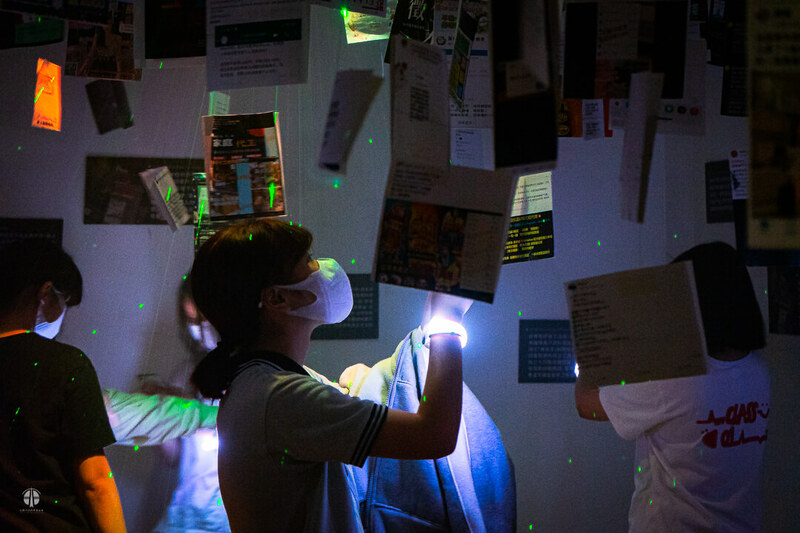 (Fraud Nation, running from March to September of this year. Photography by Hsieh Chia-chen)
"Haitian Sky" was the first exhibition where the JRF utilized raw materials organized into exhibits as a means of miscarriage-of-justice advocacy. "No Such Person" was a commemorative exhibition held to ensure the incident is understood and remembered, and that relevant individuals are not forgotten, throughout the years the JRF has continued to advocate for the March 24 Executive Yuan violent eviction incident. Meanwhile, "Grandma's House in Taichung" was a collaborative effort with the Awakening Foundation (hereinafter the AF) born out of a fortuitous encounter, allowing the JRF to gain a deeper understanding and make further progress on gender issues. The "Fraud Nation" exhibition stemmed from the JRF's focus on the issue of dummy accounts; alongside recent major legislative amendments in recent years, we also hoped to convey this issue through softer approaches.
Having introduced the background behind each exhibition, let us turn to how consensus was built for the "REST" exhibition. Similar to the aforementioned methods, the JRF has focused on China and Hong Kong issues for years, maintaining close cooperation with organizations related to Hong Kong. This time, through a friend's introduction, we met photographer Ko Chung-ming, whose work has consistently communicated his ideals to society. This aligns with the JRF's advocacy goals: both hope to help others understand the issues we wish to convey through what we say and do.
When the JRF discussed internally whether to relocate Ko Chung-ming's photography exhibition to Taichung, we went through a period of internal deliberation. Questions included: Why should we exhibit Hong Kong-related issues? Are our stances consistent with Ko Chung-ming's? Will our visitor demographic accept this exhibition? Three years have passed since this movement; does anyone still care? Can continued advocacy on Hong Kong issues effect policy changes? Will other Hongkongers in Taiwan shun us for conducting such advocacy? Can we cooperate with other Hongkongers in Taiwan? These questions had no absolute answers, but within the JRF there was a clear direction: to continue focusing on and advocating for Hong Kong human rights issues.
Viewing the JRF's hosting of exhibitions from my perspective as an advocacy officer, what I find most magical is the consensus-building stage. Because planning exhibitions is not a long-standing routine, discussions often veered off topic or bogged down in petty minutiae. Passing layer by layer through departmental meetings, plenary meetings, and finally the standing executive committee meetings, we continually verified whether the proposed exhibition topics aligned with the ideals we wanted to convey. This demonstrates how much everyone values the communication of issues, always treating it with utmost caution in hopes of achieving our goals through various advocacy tools. Therefore, this stage is actually the most demanding, requiring continuous communication and alignment of everyone's understanding to steer the exhibition in the direction we envision.
Curating Step One: Preliminary Planning
Once the exhibition theme is determined, the curatorial process accelerates, encompassing the overall schedule planning, budget allocation, prospective partners, and the core ideals we wish to convey under this theme.
Currently, JRF exhibitions are primarily planned in half-year blocks: the first half of the year runs from a month after the Lunar New Year until before the summer vacation, while the second half runs from July or August until before the Lunar New Year. This exhibition frequency has been maintained for two years.
Initially, when past exhibitions like "Haitian Sky," "No Such Person," and Ko Chung-ming's "Post-Era Revolution" were held in Taipei, venue rental fees restricted them to just a week. Relocating the exhibitions to Taichung therefore allowed for longer runs. Later, operational experience revealed that this scheduling format benefited visitors by giving them more freedom to choose when to view the exhibition while spreading out visitor numbers, ensuring that the workload remained manageable for the three staff members at the JRF Taichung Office.
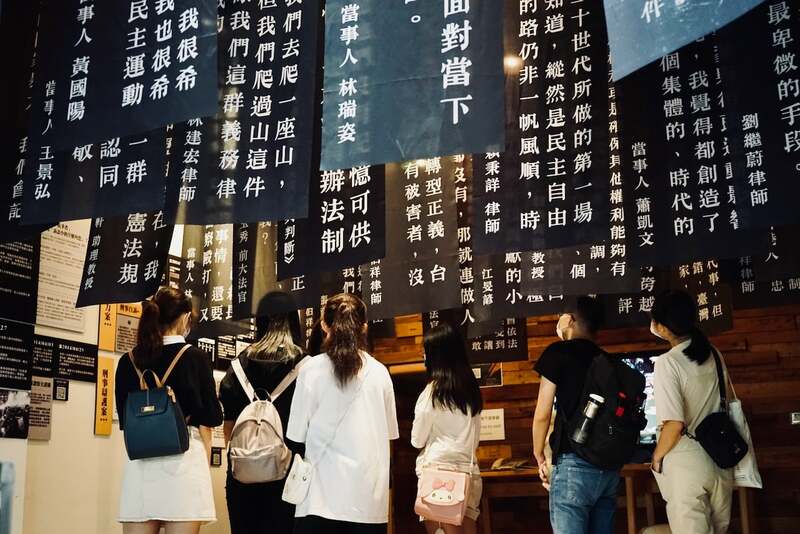 (The "No Such Person" exhibition encouraged more people to confront the March 24 Executive Yuan violent eviction incident. Photography by Hsieh Chia-chen)
Schedule planning goes beyond opening and closing dates to include setup periods, publicity timelines, and schedules for related lecture series. Meanwhile, the budget must be planned concurrently, covering venue renovation, painting, and carpentry work; procurement and printing of exhibits and props; transportation costs for moving exhibits; and various insurances. Additionally, subsequent lecture fees, speaker remuneration, and travel expenses must be factored in beforehand to prevent unbridled spending.
Finally, we must address our partners. Through these exhibitions, the JRF has generated synergistic effects with various collaborating entities. In the "Haitian Sky" exhibition, as the rescue team for the Chiou Ho-shun case, the organizing body itself comprised multiple groups, engaging local organizations, shops, or schools depending on the exhibition venue. The core team for the "No Such Person" exhibition consisted of lawyers, alongside collaborating groups and civil societies concerned with state violence from all walks of life, broadening the scope of expandable themes. For the "Grandma's House in Taichung" exhibition, the JRF partnered with the AF, borrowing their existing exhibits while expanding the JRF's own content.
Precisely because of these collaborative relationships, JRF exhibitions have begun to present diverse content and formats. From text introductions to video and audio communication, expressions vary depending on changes in the exhibits and exhibition spaces.
In this exhibition, alongside photographer Ko Chung-ming, we also invited close friend and film art specialist Li T'ien-chueh and his team to co-curate. Combining their interpretations of art and visuals with the JRF's venue and issues, the three-way combination yielded an exhibition unlike any before. This exhibition was characterized by minimal text yet the strongest impact; through Li T'ien-chueh's design, viewers understood that sometimes excessive explanation is unnecessary, as the works themselves naturally convey the message we wish to express.
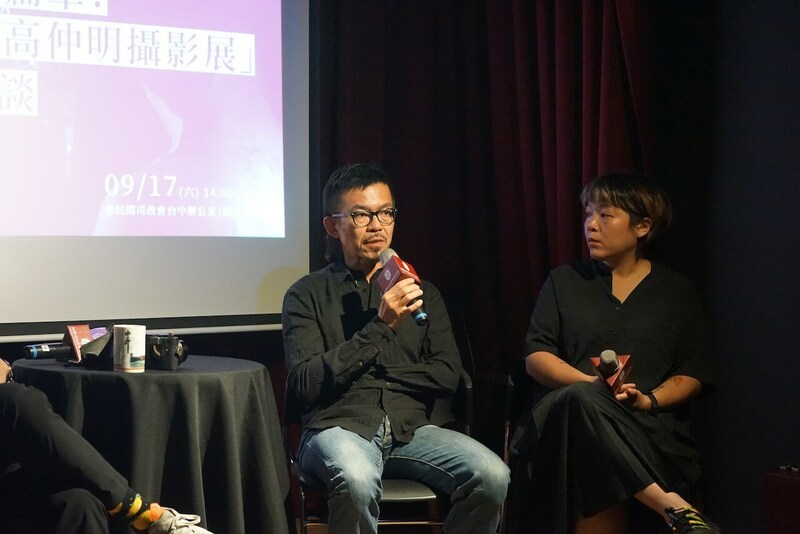 (Left: "REST" curator Li T'ien-chueh; Right: exhibition coordinator Hsieh Hsuan. Photography by Hsieh Chia-chen)
Curating Step Two: Execution and Complementary Planning
Under the premise of exhibition zone planning, sufficient materials must be available to present the exhibits. Generally, before consensus is reached, a theme must possess enough raw materials to become a subject of discussion for the next exhibition. The conversion and translation of materials rely on synthesis and organization skills, thus demanding considerable time and manpower.
Drawing on past experiences with "Haitian Sky," "No Such Person," and "Fraud Nation," transforming JRF issues into exhibitions takes at least half a year. However, the circumstances for "Grandma's House in Taichung" and "REST" were different. For "Grandma's House in Taichung," because the AF provided nearly eighty percent of the exhibits, the JRF only needed to specially organize previously assisted cases and bills. As for "REST," Li T'ien-chueh planned Ko Chung-ming's existing series of works concurrently with the JRF's four-story venue, presenting us with a matching proposal, which reduced preparatory work to just two months.
In addition to exhibition zone planning, the JRF hosts a series of events during each exhibition run, including lectures, debate tournaments, camps, and theme-related performances. These activities enable visitors to not only understand issues through exhibits but also delve deeply into various sub-facets of the issues. Taking lectures as an example, the JRF invites experts, scholars, lawyers, and industry insiders to participate in discussions. Beyond the directions proposed by the JRF, audiences can hear perspectives on the same issues from other standpoints.
Once the basic framework is finalized, the setup of the exhibition zones begins. For every exhibition at the Taichung Office, the assistance of Mr. Hsu Tzu-chiang (hereinafter Brother Chiang) has been indispensable. He is responsible for securing partition boards, rewiring electrical lines, and complex carpentry work. Notably, in the "Haitian Sky" exhibition, the simulated visitation room and simulated detention center; the water cannon truck in the "No Such Person" exhibition; and even the simulated courtroom and ATM in the "Fraud Nation" exhibition were all crafted single-handedly by Brother Chiang. The placement of exhibits and the cultivation of atmosphere within the exhibition zones require meticulous effort, all aimed at presenting the most complete and appropriate exhibition experience.
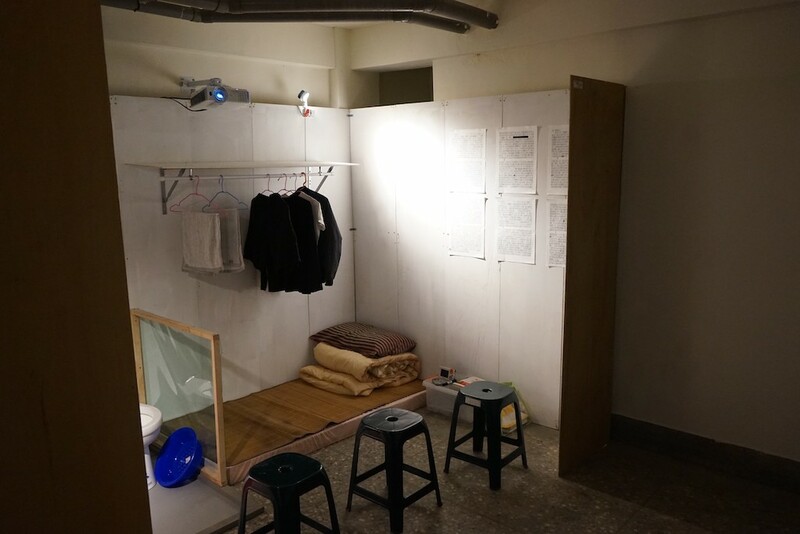 (The "Haitian Sky" exhibition, where miscarriage of justice exoneratee Hsu Tzu-chiang simulated and built a detention environment. Photography by Hsieh Chia-chen)
The exhibition space created by combining Li T'ien-chueh's proposal and Ko Chung-ming's photography for this "REST" exhibition marked a major breakthrough for the JRF. For instance, "Post-Era Revolution" on the first floor used bold color schemes to paint the walls, presenting a style we had never attempted before; meanwhile, "Hong Kong Injuries" in the basement utilized an interweaving of lighting and black threads to present a more abstract style, expressing the dilemmas and redemption surrounding the Hong Kong issue.
The fourth floor connected two differently sized rooms. The larger room continued the expression of the "illusion of home" from "Post-Era Revolution" on the first floor, creating a domestic atmosphere through bed frames and daily necessities while using red elements to symbolize the political imagery surrounding this issue. Another small room showcased the streetscape of Hong Kong through full-bleed displays of "Chronic Hong Kong Injuries." Lacking airtight windows, the sounds of vehicles driving on Taiwan Boulevard could be heard. During the day, the small room was not specially lit; instead, natural light filtering through a small window revealed an exhibition space with shifting light every single day.
Noteworthy as well is the smoke experience on the second floor. Initially, when designing the exhibition zone, the plan was for the second floor to continue the ambiance of "Hong Kong Injuries" in the basement, creating a more solemn, dark exhibit. However, to preserve the second floor's utility for hosting lectures, it was decided to adjust it to an irregular smoke experience to enhance the exhibition's interactivity.
The smoke concept simulated the effect of tear gas on the movement's streets back then, combined with the works on the walls on either side. As the density of the smoke gradually increased, it refracted the originally dim yellow light into an orange hue, blurring the works themselves. When the smoke reached a certain density, visitors lost their sense of direction within the exhibition space, and their inner fear and anxiety steadily mounted. This was the feeling we hoped to convey and have visitors experience.
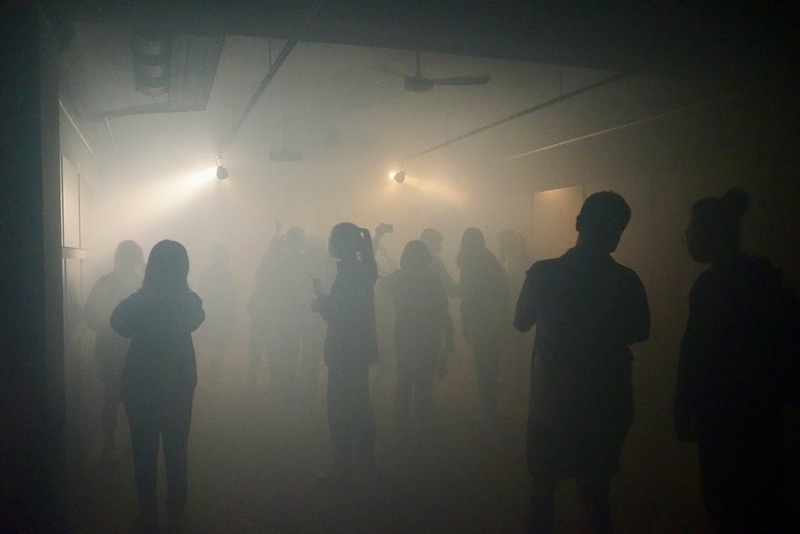 (The smoke experience at the "REST" exhibition. Photography by Hsieh Chia-chen)
Curating Step Three: Post-Opening Actions and Conclusion
Once all preparatory work is completed, the exhibition enters its opening phase. In addition to holding a press conference or reception on opening day, publicity work is an indispensable component. In terms of promotion, we first use social media—such as Facebook, Instagram, and our official LINE account—to issue previews, print promotional materials, film teaser videos, and release exhibition-related and reservation information. Second, we cooperate with friendly organizations and businesses, placing promotional materials at their locations to attract crowds interested in the issues to acquire more relevant information.
Beyond the aforementioned methods, we also utilize the electronic official document exchange system to widely broadcast the latest exhibition information to schools at all levels nationwide. Particularly in high schools, vocational schools, and colleges and universities in central Taiwan, we additionally mail posters for schools to post. We focus our promotional efforts on teachers who interact closely with us and even bring their classes to view the exhibition every time.
Since the implementation of the 108 Curriculum Guidelines, students' course selection methods and extracurricular participation have diversified, granting teachers greater flexibility in curriculum planning. Consequently, teachers incorporate exhibitions as part of their curriculum at the beginning of the semester, combining them with other media such as film screenings and character interviews to provide students with richer and more diverse experiences.
During the exhibition run of "Grandma's House in Taichung," we also held the event "Comfort Women Mini-Curation Teaching Aid Box | Outreach Project and Teacher Training Workshop," cooperating with teachers in central Taiwan to communicate issues through workshops while providing a platform for teachers to exchange and share ideas, thereby enabling them to bring these issues back to campus.
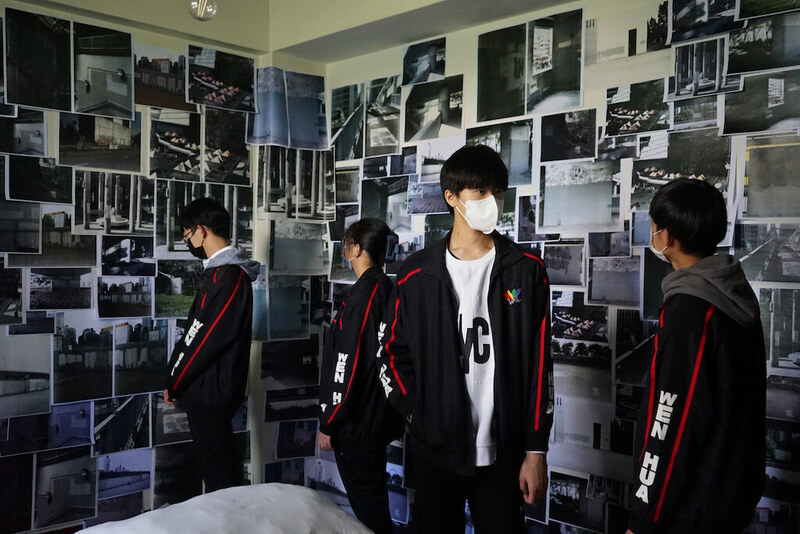 (Students from Wen-Hua High School visit the JRF exhibition. Photography by Hsieh Chia-chen)
Presenting a complete exhibition is no easy task; it requires substantial manpower and time. The preparation process before opening is lengthy and tedious, while post-opening publicity is the key to an exhibition's success. The post-publicity results must also be continuously tracked, with themes and methods constantly refined and adjusted.
Initially, exhibitions were merely one of the JRF's advocacy tools, but as exhibition runs increased and participating feedback multiplied, they gradually brought distinct value to the Taichung Office. Exhibitions have become a bridge for communicating issues, allowing local citizens to begin understanding the judicial field and providing a space for learning and inquiry.
As the JRF, we bear a social responsibility dedicated to ensuring that Taiwan has a judicial system worthy of public trust. Beyond policy and systemic changes, legal education and advocacy work are likewise crucial components. We have the capability and the desire for more people to join hands with us in striving to create further reforms.
This article is an AI-generated translation of the original Chinese text. In the event of any discrepancy, the Chinese version shall prevail.