
Op-Ed | Judicial Ethics Going Backward: Reforming the Supervisory Mechanism of the Judges Act
Last edited: 2026-07-27
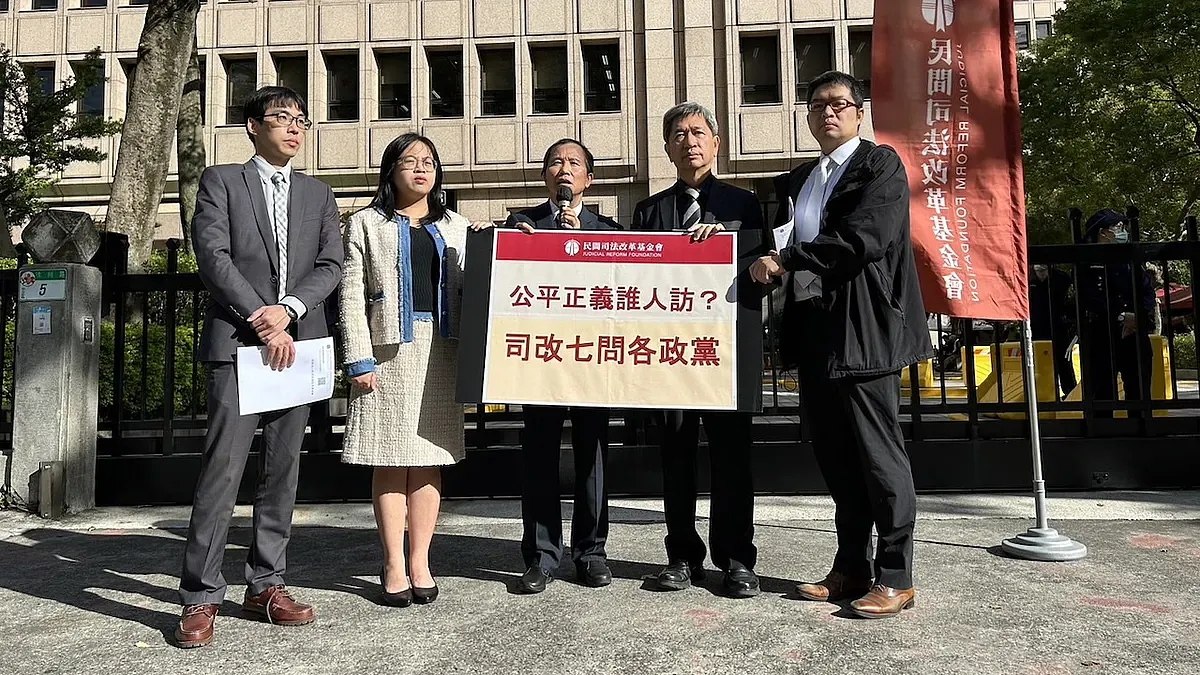
Recent media reports revealed that judges Chou T'ai-te, P'eng K'ang-fan of the Taipei High Administrative Court, Li Chao-jung of the New Taipei District Court, and Chief Judge Ch'en Chang-jung of the Shihlin District Court violated judicial duties and abused their powers. In response, the JRF issued a statement titled "Continuous Outbursts of Judicial Misconduct: Where is the Mechanism for Judicial Self-Reflection?", demanding that the Judges Commission actively and proactively investigate the "behavioral patterns" of judicial misconduct rather than treating them as isolated cases and issuing lenient penalties. It also urged the Legislative Yuan to amend the Judges Act to strengthen the administrative supervisory responsibilities of the heads of various courts and prosecutors' offices over their subordinate judges and prosecutors.
Meanwhile, Clarence Thomas, a conservative Black Justice of the US Supreme Court, and his wife accepted undisclosed gifts (such as luxury trips and real estate) from Republican donor Harlan Crow, triggering controversies over judicial independence. Under pressure from Congress and civic groups, the US Supreme Court adopted its first-ever code of conduct for Justices last week (November 13), requiring all nine Justices to sign the new code and unanimously adhere to the relevant ethical norms.
Observing the judicial chaos in both Taiwan and the United States, we indeed need to critique and reflect upon our judicial systems. Taiwan passed the Judges Act in 2011, and enacted the Code of Judicial Ethics and Implementation Measures for Self-Discipline by Judges at All Levels the following year, clearly regulating the scope of judicial duties and ethical rules while establishing an evaluation mechanism for eliminating and supervising incompetent judges. However, a decade later, Taiwan still experiences numerous instances of judges violating their duties and abusing their powers—such as judges accepting bribes, displaying poor courtroom demeanor, committing sexual harassment and workplace bullying, and even recently, failing to observe even the most basic procedural laws. We cannot help but ask: why is the Judges Act, which was supposed to safeguard judicial independence and strengthen judicial accountability, now experiencing a phenomenon akin to "going backward"? As the saying goes, it is never too late to mend. A series of judicial misconduct incidents precisely allows us to see where the Judges Act can be improved.
Judicial Misconduct and Dereliction of Duty: Behavioral Patterns or Isolated Incidents? The Judges Commission Must Investigate Thoroughly
First, we must address the dysfunctional and proactive shortcomings of the "Judges Commission." The Commission has failed to conduct proactive investigations into "behavioral patterns" in accordance with Article 35, Paragraph 6 of the Judges Act, which stipulates: "For the necessity of determining a behavioral pattern, the Judges Commission may concurrently investigate and deliberate upon disciplinary matters that have not been requested." A so-called "behavioral pattern" investigation assesses whether a judge's misconduct is merely an "isolated incident" or has formed a poor "case-handling pattern." In other words, evaluating behavioral patterns aims to understand the evaluated judge's litigation direction, interpersonal interactions, and case-handling style, grasping their "overall personal profile" to determine the necessity of disciplinary action and referral for evaluation.
Supervision by Court Presidents and Prosecutors at All Times is More Effective than Ex-Post Evaluation
Furthermore, the Judicial Yuan should take more proactive and concrete actions regarding how to strengthen the obligation of court and prosecutorial heads to exercise "official supervision." Following the major Shih Mu-ch'in disciplinary scandal in 2020, the JRF proposed a draft amendment to the Judges Act concerning official supervision, demanding that judicial heads, who should serve as role models, fulfill their responsibility to supervise misconduct by subordinate judges and prosecutors. For instance, the scope of official supervision should explicitly include "conduct violating the Code of Judicial Ethics." The rationale is that court presidents often stand at the frontline of understanding trial management, and the costs for heads to promptly initiate supervision and improvement are the lowest, while the results are the most expeditious.
Finally, rectifying the judicial chaos of judicial misconduct relies not only on the self-discipline of individual judges but also requires institutional review of the Judges Act. After all, when incompetent judges cannot be effectively eliminated through the Judges Act, judicial reform will remain empty talk.
※ This article was published in ETtoday Cloud Forum on November 22, 2023: "Judicial Ethics Going Backward: Reforming the Supervisory Mechanism of the Judges Act"
This article is an AI-generated translation of the original Chinese text. In the event of any discrepancy, the Chinese version shall prevail.