
"Forgive Taiwan's Judiciary" - Reporting on the Wrongful Conviction of Former Eighth River Management Office Director Lai Ting-fu (Part 1)
Last edited: 2026-07-27
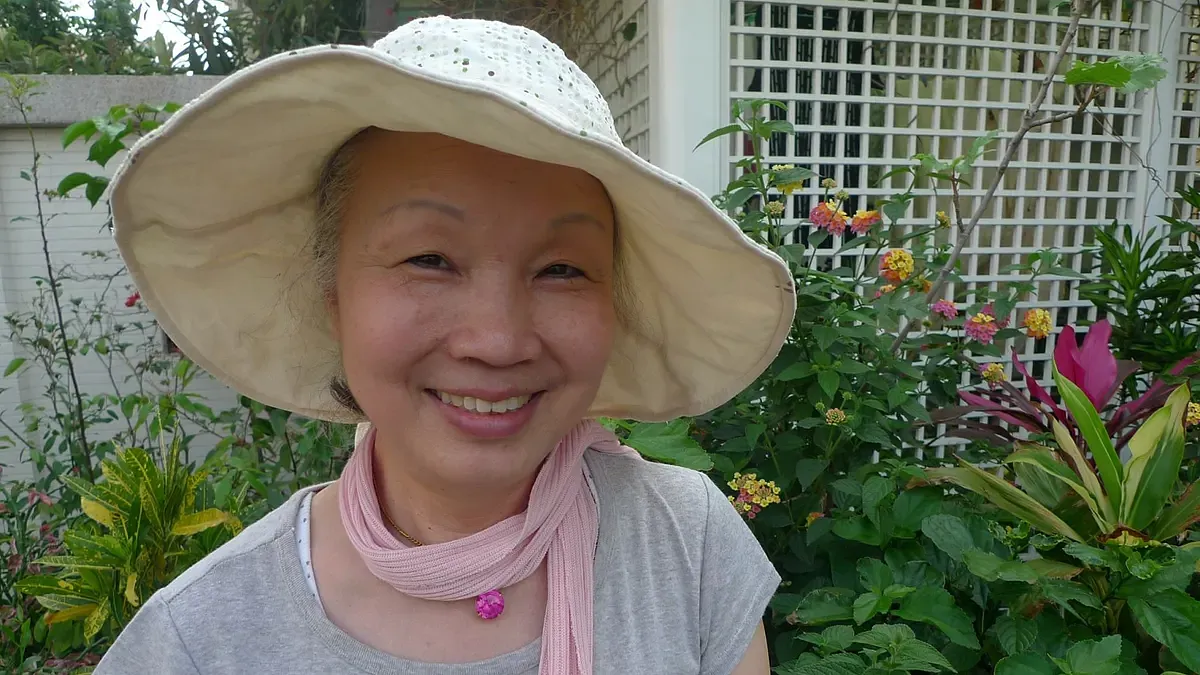
Standing at the Hsuehchia bus station, after calling to confirm that Mrs. Lai had already left to pick me up, my eyes began searching for a lady driving a respectable car, but none appeared. Coming toward me instead was a woman riding a bicycle, wearing a cotton T-shirt and cropped pants, who called out my name from afar. It turned out this was Mrs. Lai. After meeting and exchanging a few brief pleasantries, she pushed her bicycle and slowly led me back to the Lai home.
A Simple, Unpretentious Civil Servant, Family-Oriented and Never Out Late
After walking for more than ten minutes as the sky gradually grew dim, I arrived at a self-built townhome. Upon stepping inside, I immediately felt the presence of lush, green vegetation in the courtyard. However, since Lai Ting-fu went to serve his sentence in the Tainan Prison the year before, the large house has been left with only Mrs. Lai and a cat named Paper. Mrs. Lai quickly prepared dinner, simply setting roasted duck, fish soup, and blanched okra on the table. "Our family's dietary philosophy is all about health; we usually just have blanched greens. Since you are visiting today, we are eating a bit better." Mrs. Lai smiled and added, "My husband usually eats lightly too and doesn't care much for socializing—that doesn't suit his taste. On the contrary, now that he has entered prison, although the food there is coarse, I actually worry that he might gain weight.">
While eating the roasted duck, Mrs. Lai casually chatted away with ease. Through her words, one could feel her playful and guileless side. Being talkative, she could converse on all sorts of topics. She mentioned that her natal family runs a plastic factory in Hsinying, and the Yakult bottles were produced by them. Lai Ting-fu was a classmate of her older brother at Tainan First Senior High School, and the two met and fell in love when Lai came to her family's home to deliver wedding pastries for her sister. "He is a simple civil servant, working nine-to-five and heading straight home after work." Recalling the days when her husband worked as a civil servant, Mrs. Lai said, "Both of us are people who value family. After we had children, I quit my job. Normally, I didn't have other friends inviting me out, nor did I have any other social intersections with people from work; we simply stayed at home to focus on raising our children. He has been filial to his parents since childhood, and after getting married, his focus remained on family life." Having placed his heart into family life, Lai Ting-fu shared very close relationships with his family members, and his children performed exceptionally well. Their eldest daughter settled in Miaoli and is a cram school teacher beloved by her students; their second daughter graduated from the Taipei Municipal Teachers College with a government-funded scholarship in special education and now works at National Taiwan University Hospital; their youngest son graduated from Tzu Chi University College of Medicine and is currently practicing medicine in Hualien.
Diligent in Public Service and Unfazed by Hardships, an Innocent Life Met with Injustice
Regarding her husband's performance at work, Mrs. Lai said, "He is a very honest person, but at work, he possesses great strategic boldness and resolve. He would carry out things that previous superiors dared not do." She mentioned that she had moved 18 times throughout her life due to her husband's transfers; yet no matter how secluded the small apartment they moved into was, contractors involved in business would always easily find them. "Every time the contractors came, my husband would tell me not to come out, and he would deal with those people at the entryway, fending them off and sending them away. My husband would never accept the things they brought." Whenever she talked about Lai Ting-fu, Mrs. Lai's eyes would always light up, making one feel that she truly took pride in her husband. Mrs. Lai revealed that Lai Ting-fu, who was originally serving as the director of the Fourth River Management Office in Changhua, suddenly requested a transfer on his own due to work pressure. The hidden reason was that he spearheaded the forced closure of 21 illegal gravel yards in the area and cracked down heavily on illegal gravel excavation without showing any leniency. Fearing afterward that someone might come looking for trouble, he voluntarily requested a transfer to Taitung, never expecting that it would thus entangle him in the eastern corruption case and lead to his wrongful conviction.
Viewing Prison as Going to School, Treating Hardships as Learning
The day after heading south, I accompanied Mrs. Lai to the Tainan Prison. On the way, Mrs. Lai talked about the rescue process, including how she read through the case files herself to understand the situation, sought assistance from civil organizations, and took a one-hour bus ride to visit him twice a week. When describing these events, she did not wear a sorrowful expression; instead, she spoke with smiles and laughter, not treating Lai Ting-fu's predicament as an absolute misfortune at all. Mrs. Lai said, "We both treat this matter as a test. In prison, my husband reads Buddhist scriptures, meditates, and writes his memoirs. During this time, he has also deeply reflected upon himself."
Mrs. Lai shared that Lai Ting-fu is from a farming family and has lived in Hsuehchia, Tainan for generations. The land for the townhome was given to them by his father, and his uncles also received shares; their family background is clean and untainted. She herself had learned financial management from her father since childhood, and her natal family also left her an inheritance. Over the years, she managed the household diligently and thriftily, accumulating a financial safety net for her family—there was simply no need to engage in corruption or accept bribes. After the corruption case of the Eighth River Management Office in eastern Taiwan occurred, investigative and prosecution authorities audited the property accounts of three generations of the Lai family, even checking her natal family's accounts, and found no dirty money of unknown origin whatsoever; it was just that this favorable evidence was not valued by the judiciary. I vividly remember the night before, when Mrs. Lai took out an entire neatly organized collection of home letters—letters that Lai Ting-fu had written home from prison over the years. Aside from overflowing longing for his wife, the letters repeatedly featured a single sentence: "Forgive Taiwan's judiciary."
Lai Ting-fu in the Eyes of His Daughter
A week later, I met Lai Ting-fu's second daughter in Taipei at National Taiwan University Hospital. After graduating from the Taipei Municipal Teachers College, she has been serving critically ill children within the hospital. Speaking of her impression of her father, Miss Lai said, "Compared to Mom's outgoing nature, Dad was always very serious. In the past, he accompanied us to do our homework every day; although he would lose his temper when we couldn't grasp something, we all knew that it was out of love." She then continued, "But Dad also had a gentle side. Being very frugal, whatever he bought for himself was just enough; but Dad was not stingy. When I wanted an MD player back when I was learning dance, Dad bought it for me during a business trip. I know it wasn't cheap. Even though MDs are out of fashion now, I still keep it as a memento.">
With a shy smile, Miss Lai spoke about how her parents got along: "The two of them share a deep affection. Back when Dad was serving in the military, he would write letters to Mom every day, and these letters were all kept in a box—a Pandora's box. Now that Dad is in prison, it's just like back then during his military service, writing home letters to Mom every week. I do not harbor resentment toward Dad for being locked up over this matter; I only worry about my parents' health. Mom has been fighting desperately hard for Dad's case, and I only hope they can reunite in good health." Speaking of her relationship with her father, Miss Lai joked that she usually just quietly listened to him talk. "Dad has a lot to say. Usually, he likes to chat about Buddhist teachings, but they are all abstract concepts. Now that he is in prison, we all say he went to Buddhist university, where he has come to realize many truths of Buddhist philosophy. And our family has also learned a great deal amidst all this." When saying goodbye, I deeply felt that although the path to vindicating this miscarriage of justice remains long and arduous, Lai Ting-fu and his family are facing it with calm composure, earnestly seizing and cherishing the life they have in the present moment.
[Judicial Reform Magazine, Issue 92, 2012/10/31, pp. 70-71.]
This article is an AI-generated translation of the original Chinese text. In the event of any discrepancy, the Chinese version shall prevail.