

Supreme Court Judges Should Not Be Richard Moore: Report on Former Eighth River Basin Management Office Director Lai Ting-fu (Part 2)
Last edited: 2026-07-27
On October 21, 2010, the Supreme Court dismissed the appeal filed by former Director Lai Ting-fu of the Eighth River Basin Management Office under the Water Resources Agency, Ministry of Economic Affairs, finalizing his conviction for accepting bribes and sentencing him to 7 years of imprisonment. After accepting Director Lai's grievance, the Judicial Reform Foundation immediately reported the case to the Control Yuan. On September 14, 2011, the Control Yuan released an investigation report, specifically pointing out multiple flaws and errors in the judgments rendered by the Taiwan High Court Hualien Branch Court and the Supreme Court. Based on this, the Prosecutor-General filed an extraordinary appeal on April 13, 2012.
The reason why the Prosecutor-General and the Control Yuan believed that Director Lai was wronged was that the originally planned gravel transport route for the Luyeh River dredging project in Taitung traversed Luyeh Township streets and Heping Community. The traffic hazards and air pollution caused by 1,200 large dump truck trips per day sparked fierce backlash and protests from local residents. Therefore, Director Lai's approval to suspend the original route and establish a temporary river bypass for transportation was entirely necessary. The original final judgment's allegation that changing the gravel transport route was intended to benefit the contractor was contrary to the facts.
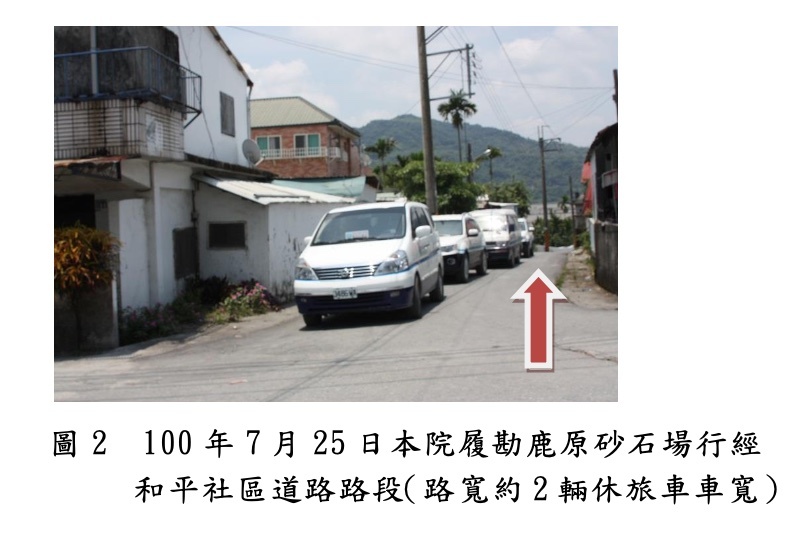 Photo / Page 38 of the
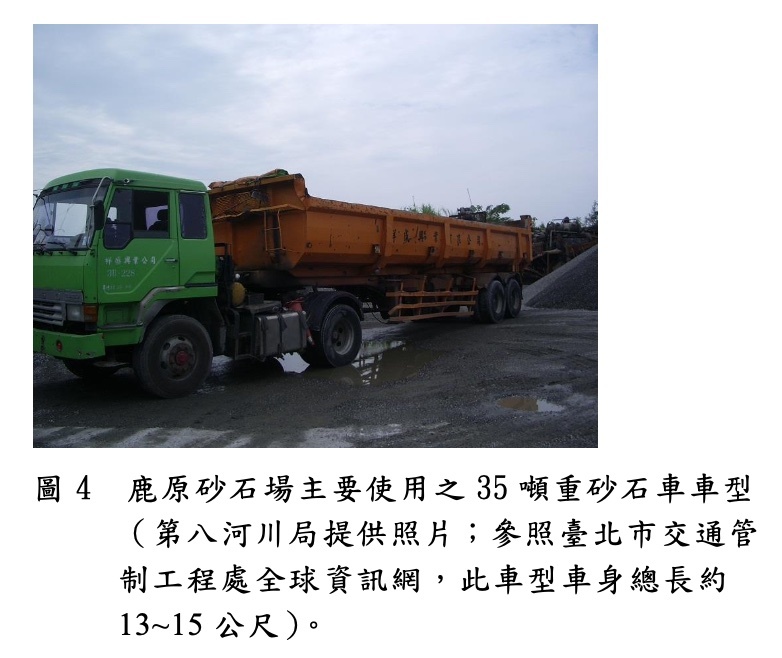 Photo / Page 39 of the
The Control Yuan also questioned the "presumption of guilt" mindset underlying the original final judgment. The reason is that the sole evidence accusing Director Lai of accepting a bribe was a single entry in the Luyuan Gravel Yard's cash book dated March 23, 2005: "Entertainment expenses, Water Resources Office Director (boss's wife), account page 169, NT$100,000." Unlike other officials involved in the case, whose ledger records showed long-term and multiple instances of gift-giving and bribe-receiving, an investigation into the accounts and assets of Director Lai and related parties revealed no illegal income or unexplained wealth. The boss's wife of the Luyuan Gravel Yard repeatedly clarified that she had "misappropriated public funds to cover gambling losses and, to prevent shareholders Chang Hsiu-lan and stepson Ch'en I-chao from discovering it when browsing the account books, asked witness Li Pai-hui to record this sum in the ledger as a gift given to Lai Ting-fu..." In particular, "Page 169 of the Entertainment Expense Subsidiary Ledger," which could have been used to verify the expenditure, mysteriously went missing after being seized in a search by the Taitung Station of the Investigation Bureau, further leading the Control Yuan to suspect that the prosecutorial and investigative authorities were involved in framing an innocent person.
The unexplained disappearance of Subsidiary Ledger Page 169 was likewise deemed a matter of utmost gravity by the Prosecutor-General. The extraordinary appeal brief pointed out that the original final judgment relied solely on a cash book unilaterally prepared by the contractor to presume that the civil servant defendant, Lai Ting-fu, had accepted bribes; however, the subsidiary ledger's entertainment expense category only contained 4 pages (pages 165, 166, 167, and 168), lacking Subsidiary Ledger Page 169 for cross-verification to prove the authenticity of the entries in the cash book. Before this flaw was clarified, the original final judgment's use of the cash book as the sole evidence of crime violated Article 379, Subparagraphs 10 and 14 of the Code of Criminal Procedure, and should therefore be rescinded.
Unexpectedly, the Supreme Court subsequently dismissed the extraordinary appeal on June 7, 2012, through Judgment 101-Tai-Fei-Zhi-No.-165. The reasoning of the judgment emphasized that changing the gravel transport route was "unnecessary"; furthermore, addressing the controversy surrounding the missing subsidiary ledger, it pointed out that the expenditures of the Luyuan Gravel Yard from March 21 to July 30, 2005, were actually recorded on page 168 of the subsidiary ledger, and even if subsidiary ledger page 169 referred to by the Prosecutor-General and the Control Yuan was missing, it had no bearing on the case. Assuming the Supreme Court's finding was true, it would mean that the Prosecutor-General and the Control Yuan committed a "novice mistake," not only failing to review accounts, but even flipping to the wrong dates in the account books.
To clarify who was right and who was wrong, the author inspected the account books of the Luyuan Gravel Yard and discovered that page 168 of the subsidiary ledger cited by the Supreme Court was not the subsidiary ledger for the "94th year of the Republic (2005)," but rather the subsidiary ledger for the "91st year of the Republic (2002)." This is proven by the fact that the page immediately preceding page 168 cited by the Supreme Court clearly states the bookkeeping date as the "91st fiscal year." As it turns out, the party who got the account books wrong was not the Prosecutor-General or the Control Yuan, but the judges of the 11th Criminal Division of the Supreme Court who dismissed the extraordinary appeal. The reason for the mistake was nothing esoteric regarding legal interpretation; they simply forgot to turn back an extra page when reviewing the accounts. This inexcusable error rendered the efforts of the Prosecutor-General, the Control Yuan, and the Judicial Reform Foundation in pursuing judicial justice all for naught.
In the bestselling anime "Case Closed" (Detective Conan), there is a character named Kogoro Mouri, a highly righteous detective who considers himself skilled at deduction. However, Kogoro Mouri is lazy in his work, makes deductions based on hearsay, and frequently makes a fool of himself, serving as the comic relief of the show. In an anime, seeing Kogoro Mouri bungle a case allows the audience to burst into laughter; seeing the Supreme Court bungle a case in the real world leaves the public with tears of despair. Perhaps the presiding judges originally wanted to emulate Conan and brilliantly solve the case, but their extreme carelessness turned them into Kogoro Mouri instead. This article calls upon the Supreme Court to immediately admit its mistake, proactively investigate and penalize the personnel at fault, and promptly formulate remedial measures so as not to bring further shame upon judicial justice.
[Judicial Reform Magazine, Issue 92, 2012/10/31, pp. 72-73.]
Appendix: Chronology of the Lai Ting-fu Case
| No. | Date | Event |
|
|
February 17, 2005 |
Luyuan Gravel Yard wins the bid for the downstream earth and rock clearing work of the Luyeh River by the Eighth River Basin Management Office of the Water Resources Agency. |
|
|
March 3, 2005 |
The Mayor of Luyeh Township leads local residents to protest at the earth and rock extraction site, demanding that gravel trucks must not pass through Luyeh Township streets and Heping Community. |
|
|
March 23, 2005 |
Director Lai Ting-fu of the Eighth River Basin Management Office approves the establishment of a temporary river bypass and changes the gravel transport route to avoid Luyeh Township streets and Heping Community. |
|
|
May 20, 2005 |
Construction of the temporary river public land bypass is completed, and Director Lai approves its use; he also instructs that upon completion of the transport operations, the bypass must be removed to restore the river to its original appearance. |
|
|
December 27, 2005 |
The Taitung District Prosecutors Office investigates the Luyeh Township Office's illegal lending of land; the Taitung Station of the Investigation Bureau searches the Luyuan Gravel Yard and seizes account books and documents. |
|
|
February 15, 2006 |
Discovering the entry "Entertainment expenses, Water Resources Office Director (boss's wife), account page 169, NT$100,000" in the Luyuan Gravel Yard account books, the Taitung District Prosecutors Office applies for the detention of Director Lai, but the court dismisses the request. |
|
|
March 6, 2008 |
The Taitung District Prosecutors Office indicts Director Lai under the Anti-Corruption Act for allegedly accepting a NT$100,000 bribe from the Luyuan Gravel Yard in exchange for agreeing to change the gravel transport route. |
|
|
August 28, 2009 |
Taitung District Court acquits Director Lai (97-Su-Zhi-No.-75). |
|
|
August 28, 2010 |
Taiwan High Court Hualien Branch Court sentences Director Lai to 7 years of imprisonment (98-Shang-Su-Zhi-No.-281). |
|
|
October 21, 2010 |
Supreme Court dismisses Director Lai's appeal (99-Tai-Shang-Zhi-No.-6503 Judgment). |
|
|
November 23, 2010 |
The Judicial Reform Foundation accompanies Director Lai to submit a grievance and statement to the Control Yuan. |
|
|
September 14, 2011 |
The Control Yuan publishes an investigation report, specifically pointing out multiple errors in the judgments of the Hualien Branch Court and the Supreme Court. |
|
|
April 13, 2012 |
The Prosecutor-General files Extraordinary Appeal Brief 101-Fei-Zhi-No.-91 on behalf of Director Lai. |
|
|
June 7, 2012 |
The Supreme Court dismisses the extraordinary appeal (101-Tai-Fei-Zhi-No.-165 Judgment). |
This article is an AI-generated translation of the original Chinese text. In the event of any discrepancy, the Chinese version shall prevail.